Artwork
Carolus van Utenhoven
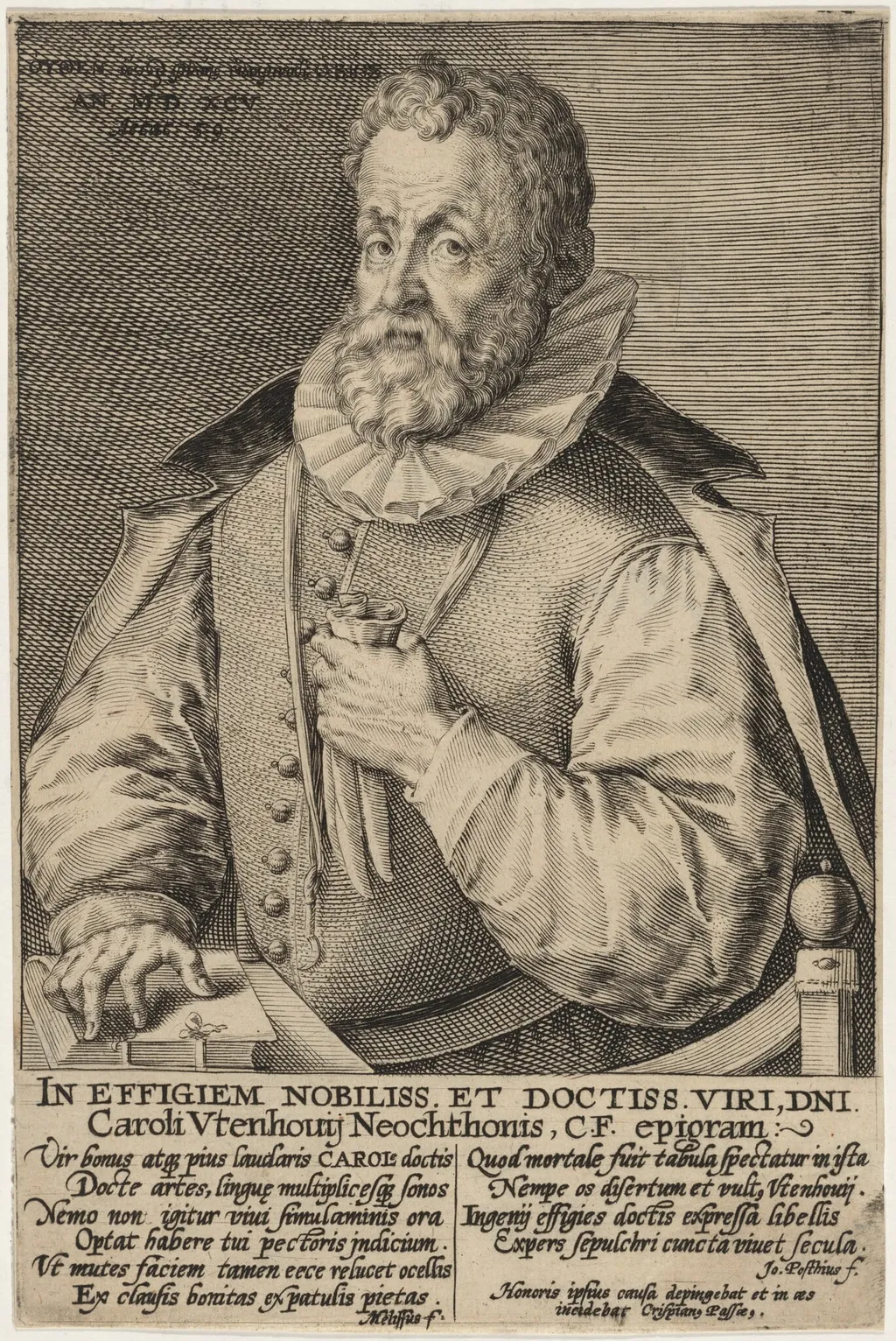
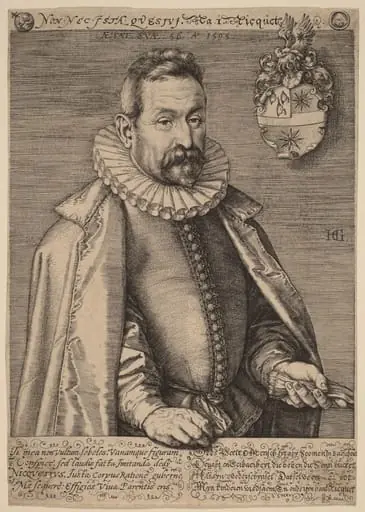
Carolus van Utenhoven is an ink print by the Renaissance artist Crispijn van de Passe I. It dates from 1601 and is held in the collection of the National Gallery of Art.
About this work
Overview
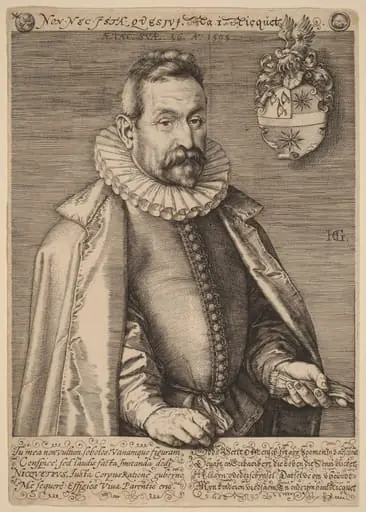
Crispijn van de Passe I produced an engraving in 1601 that presents a formal portrait of a bearded gentleman. Rendered in stark black and white, the image captures the sitter’s direct gaze and solemn demeanor, set against an unadorned background that emphasizes the figure’s attire and posture.
Subject & Meaning
The portrait depicts a man with curly hair, a dark, textured coat, and a serious expression. One hand rests on his chest while the other holds a small object, suggesting a gesture of contemplation or authority. A Latin inscription beneath the image lauds the sitter’s wisdom and abilities, indicating the work was intended as a tribute to his intellectual or professional reputation.
Technique & Style
Executed as a copper engraving, the print relies on incised lines to achieve fine detail, especially in the rendering of the hands and facial features. The monochrome palette and plain backdrop are characteristic of early 17th‑century portrait prints, where emphasis is placed on line work rather than tonal shading.
History & Provenance
Created in 1601, the print belongs to the early output of the van de Passe workshop, a family of engravers active in the Netherlands and England. Its survival in museum collections reflects the period’s demand for portable, reproducible portraits of notable individuals.
Context
During the turn of the 17th century, engravings served both as personal commemorations and as means of disseminating the likenesses of scholars, officials, and patrons across Europe. This work aligns with that tradition, offering a visual record that could be circulated beyond the sitter’s immediate locale.
Artist & collection

Artist
Crispijn van de Passe I (1564–1637) was an artist, born in Arnemuiden.