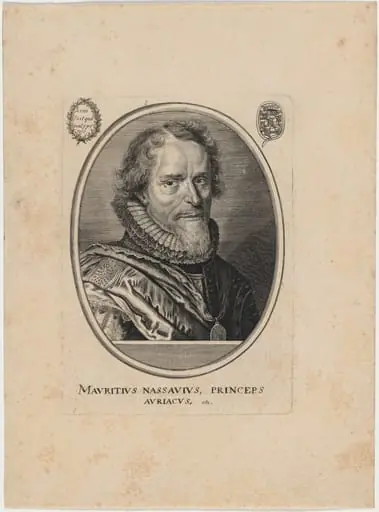
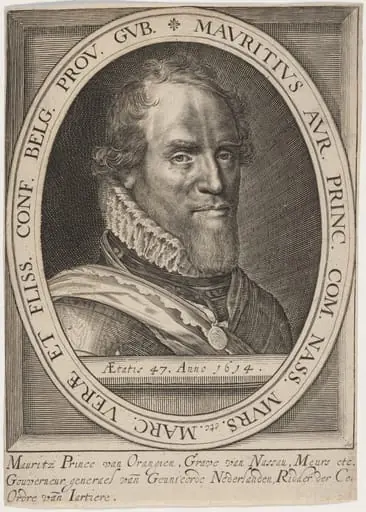
Artwork
Maurice of Nassau, Prince of Orange
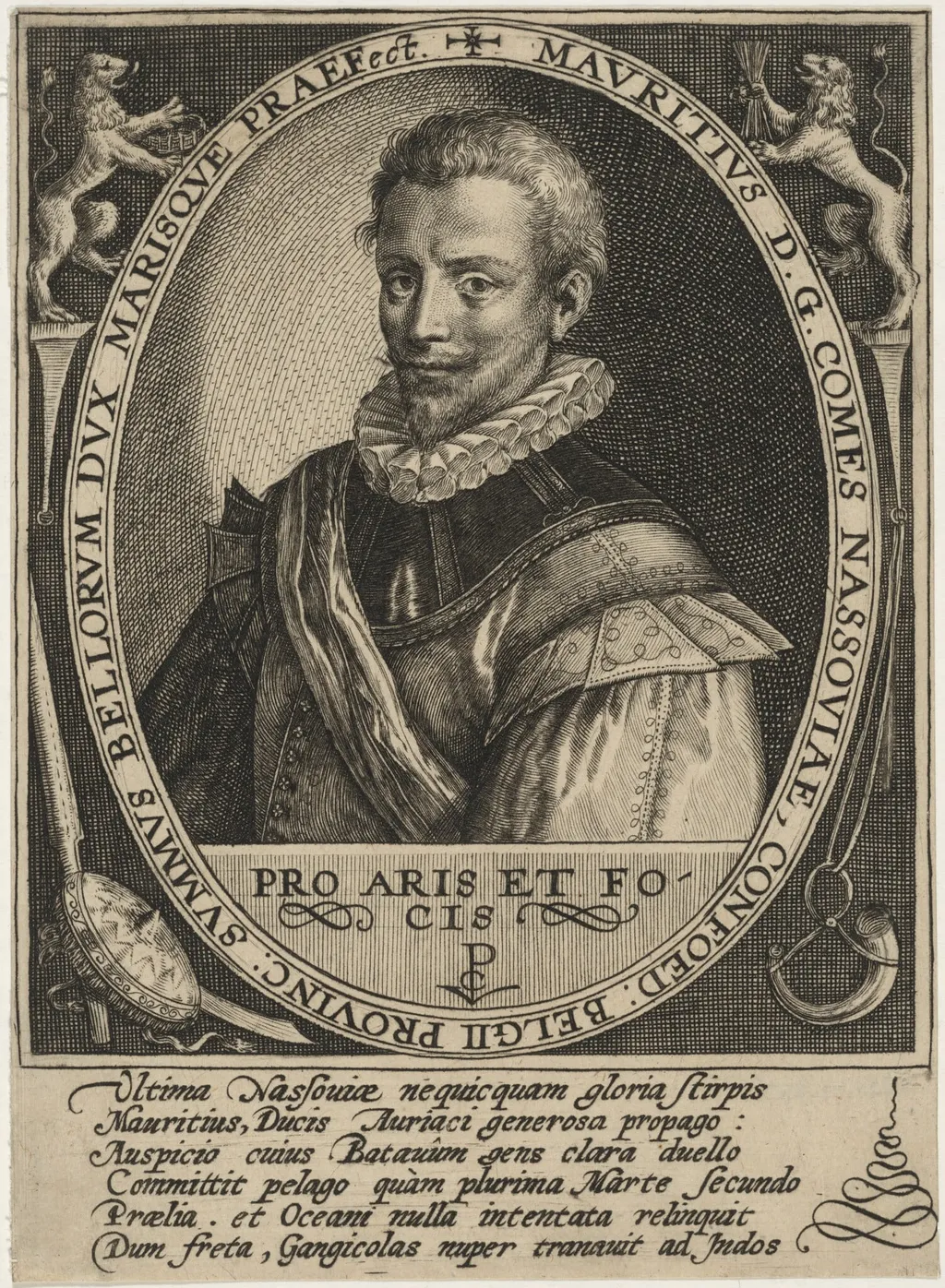
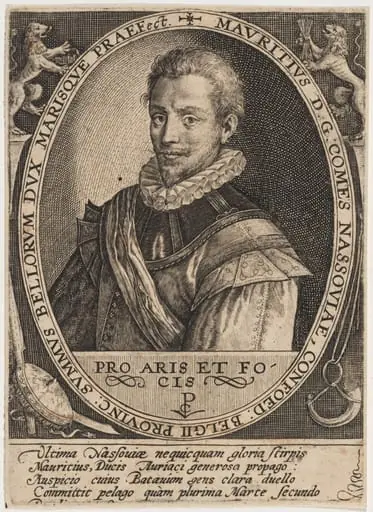
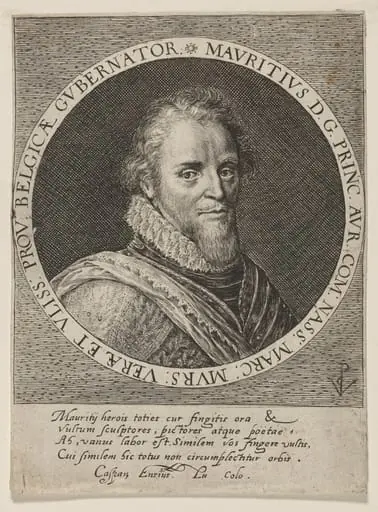
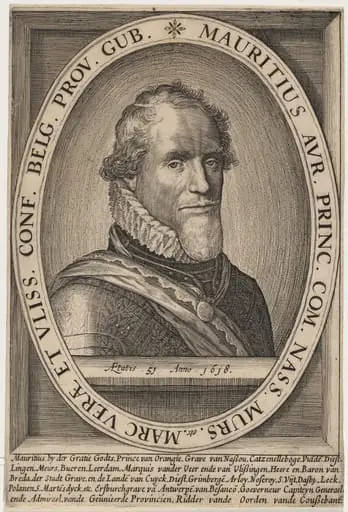
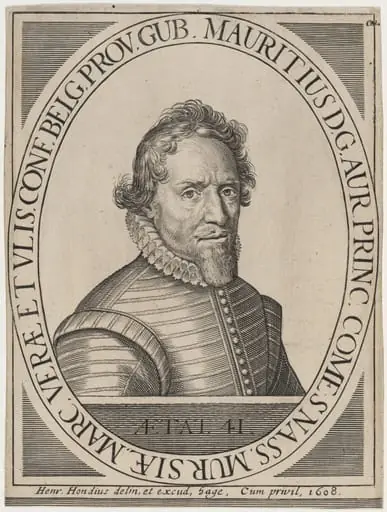
Maurice of Nassau, Prince of Orange is an ink print by the Renaissance artist Crispijn van de Passe I. It dates from 1598 and is held in the collection of the National Gallery of Art.
About this work
Overview
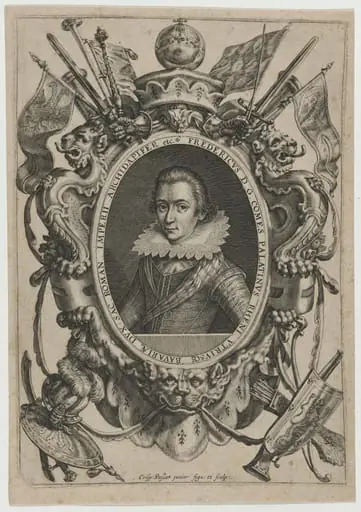
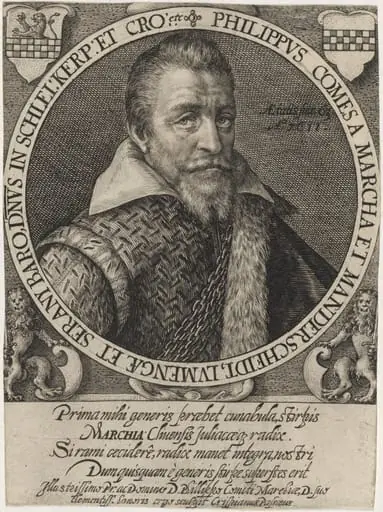
Maurice of Nassau, Prince of Orange is a 1598 engraving by Crispijn van de Passe I, portraying the prince within a circular frame adorned with inscriptions.
Subject & Meaning
The subject is Maurice of Nassau, depicted with a serious demeanor and direct gaze, indicating his authority and nobility. The formal attire, including a ruffled collar and contrasting jacket sleeve, reinforces his status.
Technique & Style
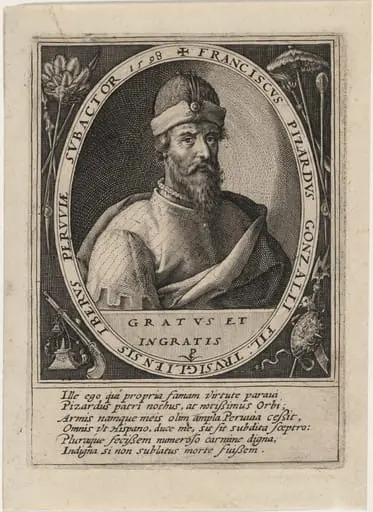
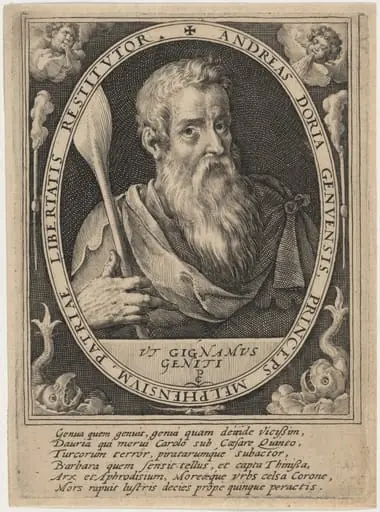
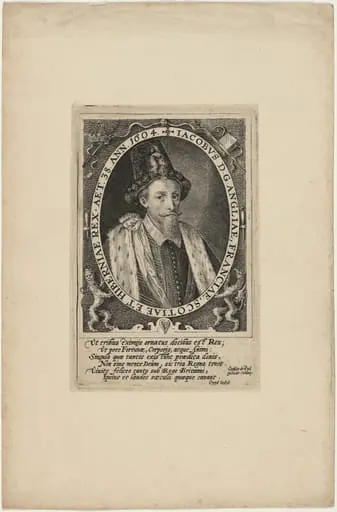
The engraving showcases meticulous craftsmanship with intricate lines and textures, achieving depth and realism. The circular frame with surrounding text is a characteristic of formal, noble portraits of the period.
History & Provenance
Created in 1598 by Crispijn van de Passe I, specific provenance details are not provided in the available information.
Context
The work reflects the 16th-century tradition of engraved portraits for nobility, serving to disseminate and affirm the subject's image and status across regions.
Legacy
While the broader impact of this specific engraving on art history is not detailed in the provided facts, it contributes to the documented visual legacy of Maurice of Nassau.
Artist & collection

Artist
Crispijn van de Passe I (1564–1637) was an artist, born in Arnemuiden.