Artwork
Maurice, Prince of Orange
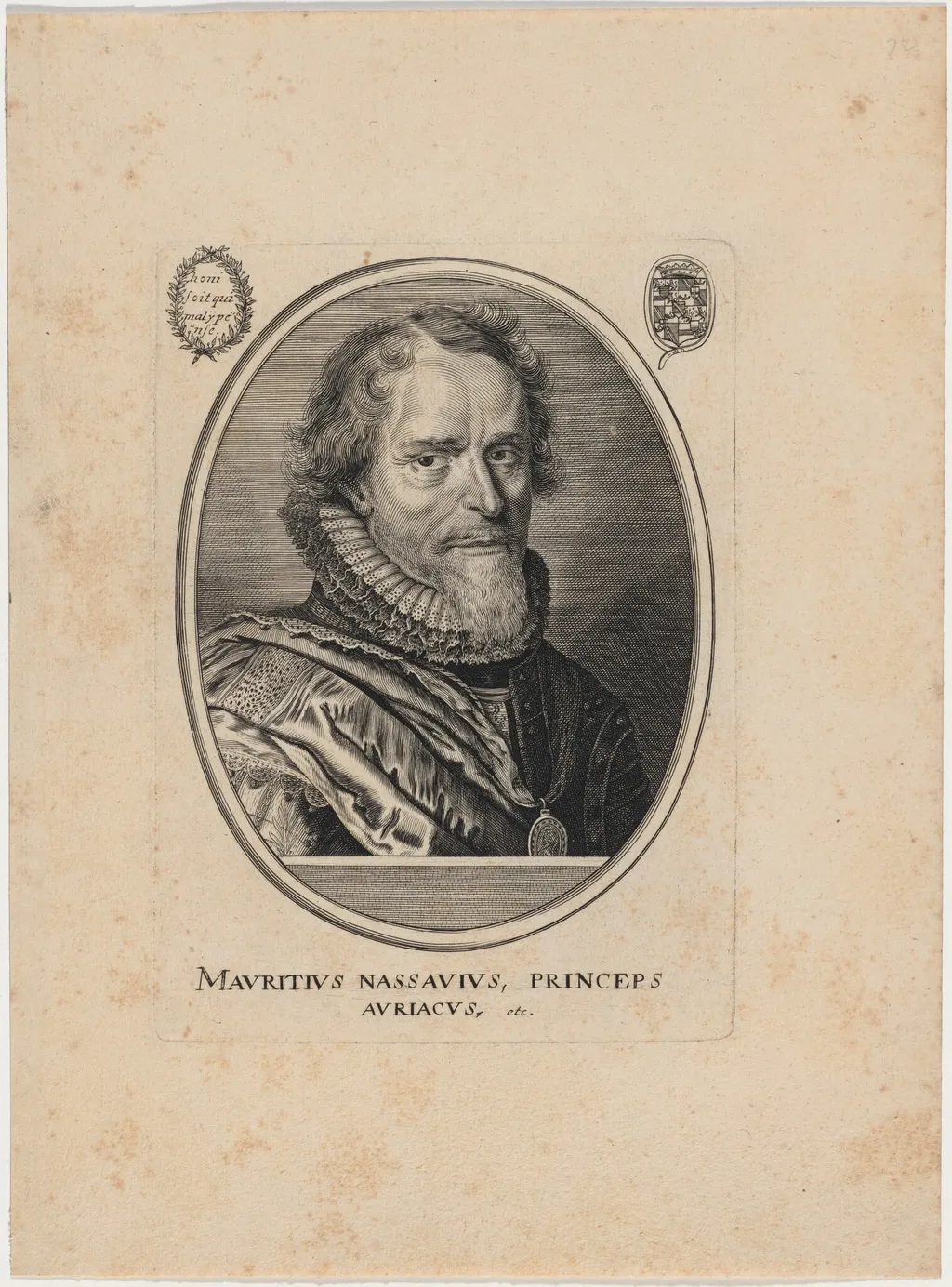
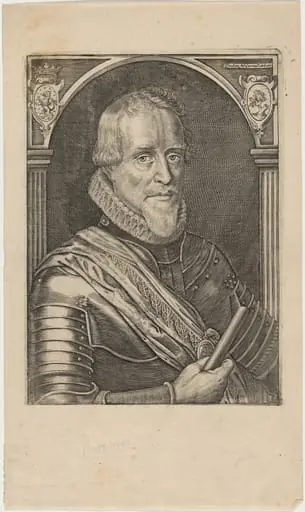
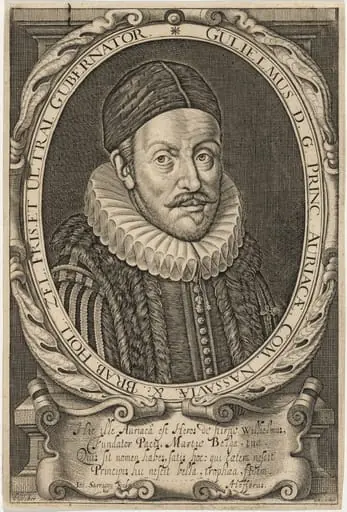
Maurice, Prince of Orange is an ink print by the Romanticist artist Unknown 19th Century. It dates from 1850 and is held in the collection of the National Gallery of Art.
About this work
Overview
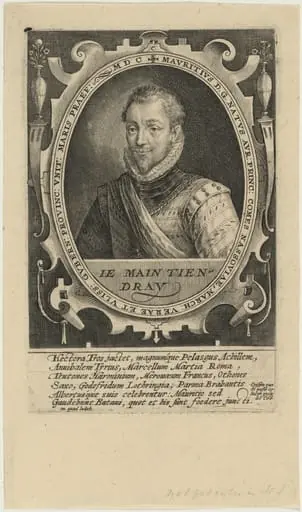
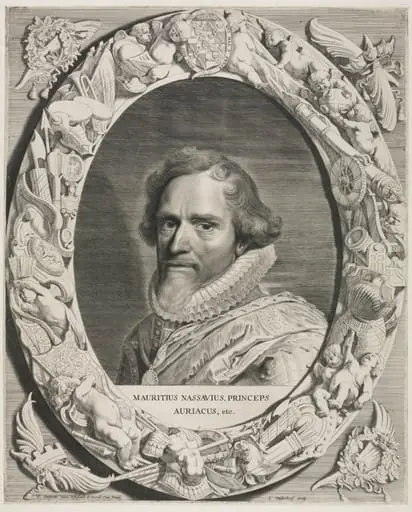
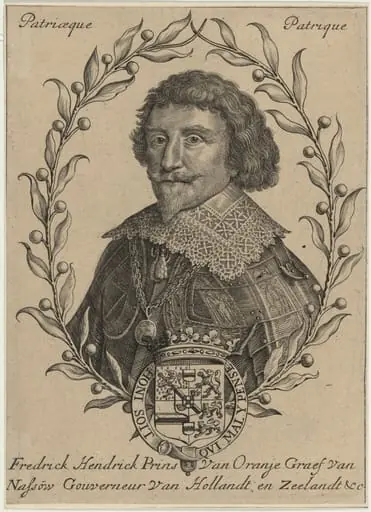
The work is an engraved portrait of Maurice, Prince of Orange, rendered in black and white. The figure is depicted with a full beard, curled hair, and a high lace‑trimmed collar, while a chain and pendant hang from his neck. His hands rest on a dark, textured surface, and a heraldic crest appears to the right of the image.
Subject & Meaning
The portrait presents Maurice, a 16th‑century Dutch stadtholder, in a formal, solemn pose that emphasizes his authority and noble status. The inclusion of regalia such as the chain and crest underscores his political and military role within the House of Orange.
Technique & Style
Executed as an engraving, the image relies on fine line work and cross‑hatching to convey texture, shading, and detail. The high contrast between ink and paper creates a crisp, graphic quality typical of printmaking, while the lace collar and facial features are rendered with meticulous precision.
History & Provenance
Although the visual style suggests an early modern origin, the print is a 19th‑century reproduction of an earlier portrait. The later copy was produced to disseminate the image of Maurice during a period of renewed interest in Dutch national heritage.
Context
Maurice, Prince of Orange, was a key figure in the Dutch struggle for independence, and his likeness was frequently reproduced in various media. The 19th‑century revival of his image aligns with Romantic nationalism, which often celebrated historic leaders through printed portraits.
Artist & collection

Artist

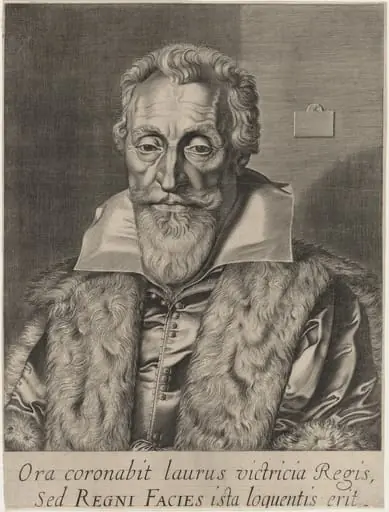
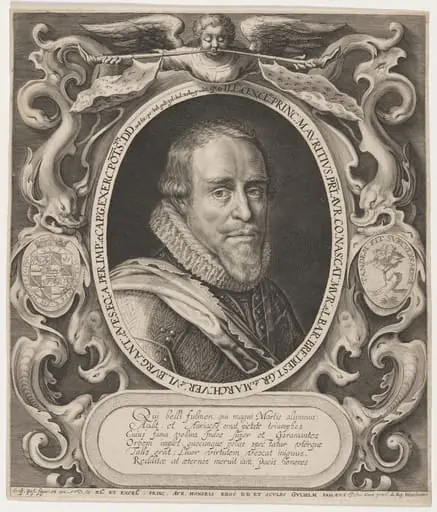 Maurice of Nassau, Prince of Orange
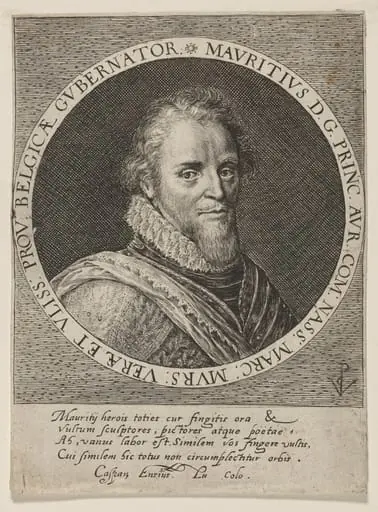 Maurice of Nassau, Prince of Orange
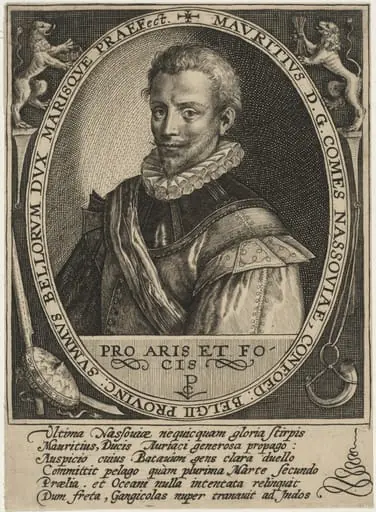 Maurice of Nassau, Prince of Orange
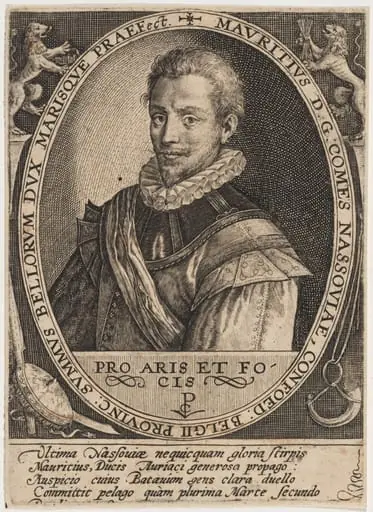 Maurice of Nassau, Prince of Orange
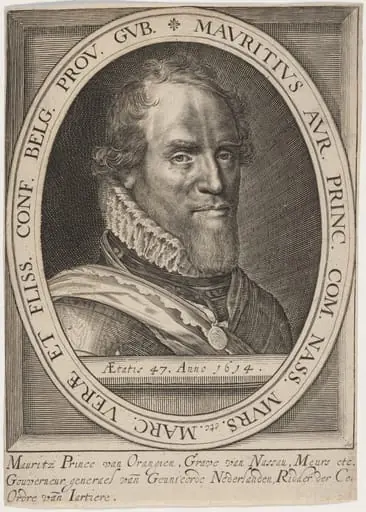 Maurice, Prince of Orange
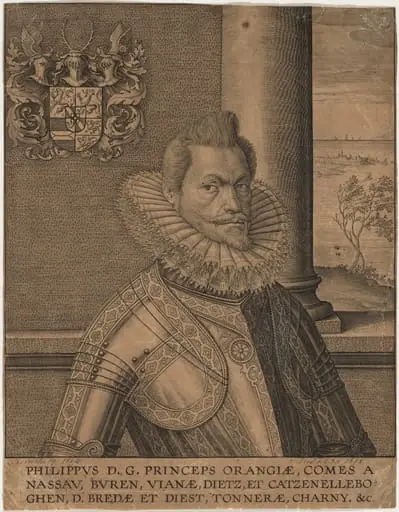 Philip William, Prince of Orange
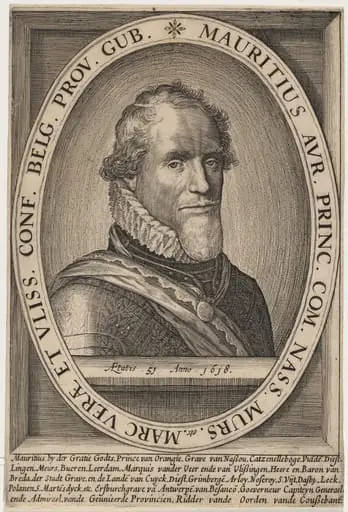 Maurice, Prince of Orange
 Maurice, Prince of Orange
 Maurice of Nassau, Prince of Orange
 Maurice of Nassau
 Frederick Henry, Prince of Orange
 William I, Prince of Orange