Artwork
Pope Clement VIII
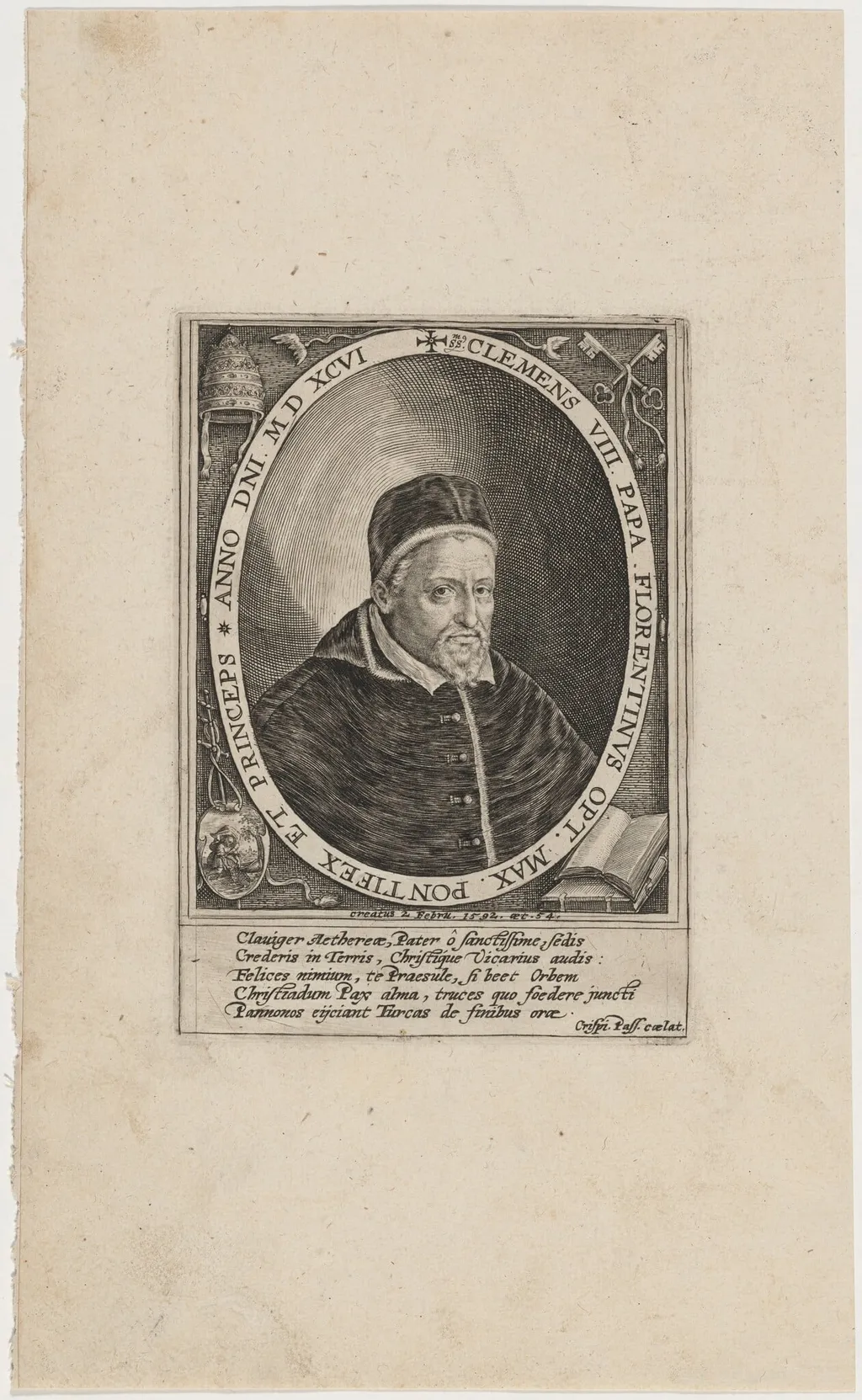
Pope Clement VIII is an ink print by the Renaissance artist Crispijn van de Passe I. It dates from 1592 and is held in the collection of the National Gallery of Art.
About this work
The background is a simple oval frame with text around it, and there’s a small shield with a coat of arms in the corner.
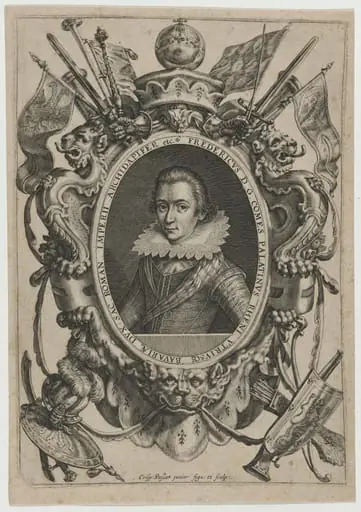
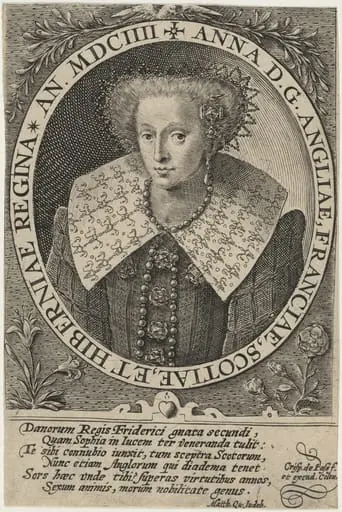
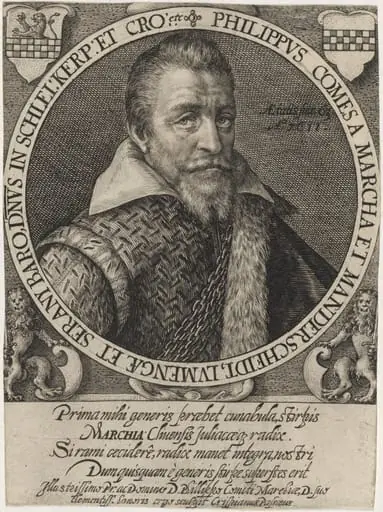
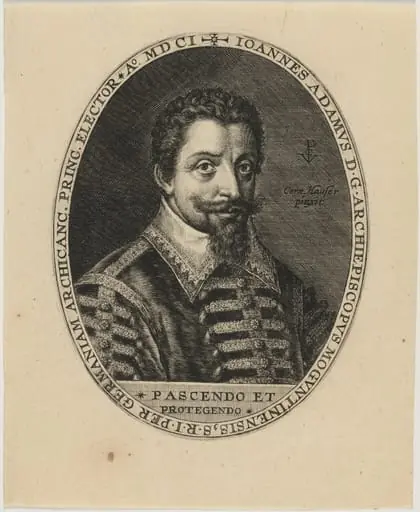
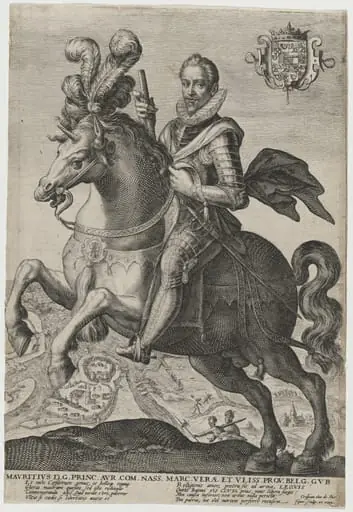
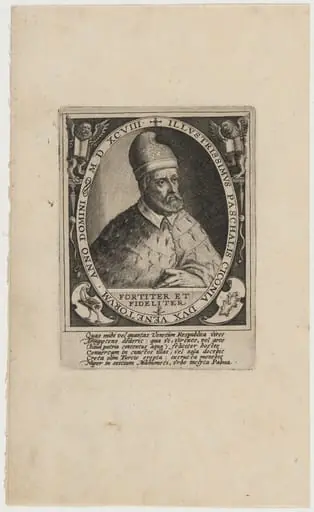
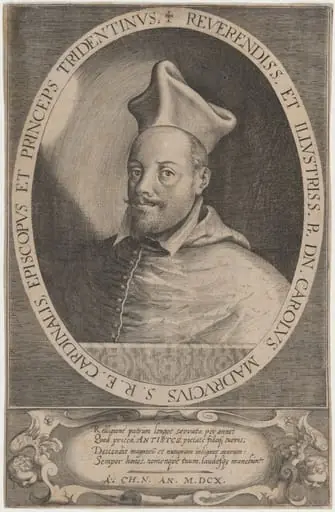
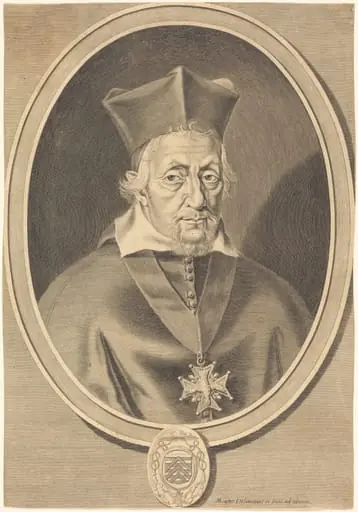
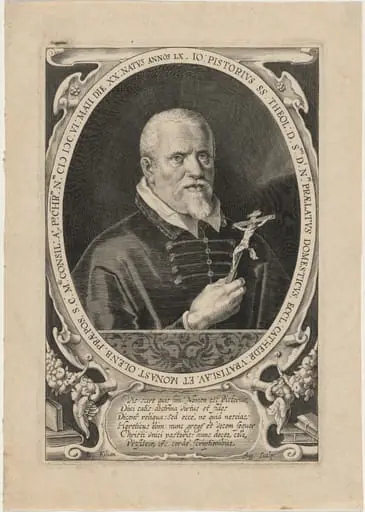
This is a black-and-white portrait of an older man with a serious face. He’s wearing a tall, pointed hat and a stiff collar, holding a book in one hand. The background is a simple oval frame with text around it, and there’s a small shield with a coat of arms in the corner.
The text around the portrait includes Latin words and the year 1592. This suggests it’s an official-looking image, likely meant to show power and authority.
This is an example of engraving, a technique where artists etch designs into metal plates.
Overview
Created in 1592 by Crispijn van de Passe I, this engraving depicts Pope Clement VIII as a formal portrait intended for dissemination. Rendered in monochrome, the image follows the conventions of early modern papal iconography, combining likeness with symbolic authority. The medium—engraving on metal—allowed for multiple impressions, making it suitable for distribution among clergy and political allies across Europe.
Subject & Meaning
The pope is portrayed with a stern expression, dressed in traditional papal regalia: a tall, pointed mitre and a rigid collar. His grip on a book signifies his role as guardian of doctrine and learning. The inclusion of a small coat of arms in the corner reinforces his familial and ecclesiastical lineage. Surrounding Latin inscriptions and the date anchor the image as an official statement of identity and legitimacy during a period of religious tension.
Technique & Style
Van de Passe employed fine-line engraving to render texture and form with precision. The contrast between the pope’s detailed facial features and the simplified background emphasizes his presence. The oval frame and border text are meticulously etched, reflecting the technical discipline of Northern European printmaking. The style is restrained, avoiding ornamentation in favor of clarity and gravitas, typical of official portraiture of the era.
History & Provenance
The print was produced shortly after Clement VIII’s papal election in 1592, likely commissioned to affirm his authority to a broad audience. As a skilled engraver based in Utrecht, van de Passe was known for producing portraits of European elites. This work circulated among Catholic institutions and diplomatic circles, serving both as a record and a tool of political representation during the Counter-Reformation.
Context
In the late 16th century, the Catholic Church relied on printed imagery to assert its presence amid Protestant reform movements. Portraits of popes like Clement VIII were not merely personal likenesses but instruments of institutional messaging. The engraving’s formal tone and textual elements align with broader efforts to project unity, orthodoxy, and continuity in a fractured religious landscape.
Legacy
This engraving exemplifies how print technology enabled the standardization of papal imagery in the early modern period. Though not widely known today, such works formed part of a visual vocabulary that shaped perceptions of religious authority for centuries. Van de Passe’s precise technique influenced later generations of printmakers who documented European leadership through similar methods.
Artist & collection

Artist
Crispijn van de Passe I (1564–1637) was an artist, born in Arnemuiden.