Artwork
Thomas Wolsey, Cardinal
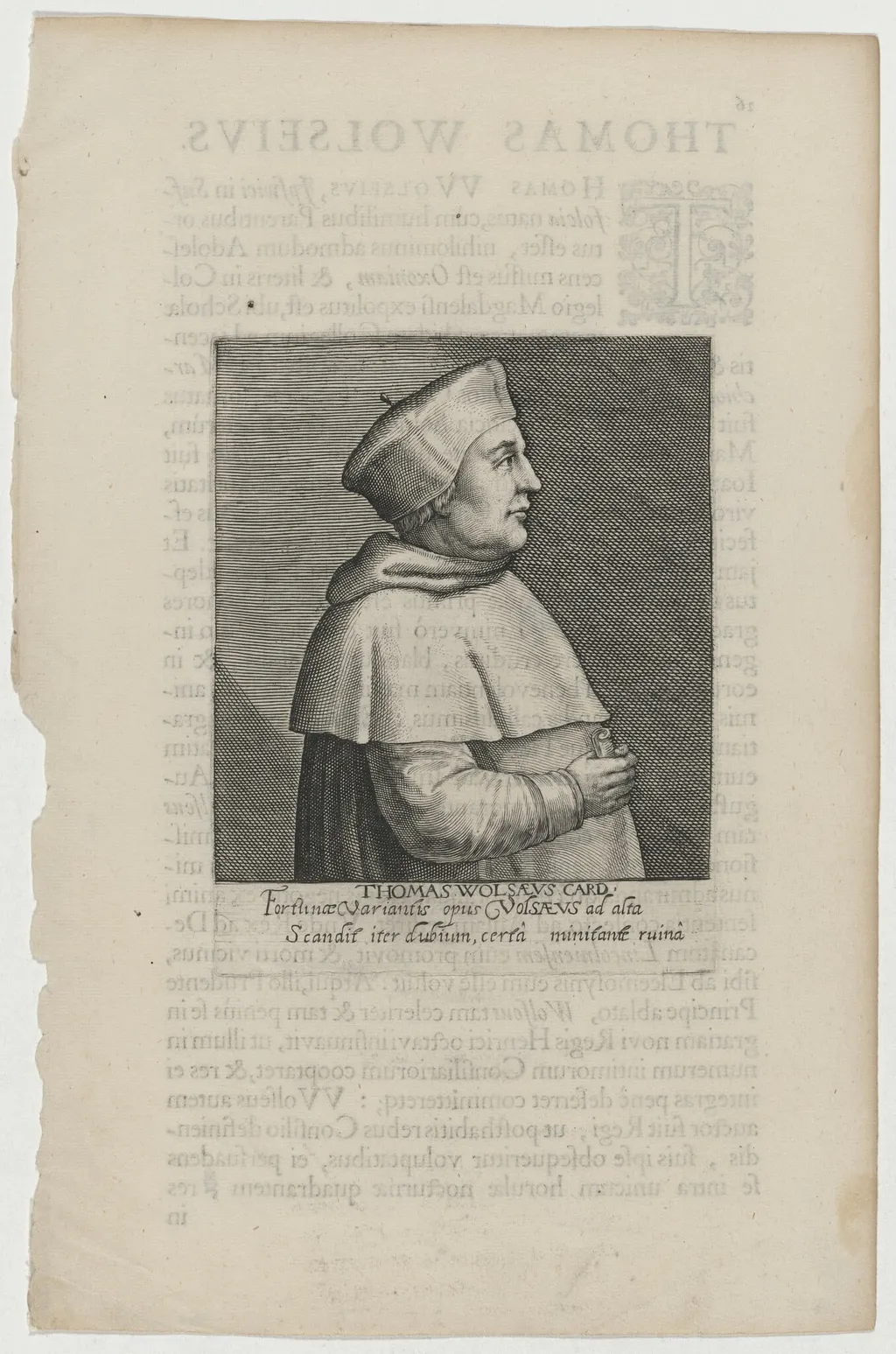
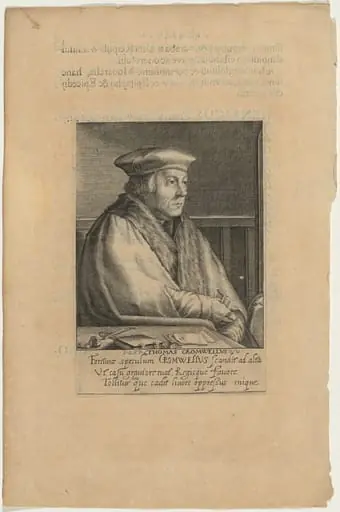
Thomas Wolsey, Cardinal is an ink print by the Baroque artist Willem de Passe. It dates from 1620 and is held in the collection of the National Gallery of Art.
About this work
Overview
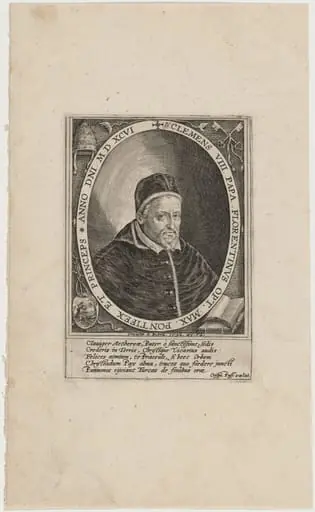
Rendered in fine linear detail, the portrait presents Wolsey in formal ecclesiastical attire against a minimal background.
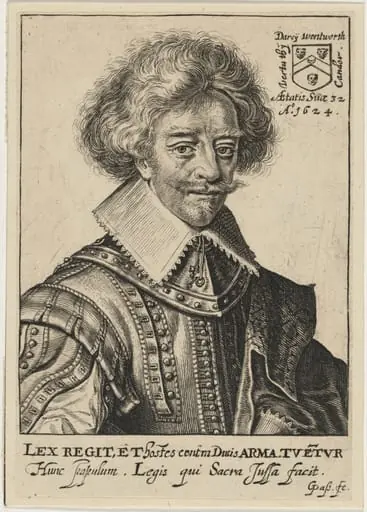
This 1620 engraving by Willem de Passe depicts Thomas Wolsey, the influential English cardinal and statesman. Rendered in fine linear detail, the portrait presents Wolsey in formal ecclesiastical attire against a minimal background. The composition emphasizes his solemn demeanor through controlled shading and precise etching, typical of early 17th-century printmaking techniques used to disseminate likenesses of notable figures.
Subject & Meaning
Wolsey is portrayed as a man of authority and introspection, dressed in the dark robes and tall hat of a cardinal. His hand rests over his chest, suggesting contemplation or piety, while the small object in his other hand may reference his ecclesiastical duties or personal insignia. The plain background focuses attention on his face and posture, reinforcing his status as a powerful religious and political figure of the Tudor era.
Technique & Style
De Passe employed fine, controlled lines to model form and depth, using cross-hatching and subtle tonal gradations to define the contours of Wolsey’s face and garments. The engraving’s clarity and precision reflect the high standards of Northern European printmaking at the time. The surrounding text, set in an old-style font, functions as both identification and decorative framing, common in portrait prints of the period.
History & Provenance
Created in 1620, nearly four decades after Wolsey’s death, the engraving was likely produced to satisfy ongoing interest in his legacy. De Passe, a Dutch artist known for portraiture, worked extensively in England and produced numerous prints of English nobility. This image may have been part of a series documenting prominent figures, circulated among collectors and scholars across Europe.
Context
Wolsey’s fall from favor under Henry VIII and his subsequent death in 1530 left a lasting impression on English political and religious life. By the 1620s, his memory was being revisited amid broader debates about church authority and royal power. De Passe’s portrait, though not from life, contributed to the visual record of Tudor elites, shaping how later generations perceived historical figures through printed imagery.
Legacy
The engraving remains one of the most widely recognized images of Wolsey, serving as a reference in historical texts and museum collections. Its restrained aesthetic and technical precision exemplify the role of print in preserving and transmitting the likenesses of historical figures before photography. Though not a contemporary portrait, it helped solidify his visual identity in public memory.
Artist & collection