Artwork
Anne Bill
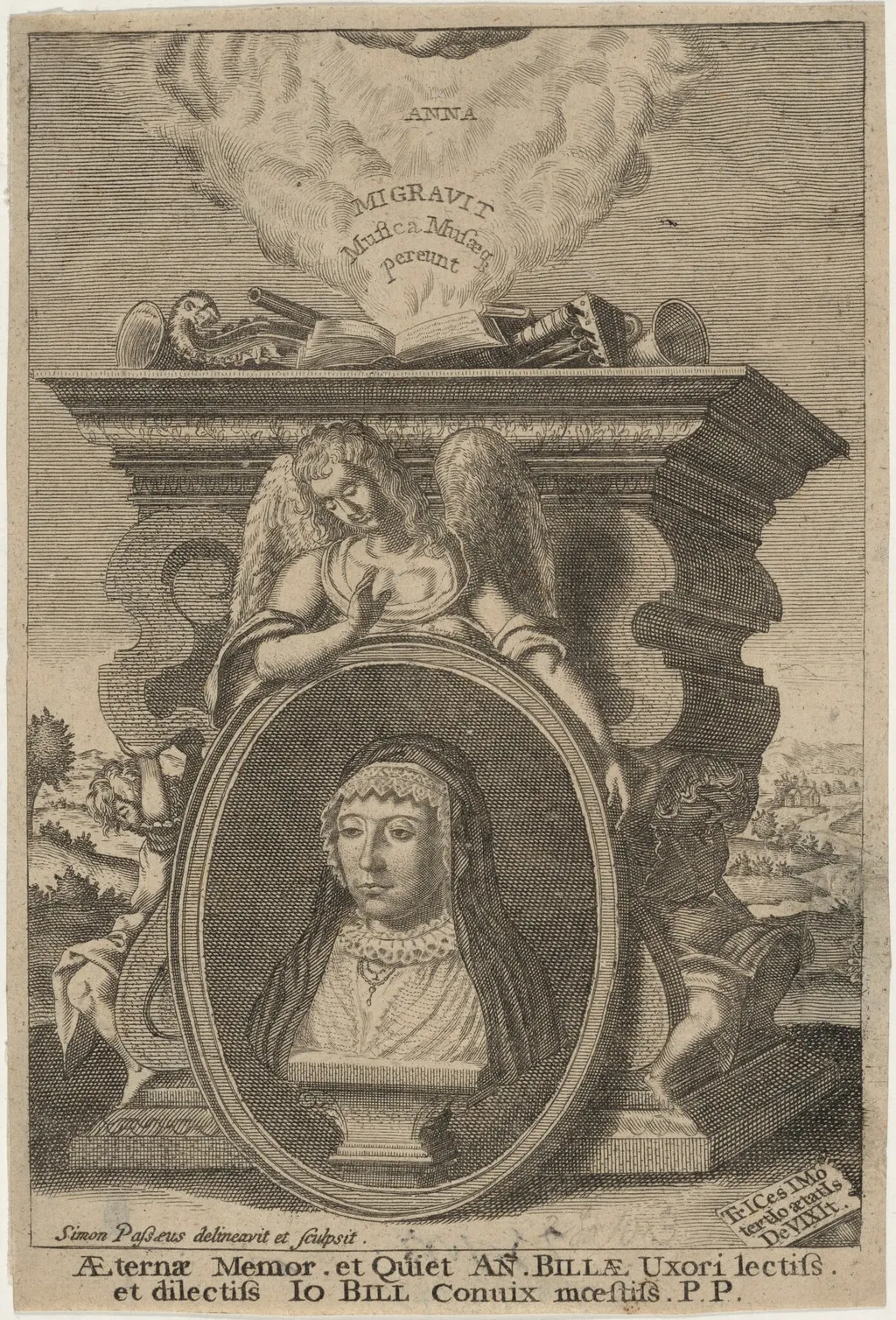
Anne Bill is an ink print by the Renaissance artist Simon van de Passe. It dates from 1621 and is held in the collection of the National Gallery of Art.
About this work
Overview
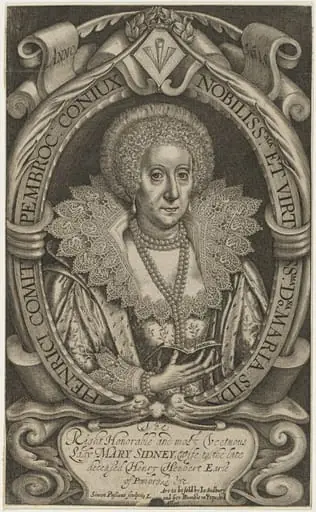
Rendered in fine linear detail, the image centers her face within a circular medallion, enclosed by architectural elements resembling a tomb.
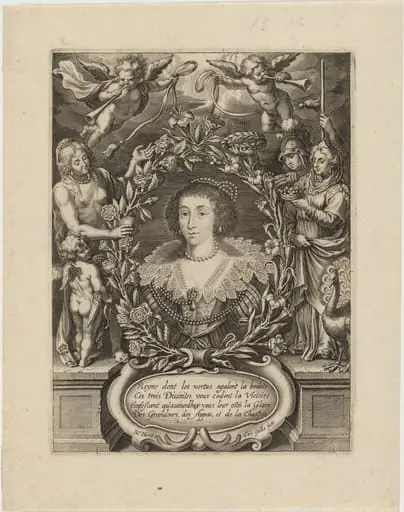
Created in 1621 by Simon van de Passe, this engraving depicts Anne Bill as a memorial portrait. Rendered in fine linear detail, the image centers her face within a circular medallion, enclosed by architectural elements resembling a tomb. The composition is structured with symbolic figures and objects arranged around her, all executed with precise etching techniques characteristic of early 17th-century Northern European printmaking.
Subject & Meaning
Anne Bill is portrayed as a deceased woman, commemorated through allegorical imagery. Two cherubs hold a banner inscribed with Latin text, likely a funerary inscription. Flanking scenes include a book and a ship, possibly symbolizing learning and the voyage of life, while a lion and a tree in the corners suggest strength and enduring memory. The overall design functions as a private memorial, blending personal identity with conventional mourning motifs.
Technique & Style
The work is executed in fine-line engraving, with delicate hatching and cross-contour lines to model form and texture. Fabric, stone, and skin are rendered with meticulous attention to surface detail. The tonal gradations are achieved through controlled etching rather than wash, emphasizing clarity and precision. The composition is tightly framed, reflecting the conventions of portrait engravings used for commemorative purposes in the period.
History & Provenance
The engraving was produced by Simon van de Passe, a Dutch artist known for portrait prints and family genealogical records. It likely served as a keepsake for Anne Bill’s relatives, possibly commissioned shortly after her death. No public record of its early ownership exists, but similar works by van de Passe circulated among elite European families as tokens of remembrance.
Context
In early 17th-century Europe, engraved portraits were common in domestic memorial practices, especially among Protestant families who avoided religious imagery in funerary art. Van de Passe’s work aligns with a tradition of using secular symbols—books, ships, animals—to convey virtue and legacy. These prints were often bound in family albums or displayed privately, reflecting a growing culture of individual commemoration.
Legacy
This engraving exemplifies the role of printmaking in personal mourning during the Renaissance and Baroque eras. Though not widely exhibited, it contributes to the understanding of how private grief was visually articulated through accessible media. Van de Passe’s technique influenced later portrait engravers, and such works remain valuable for studying early modern attitudes toward death and memory.
Artist & collection