Artwork
Anne of Austria
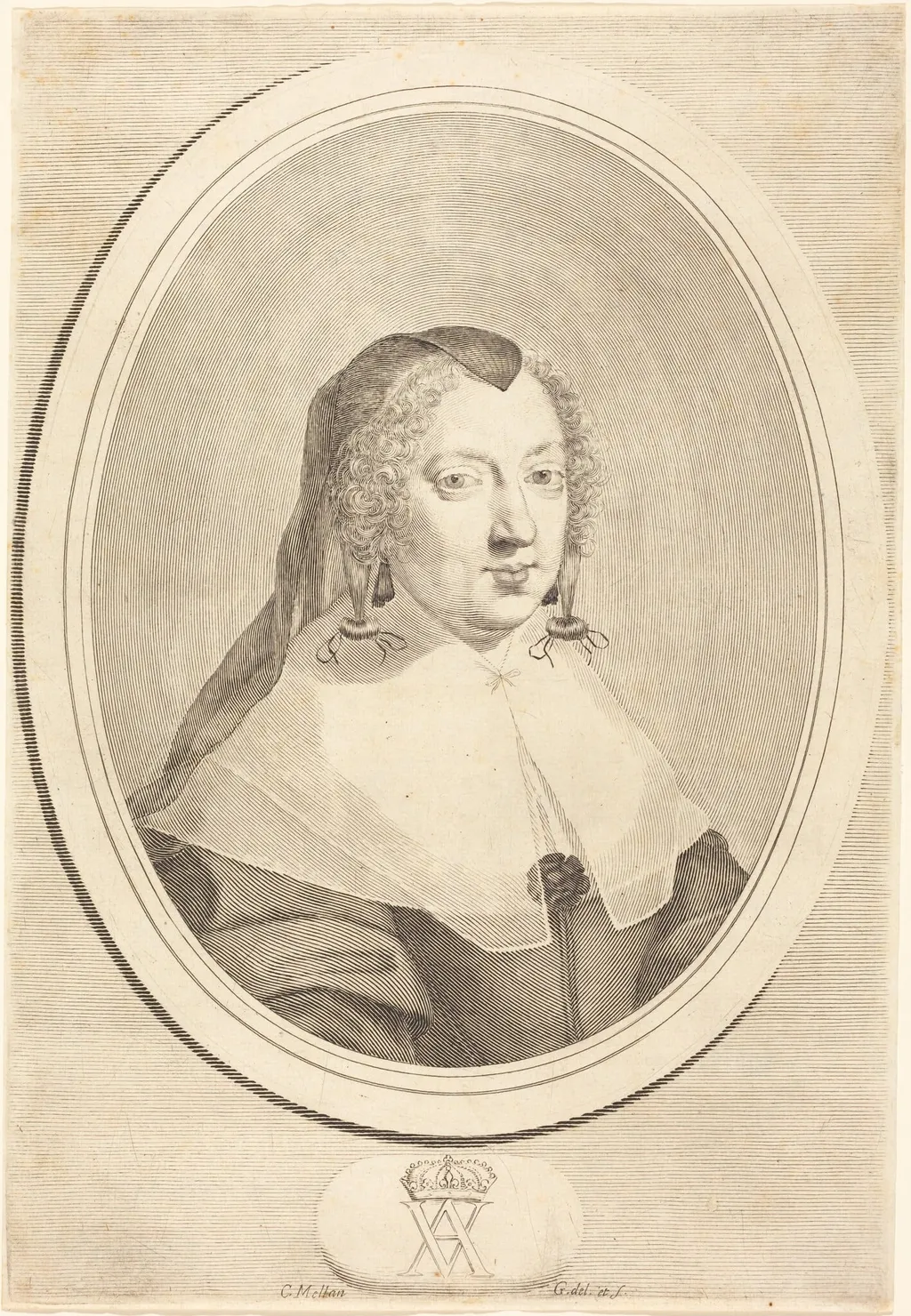
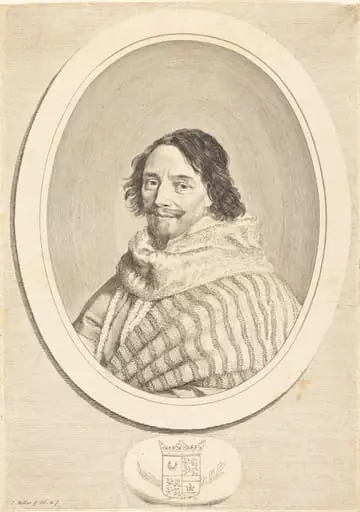
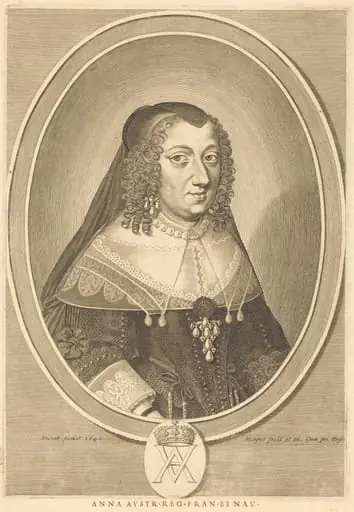
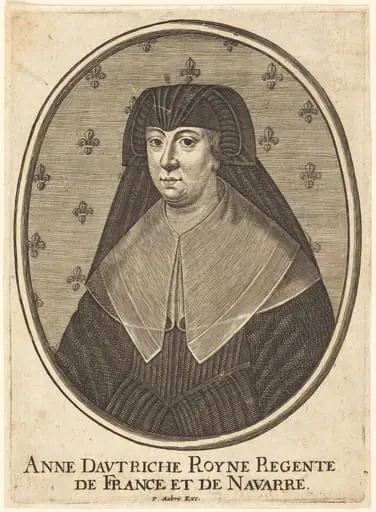
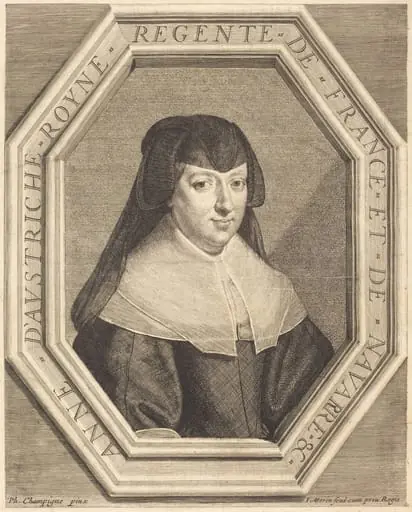
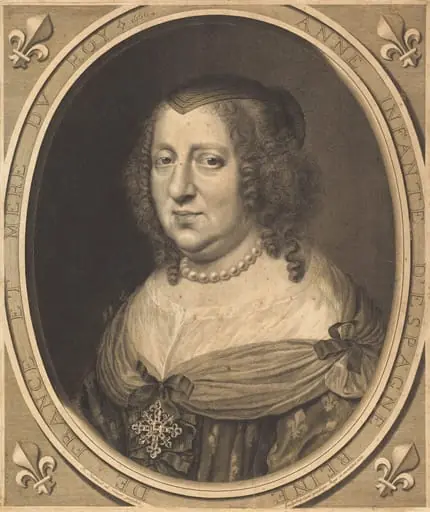
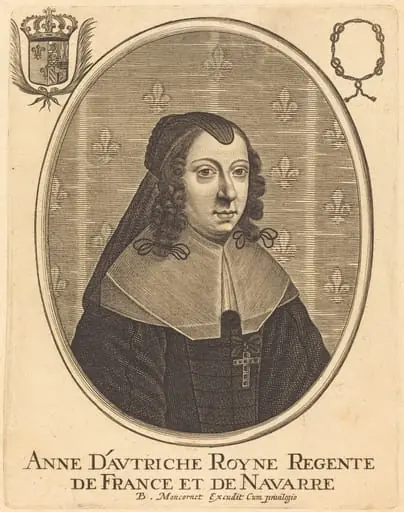
Anne of Austria is an ink print by the Renaissance artist Claude Mellan. It dates from 1643 and is held in the collection of the National Gallery of Art.
About this work
Overview
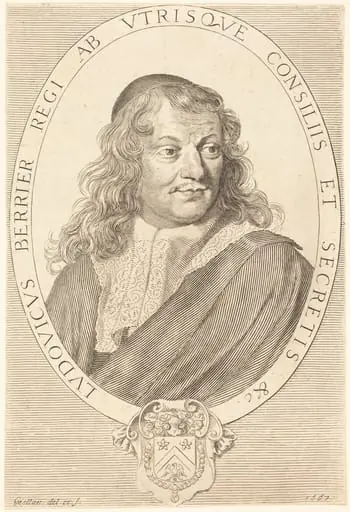
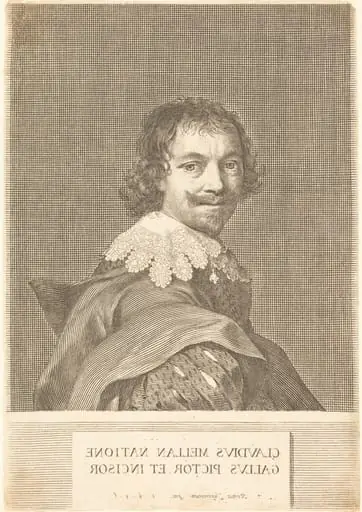
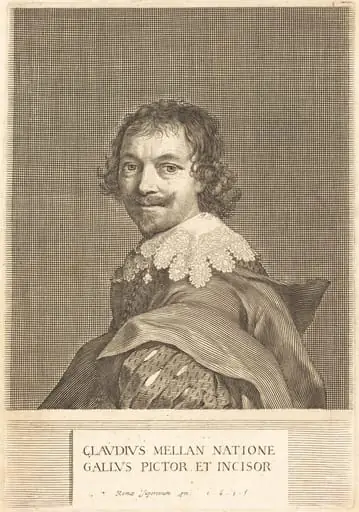
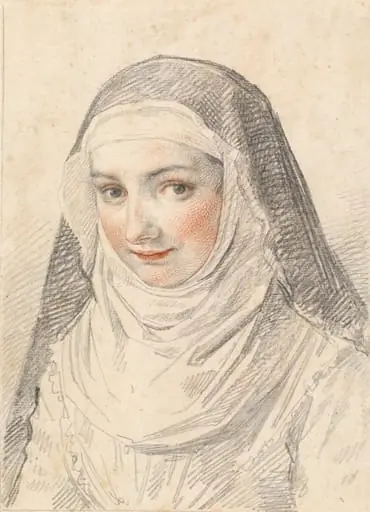
Claude Mellan’s 1643 engraving titled “Anne of Austria” presents a portrait of a woman rendered in black and white on laid paper. The figure is shown with tightly curled hair, a solemn expression, and a high‑necked garment accented by shoulder ruffles. The composition is set against an unadorned background and is enclosed within a rounded frame that features a modest decorative border.
Subject & Meaning
The sitter is identified as Anne of Austria, a prominent royal figure of the 17th‑century French court. The dignified pose and restrained attire reflect the conventions of court portraiture, emphasizing status, decorum, and the sitter’s role within the political and dynastic networks of the period.
Technique & Style
Mellan employed his characteristic fine line work and subtle cross‑hatching to model the hair, fabric folds, and facial features, achieving a nuanced sense of volume without the use of tonal washes. Executed as an engraving, the image was incised into a metal plate, allowing for precise replication and a crisp, linear quality typical of Mellan’s printmaking.
History & Provenance
Created in 1643, the print was likely intended for circulation among the French aristocracy, serving both as a visual record of Anne’s likeness and as a means of reinforcing her public image. Surviving copies have appeared in several European collections, indicating the work’s continued relevance as a documentary portrait of a historic monarch.
Context
The engraving belongs to a broader tradition of 17th‑century French portrait prints, which functioned as both artistic objects and instruments of political propaganda. Mellan’s work aligns with contemporary efforts to standardize royal iconography, providing a consistent visual language for the monarchy across printed media.
Artist & collection