Artwork
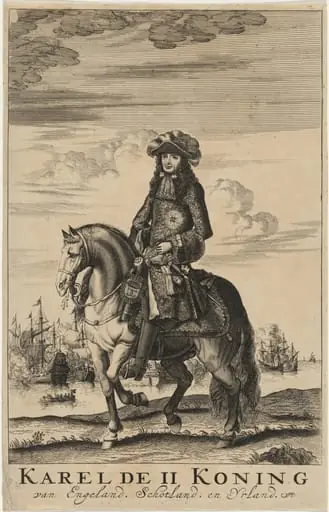
Charles I, King of England, On Horseback
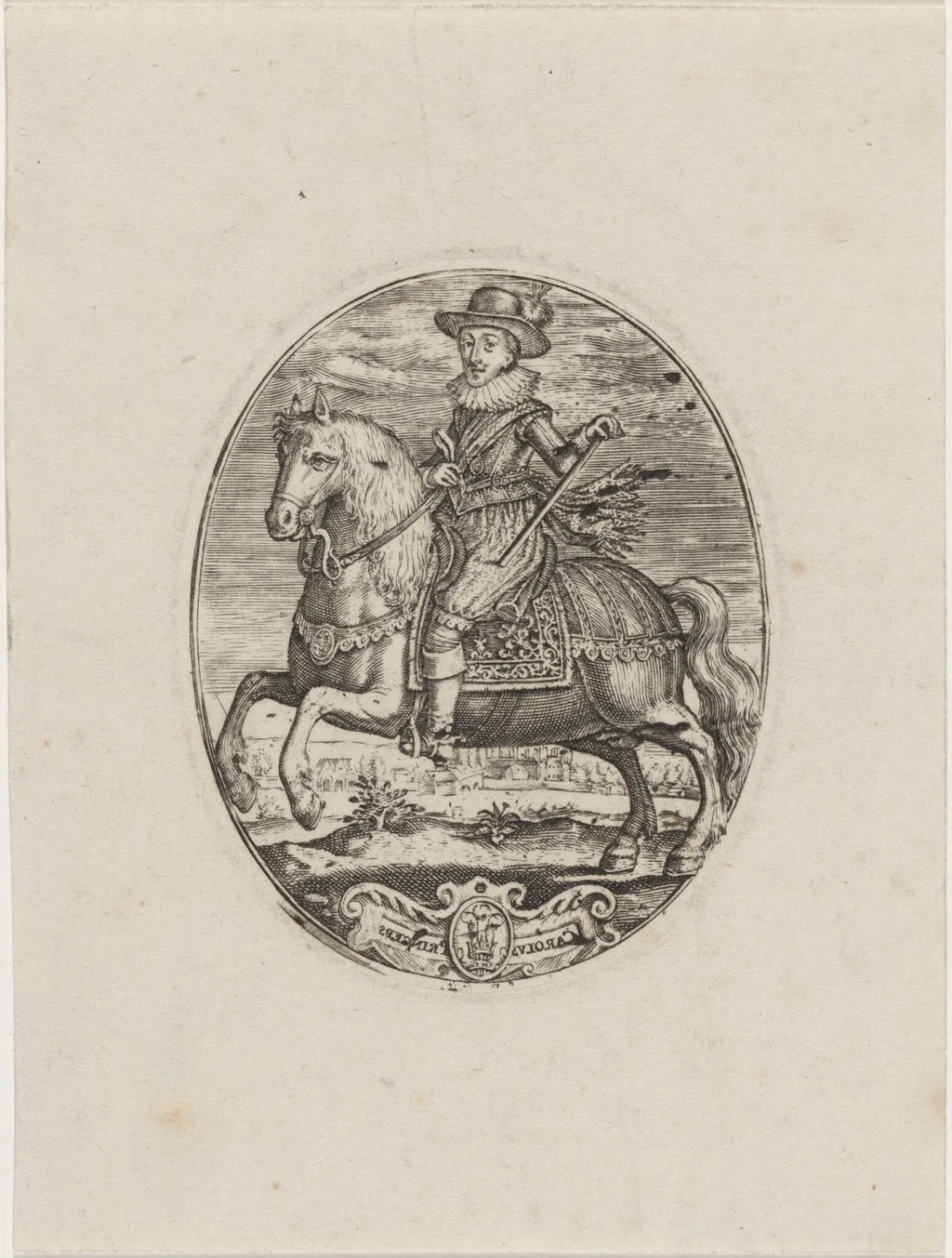
Charles I, King of England, On Horseback is an ink print by the Renaissance artist Simon van de Passe. It dates from 1621 and is held in the collection of the National Gallery of Art.
About this work
Overview
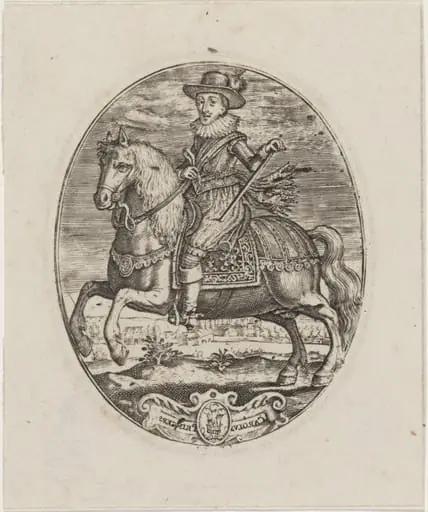
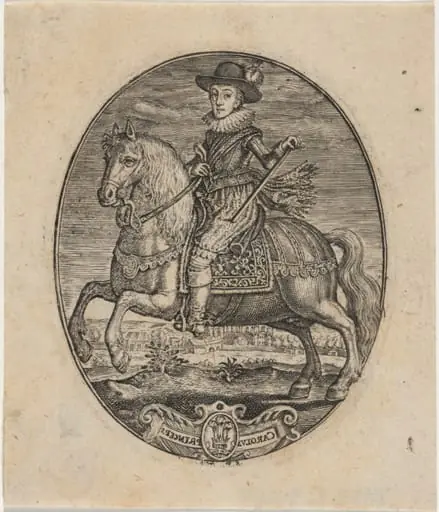
An engraving from 1621, this print was produced from a silver medal designed by Simon van de Passe. It depicts King Charles I mounted on a rearing horse, rendered in fine linear detail typical of early 17th-century medallic art. The image was intended for distribution as a portable, reproducible portrait, emphasizing royal authority through controlled imagery rather than painted grandeur.
Subject & Meaning
The rearing horse suggests dynamism and dominance, while the scepter in his hand reinforces royal power.
The portrait presents Charles I as a sovereign in motion, symbolizing control and command. The rearing horse suggests dynamism and dominance, while the scepter in his hand reinforces royal power. The Latin inscription 'Carolus Rex' and the heraldic border frame him not merely as a man, but as an institution—linking his person to the legitimacy of the monarchy through classical and heraldic conventions.
Technique & Style
Executed in fine-line engraving, the image relies on precise incisions into a metal surface to create tonal contrast and texture. Musculature of the horse and folds of fabric are rendered with sharp, deliberate strokes. The background landscape is minimized to focus attention on the figure, while the border’s ornamental elements reflect the medal’s function as both art and official insignia.
History & Provenance
Created in 1621, the original silver medal was likely commissioned to commemorate Charles’s status as heir apparent before his accession to the throne. Van de Passe, a Dutch engraver active in the English court, produced multiple versions for diplomatic and domestic circulation. The engraving preserved the medal’s design for wider dissemination, ensuring the king’s image reached audiences beyond the aristocracy.
Context
In the early 1620s, European monarchs increasingly used portraiture to project authority across territories. Van de Passe’s work aligns with a tradition of equestrian medals dating to the Renaissance, adapted here to reinforce Stuart legitimacy. The image reflects a moment before civil conflict, when visual propaganda sought to unify perception of the crown’s stability and divine right.
Legacy
This engraving exemplifies how print media extended royal imagery beyond courtly circles, influencing later portraiture and political iconography. Though not widely known today, its formal language—combining classical equestrian pose with heraldic framing—became a template for subsequent British royal portraits in print, shaping public visual expectations of monarchy for generations.
Artist & collection

 Charles I, King of England, On Horseback
 Charles I, King of England, On Horseback
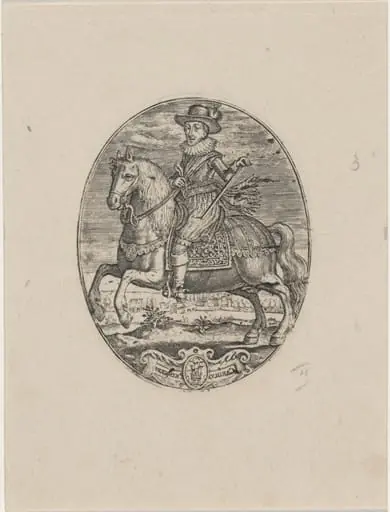 Charles I, King of England, On Horseback
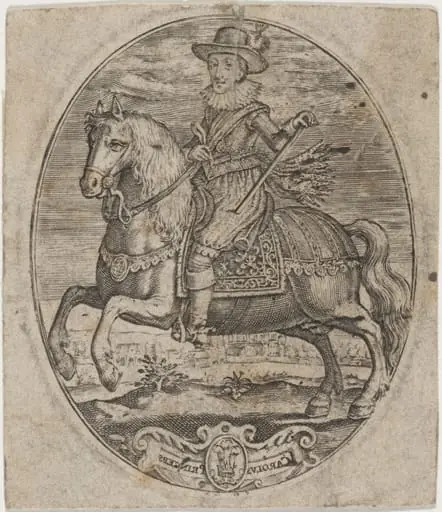 Charles I, King of England, on Horseback
![Charles I, King of England, On Horseback [bottom half], by Simon van de Passe](https://artifactworldgallery.com/img/simon-van-de-passe--charles-i-king-of-england-on-horseback-bottom-half--830ca31b00f1392d-w320.webp) Charles I, King of England, On Horseback [bottom half]
Charles I, King of England, On Horseback [bottom half]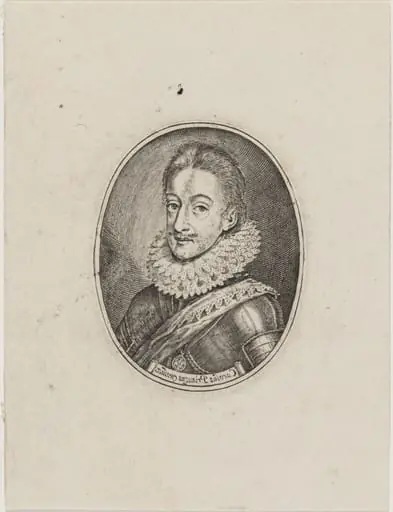 Charles I, King of England
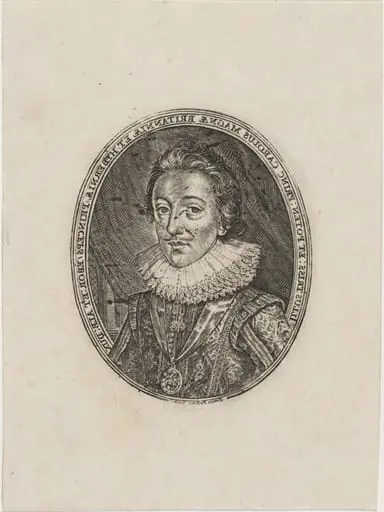
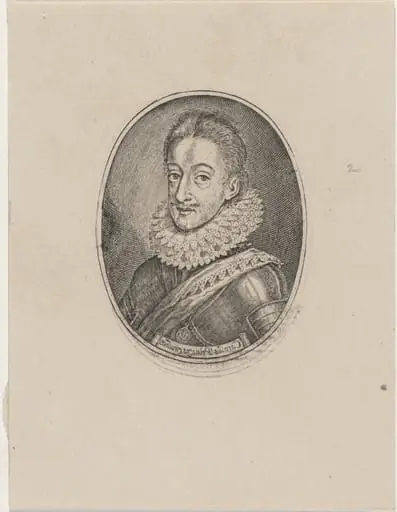
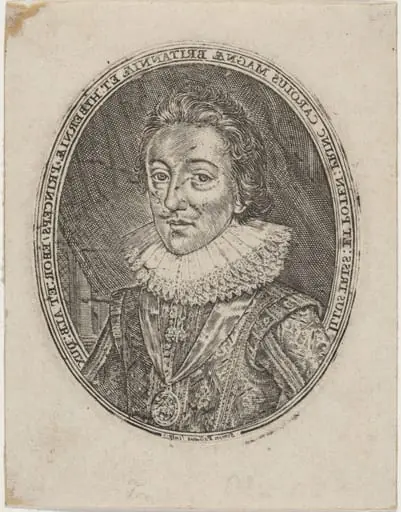
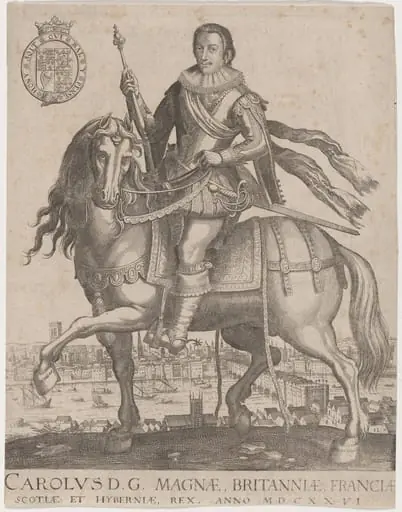 Charles I
 Charles II on Horseback
 Charles I, King of England
 Charles I, King of England
 Charles I, King of England