Artwork
Thomas Egerton, First Viscount of Brackley
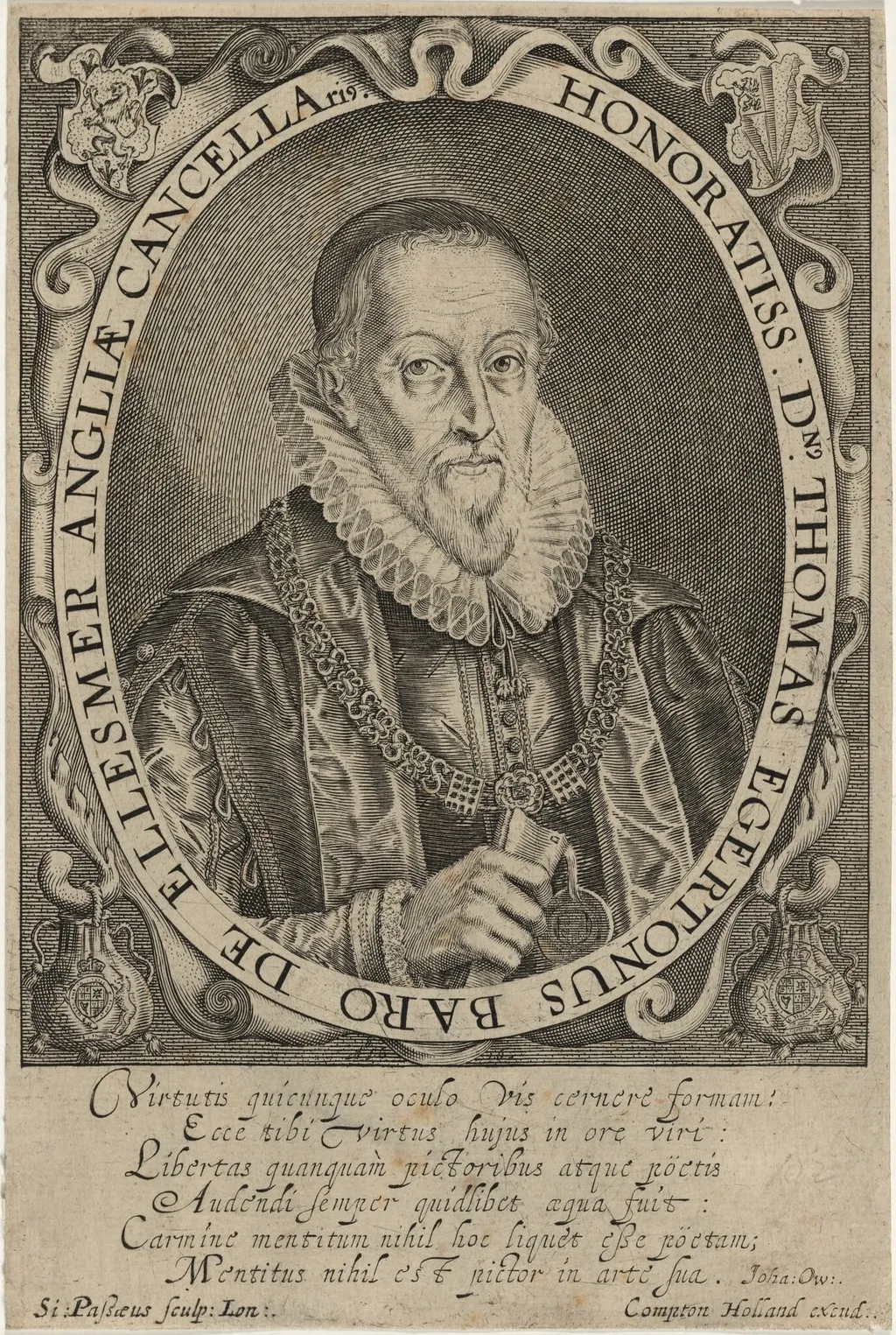
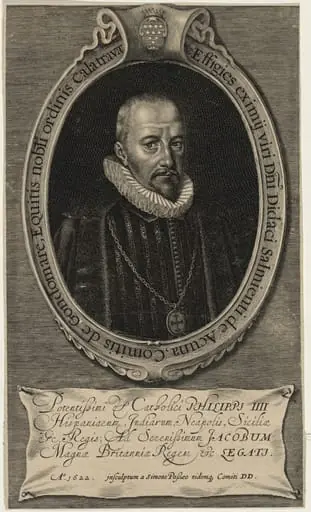
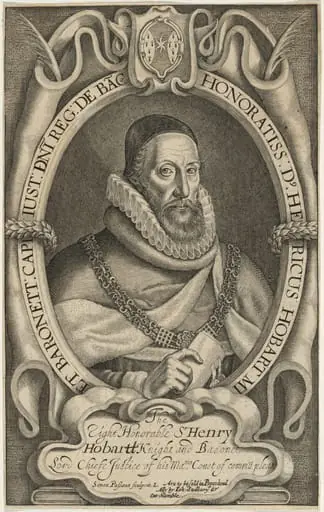
Thomas Egerton, First Viscount of Brackley is an ink print by the Renaissance artist Simon van de Passe. It dates from 1621 and is held in the collection of the National Gallery of Art.
About this work
Overview
Rendered in monochrome, the portrait emphasizes precision and restraint, characteristic of early 17th-century printmaking.
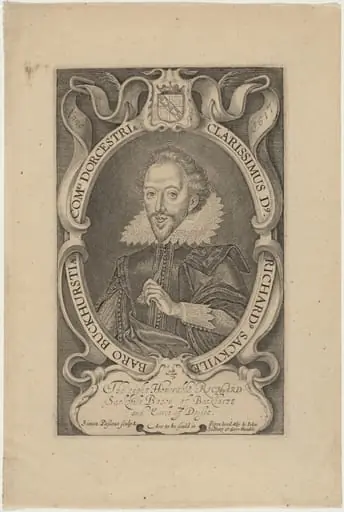
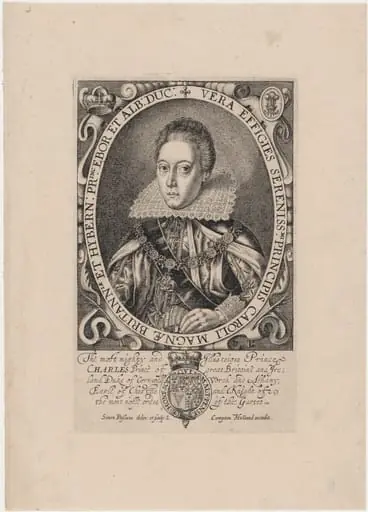
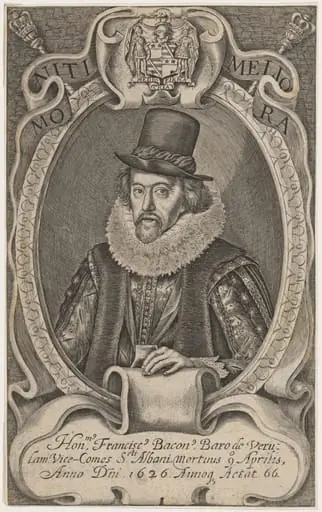
This 1621 engraving by Simon van de Passe depicts Thomas Egerton, First Viscount of Brackley, in formal attire. Rendered in monochrome, the portrait emphasizes precision and restraint, characteristic of early 17th-century printmaking. The image is enclosed within an ornate oval frame bearing Latin inscriptions, reinforcing the subject’s status and ideals. The plain background directs focus to the figure’s facial expression and attire.
Subject & Meaning
Thomas Egerton, a prominent legal and political figure, is portrayed with solemn dignity. His white ruff and gold chain signify his high rank and official roles, including Lord Chancellor. The Latin text surrounding the portrait extols virtues such as truth and liberty, aligning his public identity with moral authority. The composition avoids ornamentation, suggesting a preference for gravitas over flamboyance.
Technique & Style
Simon van de Passe employed fine, controlled lines to model form and texture, using cross-hatching to achieve subtle gradations of light and shadow. The ruff’s lace and the chain’s links are rendered with meticulous detail, demonstrating mastery of the burin tool. The oval border and Latin script reflect a tradition of humanist portraiture, where textual and visual elements jointly convey identity and virtue.
History & Provenance
Created in 1621, the engraving likely served as a formal portrait for distribution among patrons or institutions. Van de Passe, a Dutch artist active in England, was known for producing engraved portraits of nobility. The work entered public collections in the 19th century and is now held in major print repositories, preserving its role as a historical document of early Stuart elite culture.
Context
In early 17th-century England, engraved portraits were tools of political and social representation. As Lord Chancellor, Egerton’s image would have circulated to affirm his authority. The use of Latin and classical virtues reflects Renaissance humanist ideals still influential in courtly circles. Such prints bridged the gap between personal likeness and public persona in an era before photography.
Legacy
The engraving remains a clear example of how printmaking extended the reach of portraiture beyond painted originals. Van de Passe’s technique influenced later generations of engravers in Britain and the Netherlands. While Egerton’s political legacy has faded, this image endures as a precise record of how power was visually articulated in Jacobean England.
Artist & collection