Artwork
Francis White, D.D., Bishop of Ely
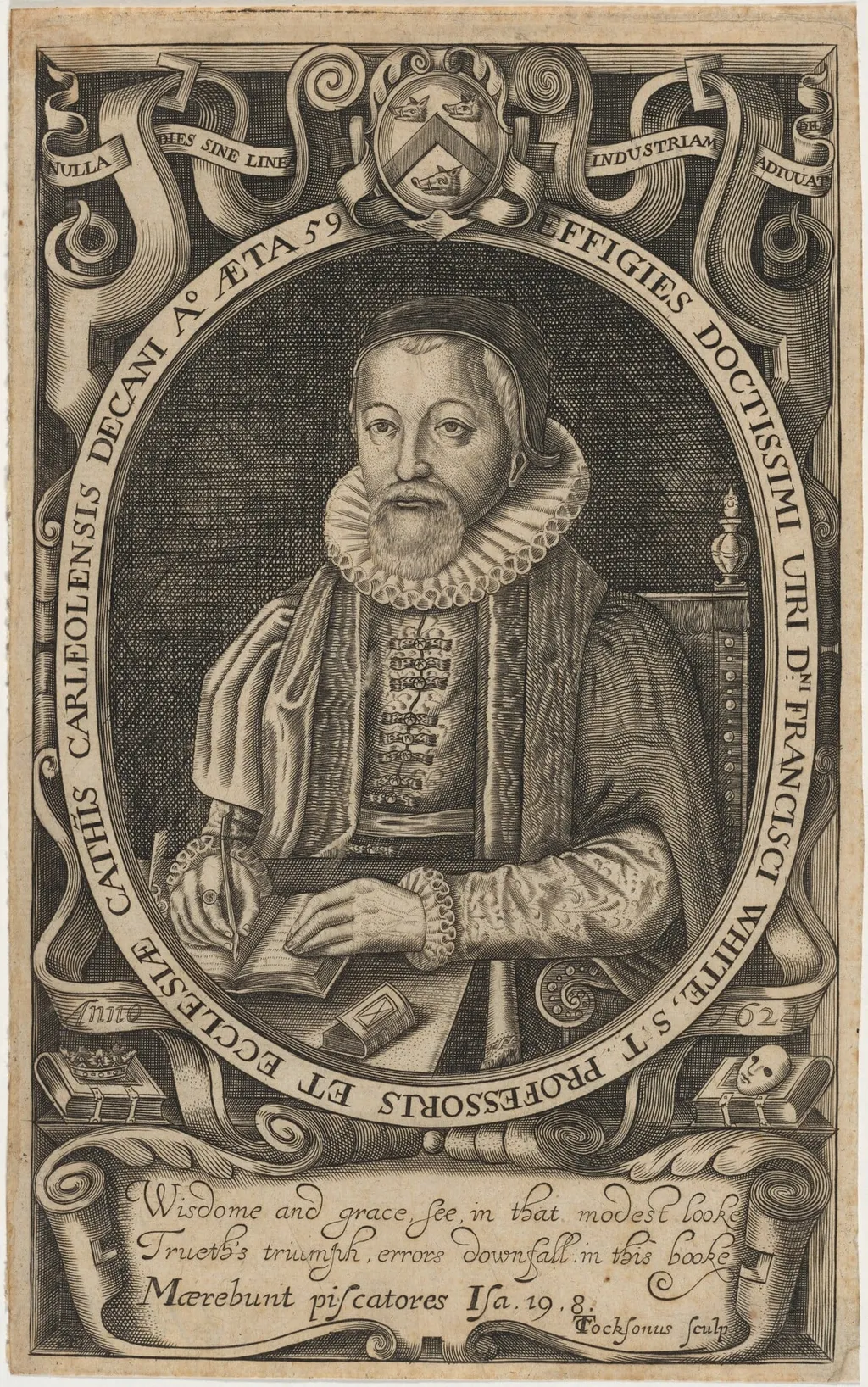
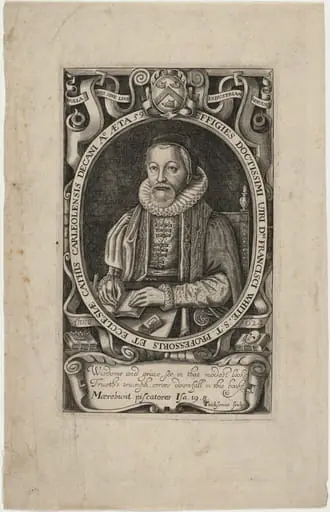
Francis White, D.D., Bishop of Ely is an ink print by the Baroque artist Thomas Cockson. It dates from 1624 and is held in the collection of the National Gallery of Art.
About this work
Overview
Thomas Cockson’s 1624 engraving presents Francis White, Doctor of Divinity and Bishop of Ely, in a formal portrait. Rendered in black ink, the image shows White seated, his long white beard and ruff collar marking his clerical status, while he holds a book in one hand and a glove in the other.
Subject & Meaning
The bishop is depicted with symbols of learning and authority: the open book suggests theological scholarship, and the glove may allude to his role in ecclesiastical governance. Latin inscriptions framing the portrait invoke virtues such as wisdom, grace, and the triumph of truth, reinforcing his religious and moral standing.
Technique & Style
Cockson employs the fine line work typical of early‑17th‑century engravings, using intricate hatching to model the figure’s features and the elaborate ornamental border. The precision of the incised lines creates a clear contrast between the dark foreground and the white paper background, characteristic of the period’s printmaking.
History & Provenance
Created in 1624, the print was likely issued shortly after White’s appointment as Bishop of Ely, serving both as a commemorative portrait and a means of disseminating his likeness among contemporaries. Surviving copies are found in several British institutional collections, indicating its distribution among ecclesiastical and scholarly circles.
Context
The engraving belongs to a broader tradition of portrait prints that documented high‑ranking clergy in post‑Elizabethan England. Such images functioned as visual affirmations of the Church of England’s hierarchy during a time of religious consolidation under King James I.
Artist & collection