Artwork
Sir Thomas More
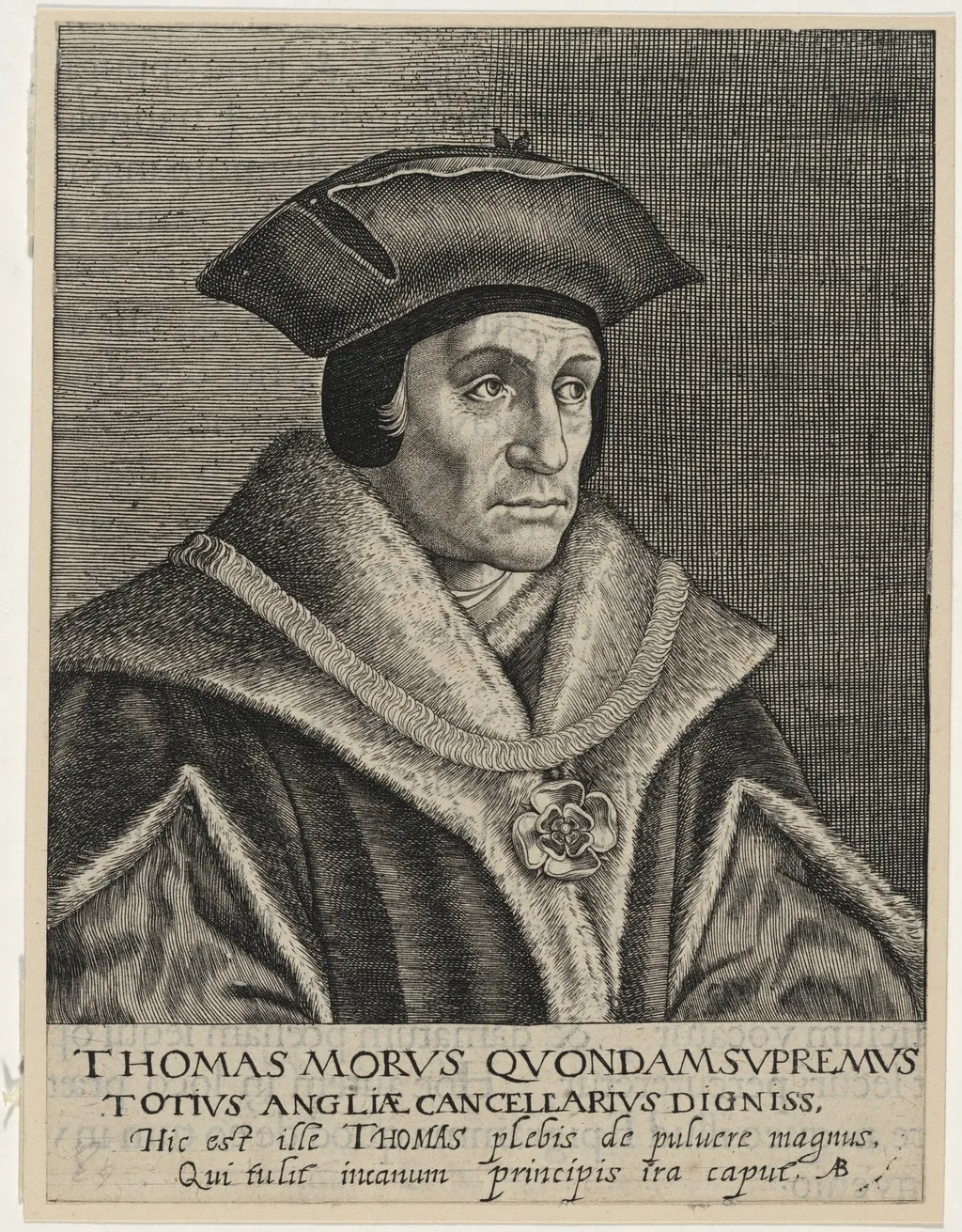
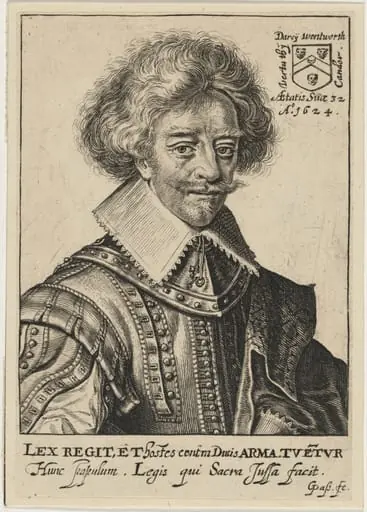
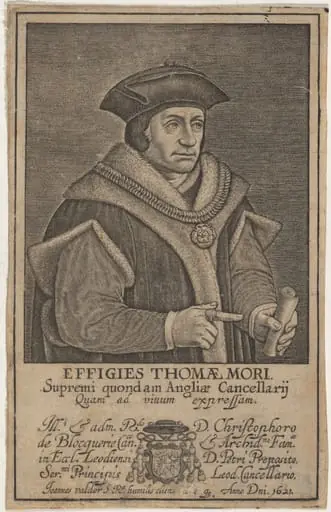
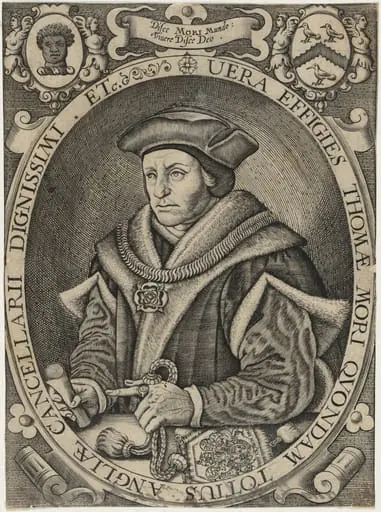
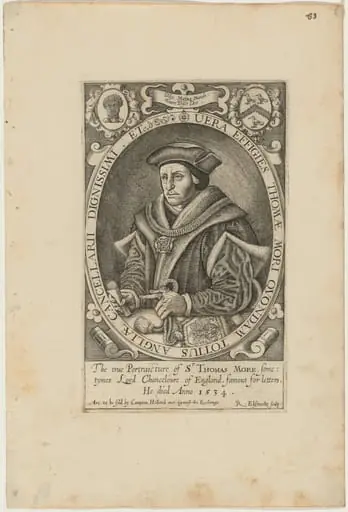
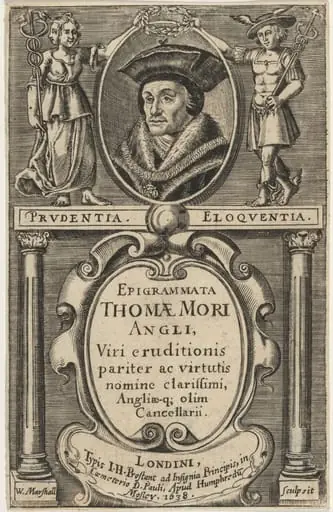
Sir Thomas More is an ink print by the Baroque artist Willem de Passe. It dates from 1620 and is held in the collection of the National Gallery of Art.
About this work
Overview
The composition emphasizes facial expression and textile texture, typical of early 17th-century Northern European portraiture.
An engraving from 1620 by Willem de Passe, this portrait depicts Sir Thomas More, the English statesman and scholar. Rendered in fine linear detail, the image captures More in formal attire, facing right against a dark, neutral background. The composition emphasizes facial expression and textile texture, typical of early 17th-century Northern European portraiture. The work was produced as a reproductive print, intended for wider dissemination rather than as a unique artwork.
Subject & Meaning
Sir Thomas More, executed in 1535 for refusing to acknowledge Henry VIII as head of the Church of England, was remembered as a symbol of moral conviction. This portrait, made nearly a century after his death, reflects his enduring reputation for integrity. The solemn gaze and restrained demeanor convey dignity and resolve, aligning with posthumous hagiographic traditions that elevated him as a figure of principled resistance.
Technique & Style
De Passe employed fine, controlled lines to render the textures of More’s fur-lined coat and hat, with delicate hatching defining wrinkles and folds. The contrast between the dark background and the softly lit face enhances three-dimensionality. The style is precise and restrained, prioritizing accuracy over dramatic flair. While influenced by Baroque sensibilities in its chiaroscuro, the engraving remains grounded in the tradition of Northern European printmaking rather than overt theatricality.
History & Provenance
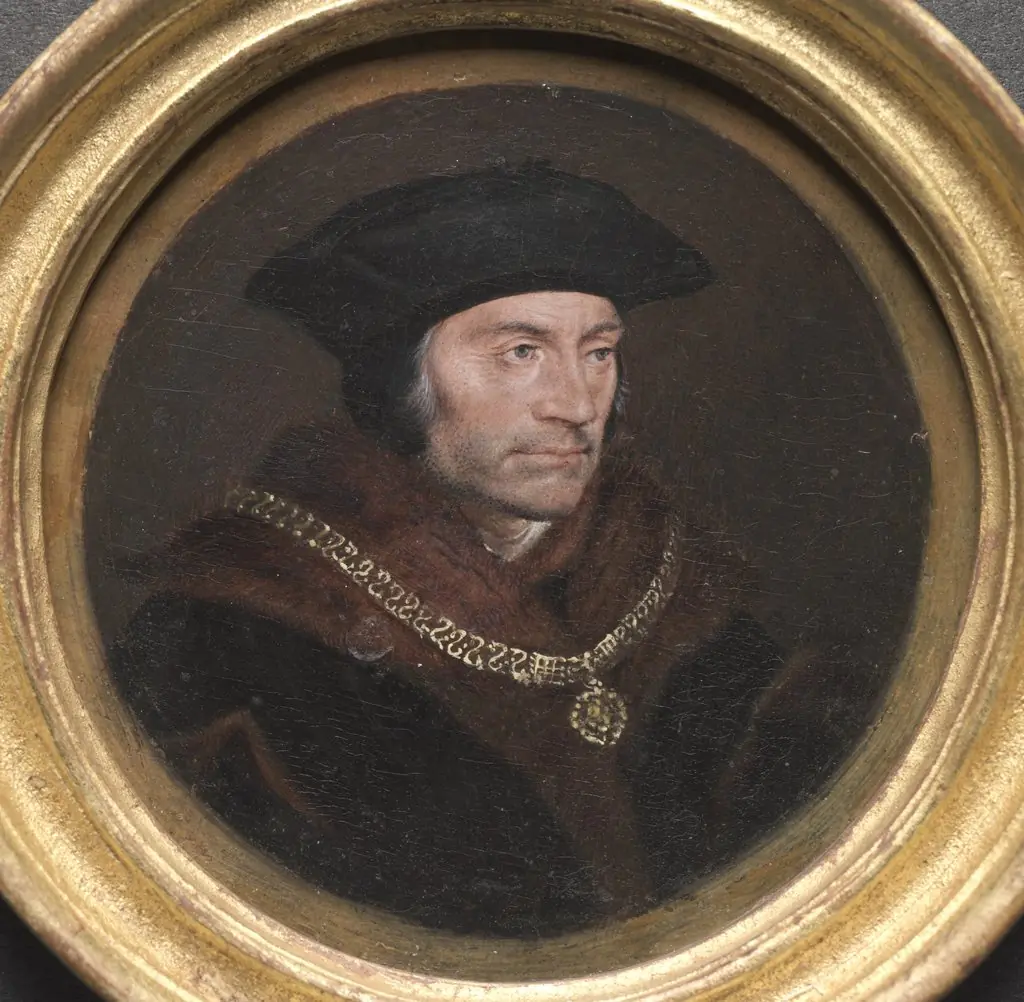
Created in 1620, the engraving was likely made from an earlier portrait or drawing, possibly based on a lost original by Hans Holbein the Younger. De Passe, a Dutch engraver active in England, specialized in reproducing portraits of notable figures for European audiences. The print circulated widely in scholarly and aristocratic circles, contributing to More’s posthumous image as a learned and steadfast statesman.
Context
In the early 17th century, engraved portraits served as tools of memory and political symbolism, especially for figures associated with religious conflict. More’s status as a Catholic martyr made him a potent icon in Counter-Reformation circles. De Passe’s print, produced in the Protestant Netherlands, nonetheless reflects the transnational reverence for More’s intellectual and moral legacy, transcending religious divides in its emphasis on personal conviction.
Legacy
This engraving became one of the most widely circulated images of Sir Thomas More, shaping visual perceptions of him for centuries. It was reprinted and adapted in later biographies and historical texts, anchoring his likeness in public consciousness. Though not original to his lifetime, the portrait’s clarity and gravitas ensured its enduring role as a standard representation of the man behind the historical narrative.
Artist & collection