Artwork
Prince Henry with the Pike
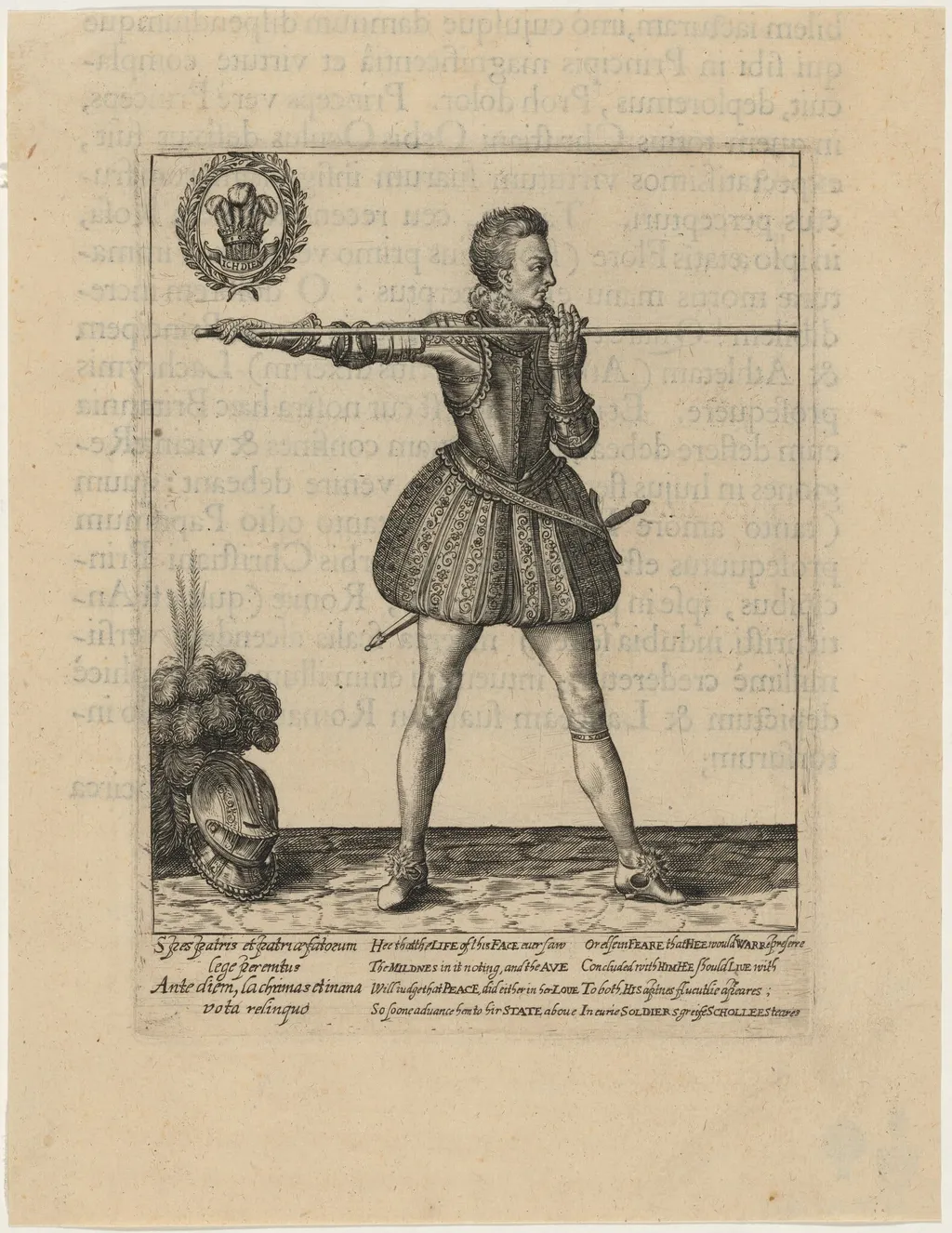
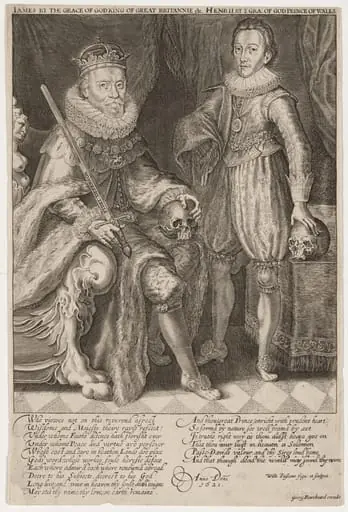
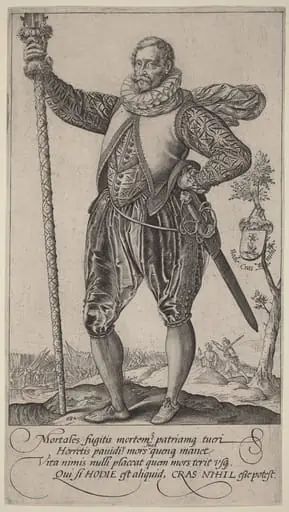
Prince Henry with the Pike is an ink print by the Baroque artist Willem de Passe. It dates from 1620 and is held in the collection of the National Gallery of Art.
About this work
Overview
Willem de Passe’s 1620 engraving titled Prince Henry with the Pike portrays a figure in elaborate armor, holding a long pole weapon. The composition includes a diminutive seated figure gazing upward, set against an unadorned background that is framed by a decorative wreath and an inscription in Latin positioned above the principal subject’s head.
Subject & Meaning
The central figure is identified as Prince Henry, depicted in ceremonial armor that emphasizes status and martial readiness. The presence of the smaller, attentive figure suggests a didactic element, perhaps representing a page or attendant, while the Latin motto surrounding the image implies a moral or political message intended for a learned audience.
Technique & Style
Executed through copper engraving, de Passe incised fine lines into a metal plate, allowing for intricate detailing of the armor’s patterned surfaces and the texture of the boots. The stark background focuses attention on the figures, and the precise line work reflects the early‑17th‑century Northern European printmaking tradition that prized clarity and decorative richness.
History & Provenance
Created in 1620, the print was likely commissioned to commemorate or promote the young prince’s martial virtues. It circulated as a single‑sheet print, a common format for portraiture and propaganda in the period, and survives in several museum collections, attesting to its role as a visual record of princely representation in early modern Europe.
Artist & collection