Artwork
Lady Jane Grey
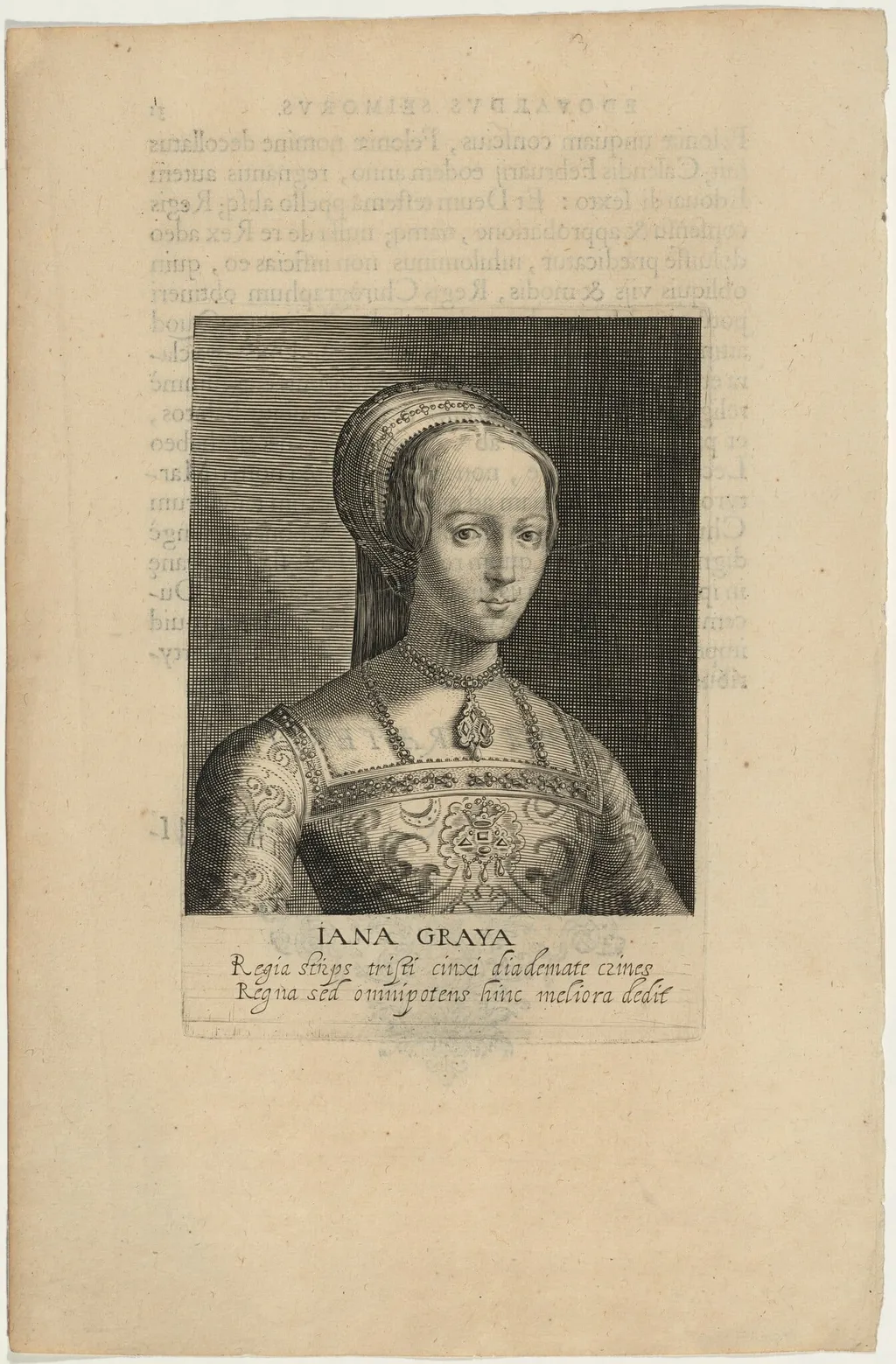
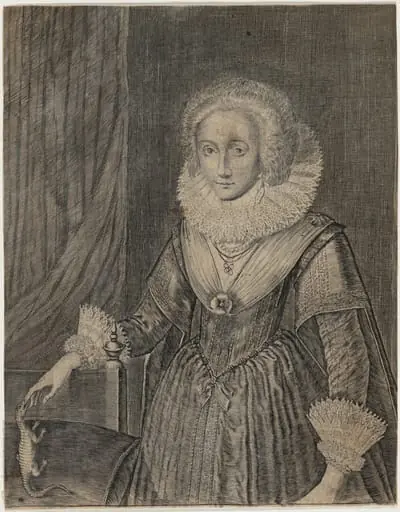
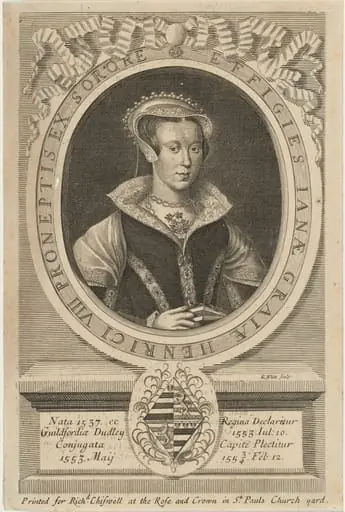
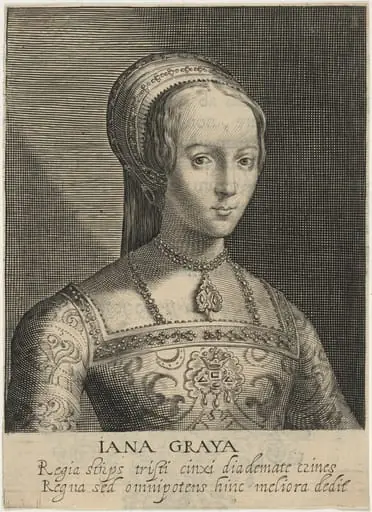
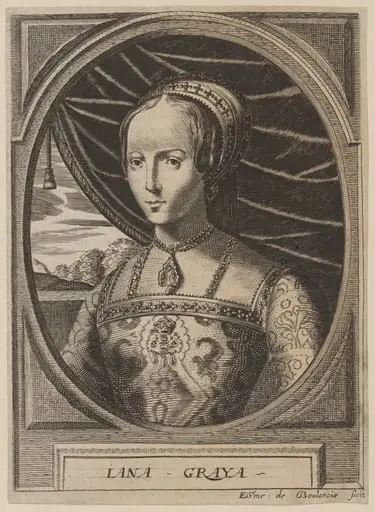
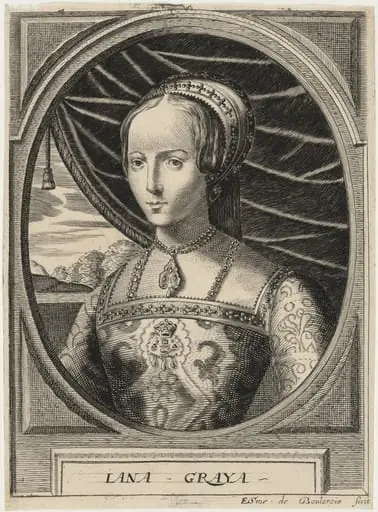
Lady Jane Grey is an ink print by the Baroque artist Willem de Passe. It dates from 1620 and is held in the collection of the National Gallery of Art.
About this work
Overview
Willem de Passe’s 1620 engraving presents a portrait of Lady Jane Grey, rendered in monochrome. The sitter is depicted with a composed demeanor, wearing a richly decorated hat and a dark, patterned gown, complemented by a modest necklace. Her hair is neatly gathered, and she gazes directly at the viewer, conveying a sense of solemnity.
Subject & Meaning
The image captures the brief reign and tragic fate of the nine‑day queen of England, Lady Jane Grey. By portraying her with dignified attire and a steady expression, the print emphasizes her noble lineage and the gravity of her historical role, despite her short tenure on the throne.
Technique & Style
Created through the engraving process, de Passe incised the composition onto a copper plate, allowing for fine line work and intricate detailing of the dress’s patterns and the hat’s ornamentation. The stark black‑and‑white palette highlights texture and contrast, characteristic of early 17th‑century printmaking.
History & Provenance
The print bears the inscription “Iana Graya” and accompanying Latin text, suggesting it was intended for inclusion in a bound volume or as a standalone portrait. Surviving copies show faded marginal notes on the paper edges, indicating its original context within a larger manuscript or collection of royal portraits.
Artist & collection