Artwork
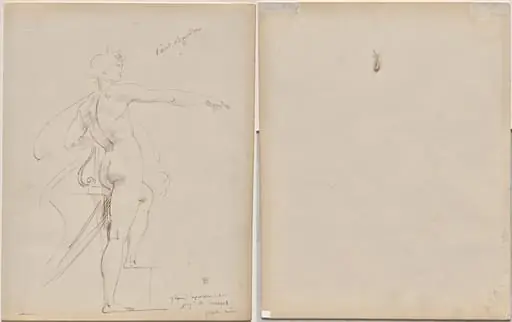
Study of Apollo for Marsyas (recto)
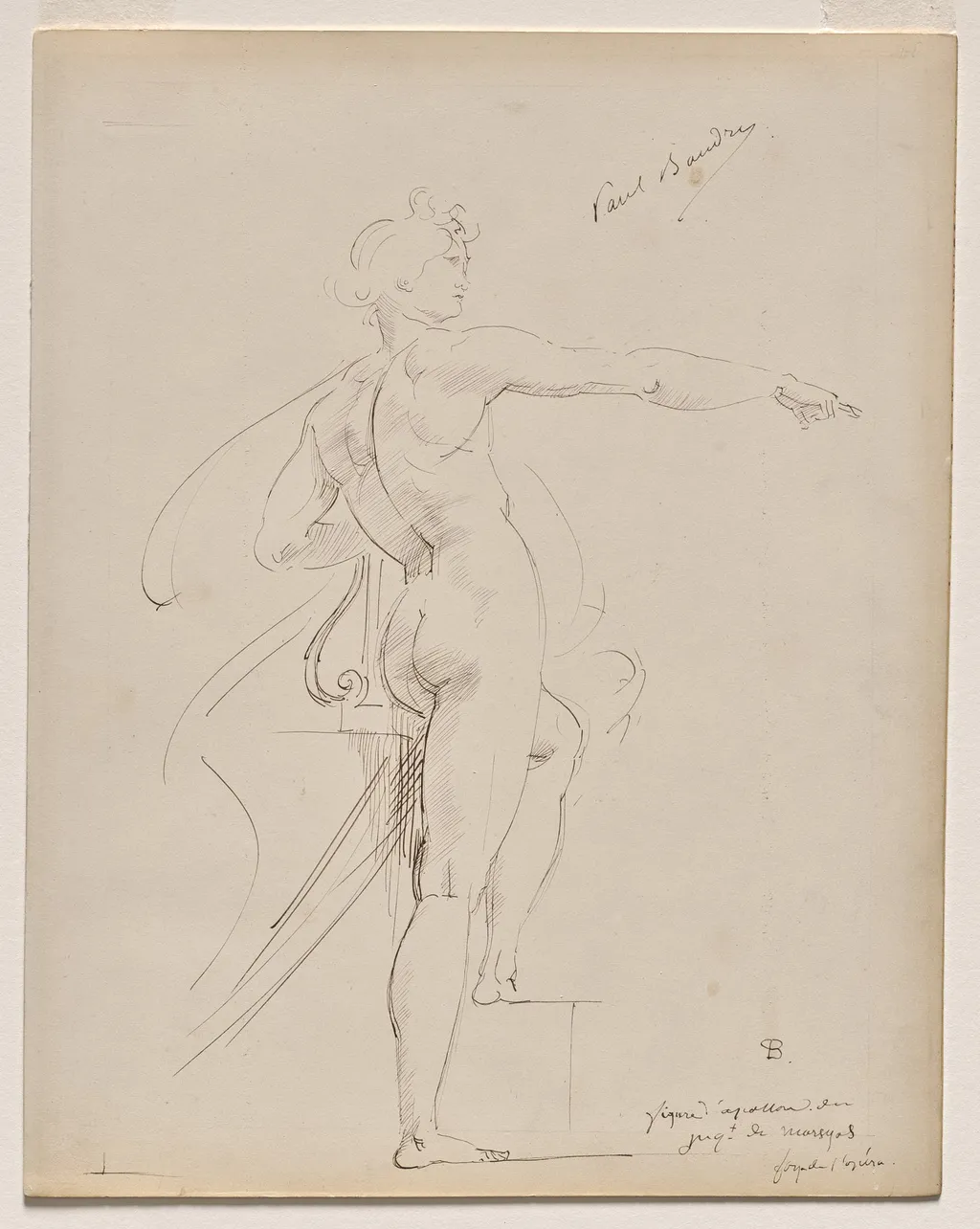
Study of Apollo for Marsyas (recto) is a drawing by the Impressionist artist Paul-Jacques-Aimé Baudry. It dates from 1864 and is held in the collection of the Cleveland Museum of Art.
About this work
You can learn more about this style by looking at the work of Paul Baudry (French, 1828–1886).
This drawing shows the god Apollo from behind.
It was made for a scene where Apollo points to the satyr Marsyas.
The artist was inspired by Michelangelo's work, which he saw at the Sistine Chapel.
The pose and figure type are similar to Michelangelo's sculpture of David.
This suggests that the artist was studying and learning from other famous works.
You can learn more about this style by looking at the work of Paul Baudry (French, 1828–1886).
Overview
In 1864 Paul‑Jacques‑Aimé Baudry prepared a preparatory drawing for a ceiling composition destined for the Grand Foyer of the newly built Paris Opéra. The study portrays the god Apollo seen from the rear, positioned to indicate the satyr Marsyas in the narrative of their famed musical contest.
Subject & Meaning
The figure represents Apollo, the Greek deity of music and the arts, captured at the moment he gestures toward Marsyas, the challenger who dared to rival the god’s lyre with his own aulos. The composition anticipates the dramatic tension between divine authority and mortal audacity that the completed fresco would later depict.
Technique & Style
Baudry rendered the study in a confident, linear drawing, emphasizing the muscular torso and contrapposto stance that echo Michelangelo’s sculptural language. The back‑view of Apollo mirrors the pose of Michelangelo’s David, suggesting a deliberate borrowing of Renaissance ideals of heroic anatomy.
History & Provenance
The drawing was produced during Baudry’s research trip to Italy, where he examined Michelangelo’s frescoes in the Sistine Chapel and the marble David in Florence. These encounters informed his design for the Opéra ceiling, a commission that linked French academic painting with the legacy of High Renaissance masters.
Context
Commissioned by the French Empire’s cultural program, the Grand Foyer ceiling was intended to celebrate the grandeur of the new opera house. By invoking Michelangelo’s visual vocabulary, Baudry aligned the French project with the celebrated tradition of monumental public art that had shaped European aesthetic standards since the sixteenth century.
Own this work as a print
Artist & collection
Artist
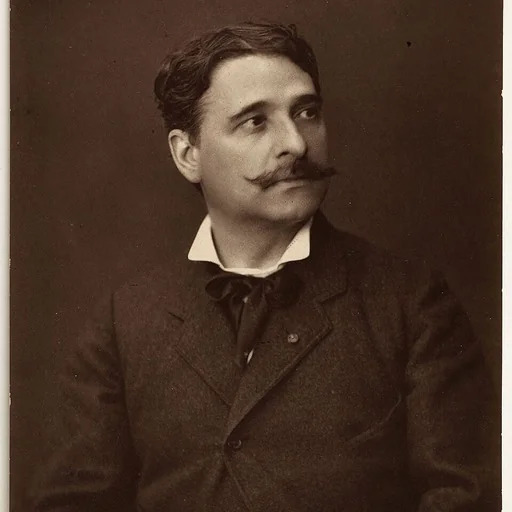
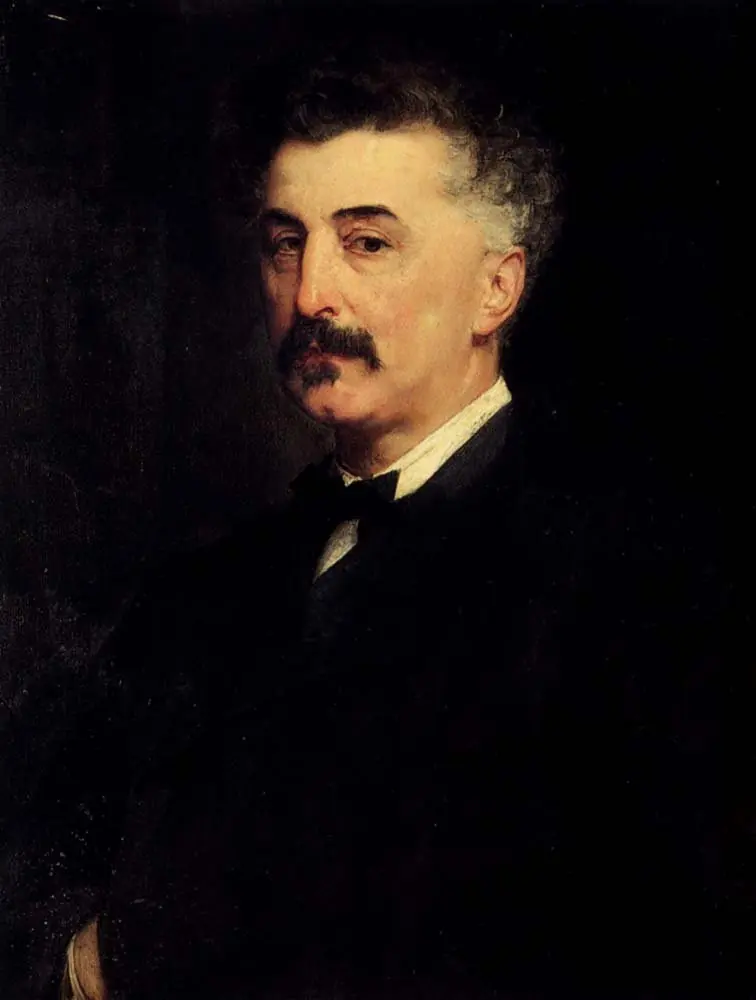
Paul-Jacques-Aimé Baudry (1828–1886) was a French artist, born in La Roche-sur-Yon.


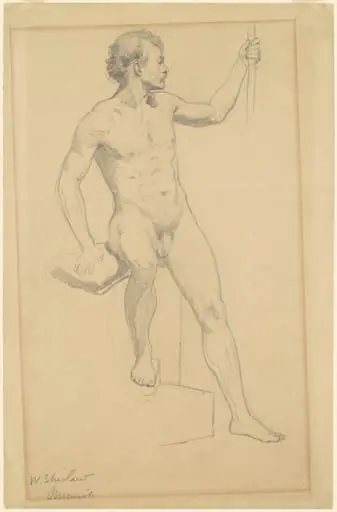 Male Nude
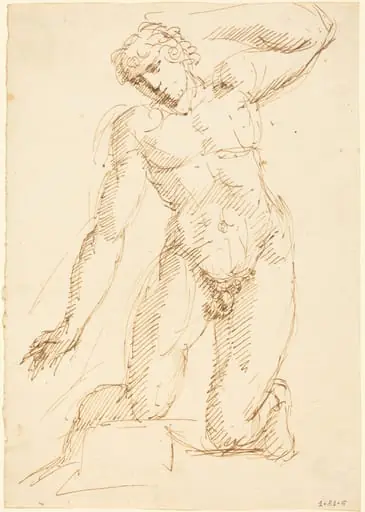 A Male Nude Kneeling
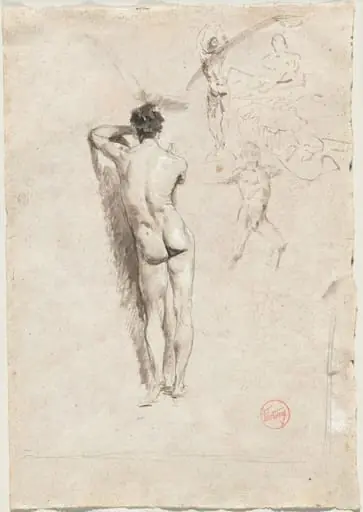 Study of a Male Nude and Other Studies
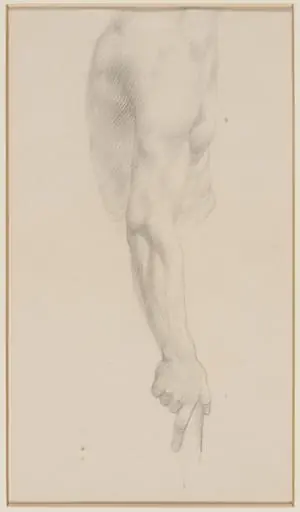 Arm
Arm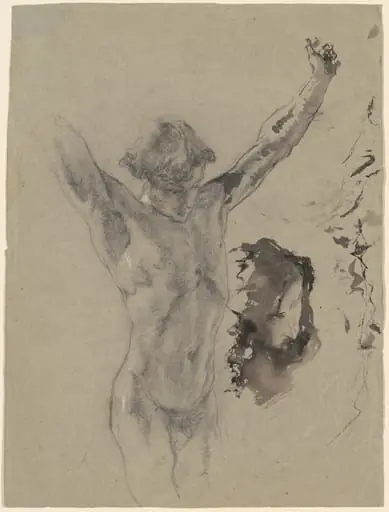 Study of the Figure and Head of Christ in "Christ on the Cross and Mary Magdalene"
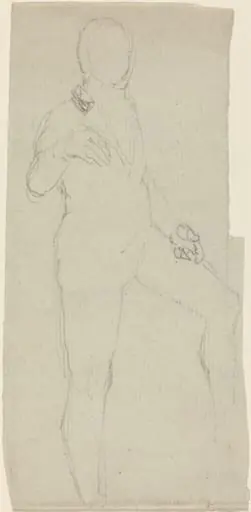 Male Figure in Contemporary Dress
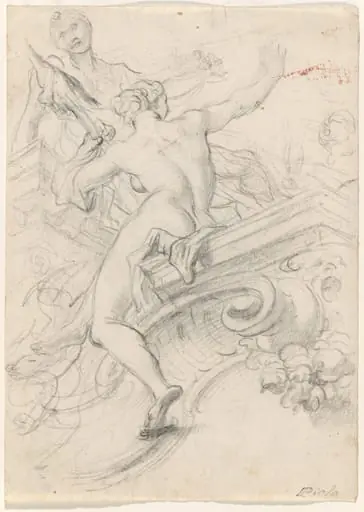 A Female Figure Seated on an Entablature, Holding a Distaff
 Reclining Female Nude (recto)
 A Seated Male Nude with His Hands Crossed over His Head
 A classical statue
 Male Nude Study