Artwork
Grand pin et terres rouges (Large Pine and Red Earth)
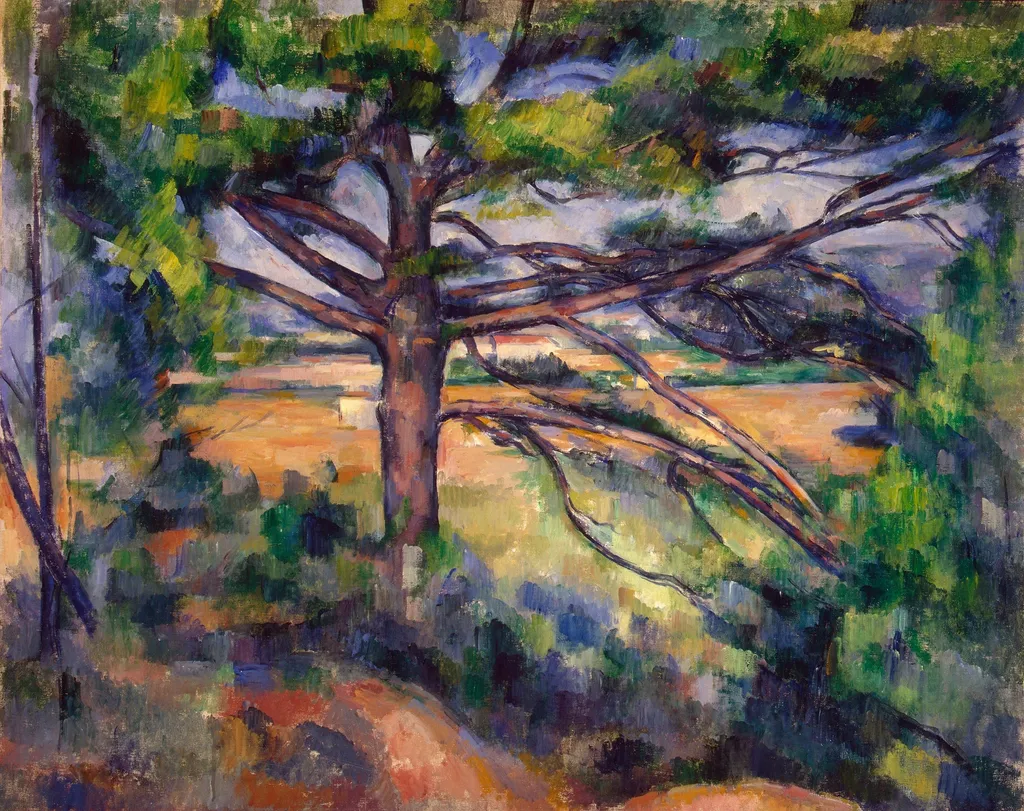
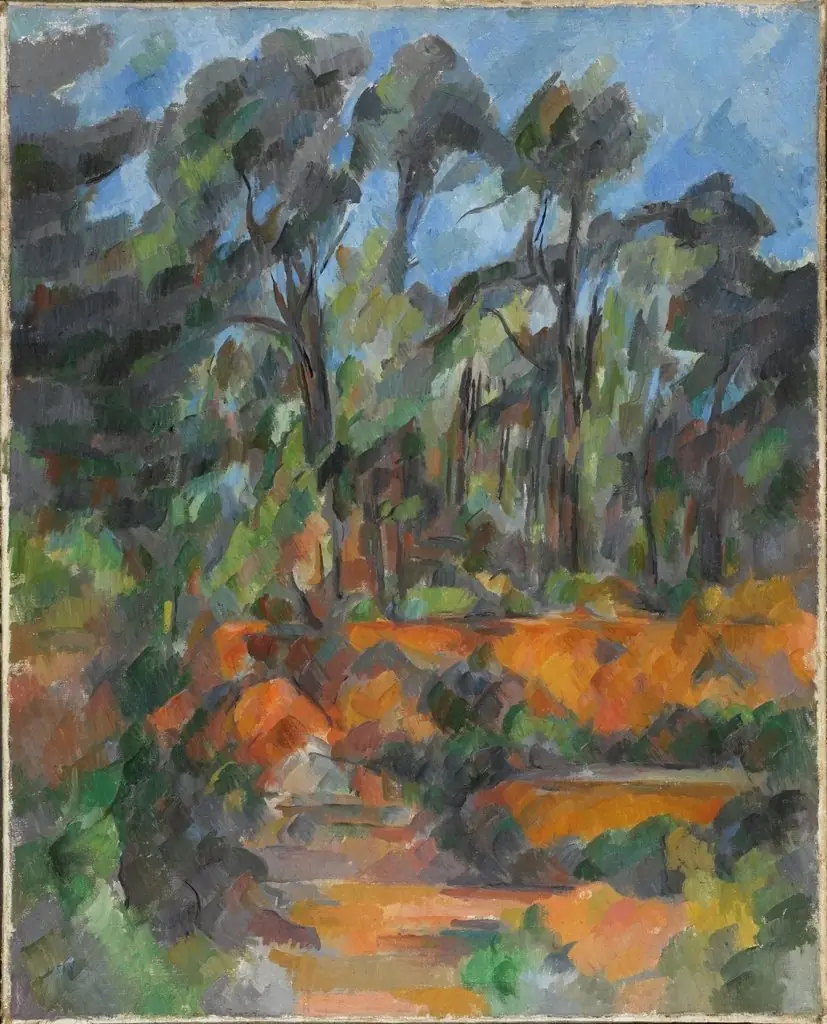
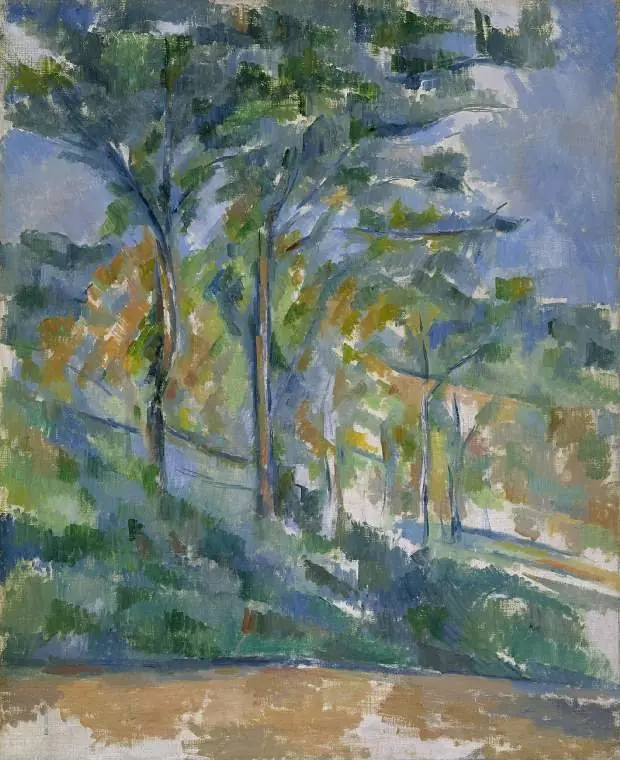
Grand pin et terres rouges (Large Pine and Red Earth) is an oil painting by Paul Cezanne. It dates from 1898 and is held in the collection of the Hermitage Museum.
About this work
Overview
Its muted palette and deliberate brushwork reflect his move away from Impressionist spontaneity toward a more analytical representation of the visible world.
Painted in 1898, *Grand pin et terres rouges* is an oil-on-canvas landscape by Paul Cézanne that captures a towering pine against a reddish earth. The work belongs to a series of late-career studies in which Cézanne sought to reveal structural order within natural forms. Its muted palette and deliberate brushwork reflect his move away from Impressionist spontaneity toward a more analytical representation of the visible world.
Subject & Meaning
The painting centers on a massive pine, its trunk and branching limbs dominating the foreground, while the red soil beneath suggests the Provençal terrain Cézanne often depicted. The tree is not idealized but presented as a solid, enduring form amid scattered shrubs and distant trees. The composition implies a quiet reverence for nature’s persistence, emphasizing mass and stability over fleeting atmosphere.
Technique & Style
Cézanne applied thick, directional brushstrokes to build form through color modulation rather than linear detail. Greens and yellows for the foliage are layered with subtle shifts in tone, while the earth is rendered in warm ochres and rusts. The sky, lightly brushed in pale blue, recedes without emphasis. The absence of sharp contours and the flattened perspective anticipate later Cubist concerns with spatial reconstruction.
History & Provenance
Created during Cézanne’s final decade, the painting remained in his possession until his death in 1906. It entered the collection of the State Hermitage Museum in the early 20th century, likely through a private acquisition or exchange. Its presence in the Hermitage underscores its recognition as a significant example of Cézanne’s mature style within European institutional collections.
Context
In the late 1890s, Cézanne retreated from urban life to work in the countryside near Aix-en-Provence, focusing on repetitive studies of trees, hills, and rock formations. These works were part of his broader effort to reconcile sensory perception with structural coherence. *Grand pin et terres rouges* exemplifies this pursuit, standing as a quiet counterpoint to the rapid brushwork of earlier Impressionist landscapes.
Legacy
The painting contributed to the redefinition of landscape painting in the early 20th century, influencing artists like Picasso and Braque who saw in Cézanne’s forms a path toward geometric abstraction. Its restrained palette and emphasis on volume over light helped shift modern art from depicting appearances to investigating the architecture of vision.
Own this work as a print
Artist & collection
Artist
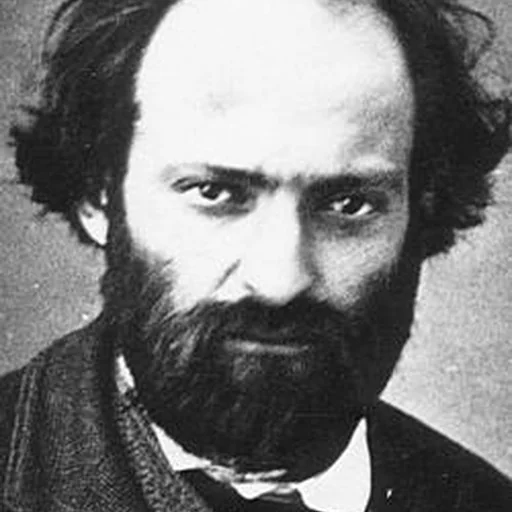
Paul Cézanne was born on January 19, 1839, in Aix-en-Provence, the son of a hatter turned wealthy banker.

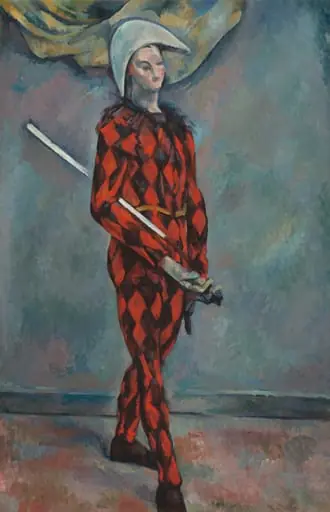 Harlequin
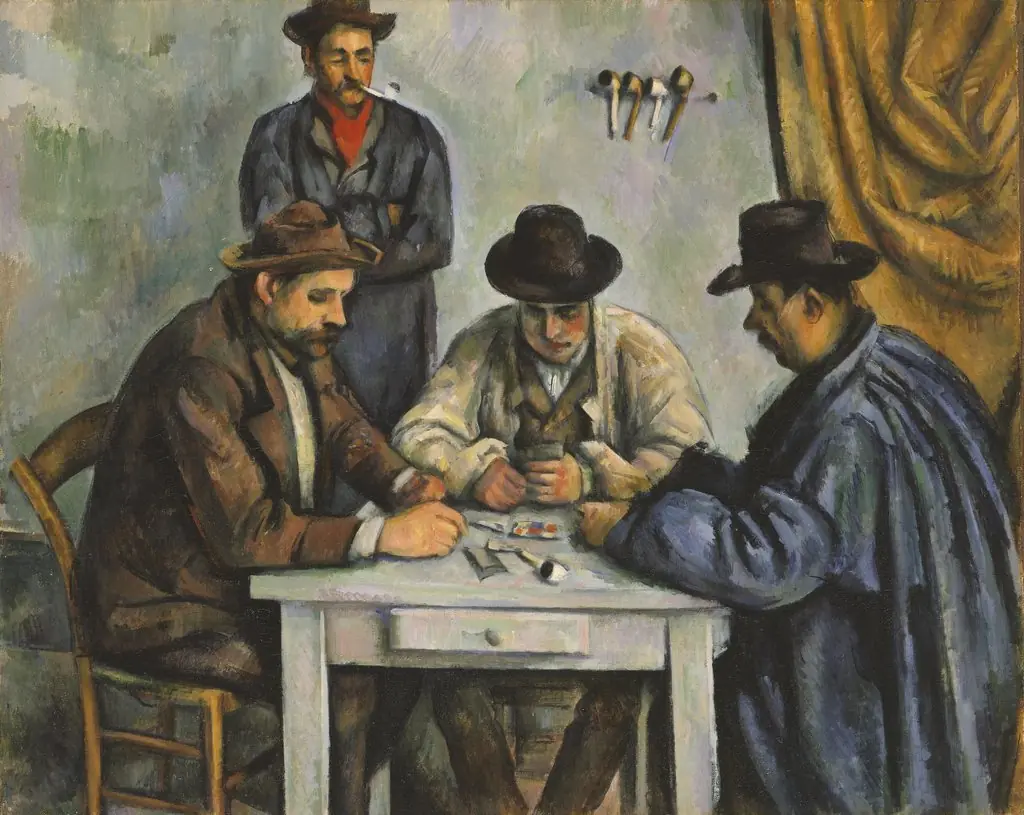 The Card Players
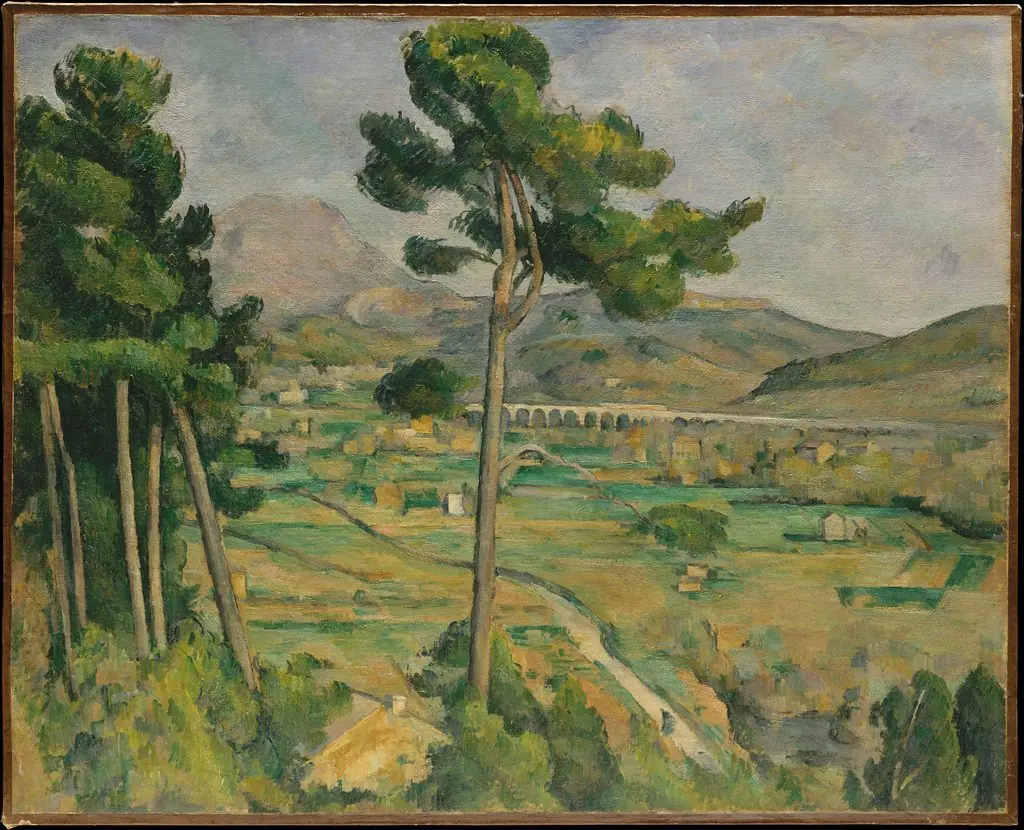 Mont Sainte-Victoire and the Viaduct of the Arc River Valley
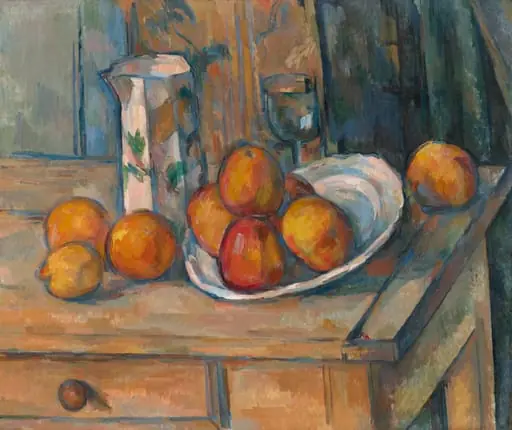 Still Life with Milk Jug and Fruit
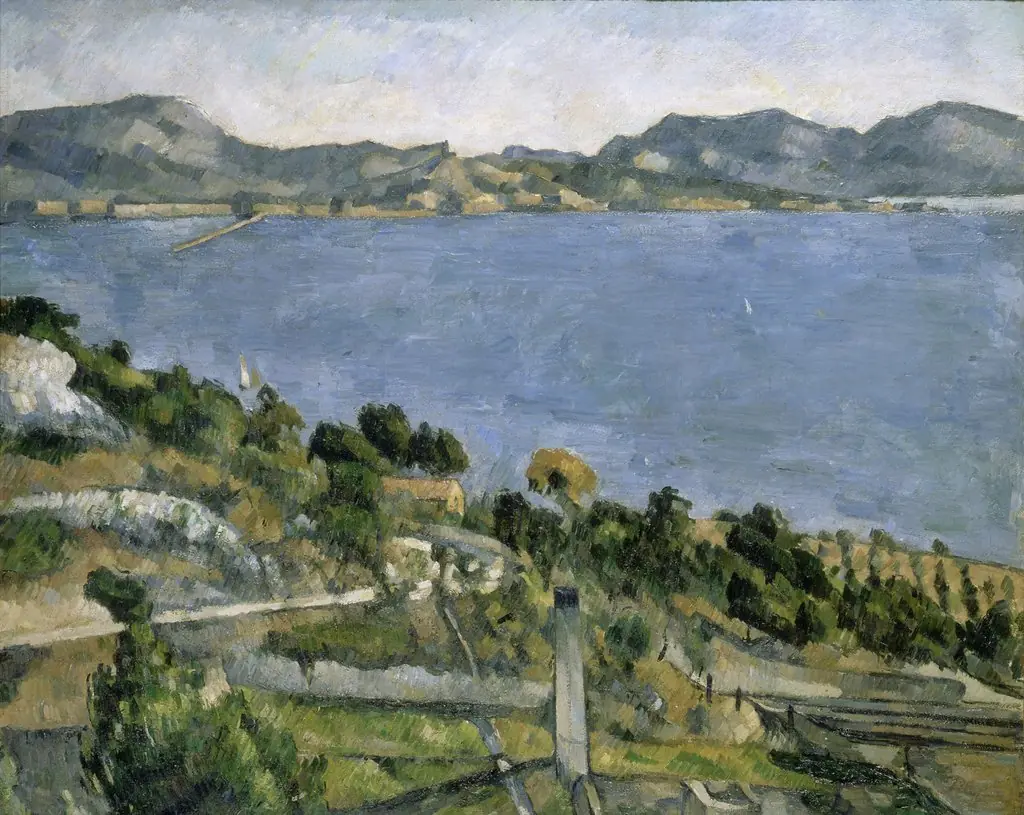 Le Golfe de Marseille vu de l'Estaque (The Gulf of Marseille Seen from L'Estaque)
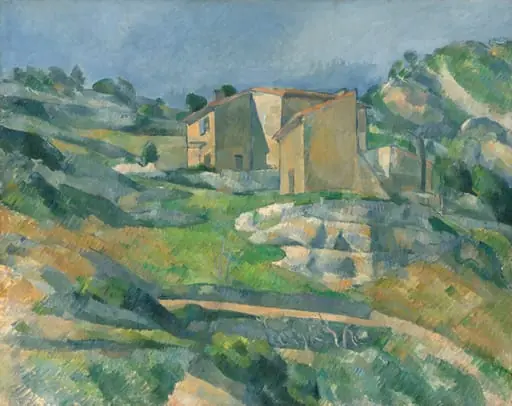 Houses in Provence: The Riaux Valley near L'Estaque
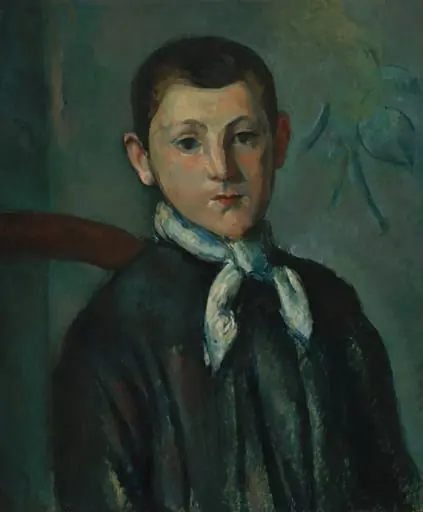 Louis Guillaume
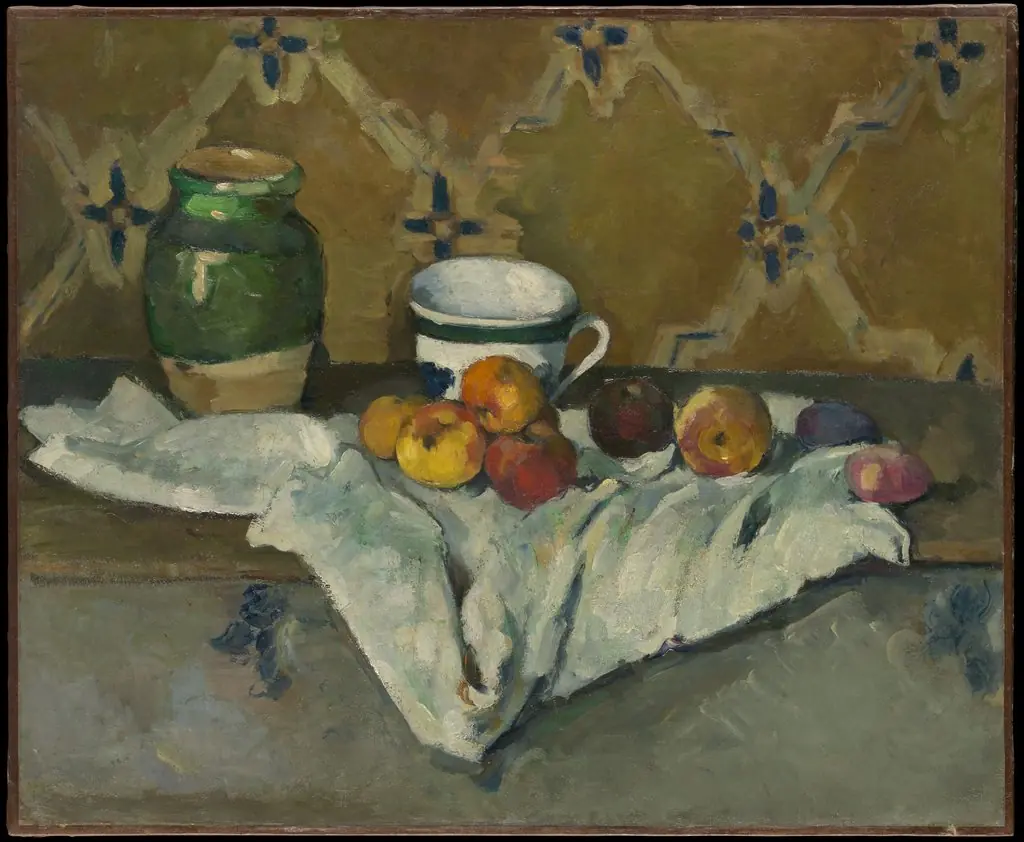 Still Life with Jar, Cup, and Apples