Artwork
Arearea (Joyfulness) II
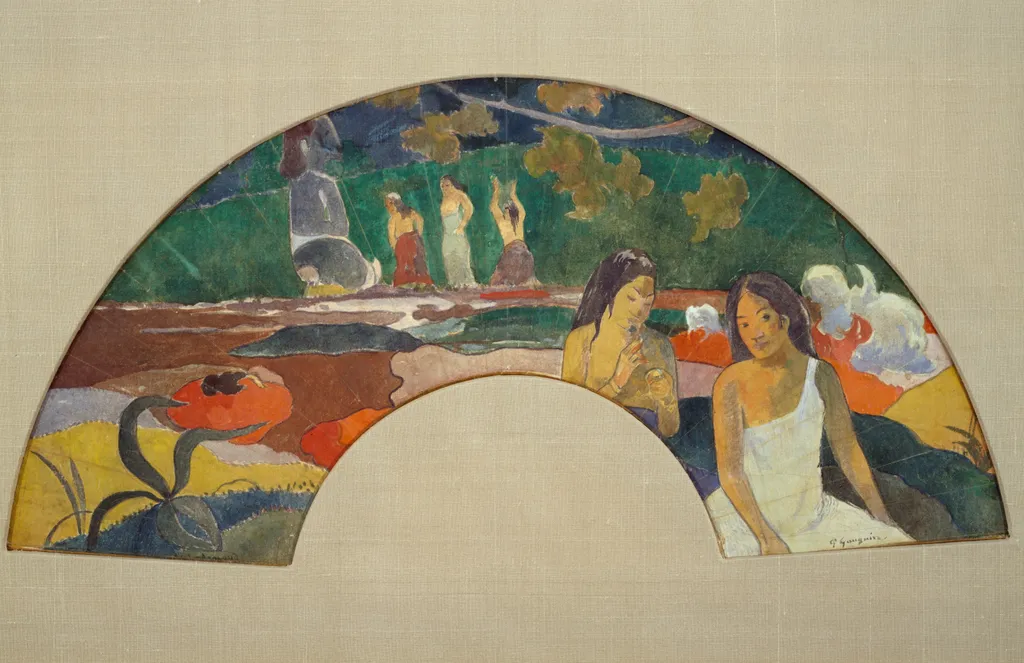
Arearea (Joyfulness) II is a watercolor painting by the Post-Impressionist artist Paul Gauguin. It dates from 1898 and is held in the collection of the Museum of Fine Arts, Houston.
About this work
Overview
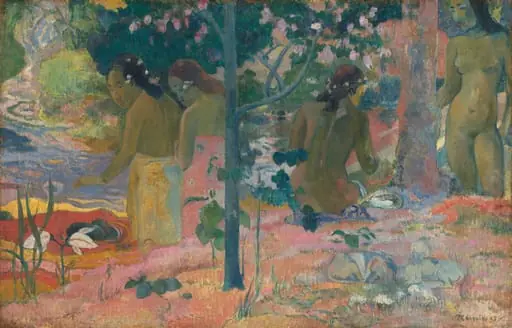
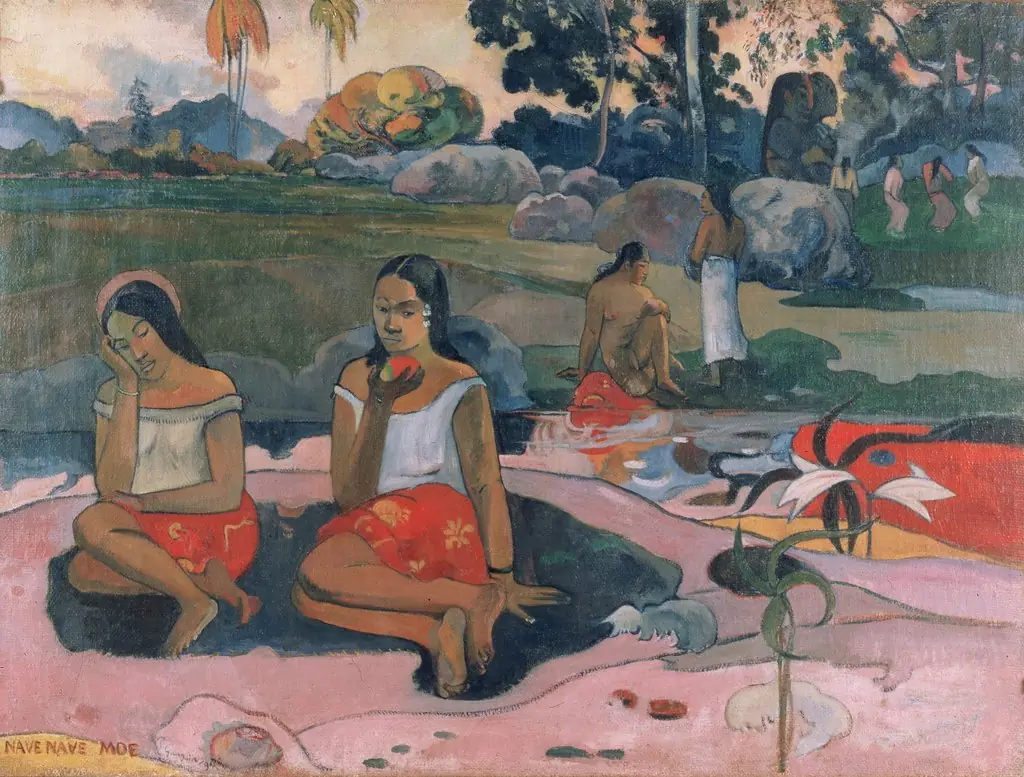
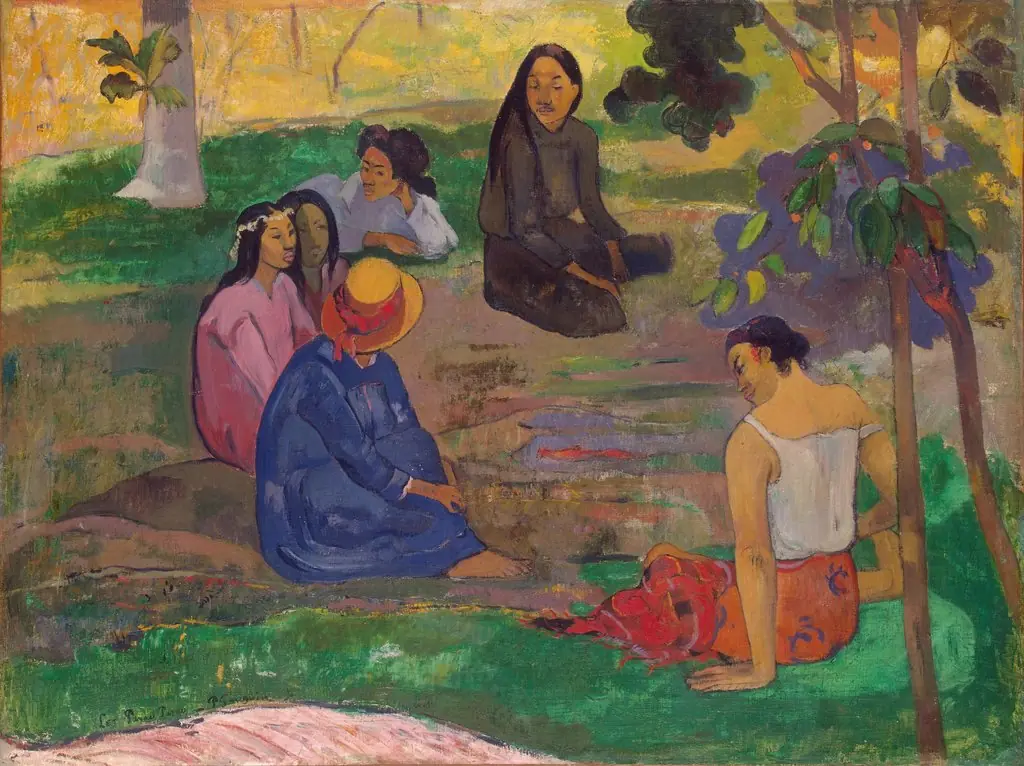
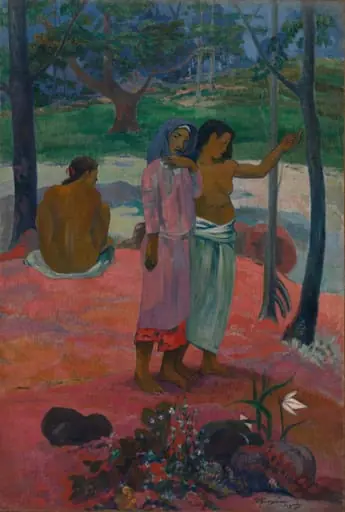
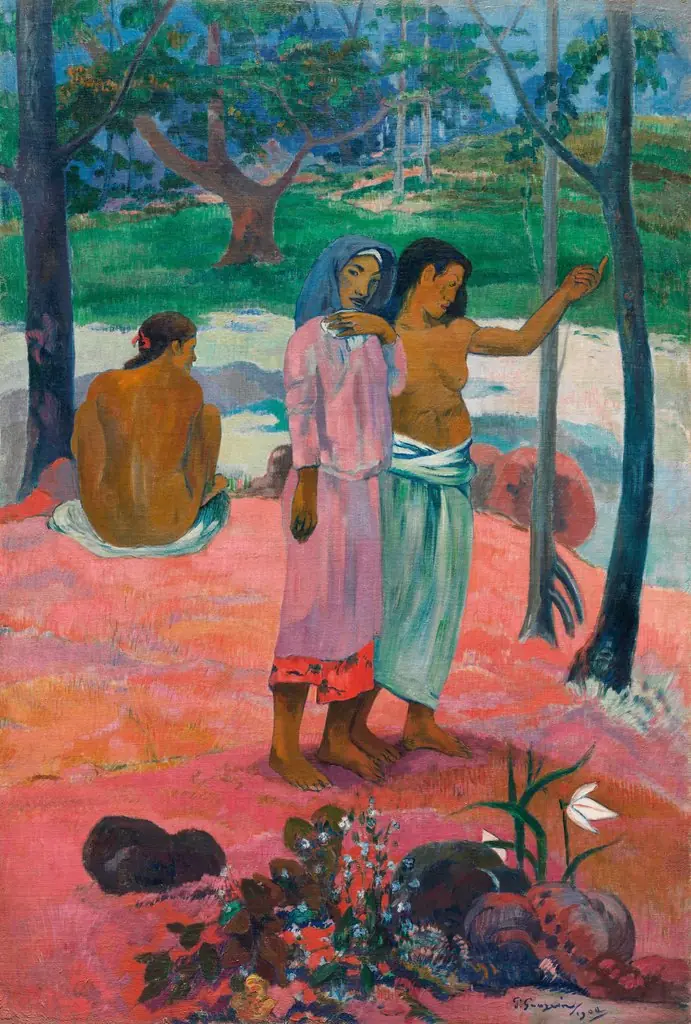
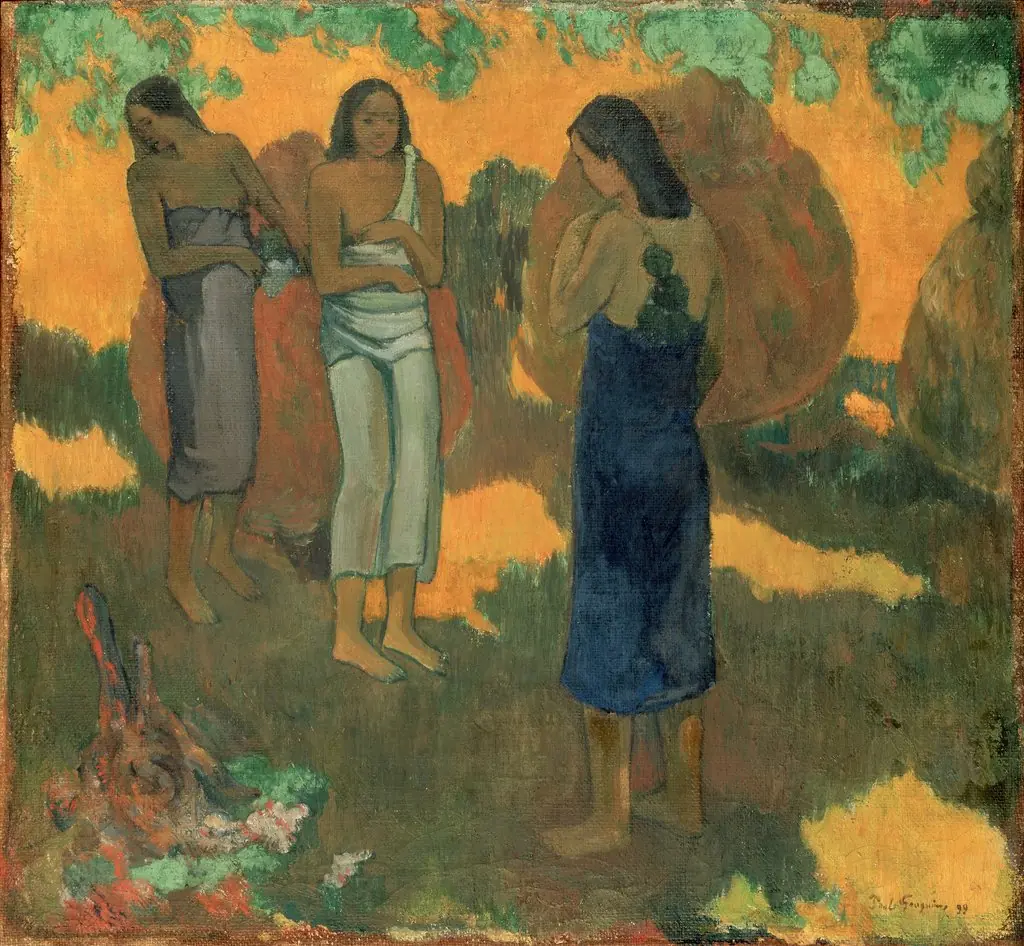
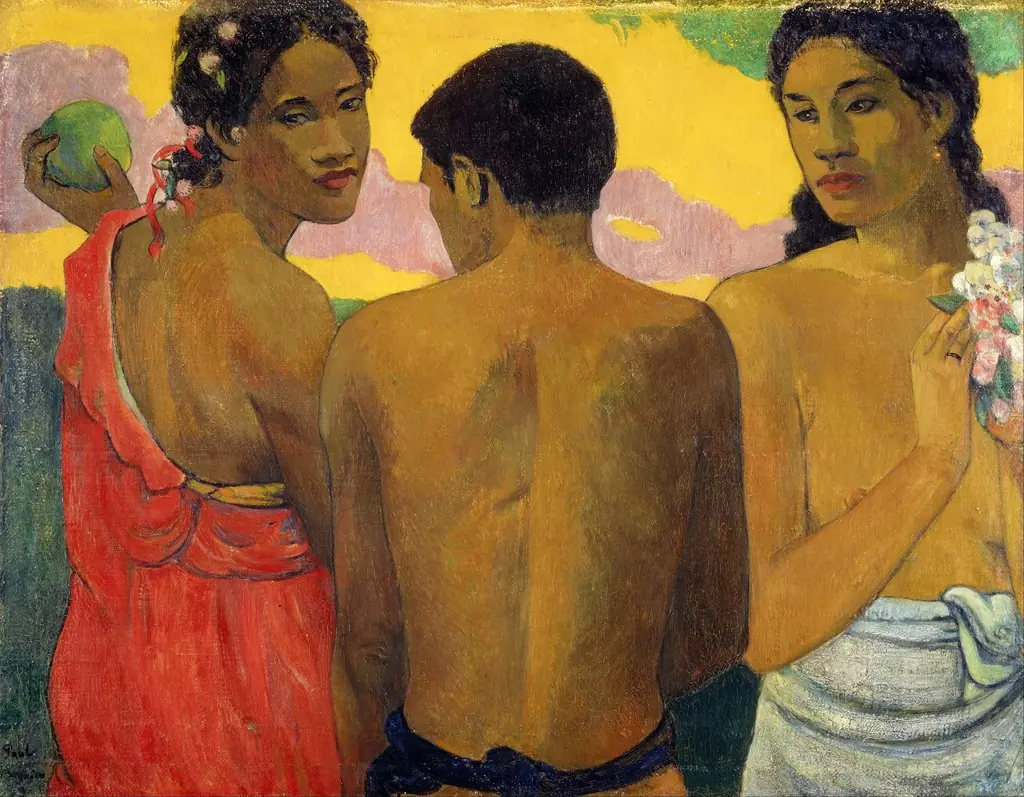
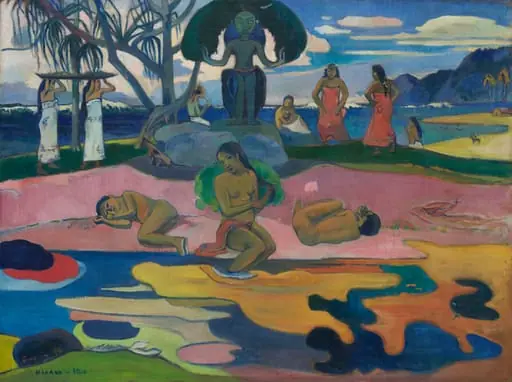
Created in 1898 on a linen support, *Arearea (Joyfulness) II* exemplifies Paul Gauguin’s late‑period work within the Post‑Impressionist current. The canvas presents a tropical tableau populated by figures and animals, rendered with a vivid palette that departs from realistic depiction in favor of symbolic resonance.
Subject & Meaning
The composition centers on two Tahitian women seated amid lush foliage, accompanied by a dog and a white goat. Their relaxed posture and the surrounding vegetation evoke a serene, idyllic atmosphere, reflecting Gauguin’s fascination with Polynesian life and his desire to convey a sense of primitive joy through simplified, archetypal forms.
Technique & Style
Executed in Gauguin’s Synthetist manner, the work employs flat areas of saturated color and strong outlines to flatten space and foreground symbolic content. The linen texture contributes a subtle grain, while the brushwork is decisive and energetic, reinforcing the painting’s rhythmic movement and its departure from naturalistic representation.
History & Provenance
Painted during Gauguin’s second stay in Tahiti, the piece belongs to a series exploring the island’s culture and landscape. Though specific ownership records are limited, the work has been catalogued among the artist’s late Tahitian productions and is recognized as part of the broader collection of his post‑impressionist output.
Artist & collection
Artist
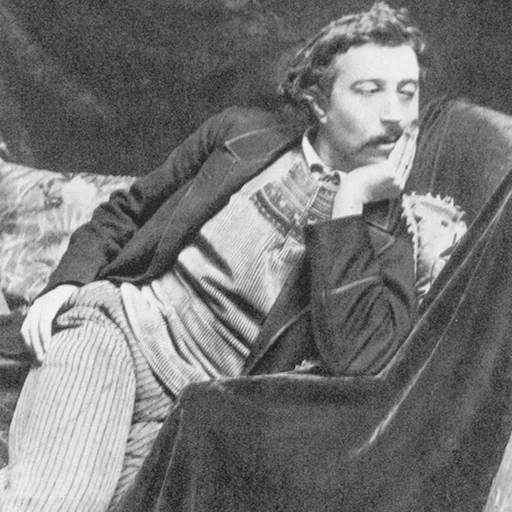
Eugène Henri Paul Gauguin (; French: ; 7 June 1848 – 8 May 1903) was a French painter, sculptor, printmaker, ceramist, and writer, whose work has been primarily associated with the Post-Impressionist and Symbolist movements.