Artwork
Three Tahitians
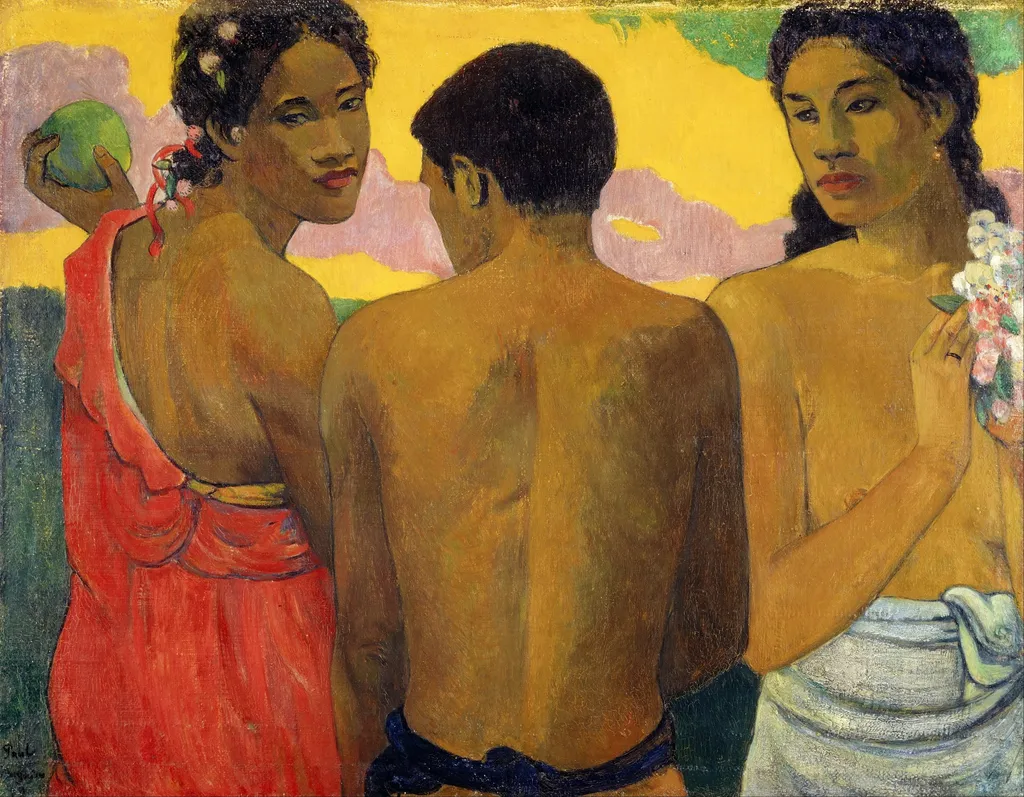
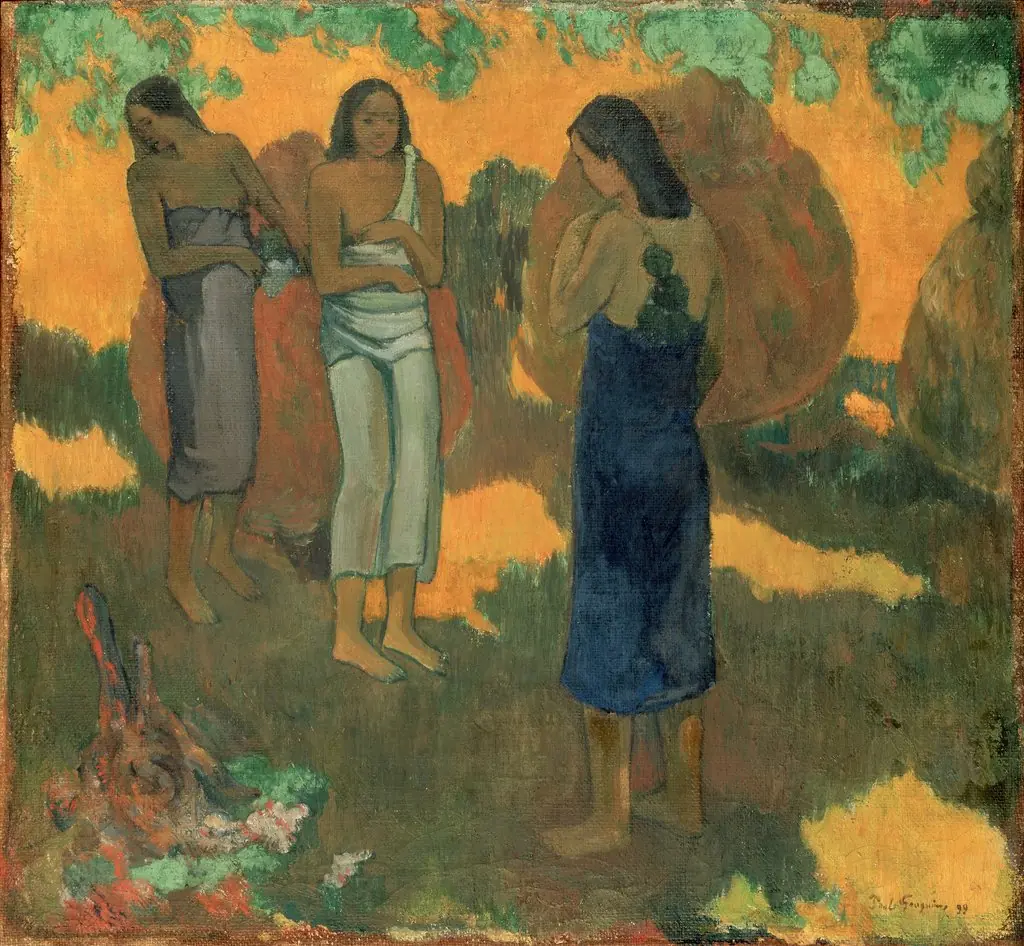
Three Tahitians is an oil painting by the Post-Impressionist artist Paul Gauguin. It dates from 1900 and is held in the collection of the National Galleries Scotland.
About this work
Overview
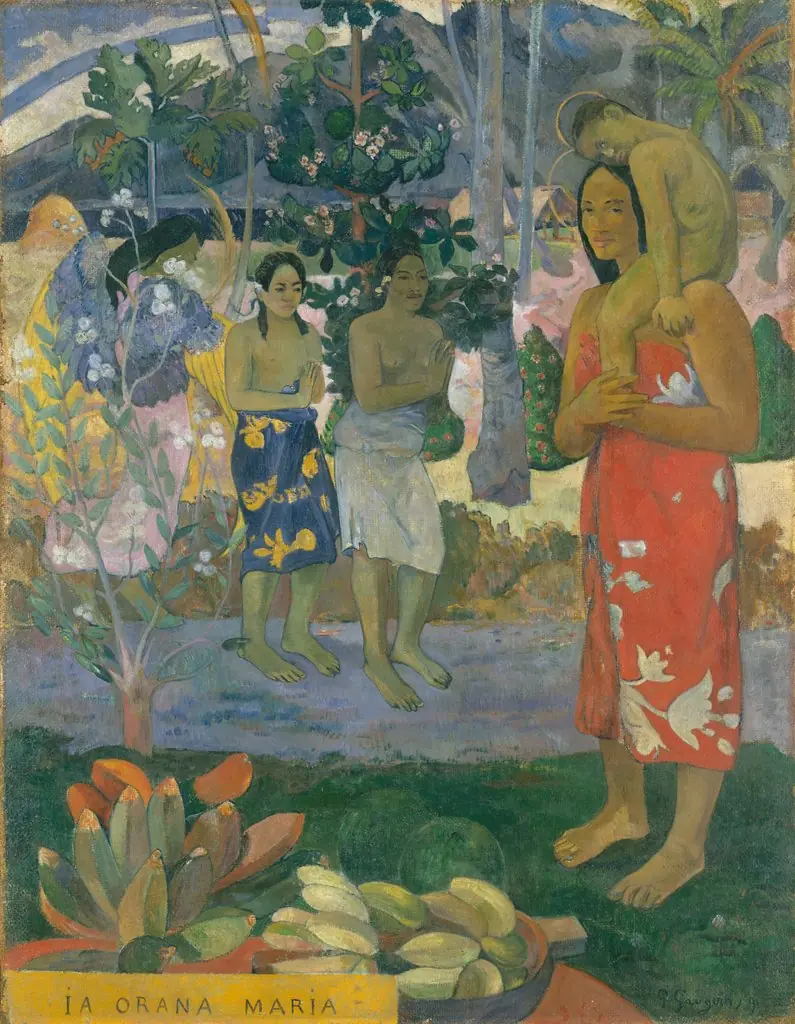
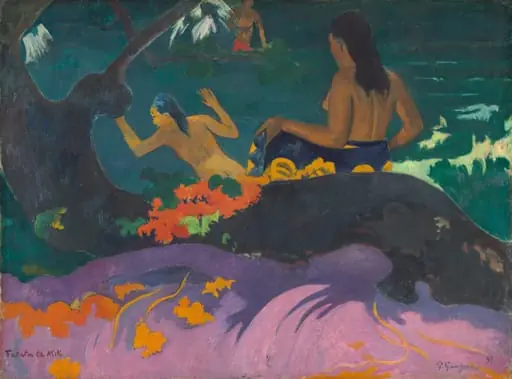
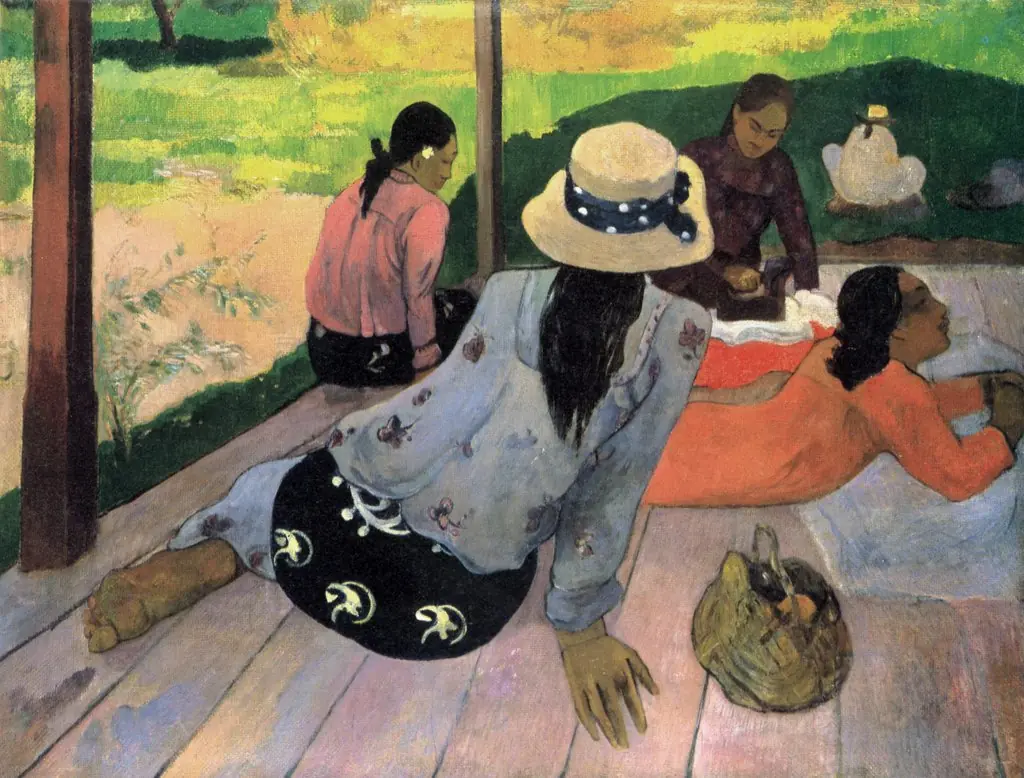
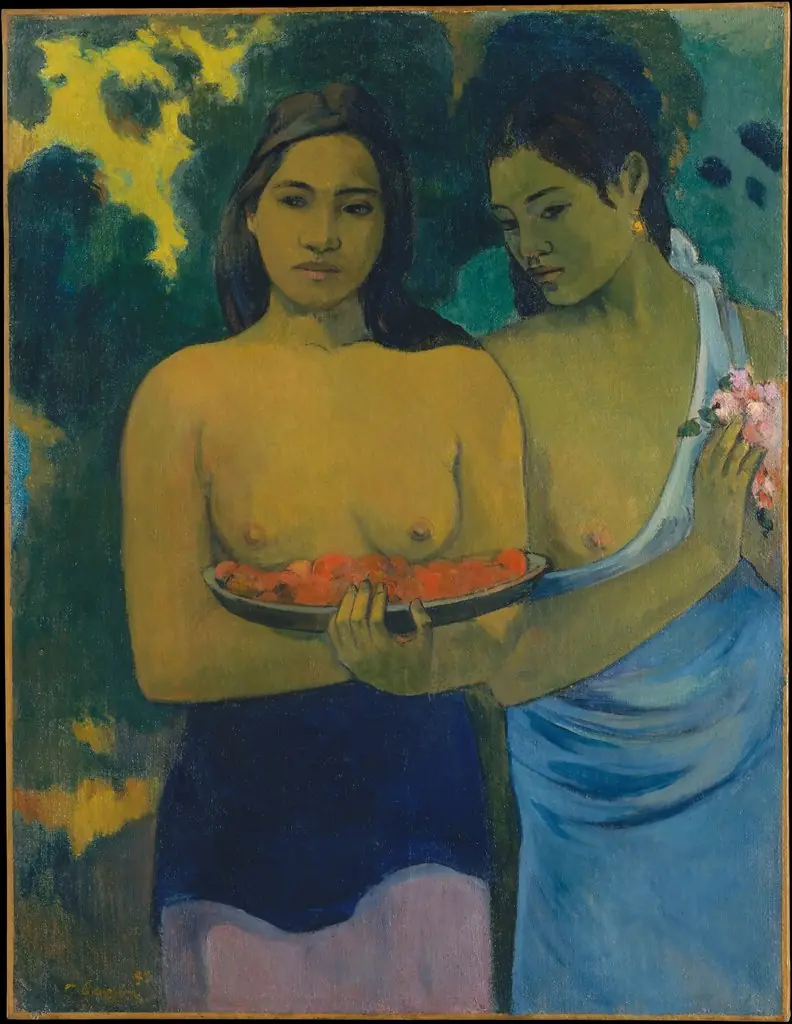
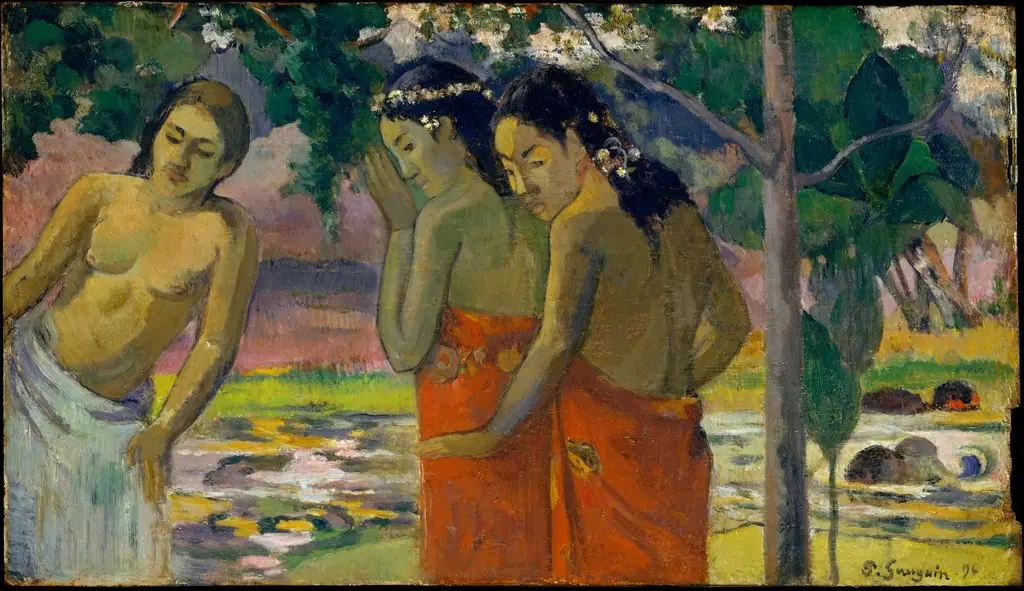
Three Tahitians is an oil painting created by Paul Gauguin in 1900, characteristic of the Post-Impressionist movement. It features three figures dressed in Tahitian attire, presented with their backs to the viewer against a vibrant, abstracted background.
Subject & Meaning
The painting reflects Gauguin's fascination with Polynesian culture, adopted after his relocation to Tahiti in pursuit of a simpler, 'primitive' lifestyle. The subjects, clad in traditional Tahitian dress, embody this thematic focus.
Technique & Style
Executed in Gauguin's distinct Synthetist style, the work prioritizes symbolic expression and bold, expressive color over realistic depiction. The composition's calm, serene mood is achieved through a palette of contrasting colors (red, blue, yellow, green, pink) and simplified forms.
History & Provenance
Painted in 1900, during Gauguin's Tahitian period, the work's provenance details are not specified here, though it is known to be part of Gauguin's later output focused on Polynesian themes.
Context
Created within the broader Post-Impressionist movement, 'Three Tahitians' situates Gauguin among artists seeking to move beyond naturalism, instead emphasizing emotional and symbolic content in their work.
Legacy
As part of Gauguin's oeuvre, 'Three Tahitians' contributes to the artist's influence on early 20th-century art movements, though its specific impact or reception history is not detailed in the provided information.
Own this work as a print
Artist & collection
Artist
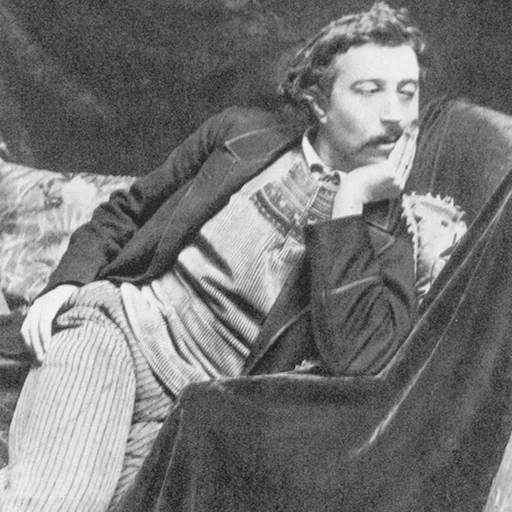
Eugène Henri Paul Gauguin (; French: ; 7 June 1848 – 8 May 1903) was a French painter, sculptor, printmaker, ceramist, and writer, whose work has been primarily associated with the Post-Impressionist and Symbolist movements.