Artwork
Three Tahitian Women Against a Yellow Background
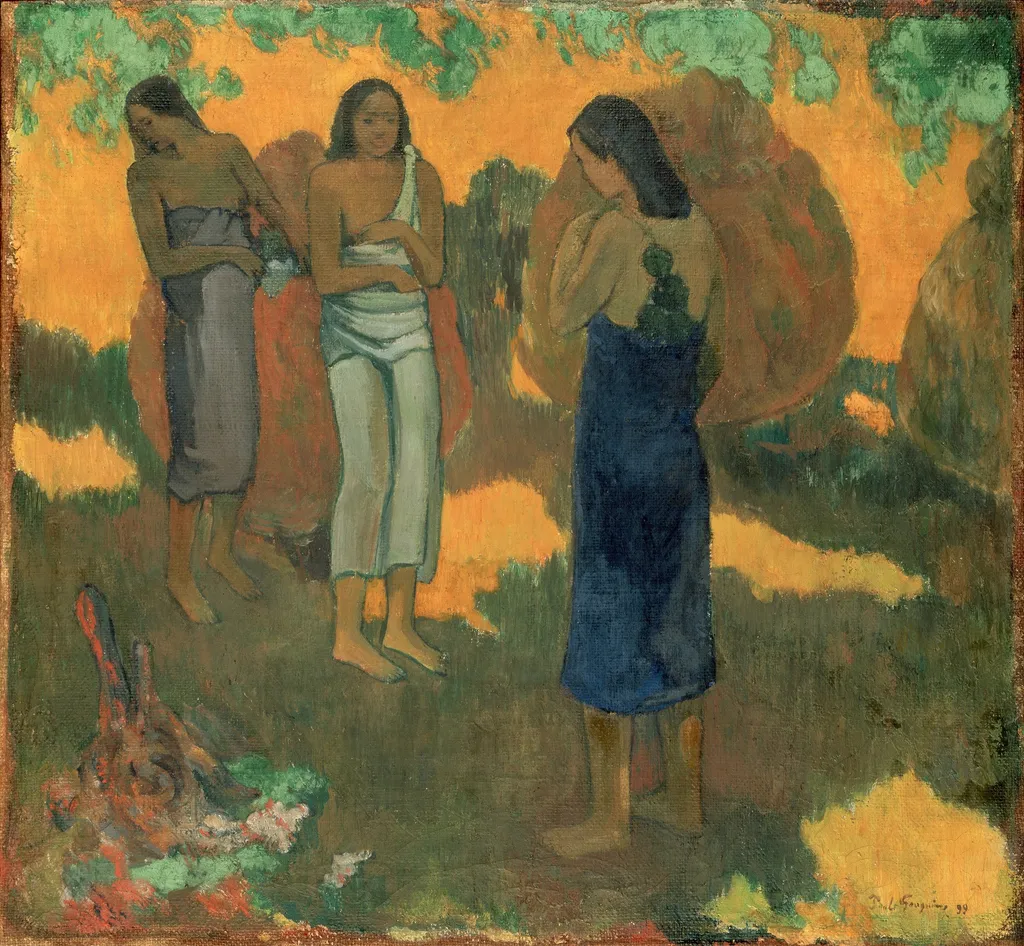
Three Tahitian Women Against a Yellow Background is an oil painting by the Post-Impressionist artist Paul Gauguin. It dates from 1900 and is held in the collection of the Hermitage Museum.
About this work
Overview
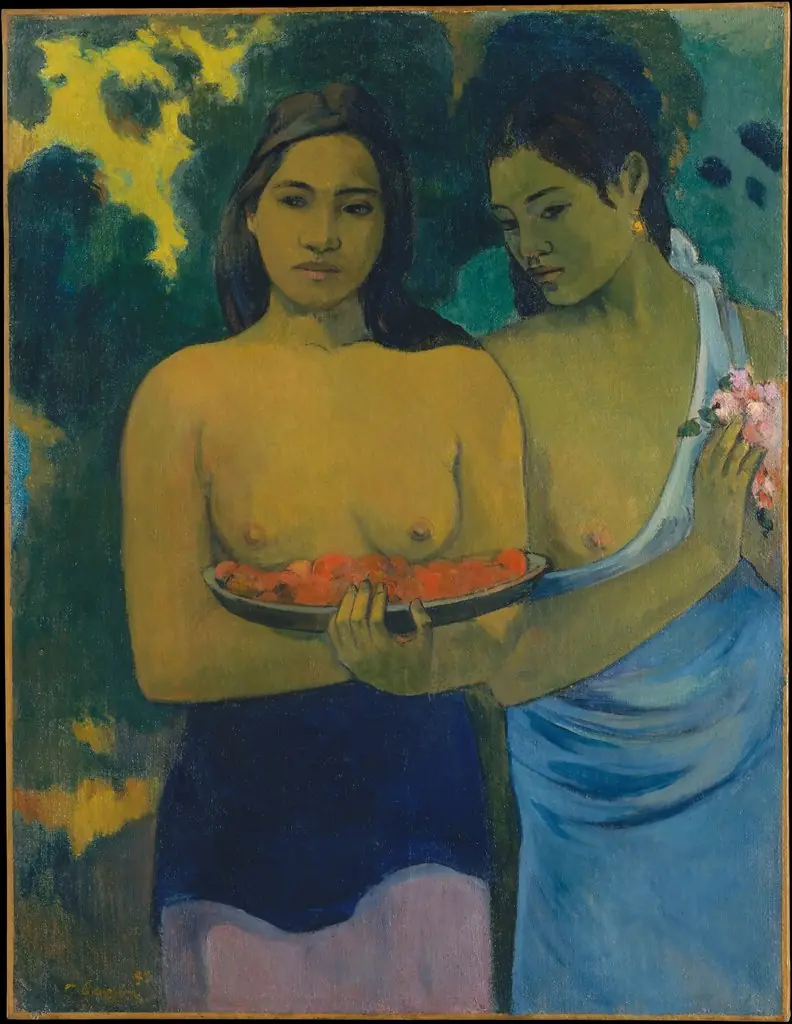
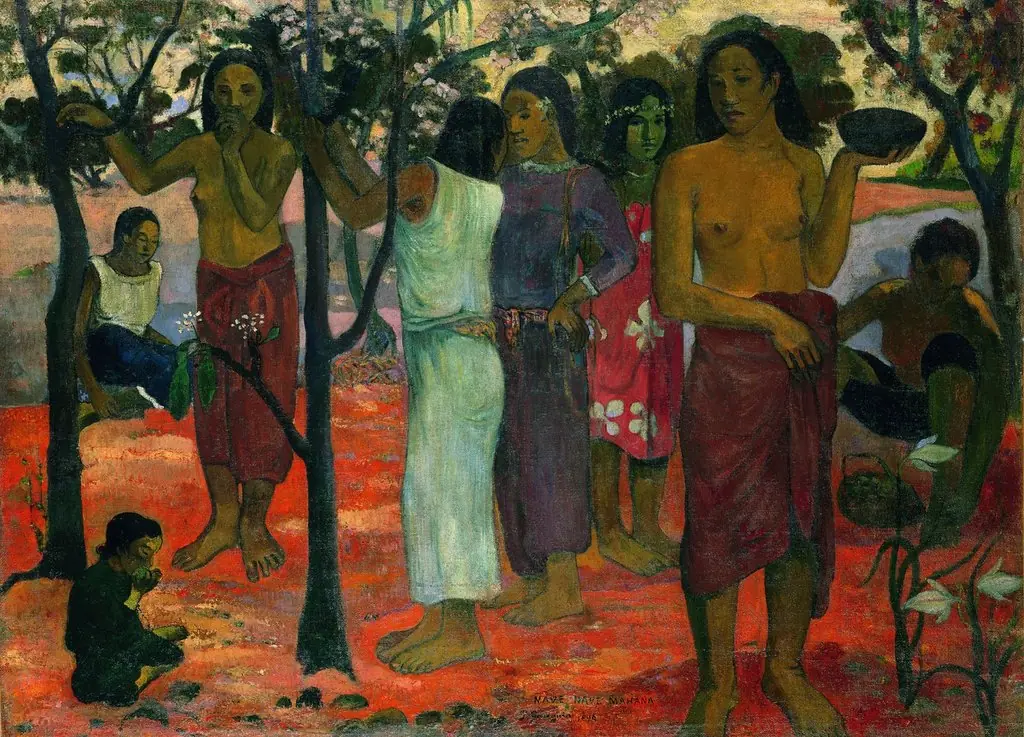
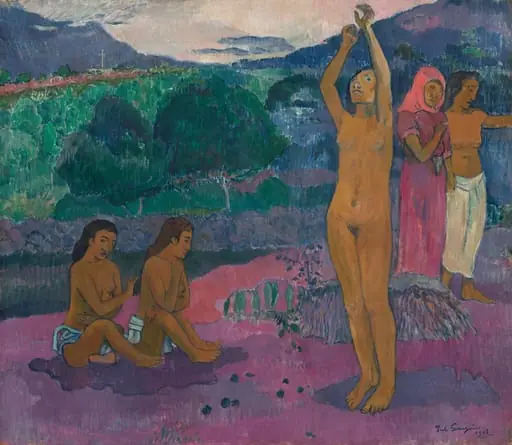
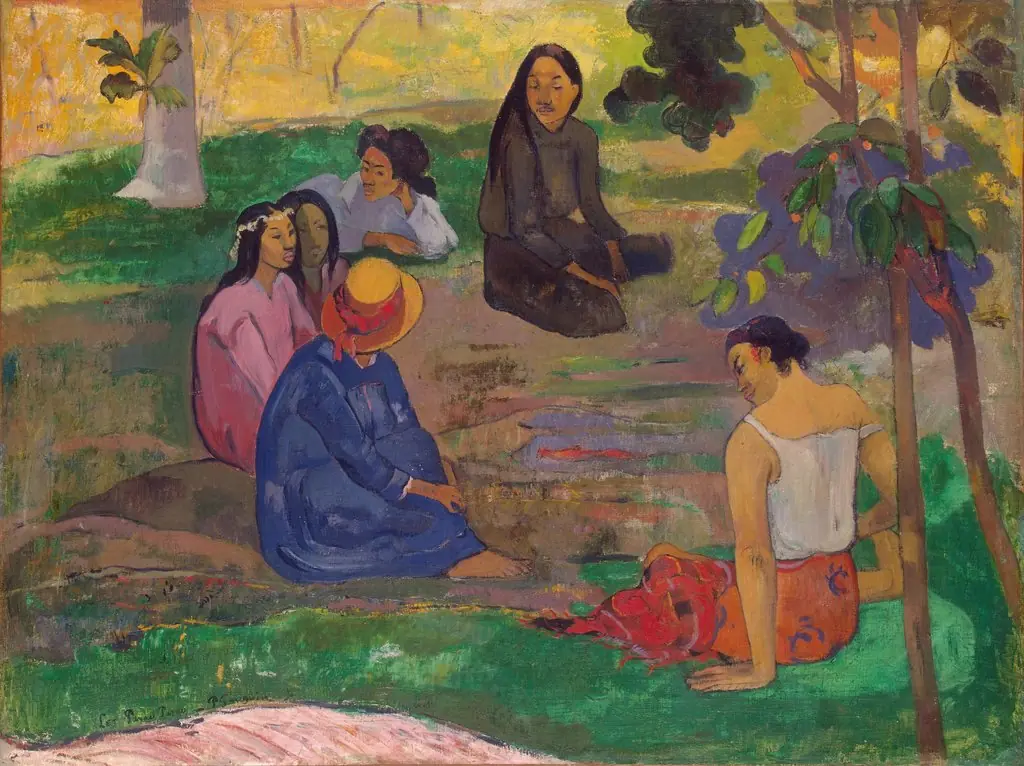
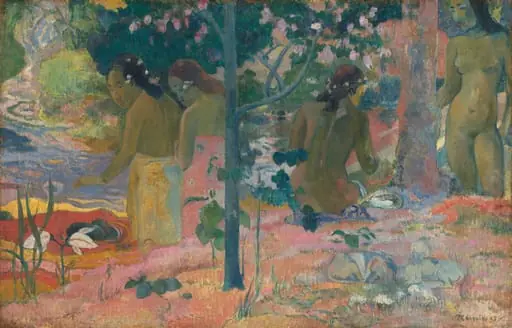
Created in 1900, this oil painting by Paul Gauguin presents three women positioned against a striking yellow field. Executed during his later, post‑Impressionist phase, the work reflects Gauguin’s departure from pure Impressionism toward a more symbolic, color‑driven approach.
Subject & Meaning
The composition shows three female figures in a tropical setting, each dressed in simple, flowing attire—one in white, the others in blue. Arranged in a triangular formation, the central figure anchors the scene, while the surrounding foliage and bright backdrop suggest a calm, contemplative atmosphere.
Technique & Style
Gauguin employs flat areas of saturated color and simplified forms, hallmarks of his Synthetist style. The vivid yellow background contrasts with the muted clothing, emphasizing the decorative quality of the surface and reducing depth to a more abstract, symbolic plane.
History & Provenance
After its completion, the painting entered various private collections before being acquired by the State Hermitage Museum, where it remains part of the permanent holdings. Its provenance traces back to Gauguin’s Tahitian period, a time when he sought new visual sources beyond Europe.
Context
The work belongs to Gauguin’s series of Tahitian subjects, produced after his relocation to the South Pacific. In this period he explored non‑Western motifs and sought to convey spiritual or emotional content through bold chromatic choices rather than realistic detail.
Own this work as a print
Artist & collection
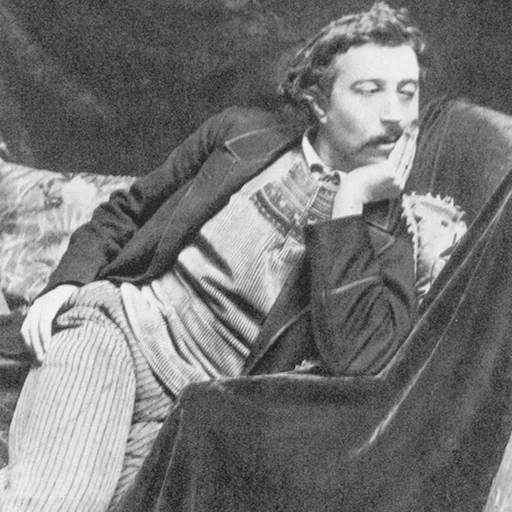
Artist
Eugène Henri Paul Gauguin (; French: ; 7 June 1848 – 8 May 1903) was a French painter, sculptor, printmaker, ceramist, and writer, whose work has been primarily associated with the Post-Impressionist and Symbolist movements.