Artwork
Arlésiennes (Mistral)
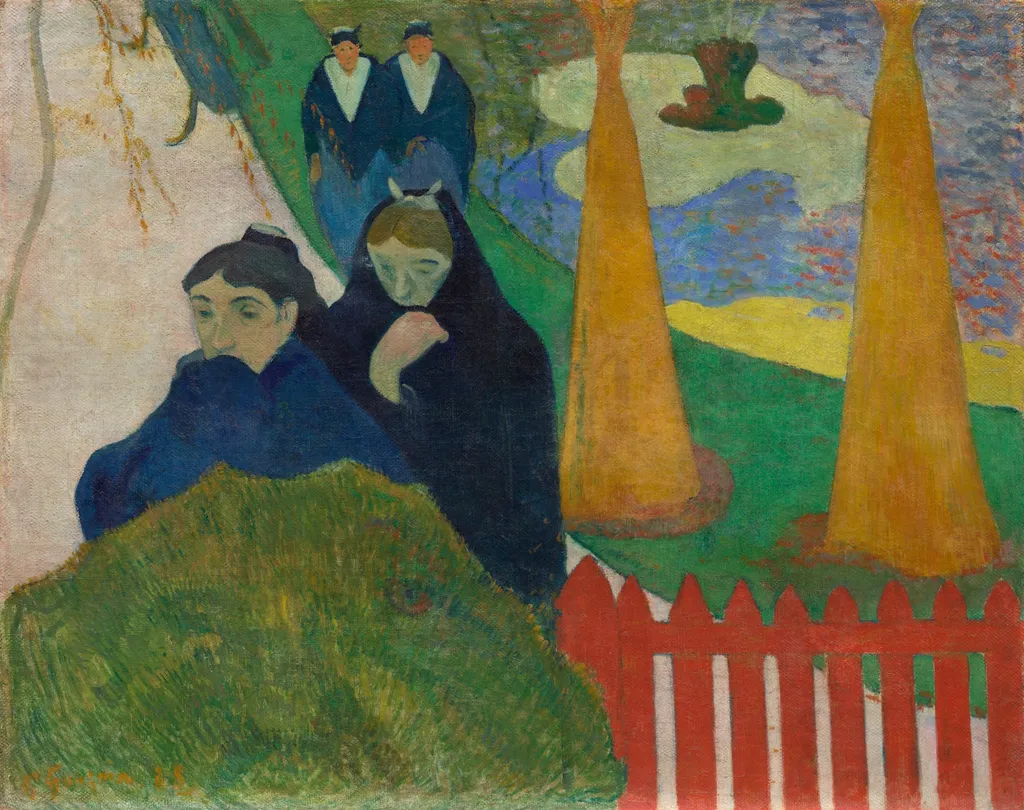
Arlésiennes (Mistral) is an oil painting by the Impressionist artist Paul Gauguin. It dates from 1888 and is held in the collection of the Art Institute of Chicago.
About this work
Overview
Arlésiennes (Mistral) is an oil on jute canvas painting created by Paul Gauguin during his winter 1888 stay in Arles, France. The work depicts four somber women walking in a public garden, characterized by simplified forms and a distinctive, upward-tilted perspective.
Subject & Meaning
The painting shows four women in dark shawls, their gestures introspective and withdrawn, as they navigate a garden blocked by a red fence and a green bush with an intentionally embedded, watchful face. This element reflects Gauguin’s interest in infusing everyday scenes with mystical undertones.
Technique & Style
Gauguin employed a reduced color palette and bold, flat shapes to define the composition. The use of impasto (thick, heavy brushstrokes) and the simplification of three-dimensional forms into two-dimensional shapes are notable stylistic elements.
History & Provenance
Created during Gauguin’s tumultuous two-month stay with Vincent van Gogh in Arles, the painting was produced amidst the failed attempt to establish an artist’s colony, marked by increasing tension and Van Gogh’s deteriorating mental health.
Context
The scene is set across from the house shared by Gauguin and Van Gogh in Arles, drawing from the local environment. The women’s somberness and the barriers in the garden may subtly allude to the artists’ strained living situation.
Own this work as a print
Artist & collection
Artist
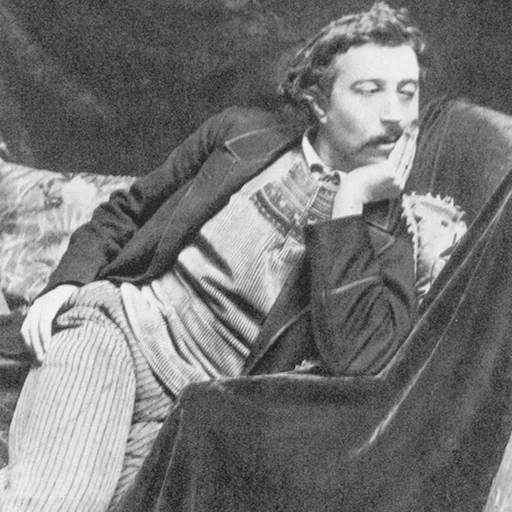
Eugène Henri Paul Gauguin (; French: ; 7 June 1848 – 8 May 1903) was a French painter, sculptor, printmaker, ceramist, and writer, whose work has been primarily associated with the Post-Impressionist and Symbolist movements.