Artwork
Canoe; Tahitian Family (Te vaa)
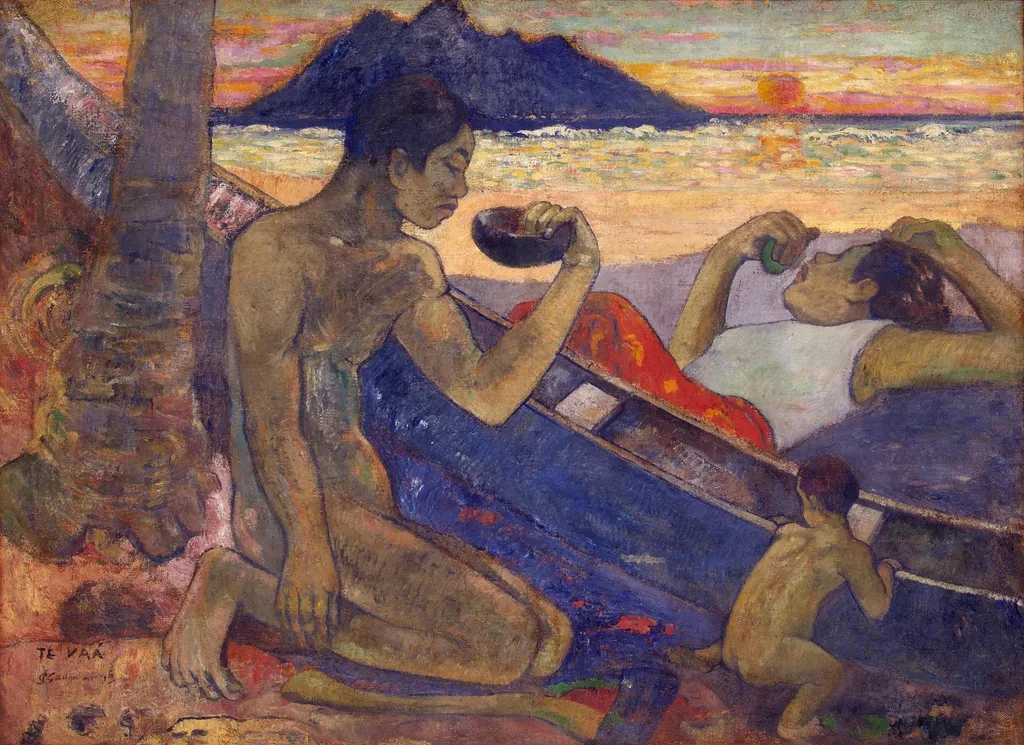
Canoe; Tahitian Family (Te vaa) is an oil painting by the Post-Impressionist artist Paul Gauguin. It dates from 1898 and is held in the collection of the Hermitage Museum.
About this work
Overview
Created in 1898, this oil painting by Paul Gauguin portrays a tranquil moment in a Tahitian setting. A small canoe drifts on calm water, occupied by a seated couple, while a child stands on the shore. Distant mountains frame the scene, lending a sense of spaciousness to the composition.
Subject & Meaning
The work captures an everyday domestic episode: a woman holding a bowl and sipping, a man reclined and also drinking, and a child observing from land. By focusing on ordinary activity rather than exotic spectacle, Gauguin hints at the rhythm of family life in Polynesia, inviting contemplation of simple, shared rituals.
Technique & Style
Executed with bold, saturated hues and pronounced brushwork, the painting exemplifies Gauguin’s move toward Synthetism, where color and form convey symbolic resonance over precise realism. The thick application of paint creates a tactile surface, while the flattened planes and simplified outlines emphasize the emotional tone rather than detailed representation.
History & Provenance
Gauguin produced the canvas during his second stay in Tahiti, a period marked by intensive exploration of local culture and landscape. The piece remained in private collections before entering a museum inventory in the mid‑20th century, where it has been displayed as part of exhibitions on Post‑Impressionist art and Pacific influences.
Own this work as a print
Artist & collection
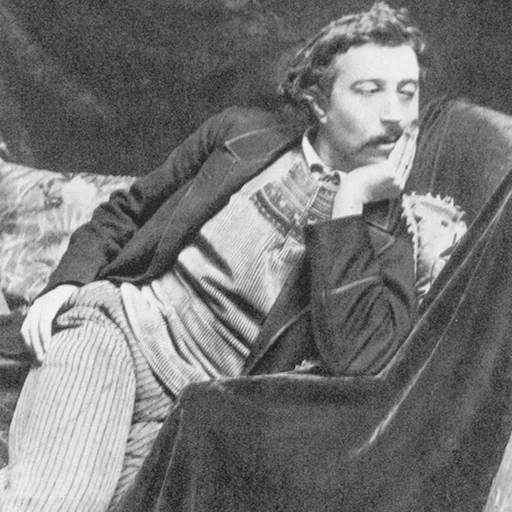
Artist
Eugène Henri Paul Gauguin (; French: ; 7 June 1848 – 8 May 1903) was a French painter, sculptor, printmaker, ceramist, and writer, whose work has been primarily associated with the Post-Impressionist and Symbolist movements.