Artwork
Jean Baptiste Isabey
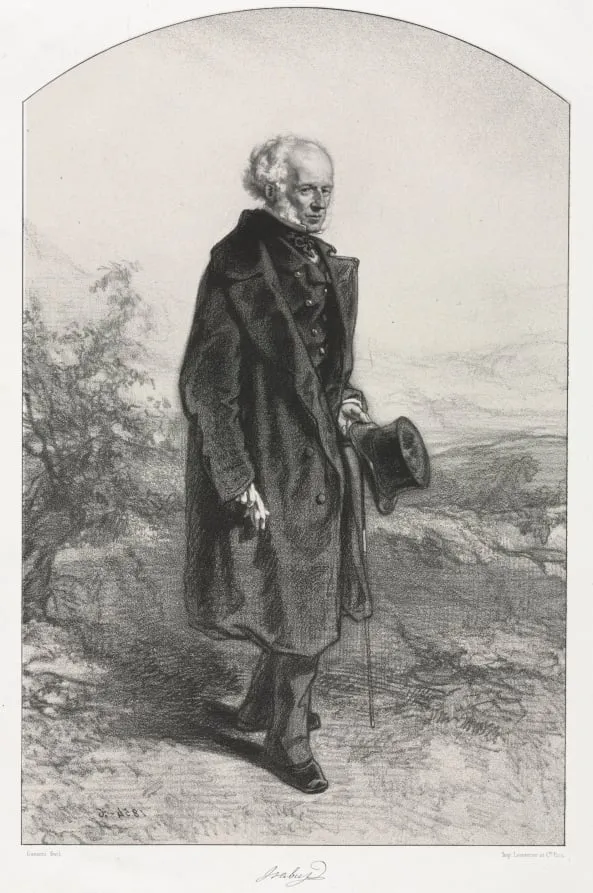
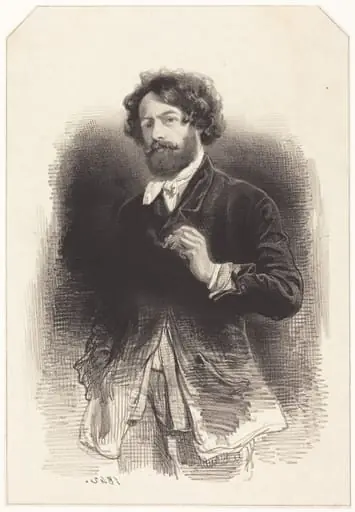
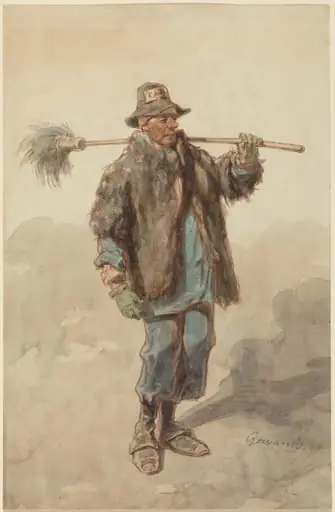
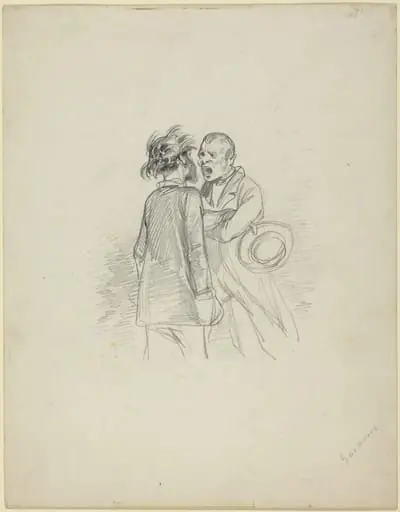
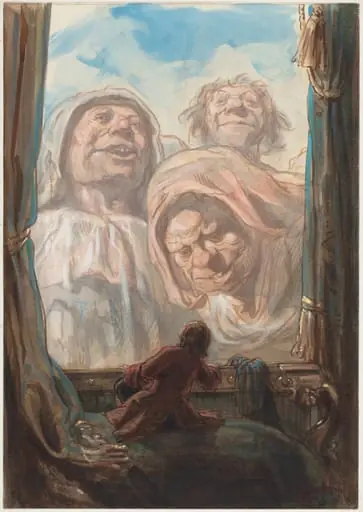
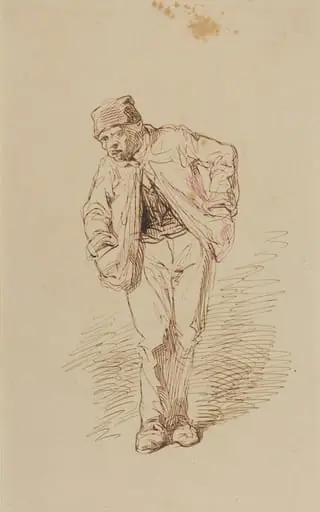
Jean Baptiste Isabey is a print by the Impressionist artist Paul Gavarni. It dates from 1855 and is held in the collection of the Cleveland Museum of Art.
About this work
Overview
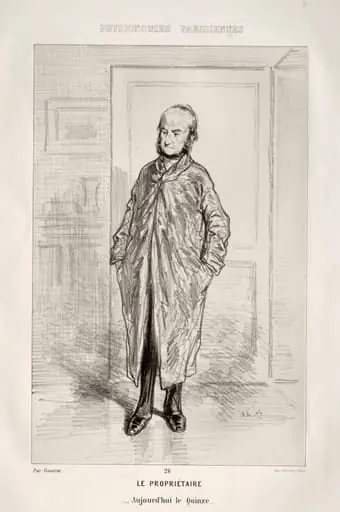
This black-and-white drawing, created in 1855 by Paul Gavarni, depicts Jean-Baptiste Isabey, a French artist and miniaturist. Rendered in ink with subtle tonal gradations, the portrait captures Isabey in a moment of quiet composure. The work is part of the collection at The Cleveland Museum of Art, where it serves as a record of a prominent figure in 19th-century French artistic circles.
Subject & Meaning
The subject, Jean-Baptiste Isabey, was a respected painter and teacher known for his portraits and miniature works. Gavarni portrays him not as a grand figure but as a composed gentleman, standing outdoors with a top hat and cane—symbols of urban refinement. The pose suggests dignity and quiet authority, reflecting Isabey’s status within Parisian artistic society without overt embellishment.
Technique & Style
Gavarni employed soft, fluid ink lines and delicate shading to model the figure’s form, using chiaroscuro to suggest volume and ambient light. The background is minimally suggested with faint washes, allowing the figure to emerge gently from the paper. The sketchlike quality reflects a mid-19th-century French preference for intimate, observational portraiture over formal rigidity.
History & Provenance
Created in 1855, the drawing was likely made during Gavarni’s period of active illustration and portraiture in Paris. It entered the Cleveland Museum of Art’s collection through documented acquisition, preserving its connection to French artistic culture of the era. No earlier provenance is widely recorded, but its survival suggests it was valued by collectors of contemporary graphic art.
Context
In mid-1800s France, graphic portraiture flourished in journals and albums, often capturing cultural figures with immediacy.
In mid-1800s France, graphic portraiture flourished in journals and albums, often capturing cultural figures with immediacy. Gavarni, known for his satirical and observational drawings, turned here to a more reverent tone. Isabey, a bridge between Neoclassical tradition and emerging realism, embodied the artistic transition of the time, making this portrait a quiet document of professional continuity.
Legacy
Though not widely exhibited, the drawing remains a representative example of French graphic portraiture from the 1850s. It illustrates how artists like Gavarni used ink and wash to convey character with restraint, influencing later generations of illustrators and caricaturists who valued nuance over spectacle. The work endures as a modest but precise record of a cultural figure.
Artist & collection

Artist
Paul Gavarni was the pen name of Sulpice Guillaume Chevalier (13 January 1804 – 24 November 1866), a French illustrator, born in Paris.