Artwork
We have given no one the right to doubt the sincerity of our manifestations. Therefore, say briefly today: No! Prussia's attitude does not in the least disquiet us
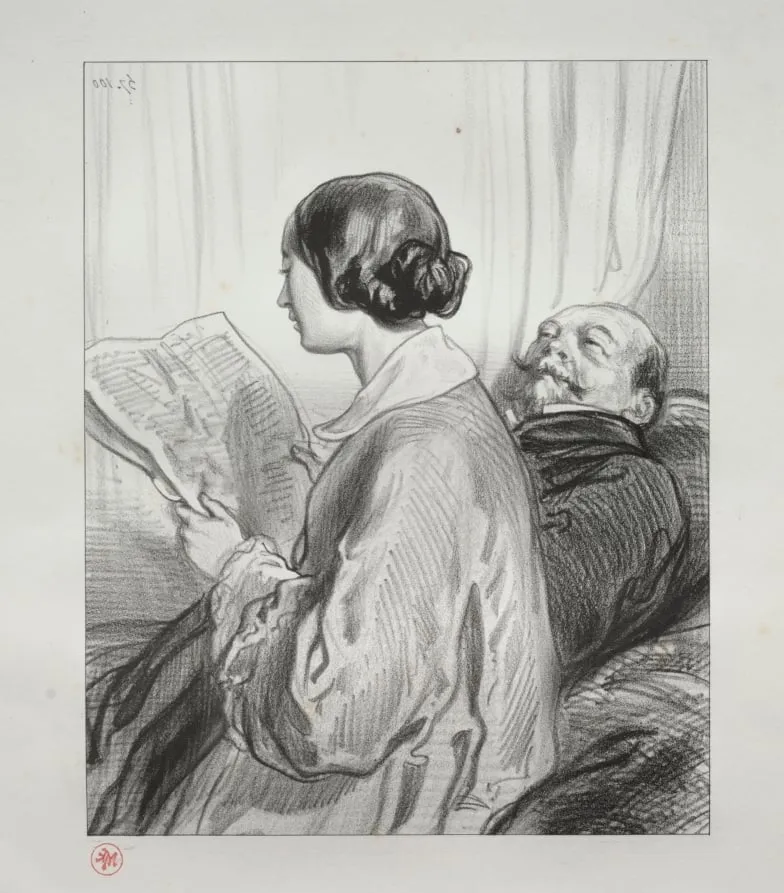
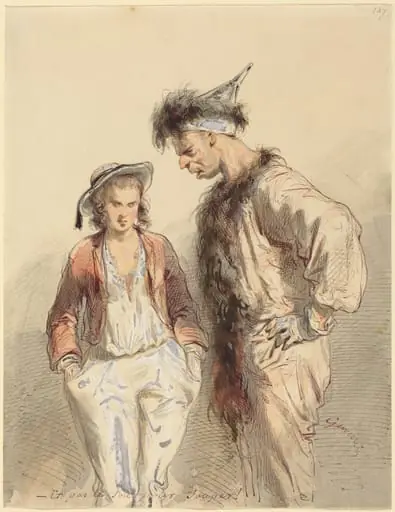
We have given no one the right to doubt the sincerity of our manifestations. Therefore, say briefly today: No! Prussia's attitude does not in the least disquiet us is a print by the Romanticist artist Paul Gavarni. It dates from 1858 and is held in the collection of the Cleveland Museum of Art.
About this work
Overview
The contrast between the title’s rhetorical force and the quietness of the imagery invites reflection on the gap between public rhetoric and private life.
This print, dated around 1858, is the work of French artist Paul Gavarni. It is part of the collection at The Cleveland Museum of Art. Though its title references political defiance toward Prussia, the image itself depicts an intimate domestic scene. The contrast between the title’s rhetorical force and the quietness of the imagery invites reflection on the gap between public rhetoric and private life.
Subject & Meaning
The scene portrays a woman standing, reading aloud from a large book, while an older man reclines nearby, gazing up at her. Their postures suggest a moment of calm intimacy, unmarked by tension or urgency. The political phrase in the title appears disconnected from the image, suggesting irony or a layered commentary on how public declarations often mask personal realities.
Technique & Style
Gavarni employs subtle chiaroscuro to model forms through soft gradations of light and shadow. Heavy curtains frame the composition, enhancing the sense of enclosure. The textures of fabric and skin are rendered with delicate hatching, emphasizing quiet realism over dramatic flair. The absence of sharp outlines contributes to the scene’s subdued, contemplative mood.
History & Provenance
Created in the late 1850s, the print emerged during a period of political instability in Europe, when France and Prussia were in diplomatic tension. Gavarni, known for satirical social commentary, often juxtaposed political slogans with mundane scenes. The work entered the Cleveland Museum of Art’s collection through documented acquisition, though its early ownership history remains unrecorded.
Context
In mid-19th-century France, printmaking was a primary medium for public discourse. Gavarni’s work frequently critiqued bourgeois norms and political posturing through understated imagery. This piece reflects a broader trend of using domestic interiors to question the authenticity of national rhetoric, aligning with contemporary literary and artistic movements that valued psychological nuance over grandeur.
Legacy
Though not widely exhibited, the print exemplifies Gavarni’s ability to embed political ambiguity within quiet domestic moments. It influenced later illustrators who sought to convey social critique without overt symbolism. Its enduring presence in museum collections underscores its role as a quiet but persistent commentary on the dissonance between public assertion and private experience.
Artist & collection

Artist
Paul Gavarni was the pen name of Sulpice Guillaume Chevalier (13 January 1804 – 24 November 1866), a French illustrator, born in Paris.

 Les Partageuses
 Discussion of Budget
 The Drawing Lesson (Berthe Morisot Drawing with Her Daughter)
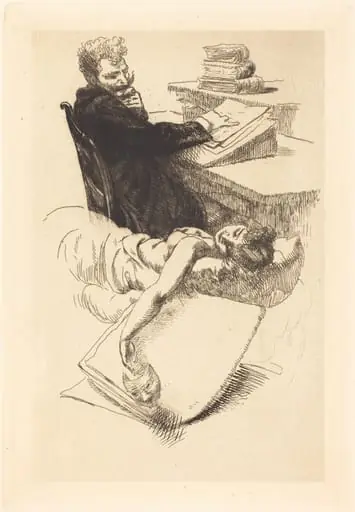 Frontispiece for "L'Affaire Clémenceau"
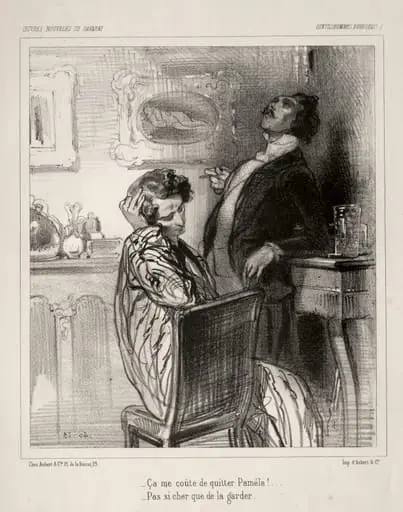 Gentils Hommes Bourgeois
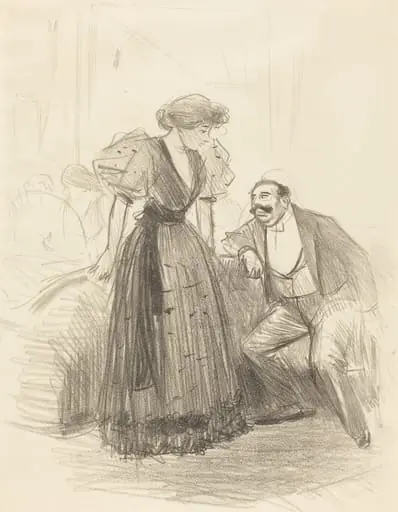 En soirée (At an Evening Party)
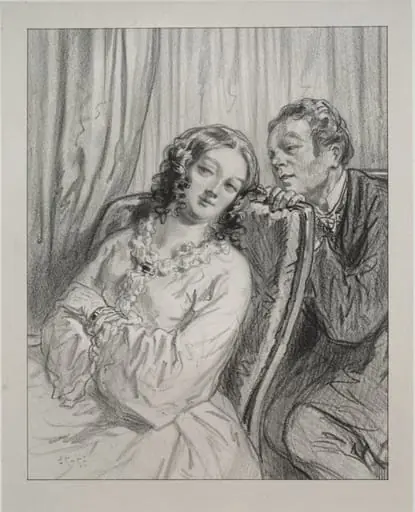 Masques et visages: Par-ci, par-la: M'ame Beauminet, ta majeste...
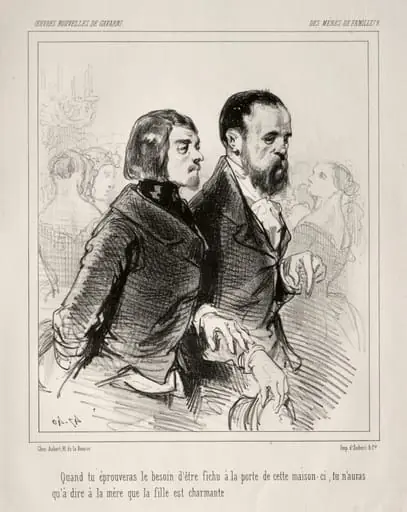 Des Mères de Famille!
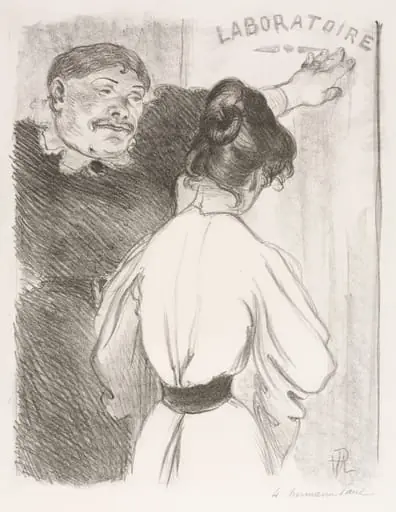 Laboratoire
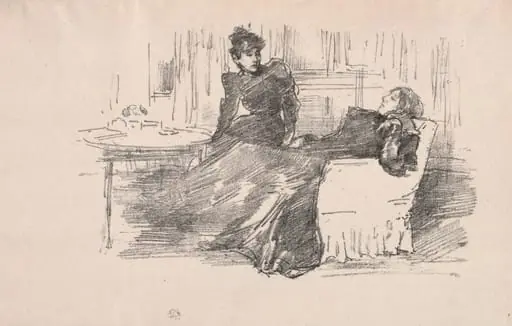 The Sisters
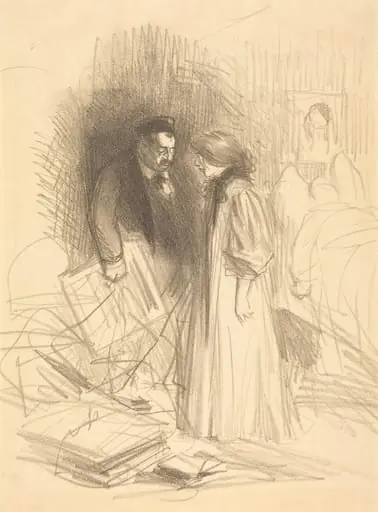 "J'ose pas encore aller le décrocher...ça lui fera trop de peine." ("I don't dare take them down...it would hurt him too much.")
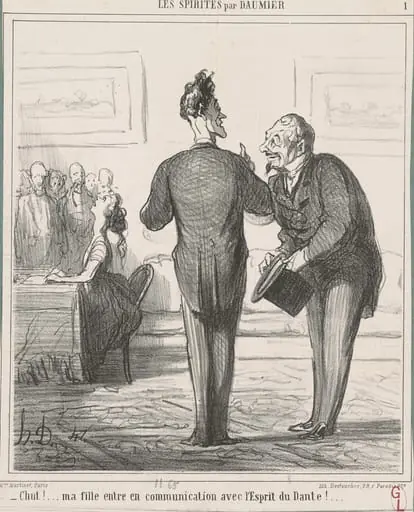 Chut ... ! Ma fille est en communication ...