Artwork
Fantasy
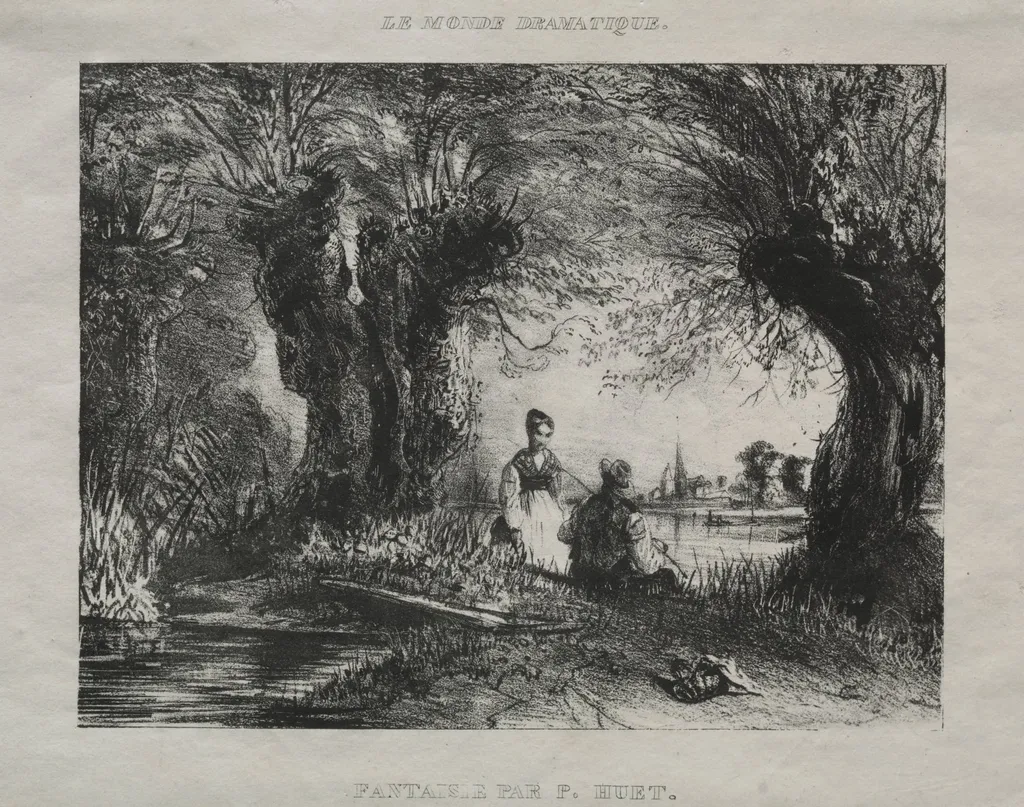
Fantasy is a print by the Romanticist artist Paul Huet. It dates from 1836 and is held in the collection of the Cleveland Museum of Art.
About this work
Overview
Trained under Gros and Guérin, he was deeply affected by British landscape practices, particularly after encountering Richard Parkes Bonington’s work.
Paul Huet, born in Paris in 1803, produced *Fantasy* in 1836 as a print reflecting his transition from academic neoclassicism to a more personal, nature-centered vision. Trained under Gros and Guérin, he was deeply affected by British landscape practices, particularly after encountering Richard Parkes Bonington’s work. This piece belongs to his mature phase, where mood and atmosphere took precedence over narrative clarity, aligning with broader Romantic tendencies in French art of the 1830s.
Subject & Meaning
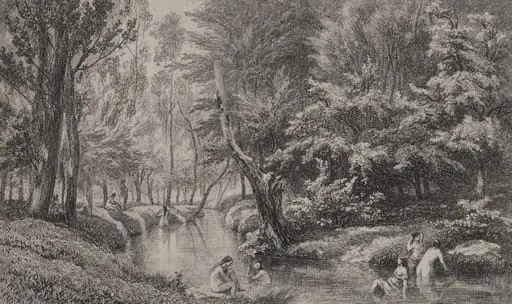
The scene depicts a solitary woman in a white dress, cloaked in a dark shawl, standing quietly beside a still body of water. A man sits nearby, turned away, his posture suggesting introspection. Neither figure engages with the other or the viewer; their isolation within the landscape implies an inner emotional state. The title *Fantasy* hints at an idealized, dreamlike space rather than a documented place, emphasizing feeling over literal representation.
Technique & Style
Huet employed subtle tonal gradations and delicate chiaroscuro to evoke depth and stillness. The brushwork in the print is restrained, favoring soft edges and muted contrasts to enhance the hushed atmosphere. Influenced by British watercolor traditions, he avoided bold outlines, instead building form through layered washes and delicate line work. The composition is deliberately uncluttered, directing attention to the quiet interaction between figures and their natural surroundings.
History & Provenance
Created during Huet’s period of active printmaking, *Fantasy* was likely produced as part of a series exploring poetic landscapes. While specific early ownership records are sparse, the work entered institutional collections in the late 19th century, reflecting growing recognition of Huet’s role in bridging French and British Romantic aesthetics. It remains a key example of his graphic output, distinct from his more widely known oil paintings.
Context
In the 1830s, French artists increasingly turned away from historical and mythological subjects toward intimate, emotionally resonant landscapes. Huet’s work responded to this shift, influenced by the British landscape tradition showcased at the 1824 Salon and by the writings of thinkers like Rousseau. His prints contributed to a growing interest in nature as a vessel for personal and spiritual reflection, aligning with broader Romantic currents across Europe.
Legacy
Huet’s *Fantasy* exemplifies a quiet revolution in 19th-century French printmaking: the elevation of landscape as a vehicle for mood rather than documentation. Though less celebrated than contemporaries like Delacroix, his emphasis on atmosphere and psychological nuance influenced later generations of Symbolist and Barbizon artists. The print endures as a subtle testament to the power of restraint in visual storytelling.
Artist & collection
Artist
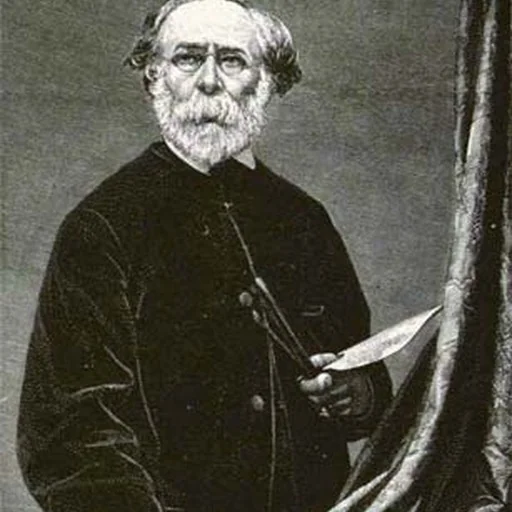
Paul Huet (French pronunciation: ; 3 October 1803 – 8 January 1869) was a French painter and printmaker born in Paris.

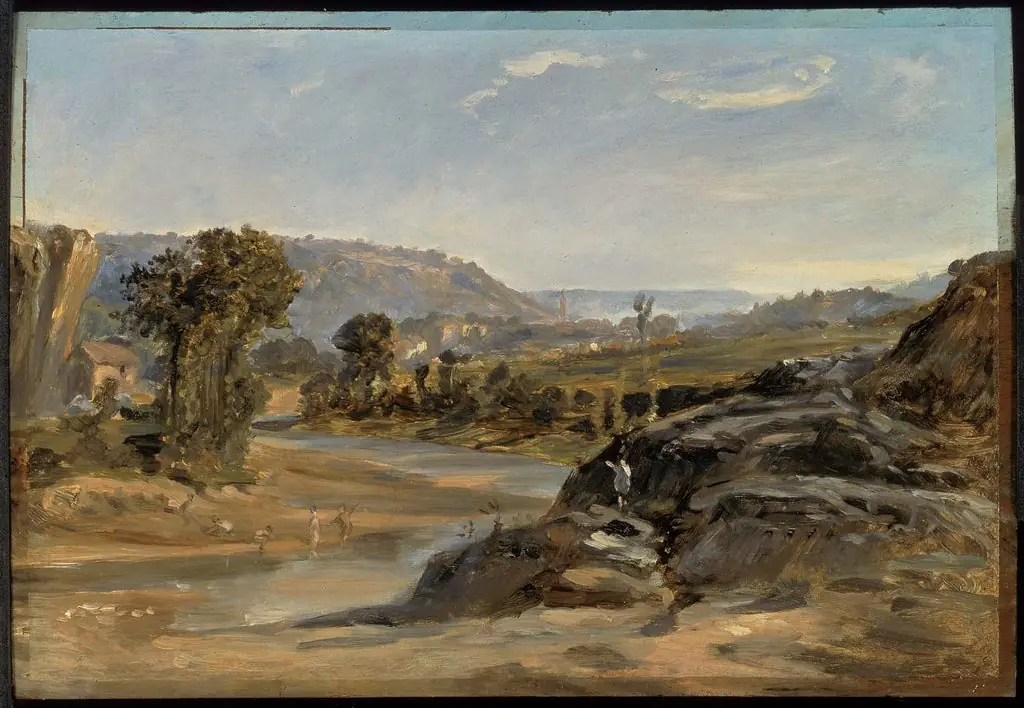
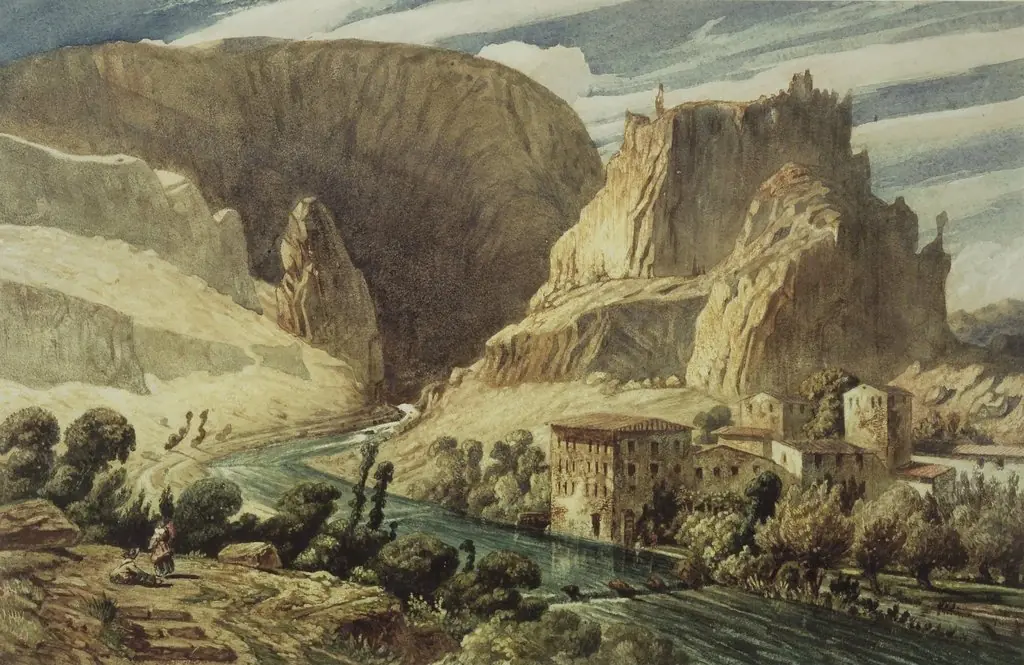
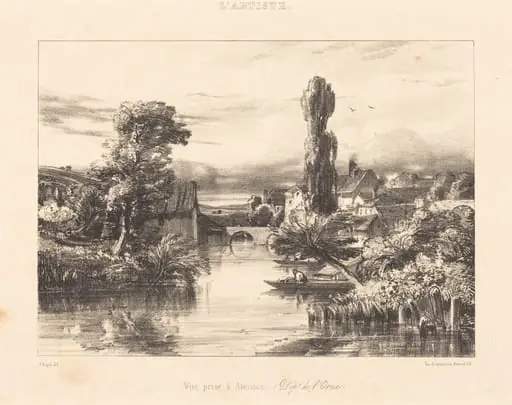 View at Alençon (Vue prise à Alençon)
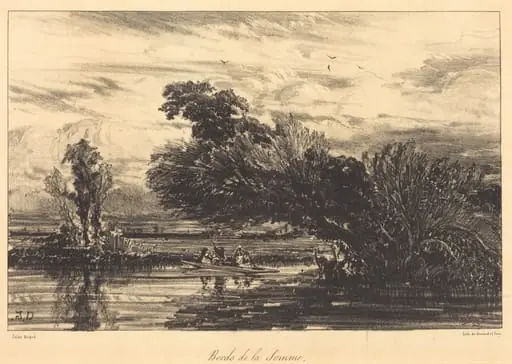 Bank of the Somme (Bords de la Somme)
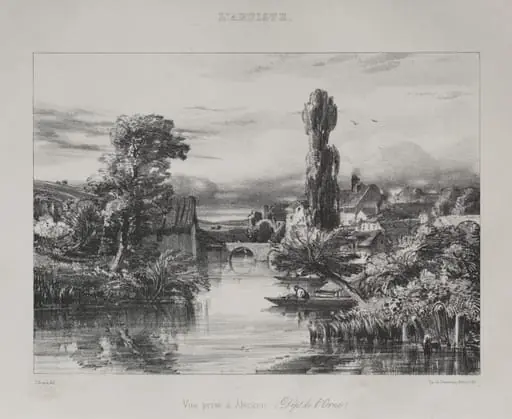 View near Alençon
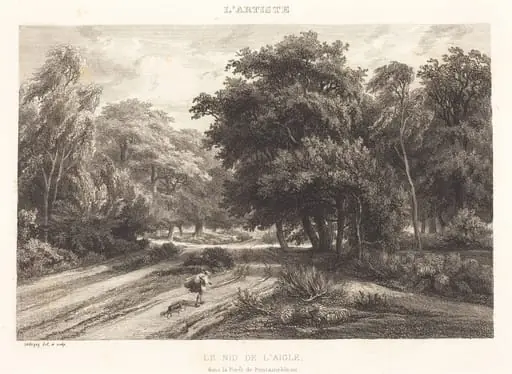 The Eagle's Nest in the Forest of Fontainebleau (Le nid de l'aigle dans la Foret de Fontainebleau
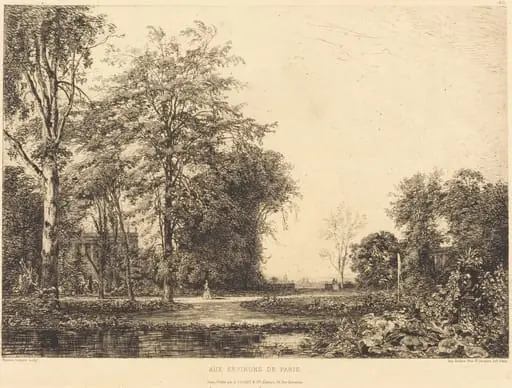 Aux environs de Paris
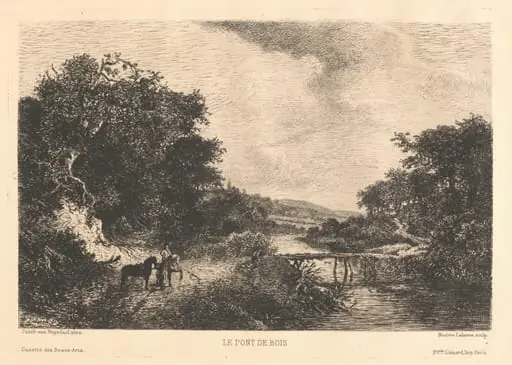 Le Pont de Bois
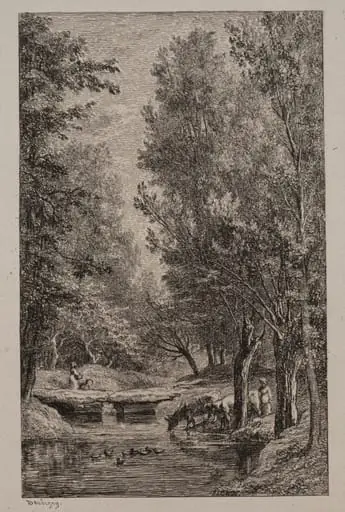 Brook in the Val Mondois
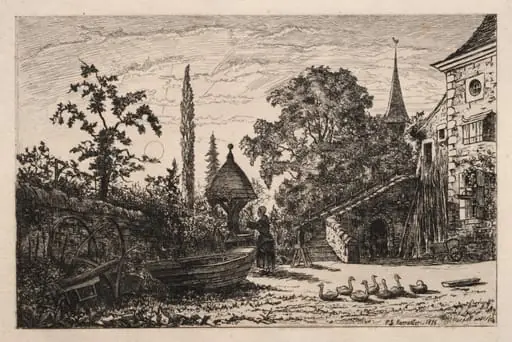 The Courtyard
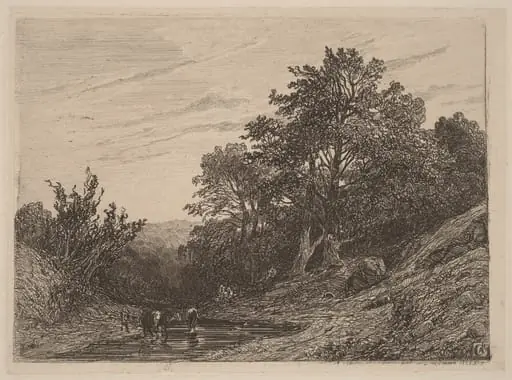 Herd in a Stream
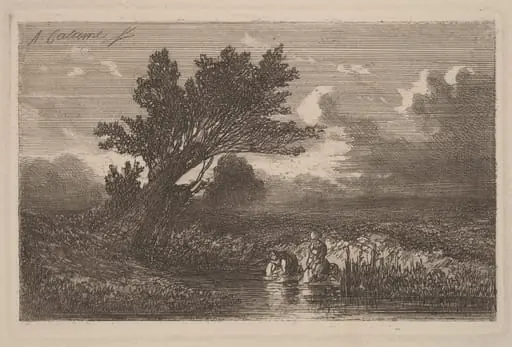 Laundresses
 The Bathers
 Water Elms