Artwork
Landscapes: The Entrance of a Forest
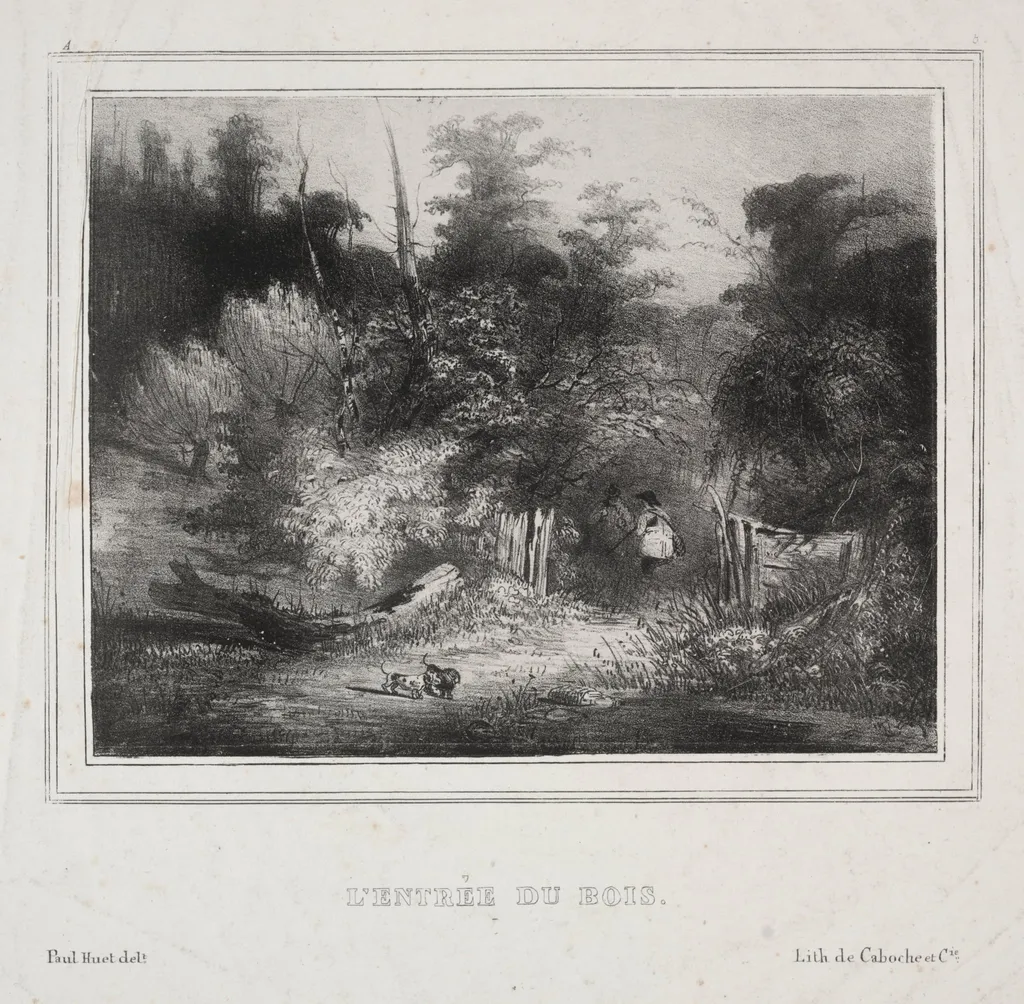
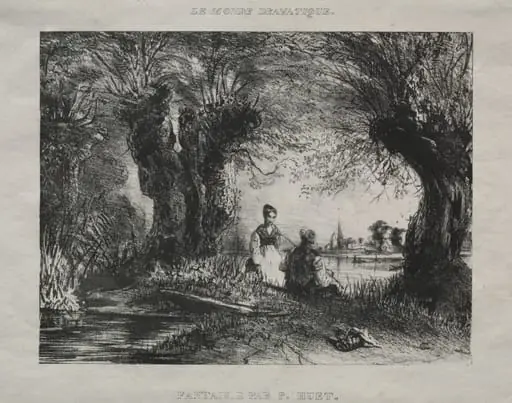
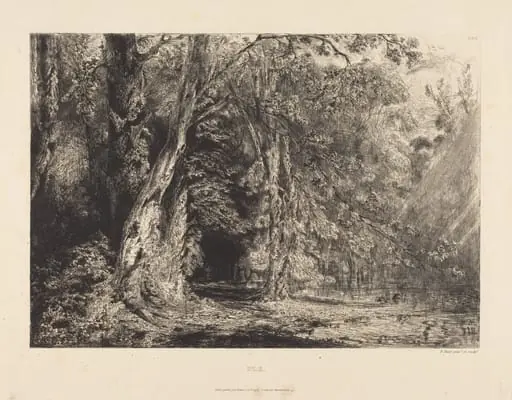
Landscapes: The Entrance of a Forest is a print by the Romanticist artist Paul Huet. It dates from 1829 and is held in the collection of the Cleveland Museum of Art.
About this work
Overview
His early academic training gave way to a personal focus on natural scenery after exposure to the work of Richard Parkes Bonington.
Paul Huet, a French artist trained in Paris, produced the print *L’Entrée du Bois* in 1829. His early academic training gave way to a personal focus on natural scenery after exposure to the work of Richard Parkes Bonington. This print exemplifies his turn toward direct observation of the landscape, moving beyond idealized classical forms toward a more intimate, atmospheric depiction of the natural world.
Subject & Meaning
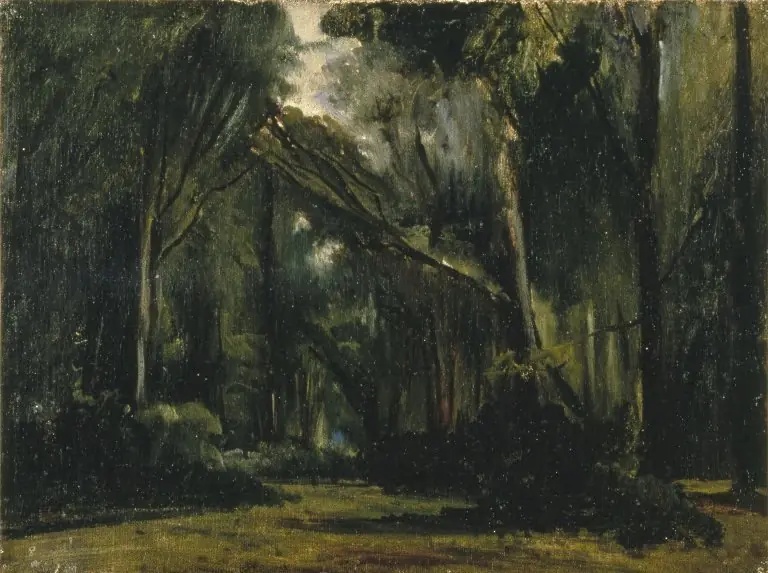
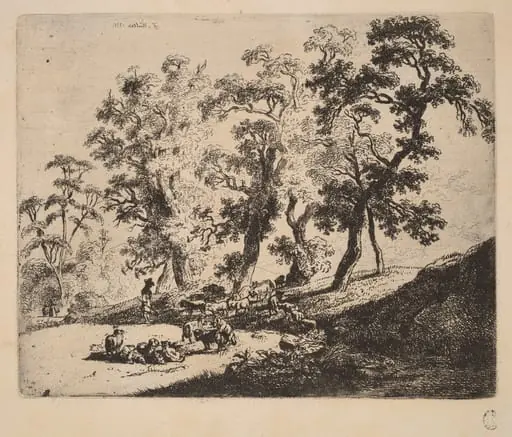
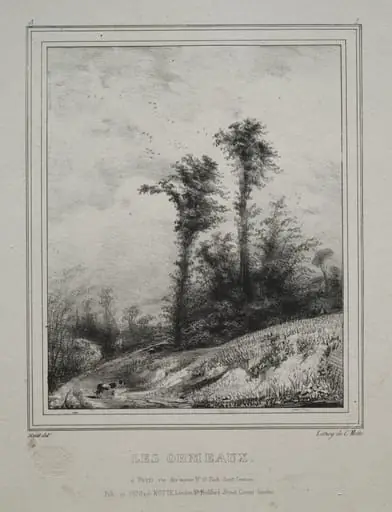
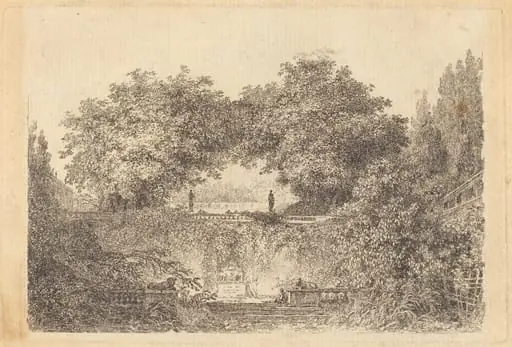
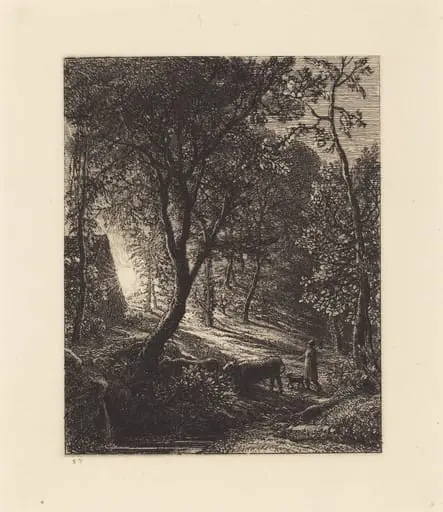
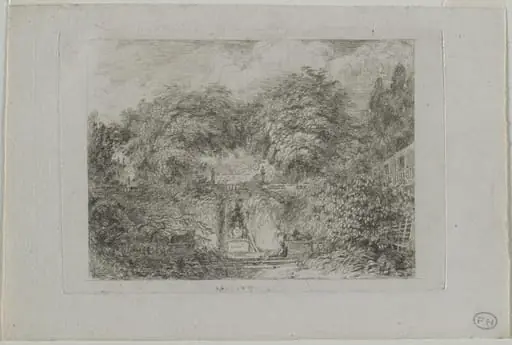
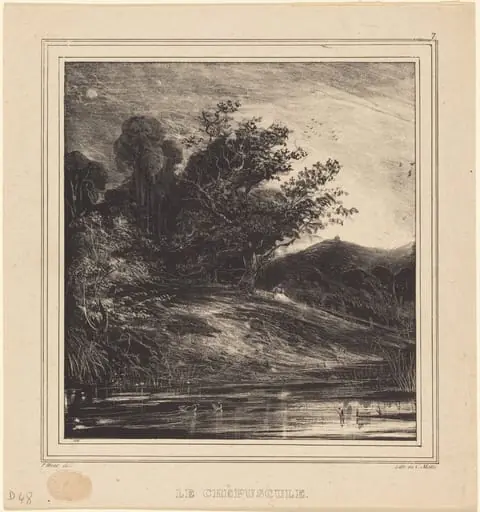
The scene portrays a secluded forest path, where a solitary horseman pauses near a wooden fence, gazing toward a quiet stream. A dog lingers by the water’s edge, and a small boat rests on the bank, suggesting transient human presence. The dense foliage and deep shadows evoke a sense of stillness and introspection, reflecting a Romantic sensibility that finds emotional resonance in the quiet, untamed wilderness.
Technique & Style
Huet employed fine, layered shading to build depth and texture in the forest’s undergrowth, rocks, and tree trunks. The print’s tonal gradations create a moody, immersive atmosphere, with light barely piercing the thick canopy. Delicate linework defines the fence and water’s ripple, while the rider and dog are rendered with minimal detail, emphasizing scale and solitude within the overwhelming natural environment.
History & Provenance
Created in 1829, the print was part of Huet’s broader exploration of landscape as a subject worthy of serious artistic attention. It entered the collection of The Cleveland Museum of Art, where it remains as a testament to his role in shifting French printmaking toward naturalism. Its preservation reflects early institutional recognition of Romantic-era graphic works beyond traditional historical or mythological themes.
Context
In the 1820s, French artists began rejecting rigid neoclassical conventions in favor of personal, emotional responses to nature. Huet’s work aligns with this movement, influenced by British landscape traditions and the growing interest in plein air study. His prints contributed to a broader European trend where nature was no longer a backdrop but a subject imbued with psychological weight and quiet drama.
Legacy
Huet’s *L’Entrée du Bois* stands as an early example of French printmaking embracing Romantic ideals through direct observation. While less widely known than his contemporaries, his focus on atmospheric detail and emotional tone influenced later generations of landscape artists who prioritized mood over narrative. The print remains a quiet but significant marker in the transition from academic tradition to modern landscape expression.
Own this work as a print
Artist & collection
Artist
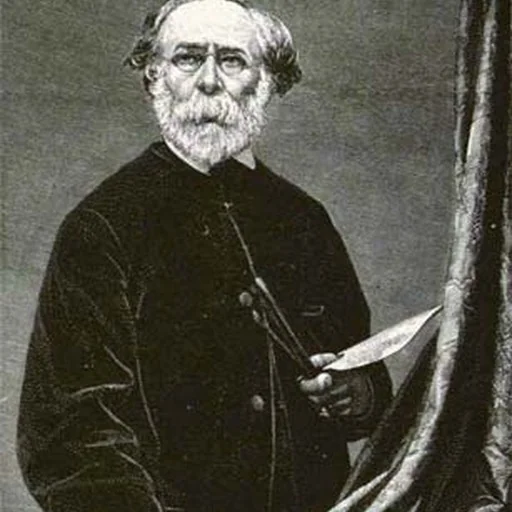
Paul Huet (French pronunciation: ; 3 October 1803 – 8 January 1869) was a French painter and printmaker born in Paris.