Artwork
Landscape with a train
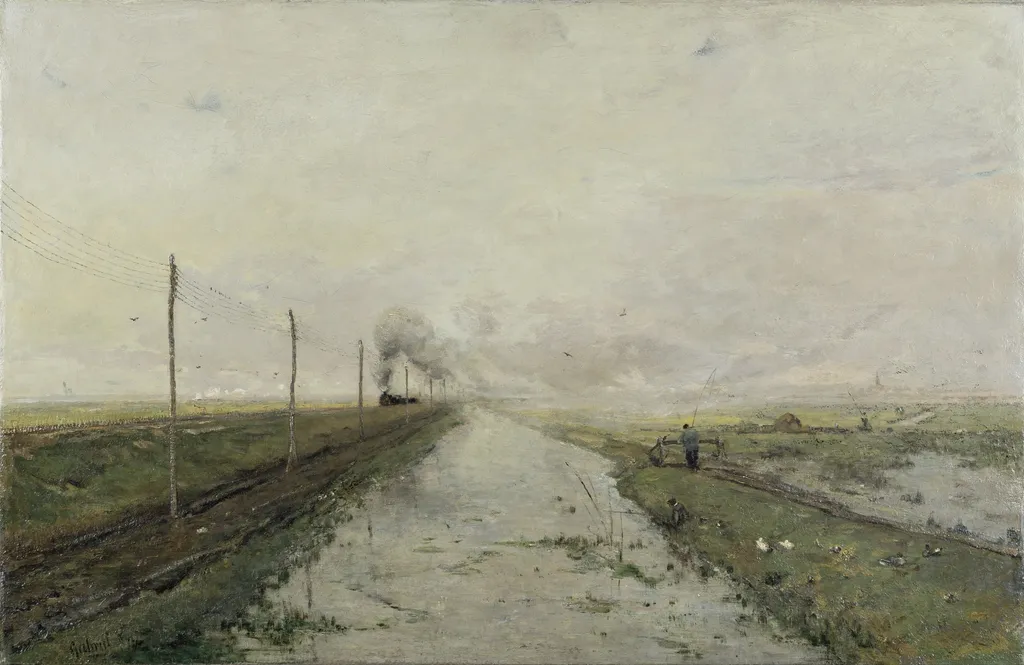
Landscape with a train is an oil painting by the Impressionist artist Paul Joseph Constantin Gabriël. It dates from 1894 and is held in the collection of the Kröller-Müller Museum.
About this work
Overview
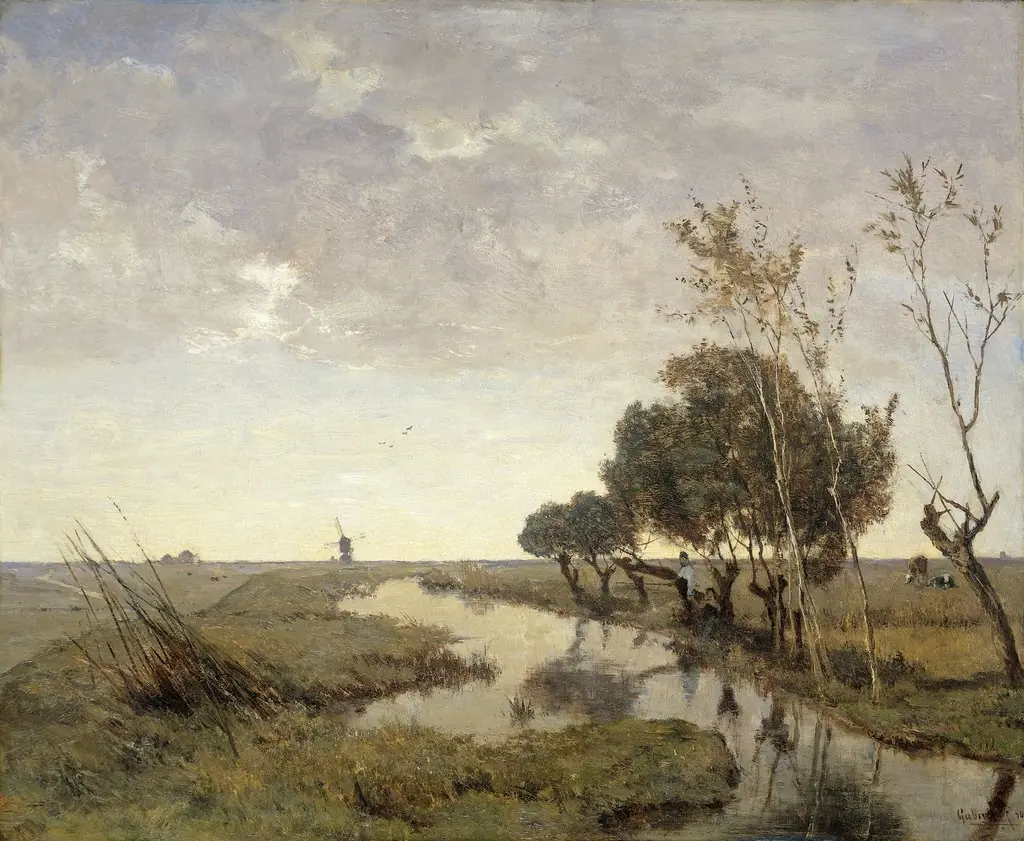
Paul Gabriël’s 1894 oil painting *Landscape with a Train* captures a quiet Dutch countryside scene where a steam locomotive traverses the distance. The composition balances natural elements—a reflective water surface, cloudy sky, and distant hills—with industrial detail, creating a moment of stillness amid movement.
Subject & Meaning
The work juxtaposes the tranquil shoreline, where two figures—one with a fishing rod—stand, against the faint silhouette of a train emitting a thin column of smoke. This contrast highlights the coexistence of traditional rural life and the encroaching modernity of rail travel in the late nineteenth century.
Technique & Style
Executed in oil, Gabriël employs a restrained palette of muted grays and earth tones, characteristic of the Hague School’s impressionistic approach. Loose brushwork renders the cloudy sky and water’s surface, while sharper delineation defines the locomotive, emphasizing its presence without disrupting the overall atmospheric harmony.
History & Provenance
Created in 1894, the painting entered the collection of the Kröller‑Müller Museum, where it remains on display. The museum’s acquisition reflects its commitment to representing Dutch landscape painting and the transition toward industrial subjects within that tradition.
Context
During the 1890s, Dutch artists increasingly incorporated contemporary infrastructure into pastoral settings, mirroring societal shifts. Gabriël, a member of the Hague School, contributed to this dialogue by integrating the train—a symbol of progress—into his otherwise bucolic visual language.
Own this work as a print
Artist & collection
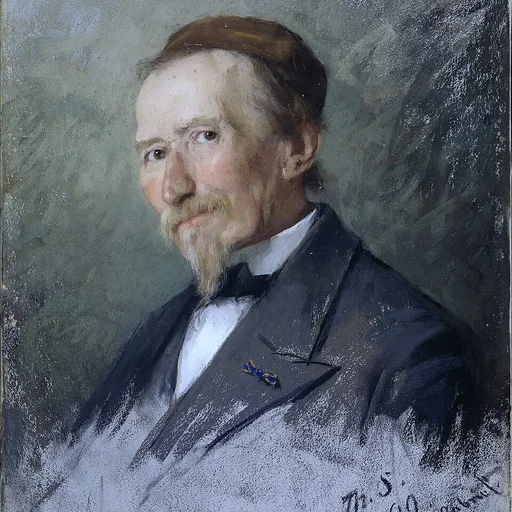
Artist
Paul Joseph Constantin Gabriël
Paul Joseph Constantin Gabriël or Paul Gabriël (5 July 1828 – 23 August 1903) was a painter, draftsman, watercolorist, and etcher who belonged to the Hague School.