Artwork
Totems, Old Shipyard, Rye
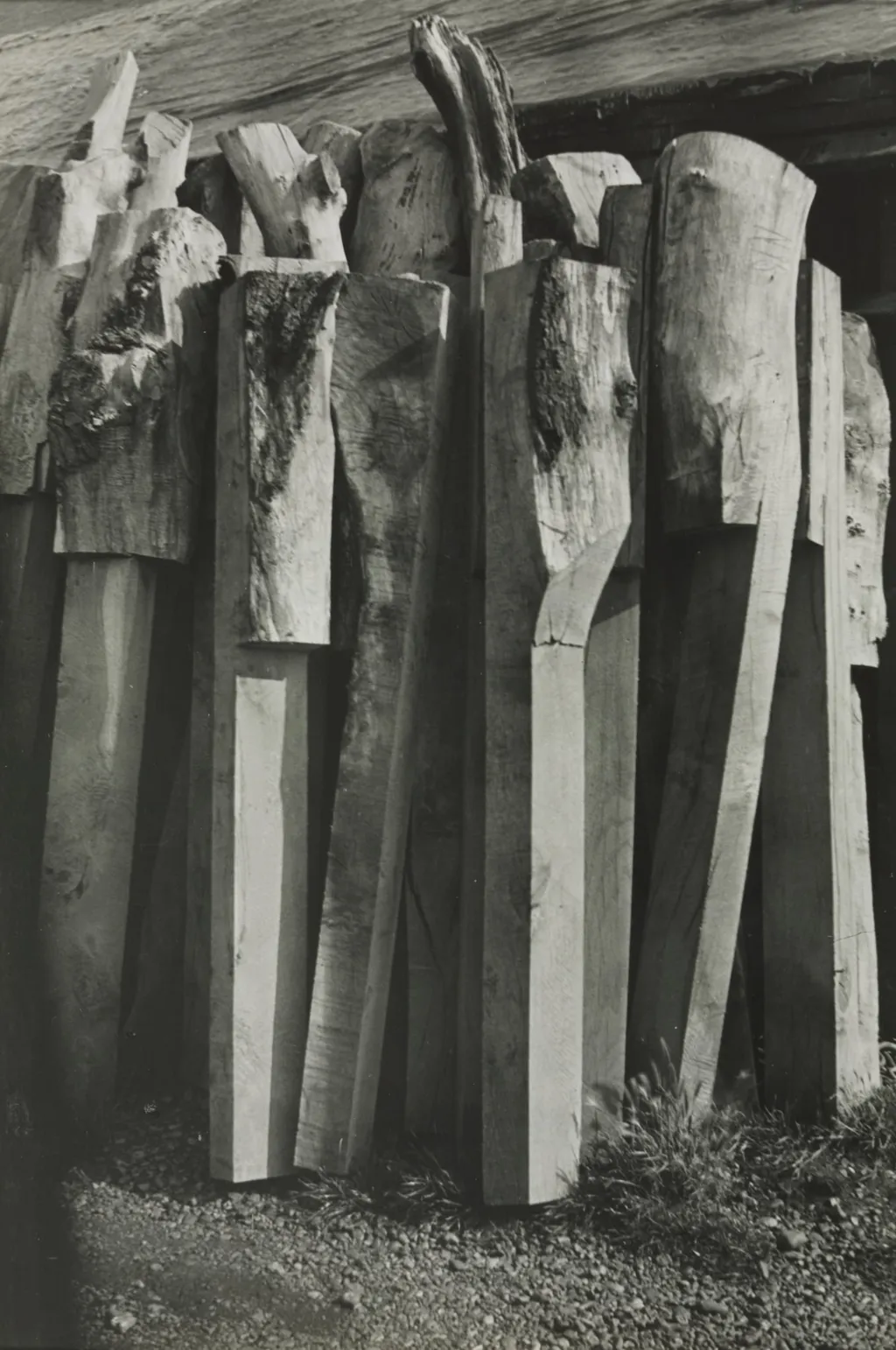
Totems, Old Shipyard, Rye is a photography by Paul Nash. It dates from 1932 and is held in the collection of the Cleveland Museum of Art. Taken in 1932, this photograph captures a row of decaying wooden posts in an abandoned shipyard near Rye, England.
About this work
Overview
The scene reflects Nash’s interest in the quiet decay of industrial remnants and their transformation into symbolic forms through careful framing and light.
Taken in 1932, this photograph captures a row of decaying wooden posts in an abandoned shipyard near Rye, England. Though often associated with Paul Nash’s painted works, this image is a photographic record of the same site he frequently depicted. The scene reflects Nash’s interest in the quiet decay of industrial remnants and their transformation into symbolic forms through careful framing and light.
Subject & Meaning
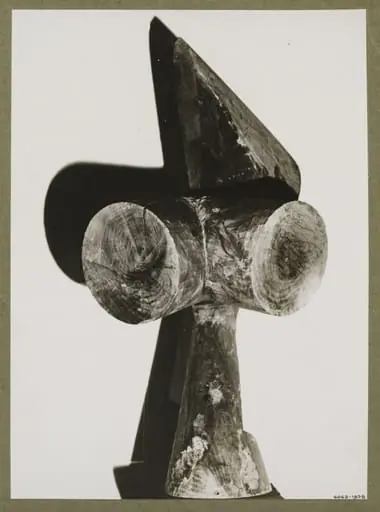
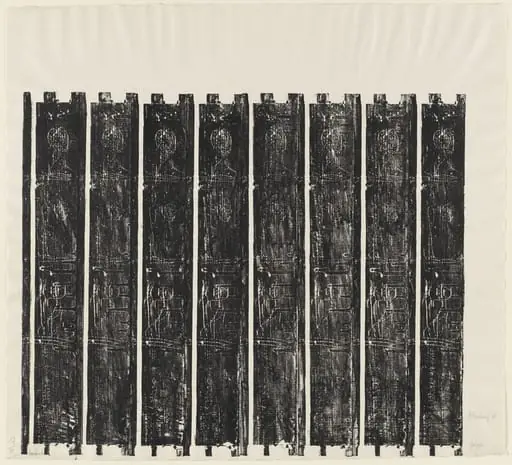
The upright posts, weathered and fractured, suggest the skeletal remains of a vanished structure—perhaps a dockside fence or mooring system. One post bears a faint, human-like carving with raised arms, evoking ritual or memory. The arrangement feels deliberate, not random, hinting at forgotten labor or ceremonial use. The emptiness around them amplifies a sense of abandonment, turning the ordinary into something hauntingly resonant.
Technique & Style
The photograph employs natural light and a low angle to emphasize the verticality and texture of the posts. Shadows deepen the cracks and splinters, enhancing their tactile presence. The composition is sparse, with no horizon or sky, isolating the objects against a muted ground. This framing aligns with Nash’s modernist tendency to elevate mundane ruins into meditative, almost archetypal forms.
History & Provenance
The photograph was made during Nash’s visits to the Rye shipyard, a site he returned to repeatedly in the early 1930s. It likely served as reference material for his paintings of the same location. The image remained in private hands until acquired by The Cleveland Museum of Art, where it is now preserved as part of a broader collection documenting British modernist responses to landscape and memory.
Context
In the early 1930s, Nash was increasingly drawn to sites of industrial decline, viewing them as repositories of cultural and emotional residue. His work during this period bridged realism and symbolism, influenced by both English Romantic landscape traditions and emerging surrealist ideas. The Rye shipyard, once active, had fallen into disuse, making it a potent subject for exploring time, loss, and the persistence of form.
Legacy
This photograph contributes to a body of work that redefined how modern artists engaged with the English countryside—not as pastoral idyll, but as layered terrain of memory and erosion. It influenced later generations interested in the poetic potential of decay and the quiet monumentality of forgotten structures, anchoring Nash’s legacy beyond painting into documentary and visual anthropology.
Artist & collection
Artist
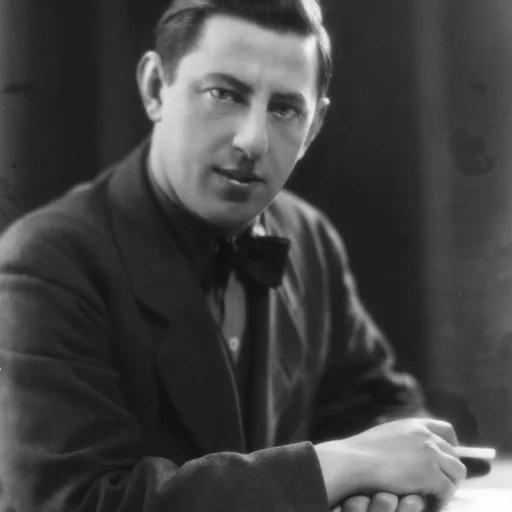
Paul Nash (11 May 1889 – 11 July 1946) was a British surrealist painter and war artist, as well as a photographer, writer and designer of applied art.