Artwork
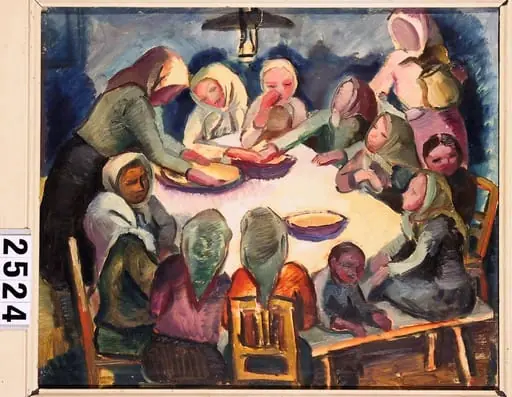
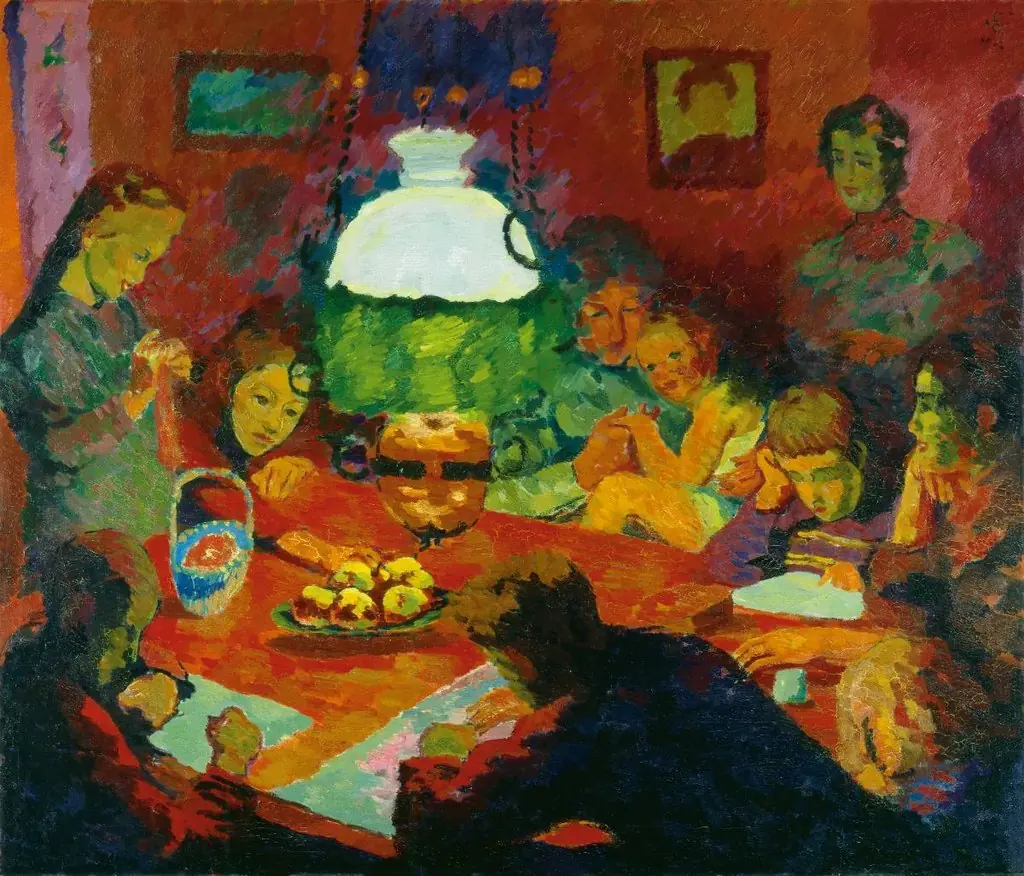
The Children's Supper
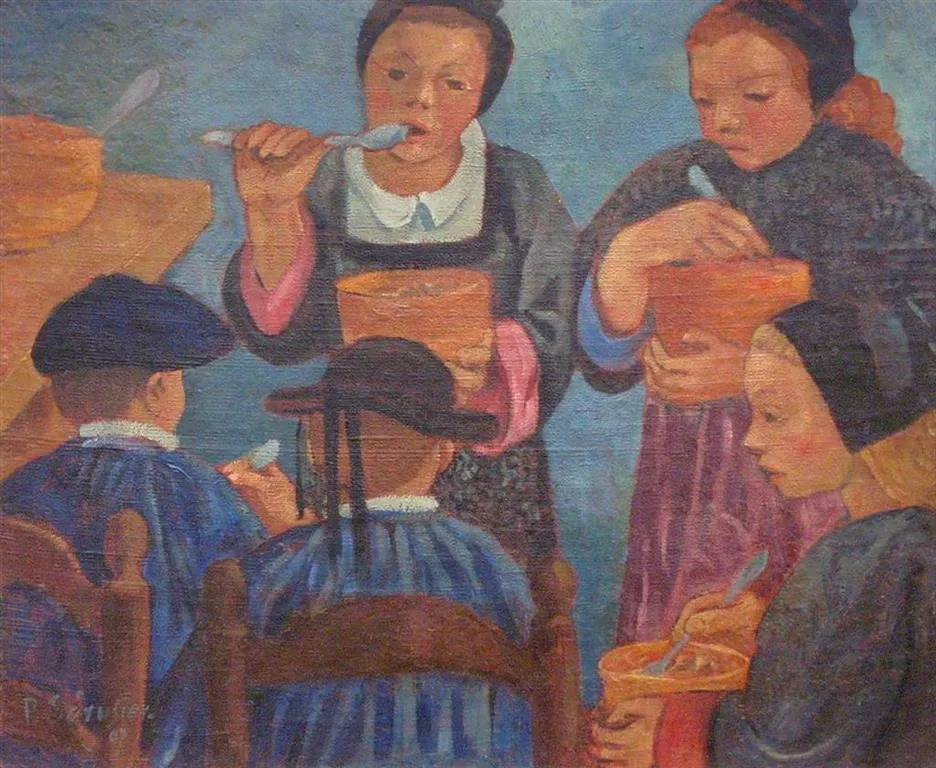
The Children's Supper is an oil painting by the Post-Impressionist artist Paul Sérusier. It dates from 1907 and is held in the collection of the Israel Museum.
About this work
Overview
Paul Sérusier’s 1907 oil on canvas entitled The Children’s Supper presents a modest domestic scene. A group of youngsters gathers around a low table, sharing a simple meal. The composition is set against a uniform blue backdrop that lends the work a tranquil atmosphere, while the muted palette emphasizes the quiet intimacy of the moment.
Subject & Meaning
The painting captures a fleeting, everyday ritual: children in plain clothing, some with hats, seated together and eating. Their gentle expressions and the soft illumination suggest a sense of community and innocence, inviting viewers to contemplate the simple pleasures of childhood and the shared experience of a communal supper.
Technique & Style
Sérusier employs a restrained color scheme, favoring earth tones and subtle blues that harmonize the figures with their surroundings. The brushwork is delicate, rendering the children’s faces and hands with a soft focus that conveys warmth. The overall effect is one of calm realism, avoiding dramatic contrasts in favor of a measured, intimate tone.
History & Provenance
Created in 1907, The Children’s Supper entered the collection of the Israel Museum, where it remains on display. Its acquisition reflects the museum’s commitment to representing early twentieth‑century French painting, and the work has been part of the institution’s holdings for several decades.
Context
Sérusier, a former student of Paul Gauguin, was a pivotal figure in the development of the Nabis movement, which emphasized symbolic color and simplified forms. Although The Children’s Supper is more representational than some of his later abstractions, it retains the Nabis interest in mood and the emotional resonance of color.
Artist & collection

Artist
Paul Sérusier was a French painter who was a pioneer of abstract art and an inspiration for the avant-garde Nabis movement, Synthetism and Cloisonnism.