Artwork
Boats
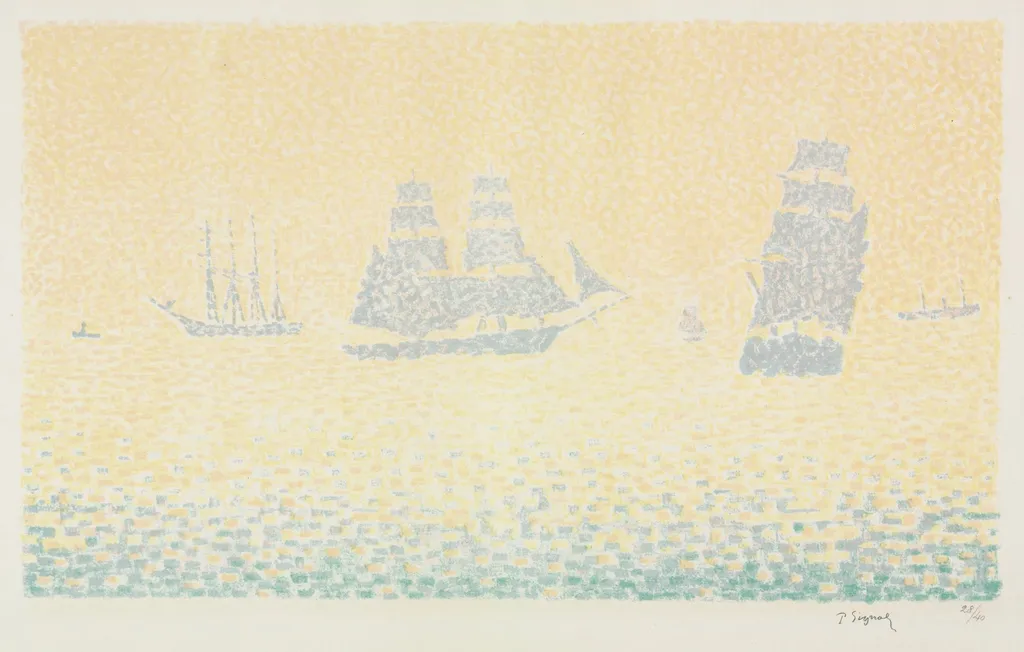
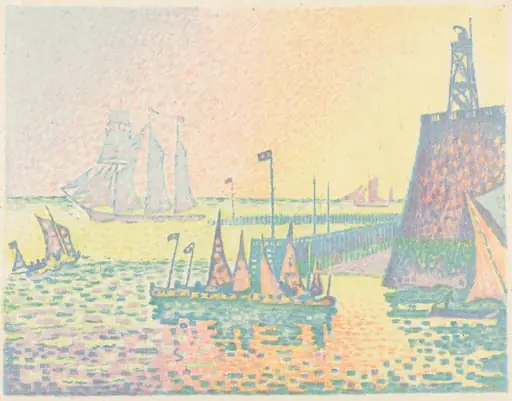
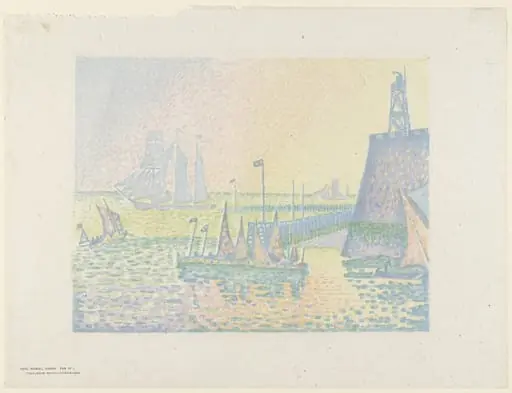
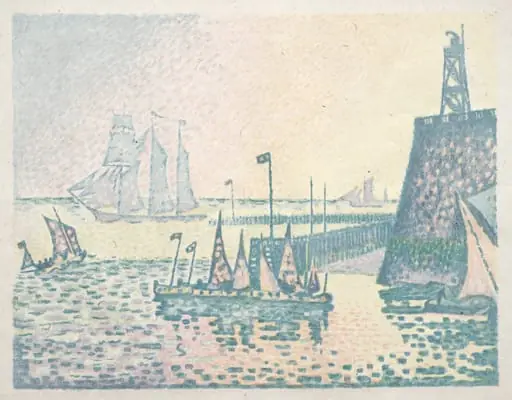
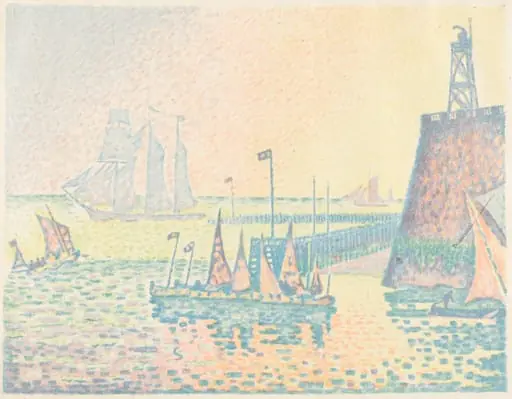
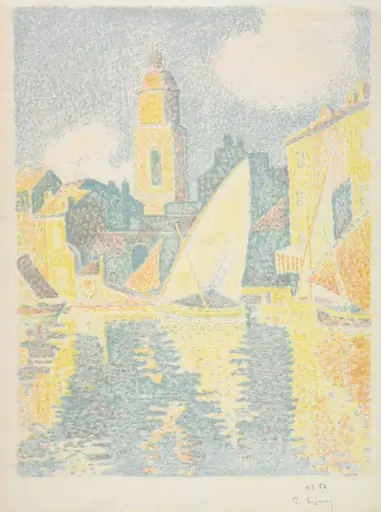
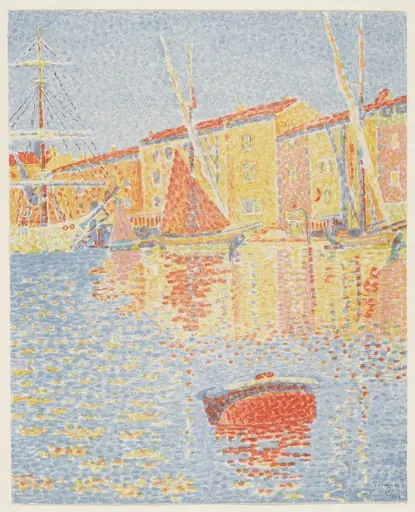
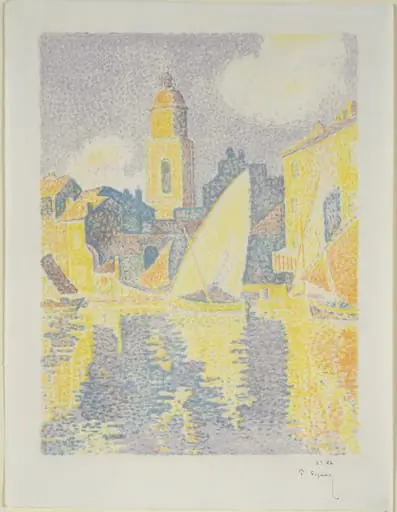
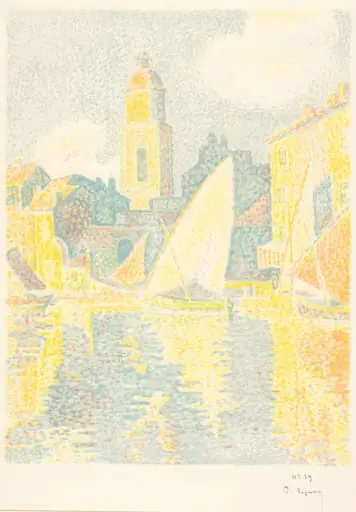
Boats is a print by the Impressionist artist Paul Signac. It dates from 1894 and is held in the collection of the Cleveland Museum of Art.
About this work
Overview
Signac’s approach prioritized optical mixing over blended pigments, creating a sense of atmospheric clarity through controlled chromatic placement.
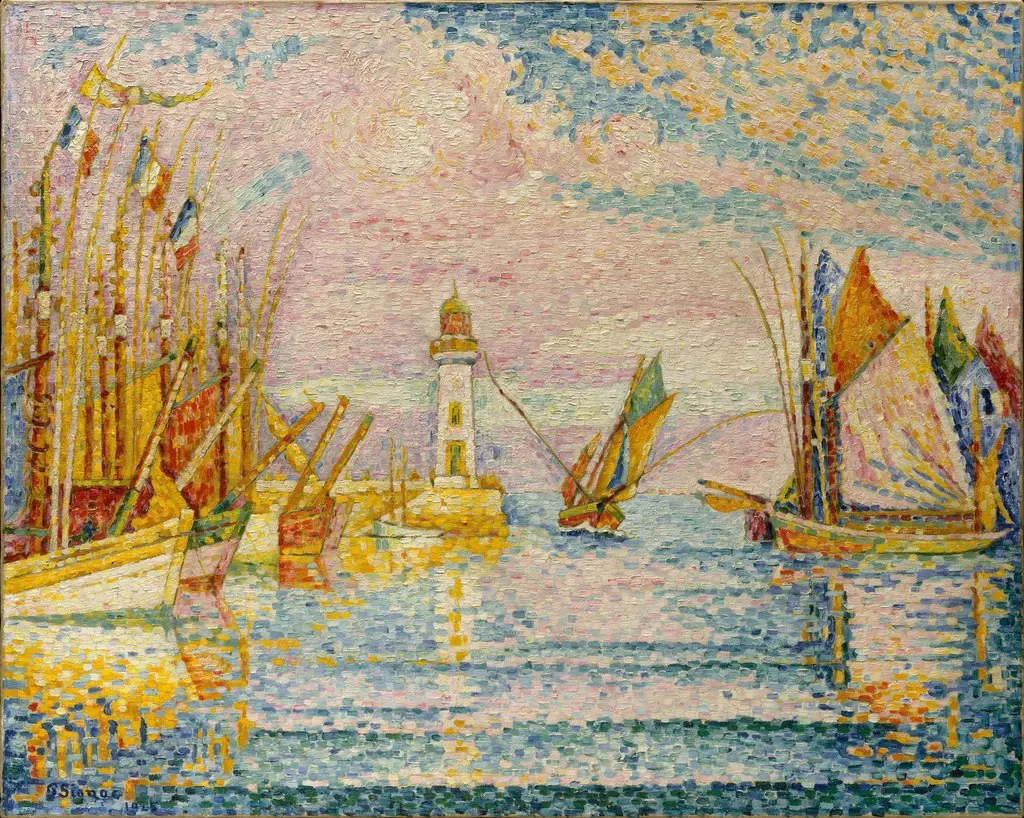
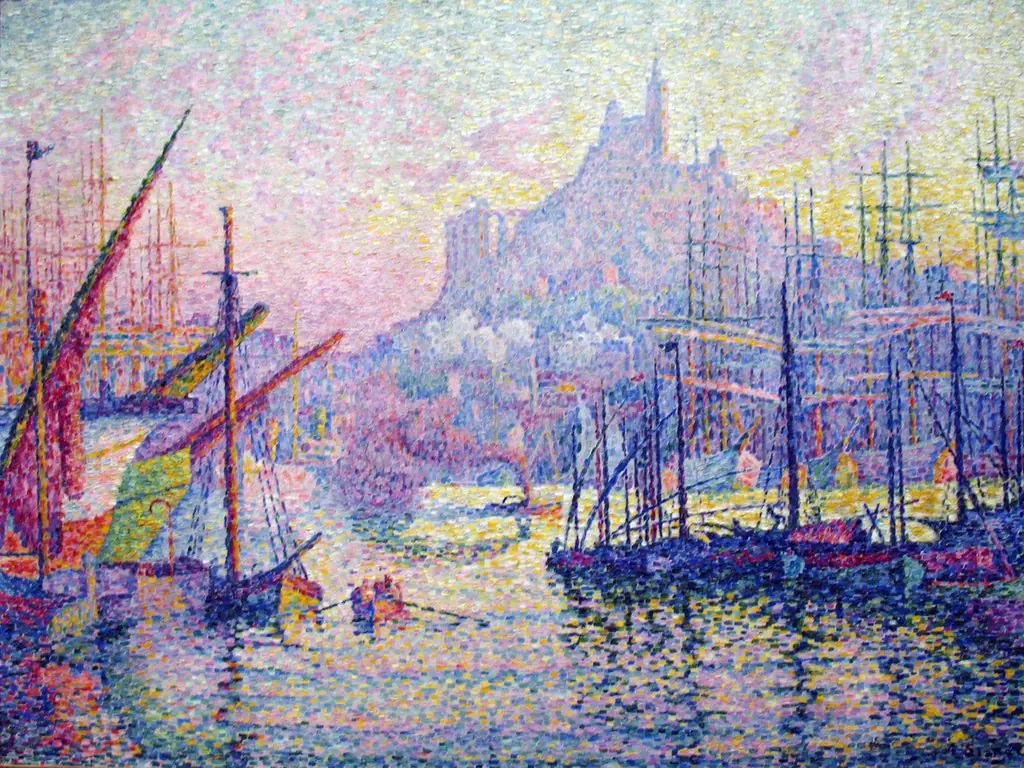
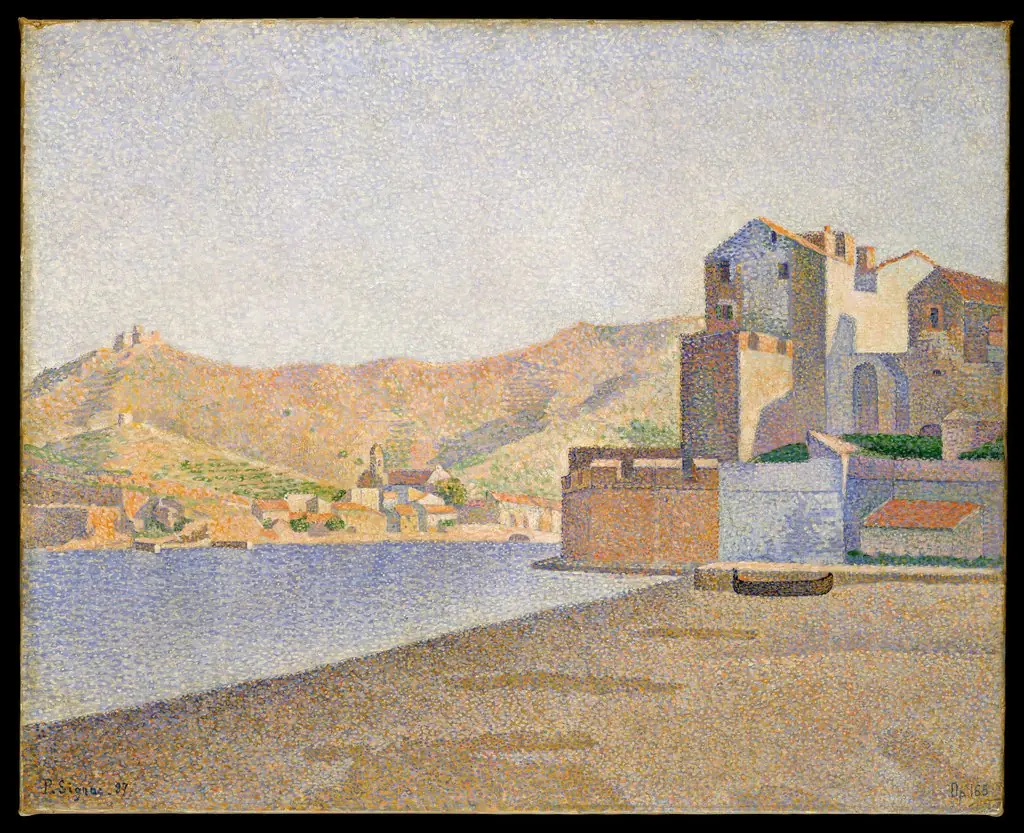
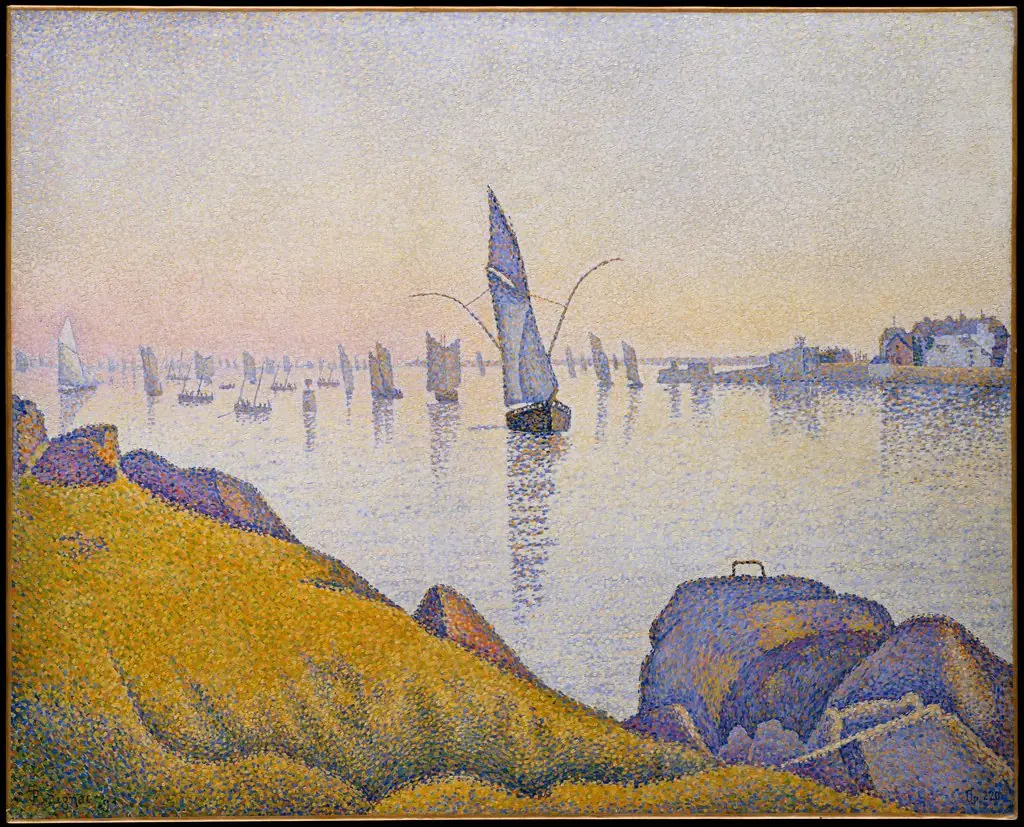
Paul Signac’s *Boats*, dated around 1894, is a print that exemplifies his commitment to Neo-Impressionist principles. Working in the tradition of Pointillism, he constructed the scene through meticulously placed dots of pure color. The composition centers on three vessels resting on a calm sea, their forms simplified against a luminous expanse. Signac’s approach prioritized optical mixing over blended pigments, creating a sense of atmospheric clarity through controlled chromatic placement.
Subject & Meaning
The painting depicts three sailing vessels on a shallow, yellow-toned sea, with a narrow strip of coastal land at the bottom. These maritime subjects reflect Signac’s personal connection to the sea, shaped by his years of sailing along the French coast. The boats are rendered without narrative detail, suggesting a quiet contemplation of movement and stillness. Their simplicity underscores the harmony between human activity and the natural rhythms of water and light.
Technique & Style
Signac employed the Pointillist method, applying tiny, uniform dots of color to form the sea, sky, and shoreline. Rather than blending pigments on the palette, he relied on optical mixing—allowing the viewer’s eye to blend hues like green, brown, and ochre from a distance. This technique heightened the luminosity of the scene and gave the surface a mosaic-like texture, reinforcing the scientific underpinnings of his approach to color theory.
History & Provenance
Created during a period when Signac was refining his Pointillist style after Seurat’s death, *Boats* belongs to a series of maritime works produced in the mid-1890s. While the exact provenance of this print is not widely documented, it aligns with his broader practice of producing prints and paintings of coastal scenes during his travels. These works were often exhibited in avant-garde circles, reinforcing his role in advancing Neo-Impressionism beyond painting.
Context
In the 1890s, Signac was a leading figure in the Neo-Impressionist movement, promoting a systematic, theory-driven approach to color and light. His focus on harbors and coastal landscapes reflected both personal interest and a broader cultural fascination with leisure and the sea. Unlike the fleeting impressions of earlier Impressionists, his work sought permanence through structure, aligning with contemporary scientific studies of optics and perception.
Legacy
Signac’s *Boats* exemplifies how Pointillism evolved into a distinct visual language beyond Seurat’s early experiments. His emphasis on color harmony and structured composition influenced later movements, including Fauvism and abstract art. Though less celebrated than his large canvases, works like this print demonstrate the adaptability of his technique and its enduring contribution to modern printmaking and color theory.
Artist & collection

Artist
Paul Victor Jules Signac ( seen-YAHK, French: ; 11 November 1863 – 15 August 1935) was a French Neo-Impressionist painter who, with Georges Seurat, helped develop the artistic technique Pointillism.