Artwork
Untitled
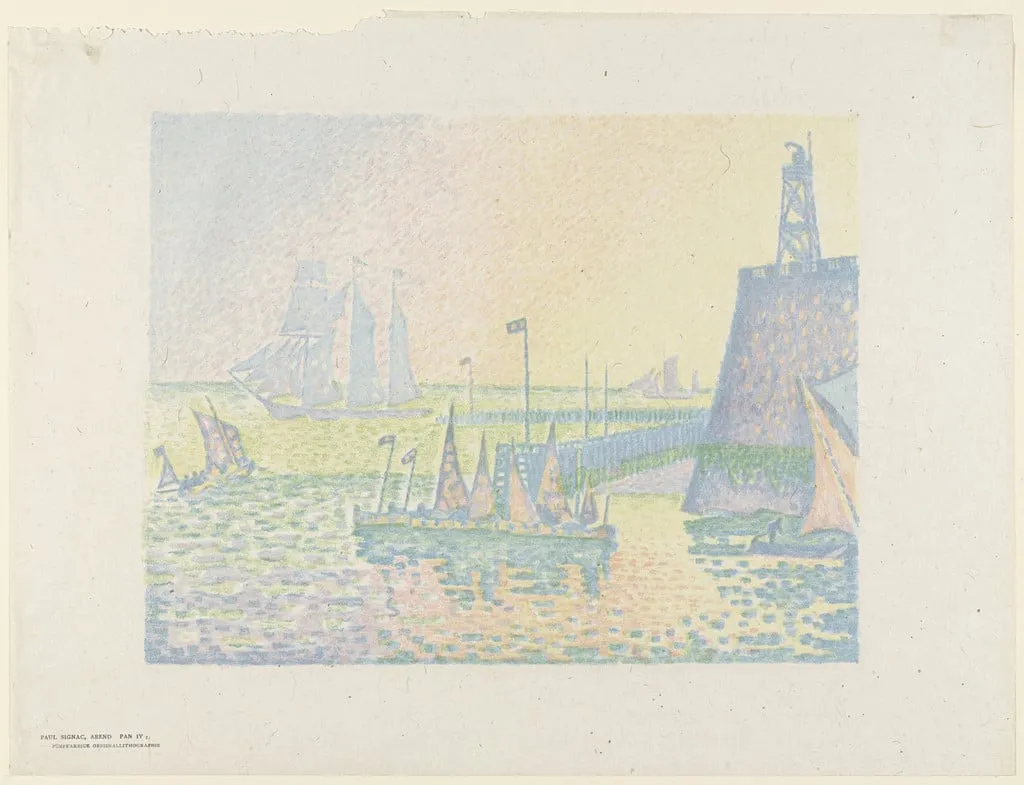
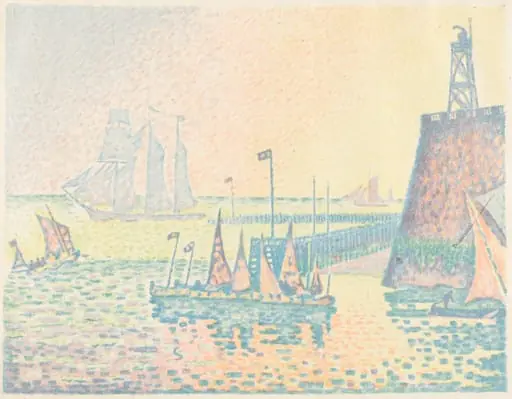
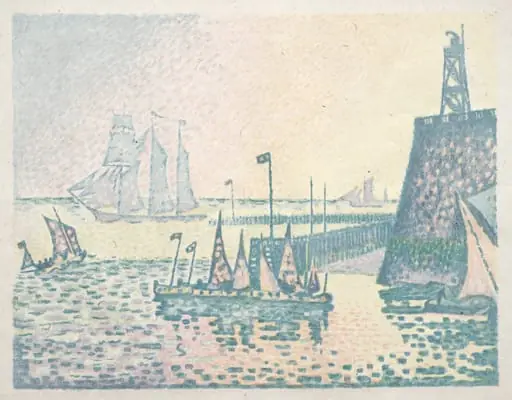
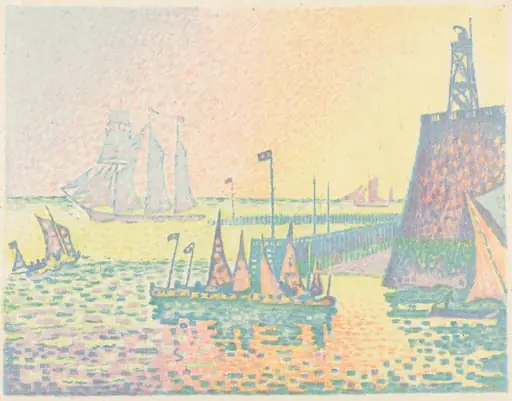
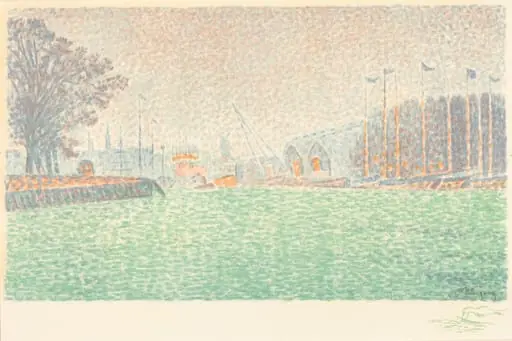
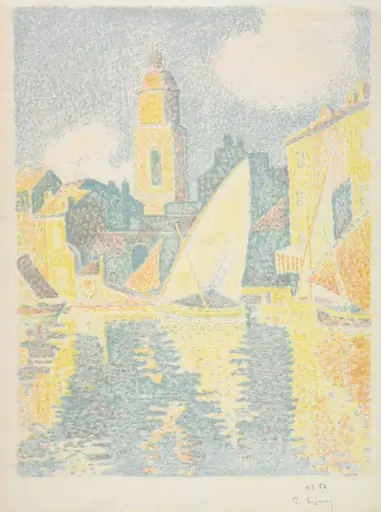
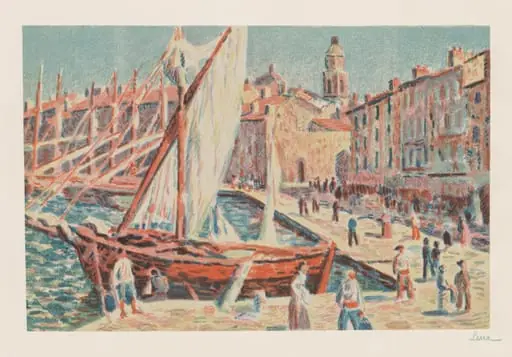
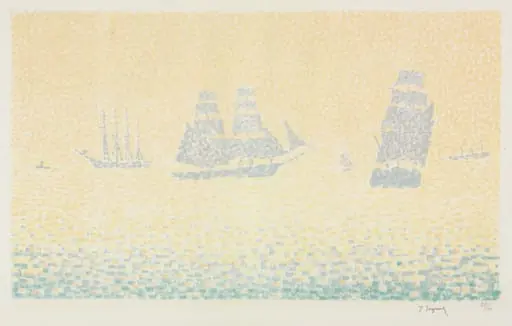
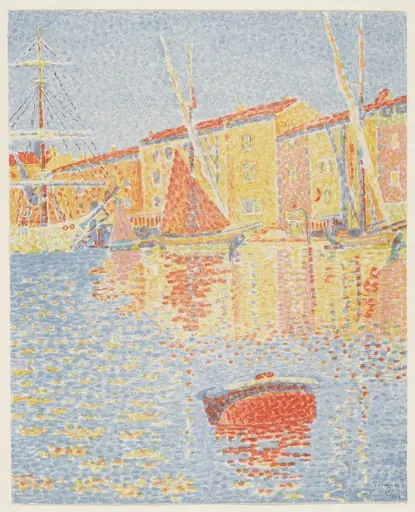
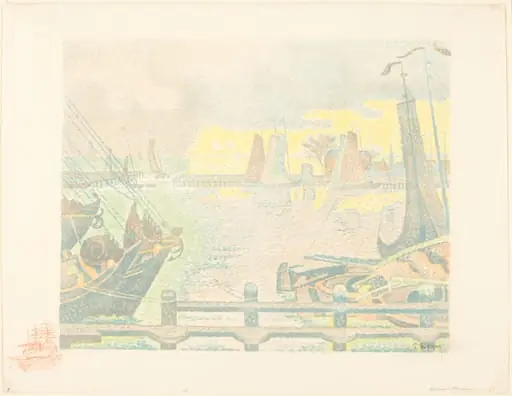
Untitled is an ink print by the Impressionist artist Paul Signac. It dates from 1898 and is held in the collection of the Museum of Modern Art.
About this work
Overview
Though often associated with oil painting, he extended his color theories to printmaking, using lithography to explore light and structure.
Paul Signac produced this 1898 lithograph as part of his sustained engagement with Neo-Impressionist principles. Though often associated with oil painting, he extended his color theories to printmaking, using lithography to explore light and structure. The work belongs to The Museum of Modern Art’s collection and reflects his commitment to systematic approaches to visual perception, even in smaller-scale formats.
Subject & Meaning
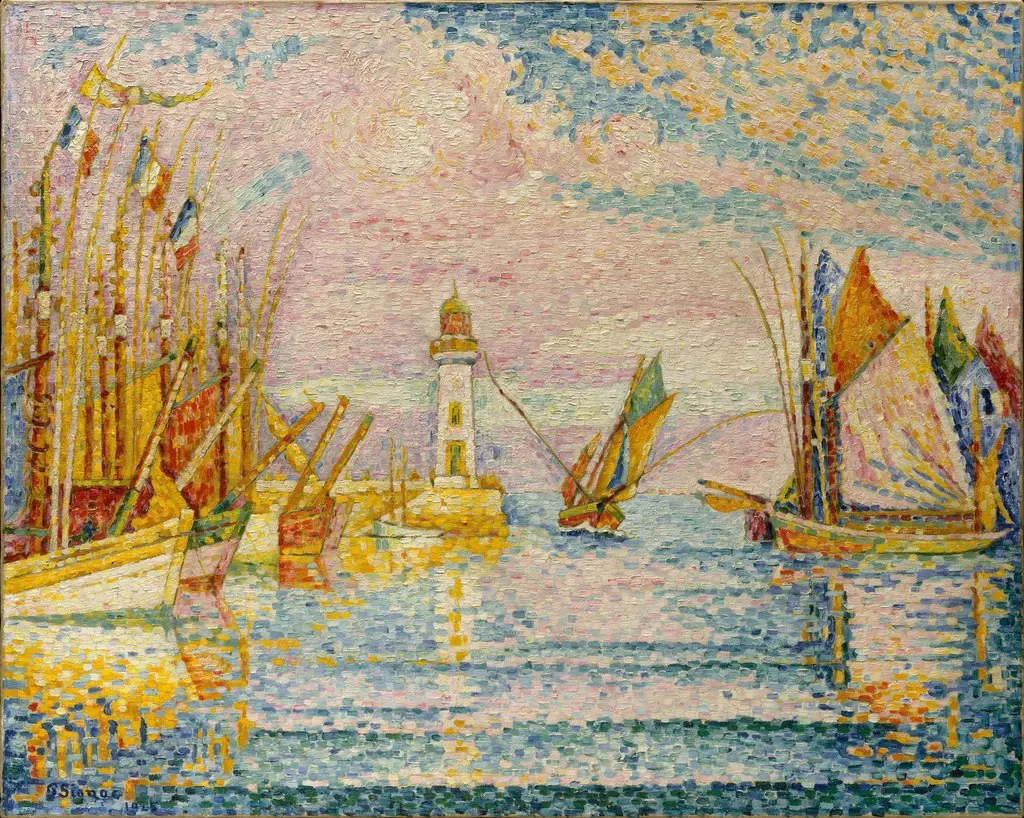
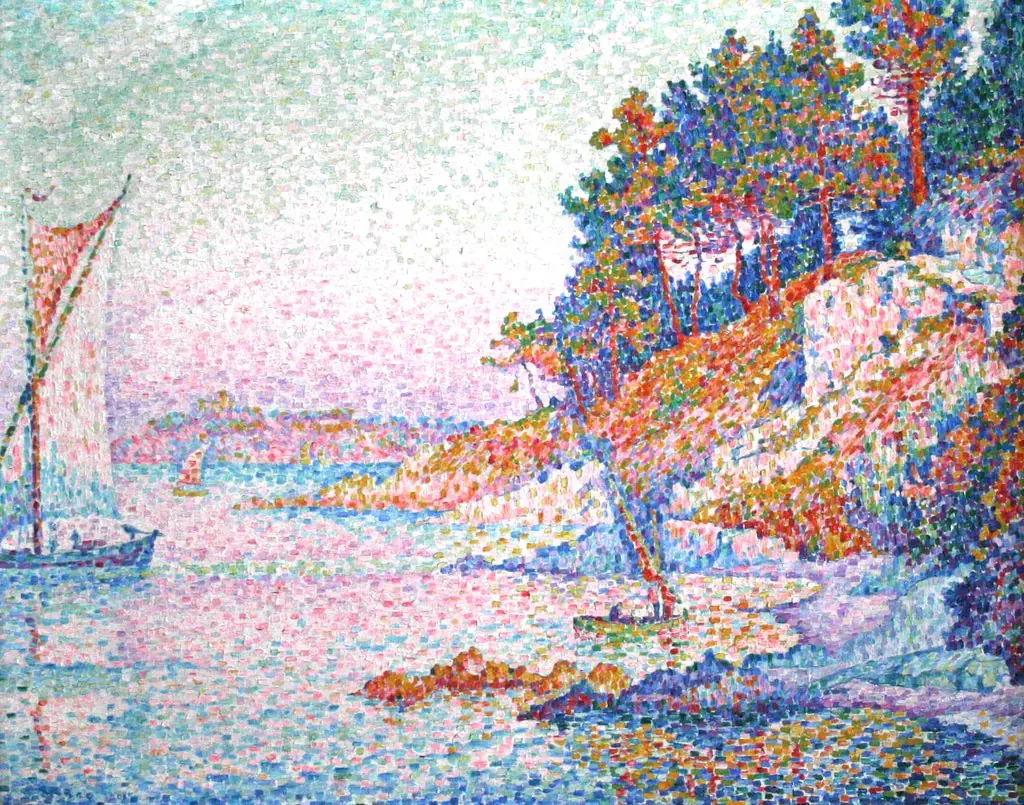
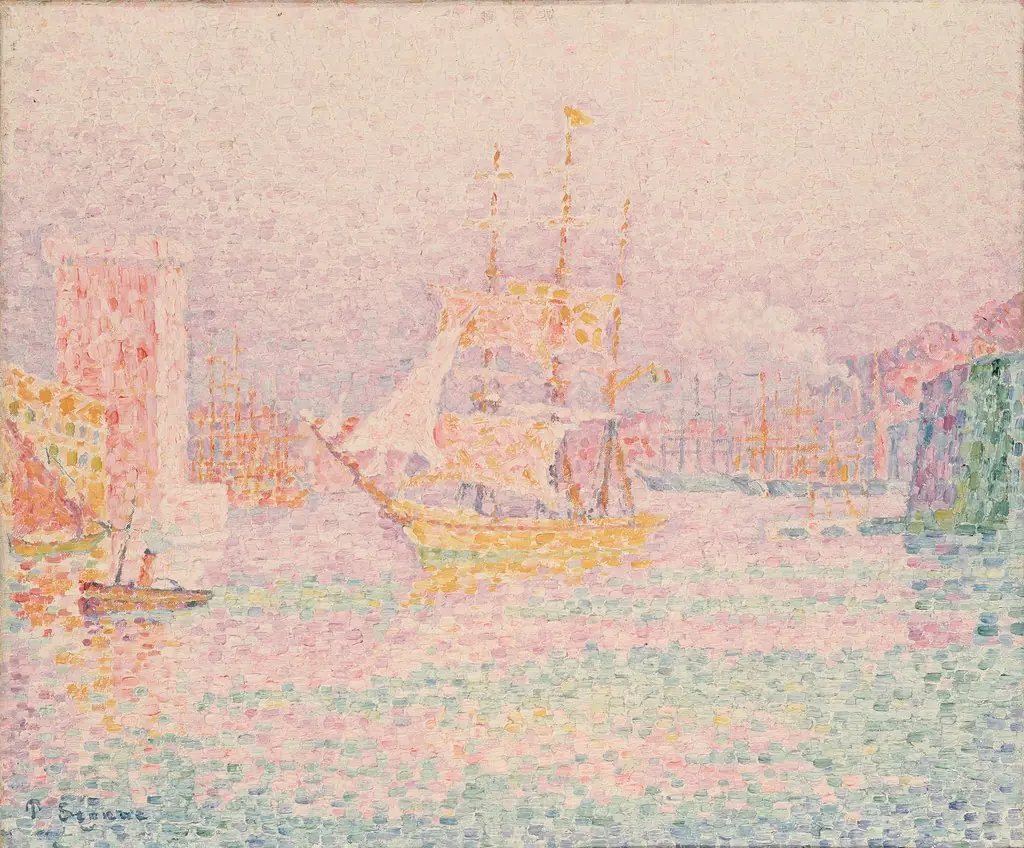
The scene depicts a quiet harbor, with vessels moored along a shoreline and distant architecture suggesting a coastal settlement. A lighthouse rises subtly in the background, anchoring the composition without dominating it. Signac avoids narrative detail, instead emphasizing the harmony between land, water, and sky. The absence of human figures reinforces a contemplative mood, aligned with his interest in tranquil, rhythmic environments.
Technique & Style
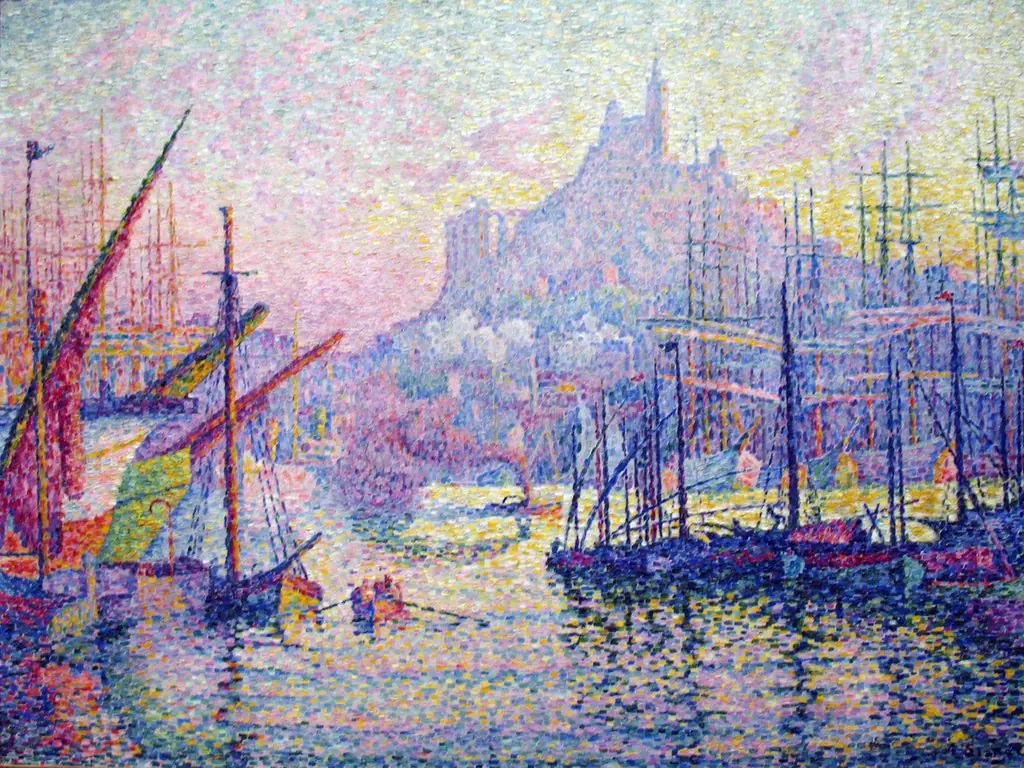
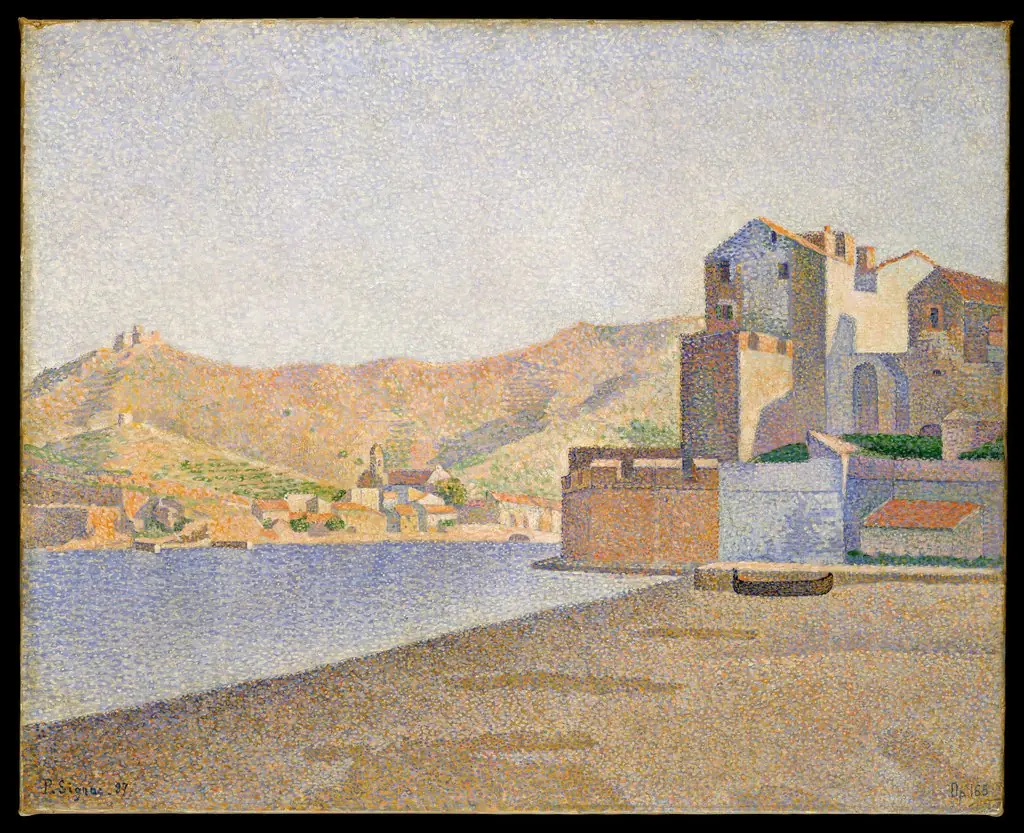
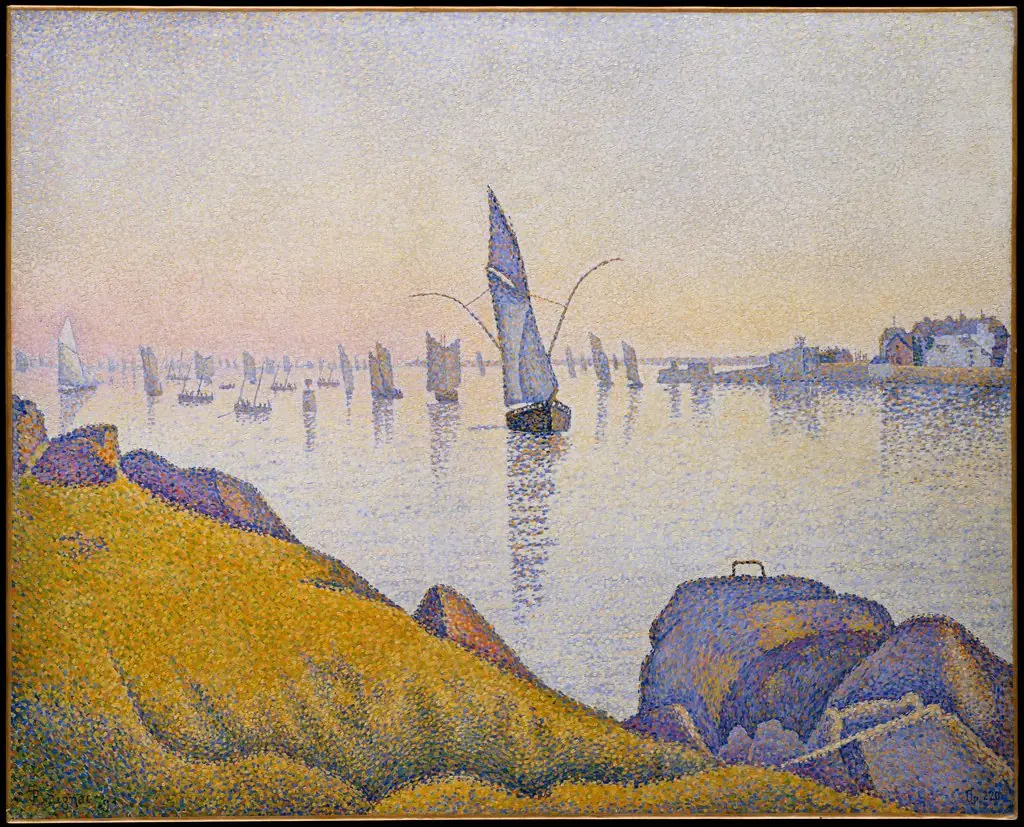
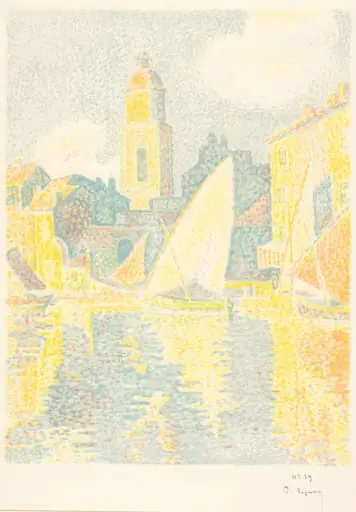
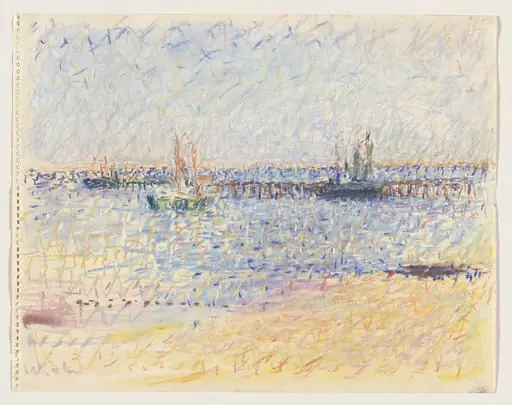
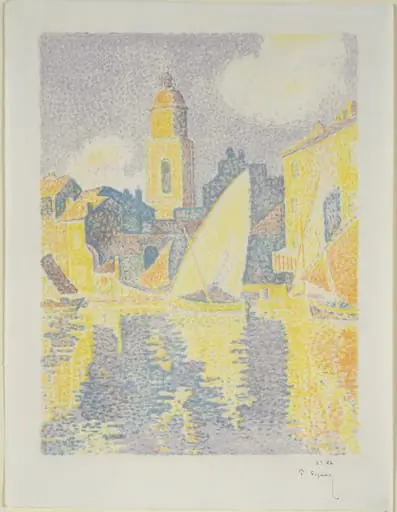
Signac employed fine, deliberate strokes to build form through color rather than line. Small, varied dots and dashes of blue, yellow, and green interact optically, creating luminous effects without blending on the palette. The lithographic process allowed him to achieve a delicate tonal range, enhancing the shimmering quality of water and light. Forms are reduced to essential shapes, prioritizing chromatic relationships over precise representation.
History & Provenance
Created in 1898, this lithograph emerged during a period when Signac was refining his printmaking methods alongside his painting practice. It entered The Museum of Modern Art’s collection in the 20th century, contributing to the institution’s broader documentation of Post-Impressionist print culture. Its preservation reflects early institutional recognition of print as a legitimate medium for experimental color theory.
Context
Signac’s work in lithography coincided with broader interest in reproductive techniques among Neo-Impressionists seeking wider dissemination of their ideas. While Seurat focused on large canvases, Signac explored print media to test his color systems in accessible formats. This piece aligns with contemporary efforts to bridge scientific color theory and artistic practice, particularly in France’s evolving visual culture.
Legacy
The lithograph exemplifies how Signac extended Pointillist principles beyond painting into print, influencing later generations of artists interested in optical mixing and non-traditional media. Its restrained palette and structured composition prefigure modernist reductions in form and color. Though less known than his oils, such works affirm his role in expanding the boundaries of Neo-Impressionist technique.
Artist & collection

Artist
Paul Victor Jules Signac ( seen-YAHK, French: ; 11 November 1863 – 15 August 1935) was a French Neo-Impressionist painter who, with Georges Seurat, helped develop the artistic technique Pointillism.