Artwork
Untitled
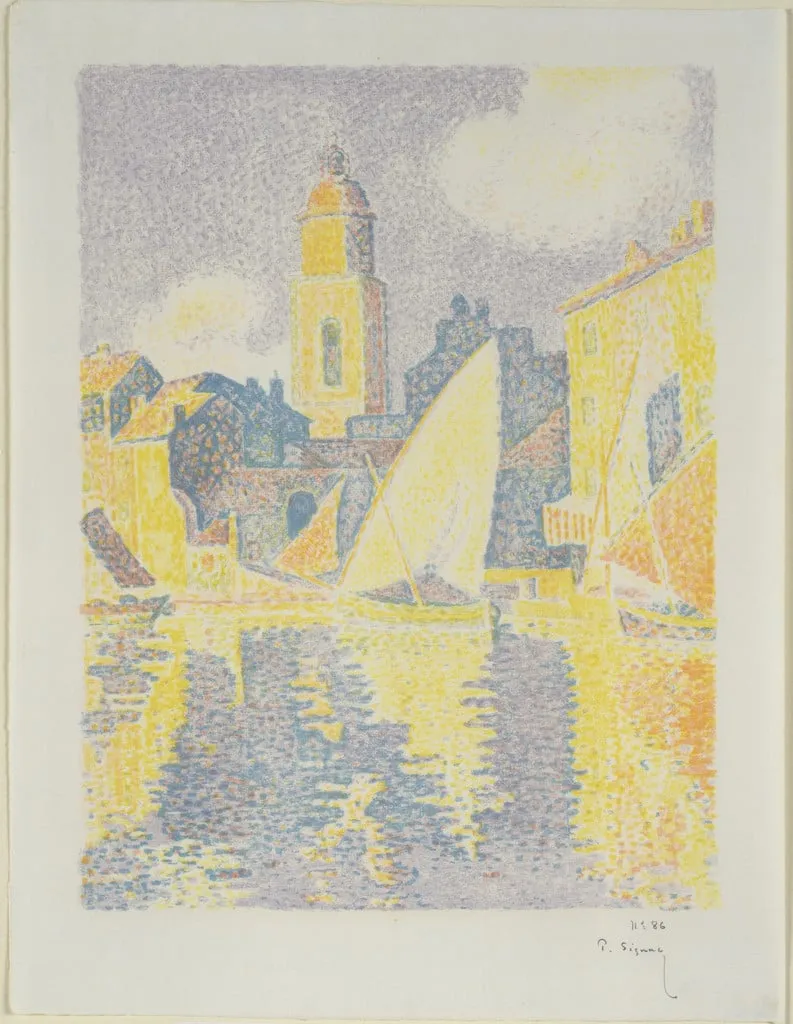
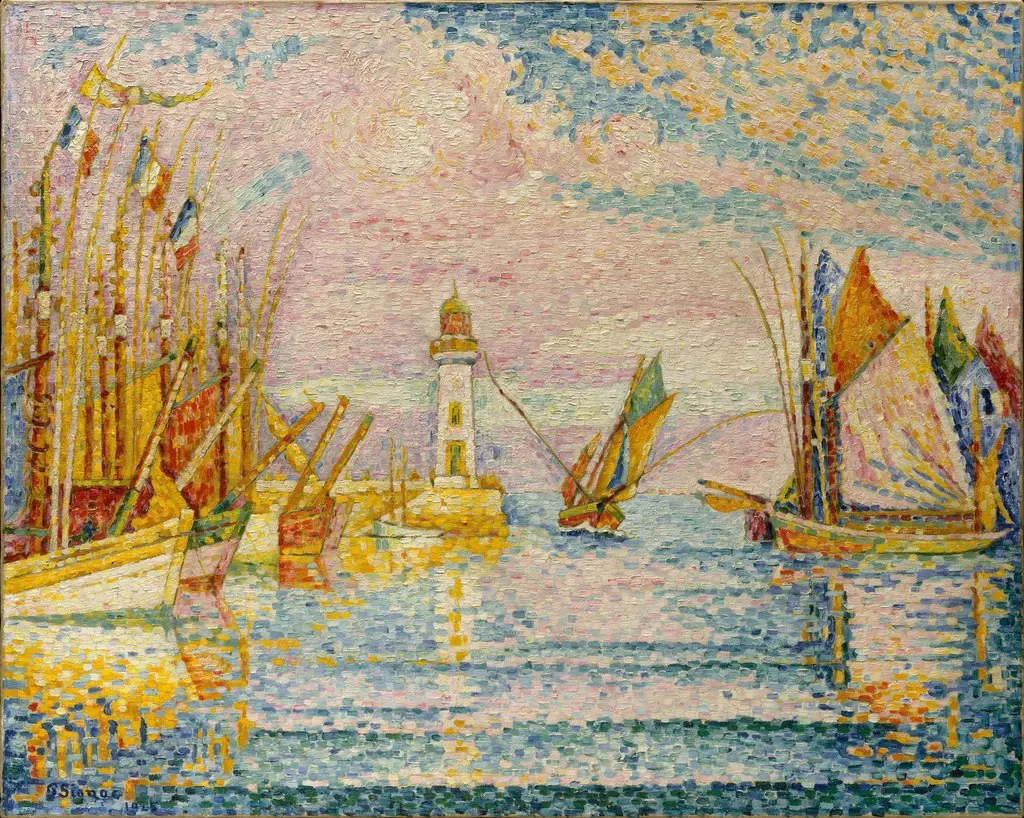
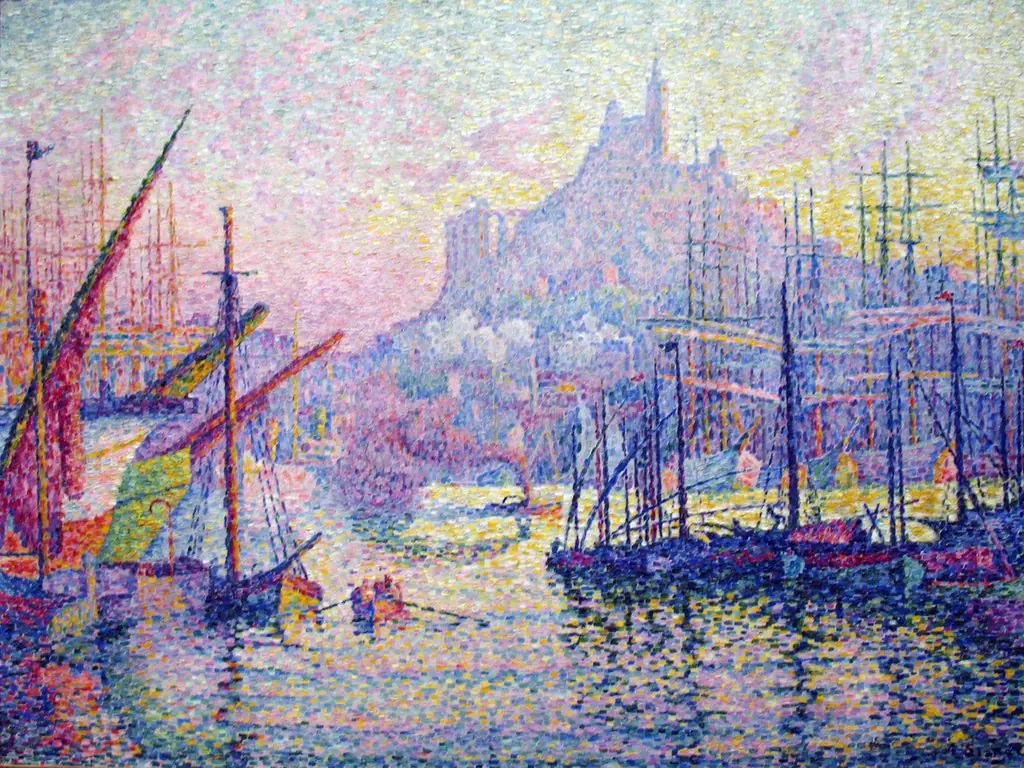
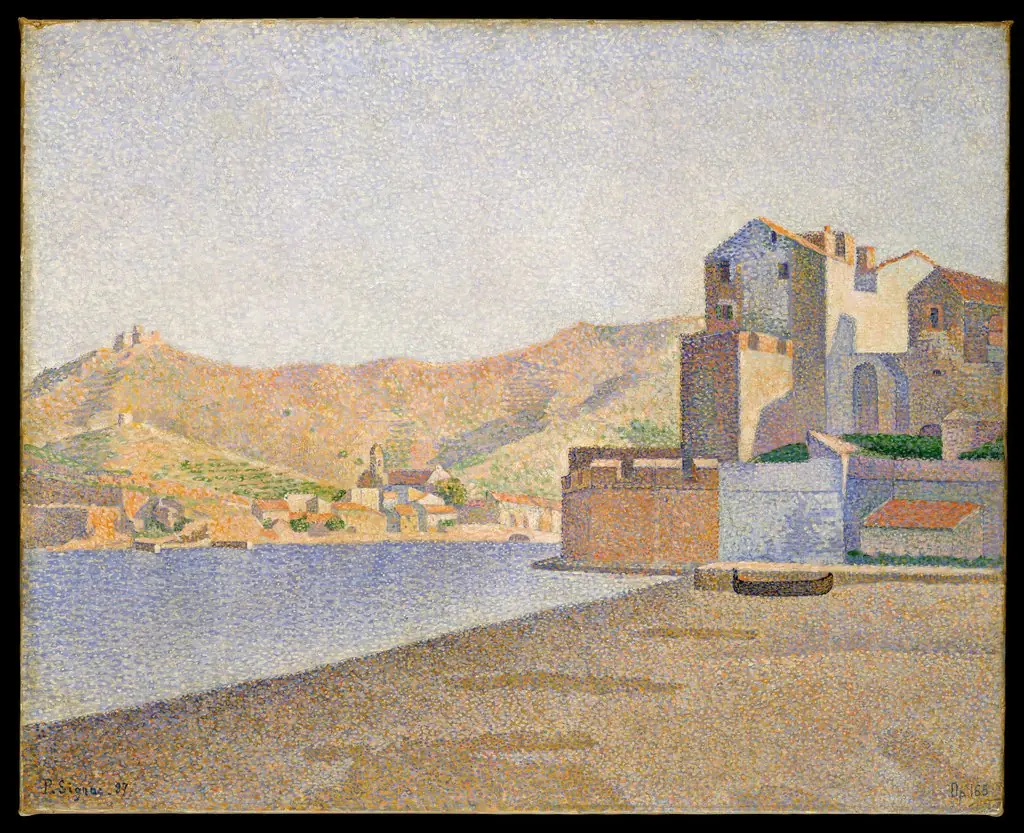
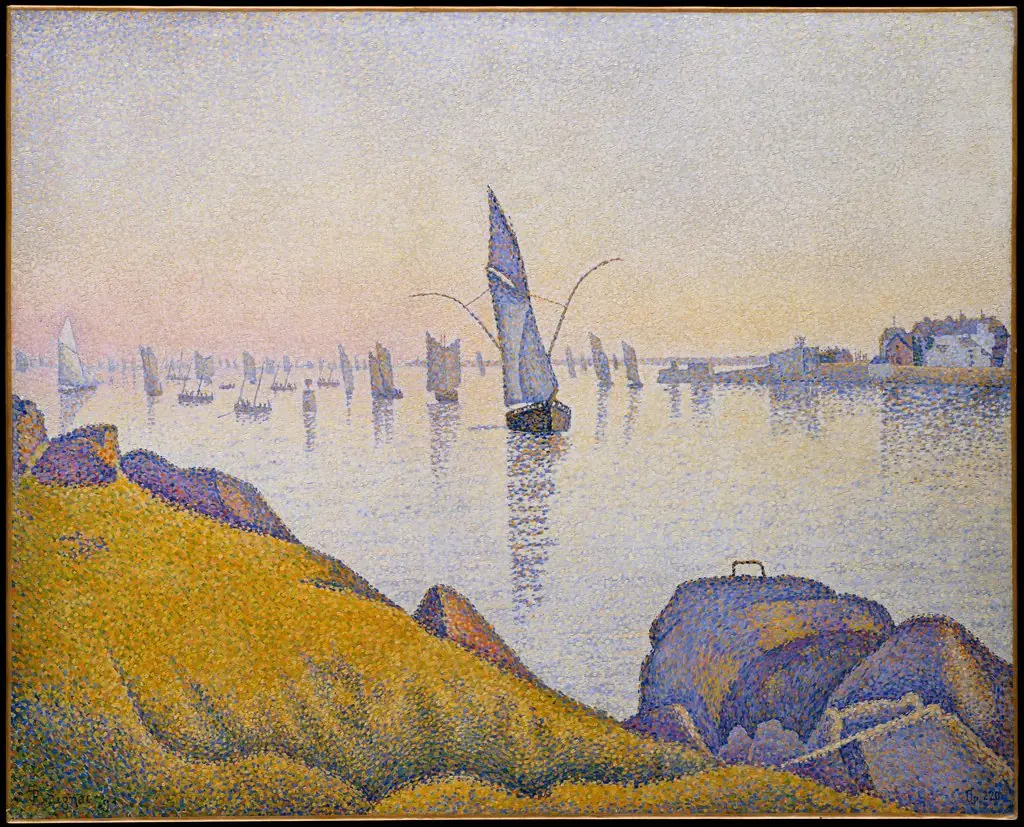
Untitled is an ink print by the Impressionist artist Paul Signac. It dates from 1898 and is held in the collection of the Museum of Modern Art.
About this work
Overview
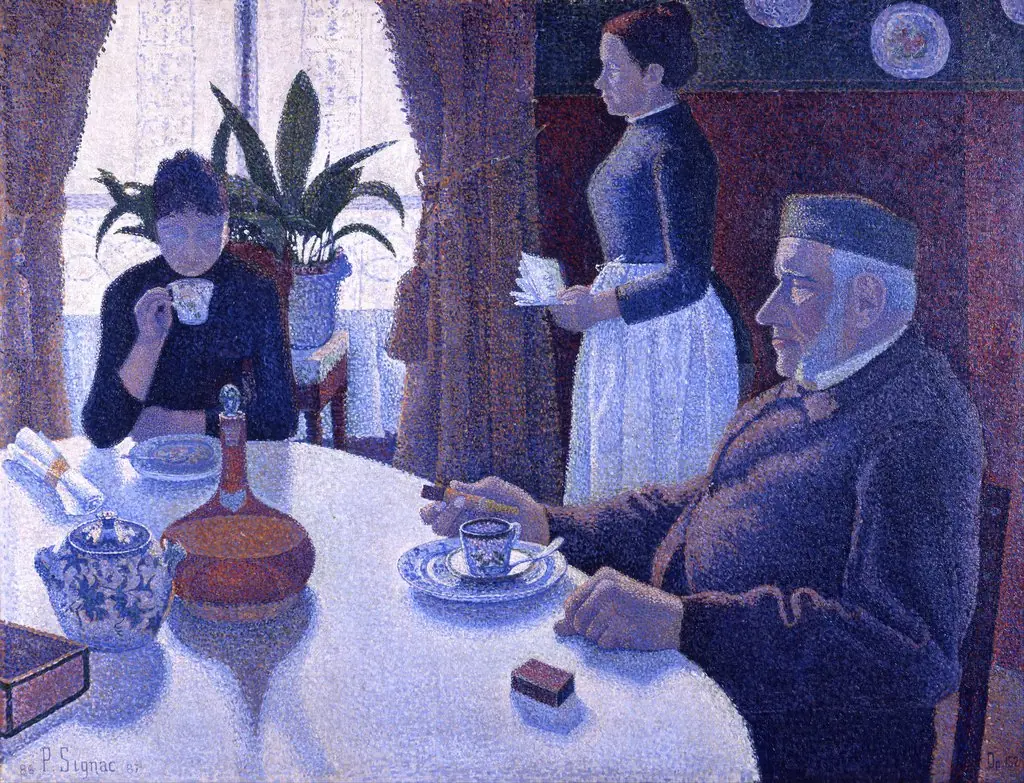
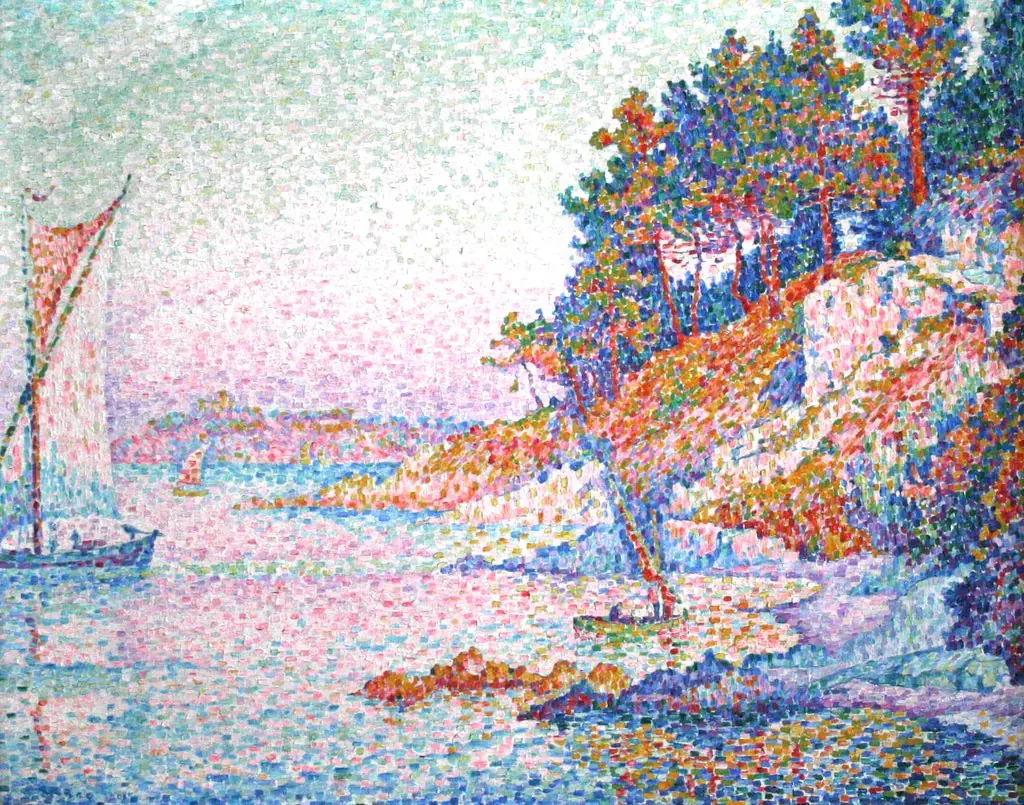
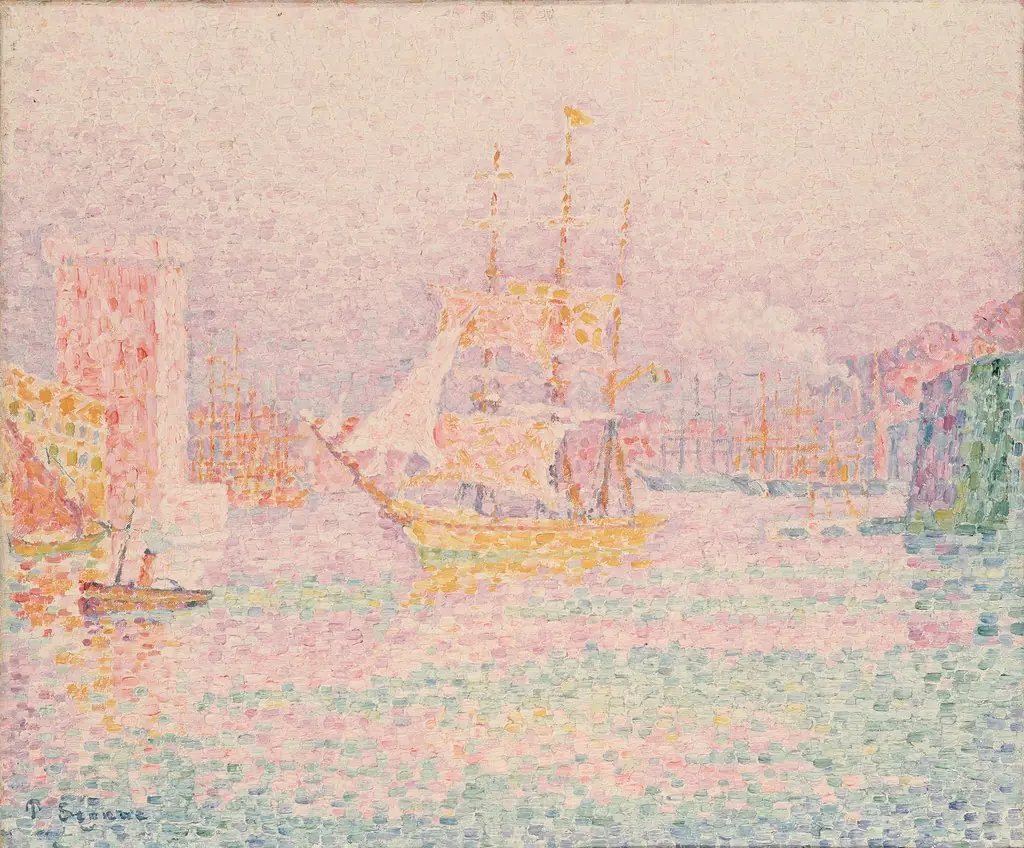
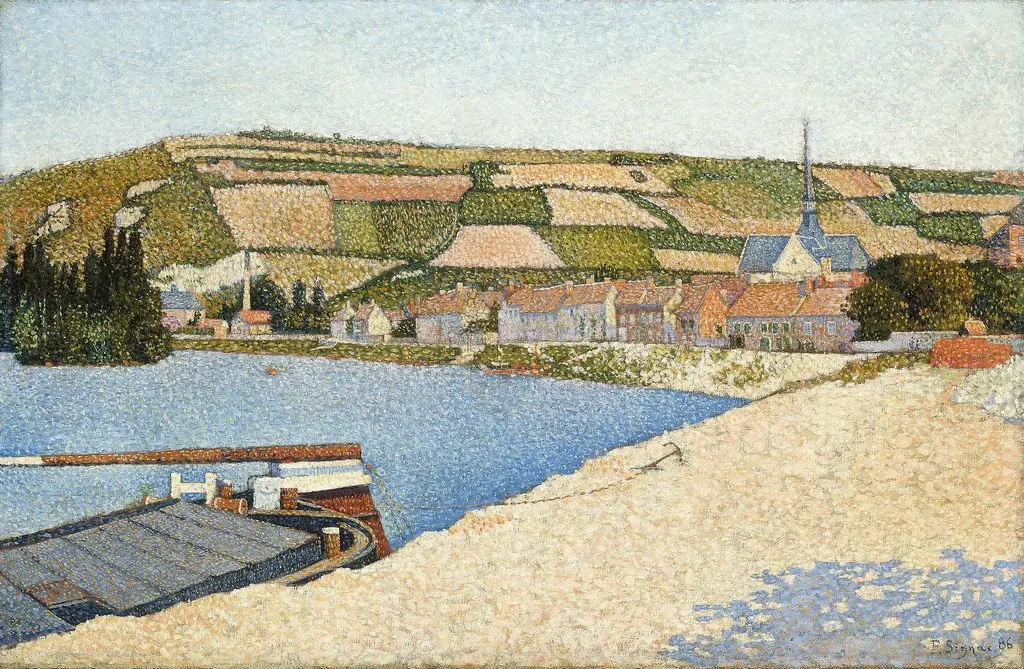
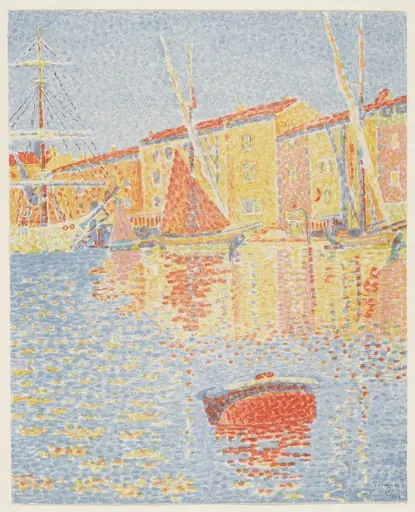
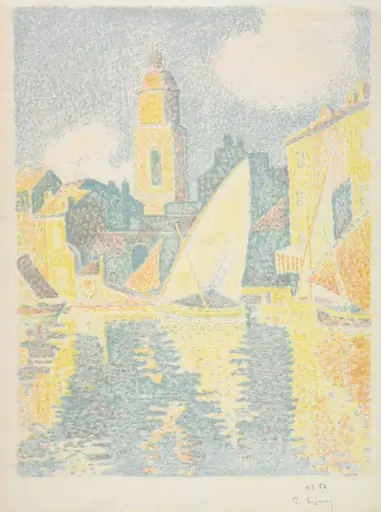
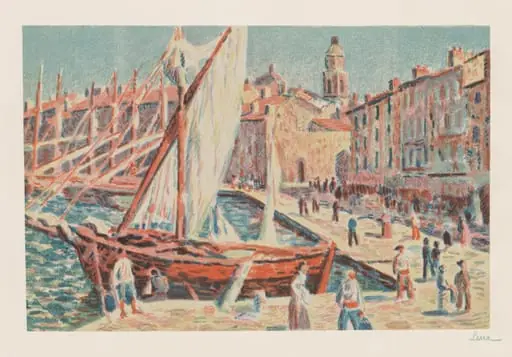
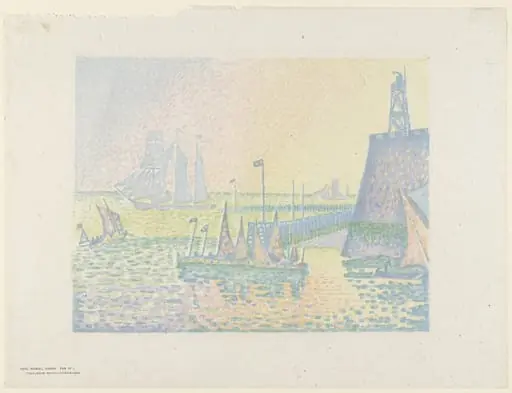
The image captures a quiet urban scene with architectural and human elements, rendered through the deliberate placement of colored dots.
Paul Signac produced this 1898 lithograph as part of his exploration beyond oil painting into printmaking. Though less known than his canvases, his graphic works extend his Neo-Impressionist principles. The image captures a quiet urban scene with architectural and human elements, rendered through the deliberate placement of colored dots. It reflects his commitment to optical mixing and chromatic harmony, even in a medium not traditionally associated with Pointillism.
Subject & Meaning
The scene depicts a modest town setting centered on a church tower, flanked by a solitary figure walking along a damp path and a horse-drawn cart. These elements suggest everyday life in a coastal or riverine community, a recurring theme in Signac’s work. The absence of dramatic action invites contemplation rather than narrative. The stillness of the figures contrasts with the vibrancy of the colors, emphasizing atmosphere over event.
Technique & Style
Signac applied the Pointillist method to lithography by using small, discrete dots of ink to construct form and luminosity. Colors—yellows, blues, and purples—are placed side by side, allowing the viewer’s eye to blend them optically. The flat, unmodulated planes and sharp contrasts reflect his interest in color theory and the scientific approach to light. The technique gives the print a shimmering, almost vibrating quality despite its static composition.
History & Provenance
This lithograph entered the collection of The Museum of Modern Art as part of its early commitment to modern graphic arts. While the exact provenance prior to acquisition is not widely documented, its inclusion signals recognition of Signac’s contributions to printmaking within the broader Neo-Impressionist movement. It remains one of the few lithographs by Signac held in a major institutional collection.
Context
Created during a period when Signac was increasingly focused on printmaking and political activism, this work aligns with his broader interest in democratizing art through accessible mediums. Lithography allowed him to reach wider audiences while maintaining his experimental color techniques. The scene’s quiet realism reflects his belief in art’s capacity to elevate ordinary moments, consistent with his anarchist sympathies and faith in communal life.
Legacy
Signac’s use of Pointillism in lithography expanded the technical possibilities of printmaking in the late 19th century. This work influenced later artists exploring color theory in graphic arts, demonstrating that optical mixing could transcend painting. Though less celebrated than his oils, such prints affirm his role in bridging scientific color theory with the evolving language of modern visual expression.
Artist & collection

Artist
Paul Victor Jules Signac ( seen-YAHK, French: ; 11 November 1863 – 15 August 1935) was a French Neo-Impressionist painter who, with Georges Seurat, helped develop the artistic technique Pointillism.