Artwork
Untitled
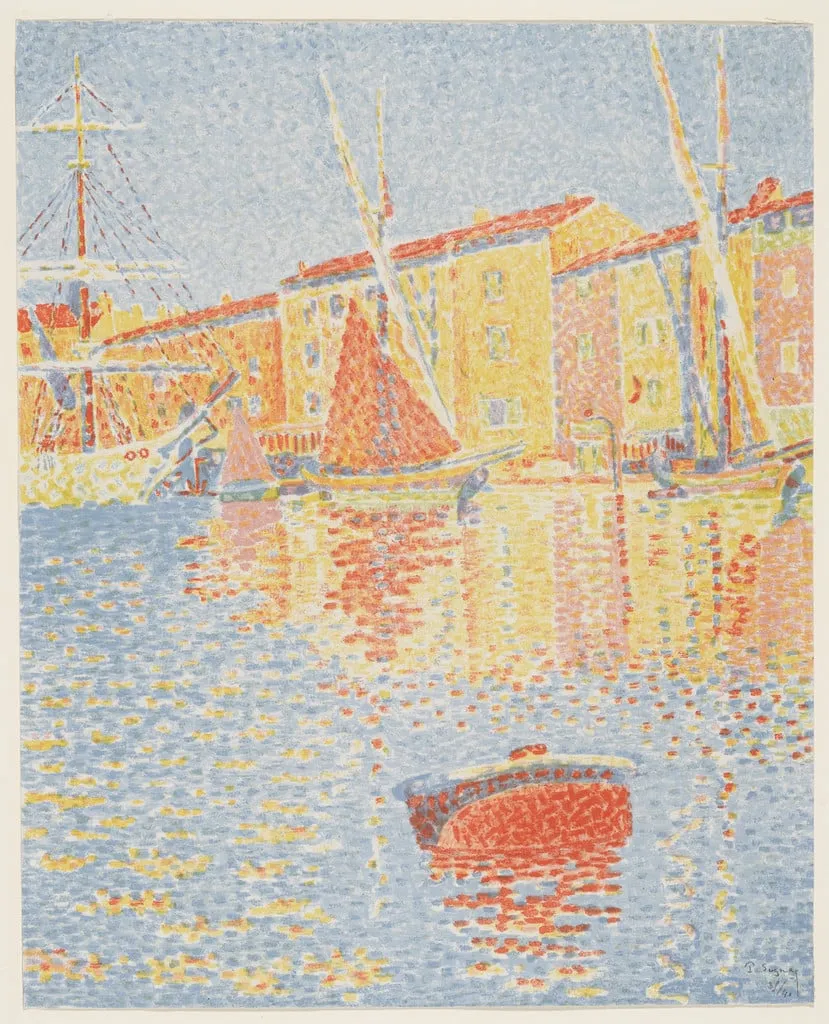
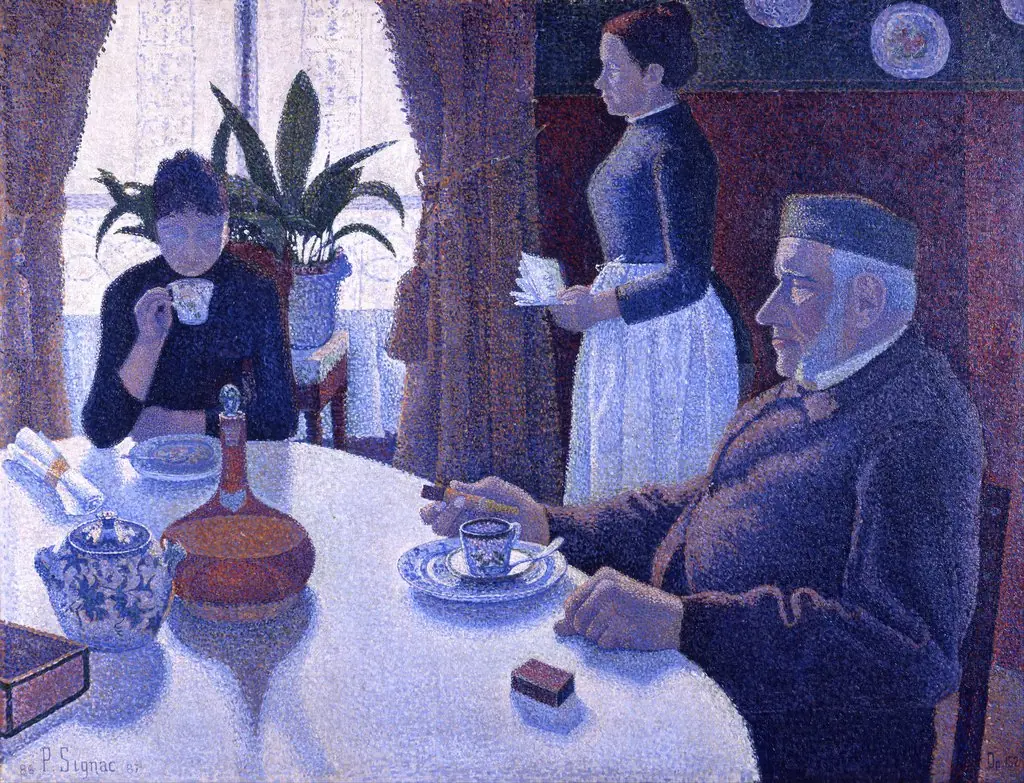
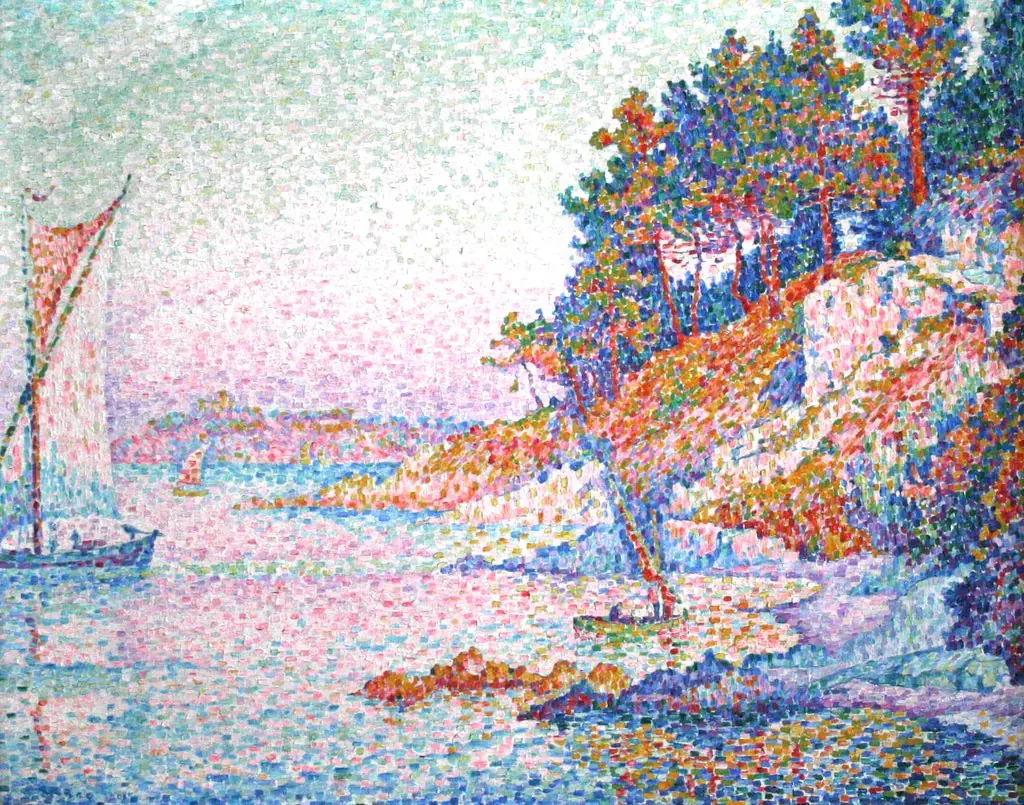
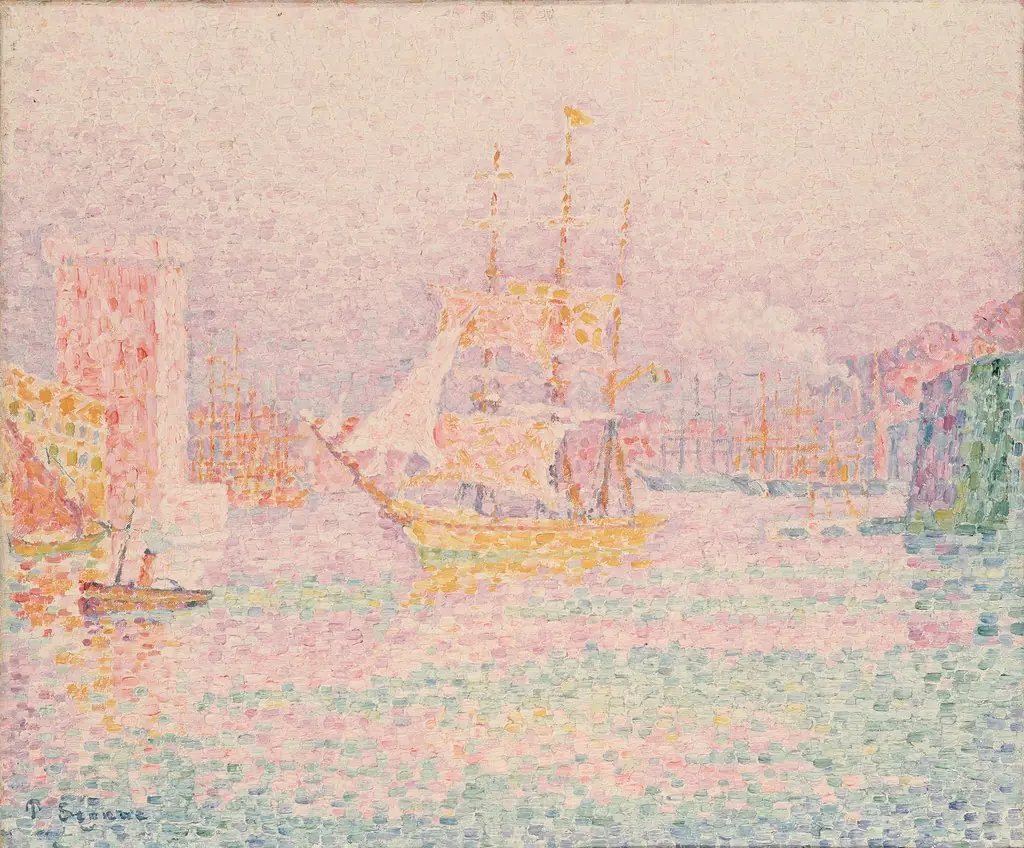
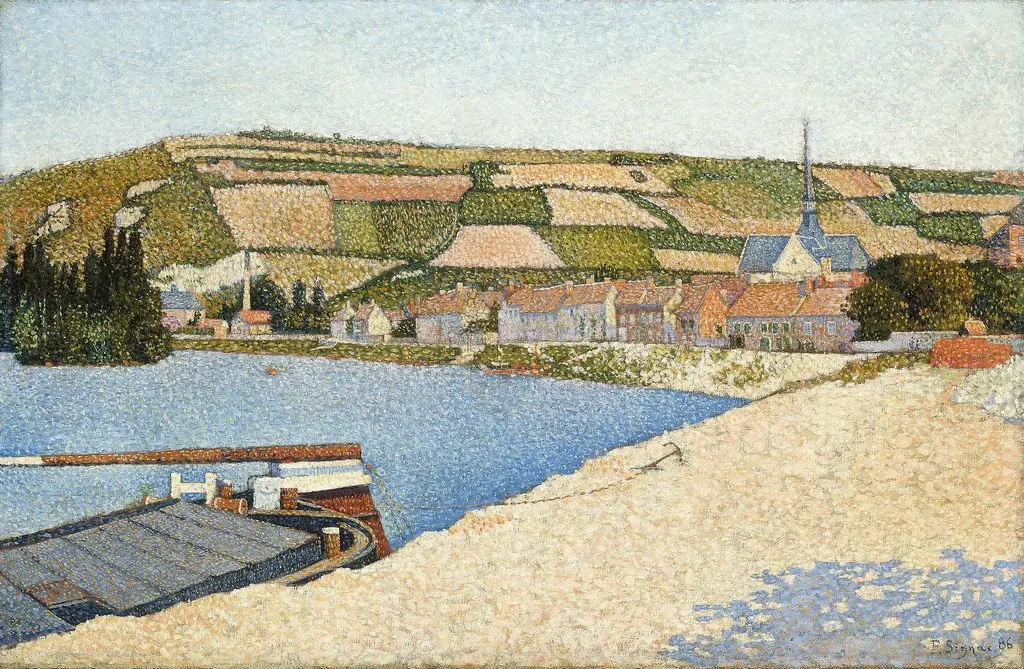
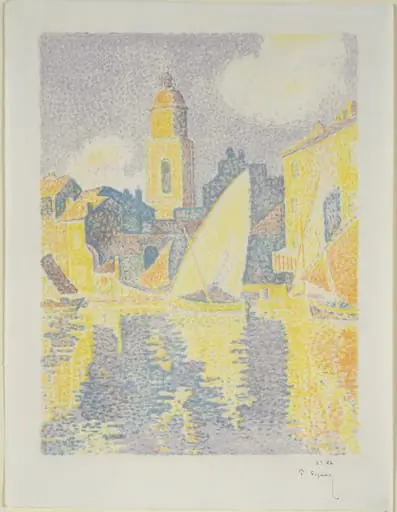
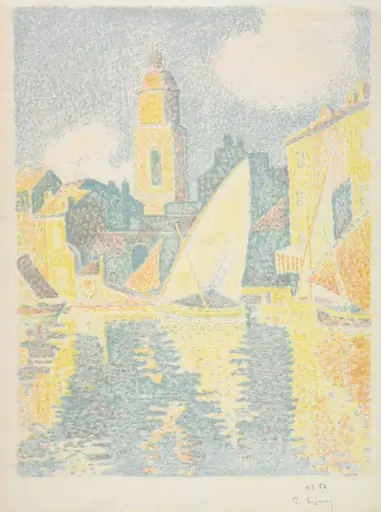
Untitled is an ink print by the Impressionist artist Paul Signac. It dates from 1894 and is held in the collection of the Museum of Modern Art.
About this work
Overview
The work captures a harbor setting, consistent with his frequent focus on coastal life and maritime activity, informed by his personal experience as a sailor.
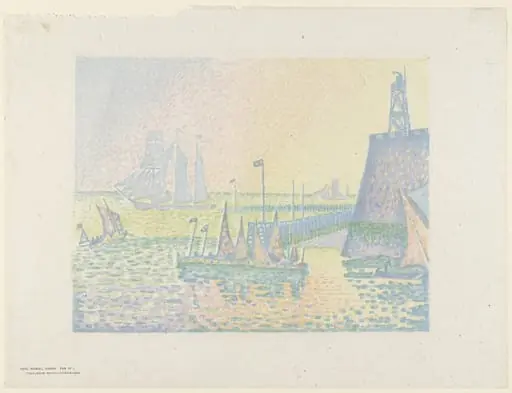
Paul Signac produced this lithograph in 1894, extending his exploration of Neo-Impressionist principles into printmaking. Though best known for oil paintings, he adapted the dot-based color system of Pointillism to lithography, demonstrating the technique’s versatility. The work captures a harbor setting, consistent with his frequent focus on coastal life and maritime activity, informed by his personal experience as a sailor.
Subject & Meaning
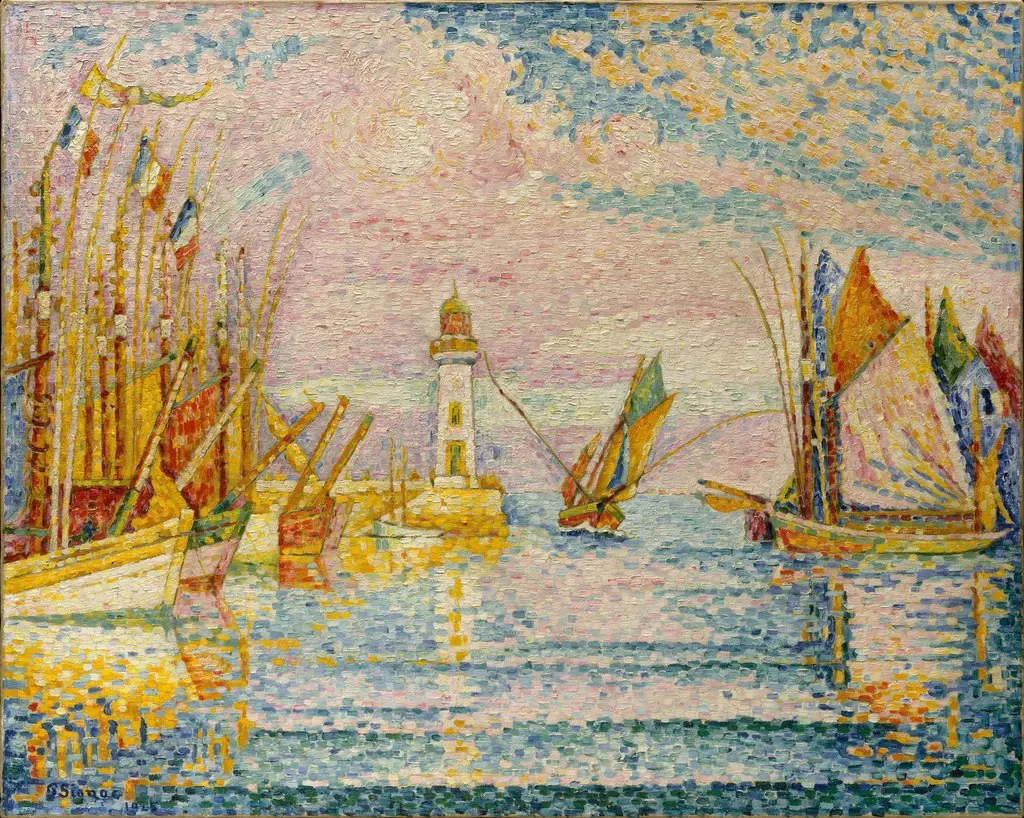
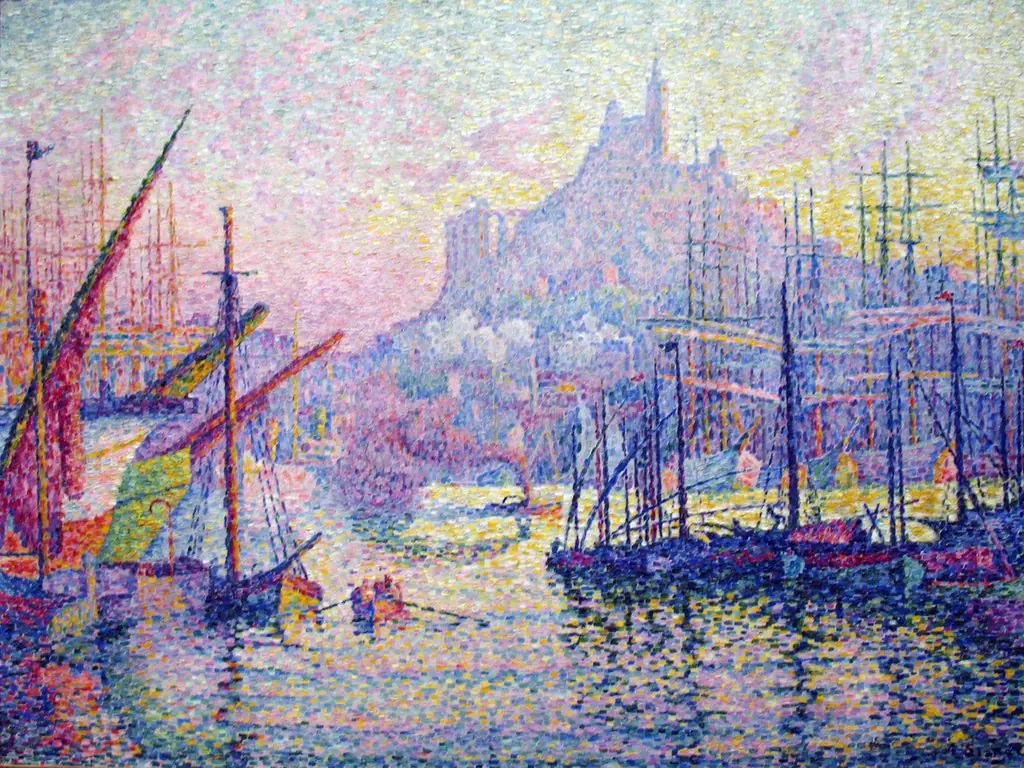
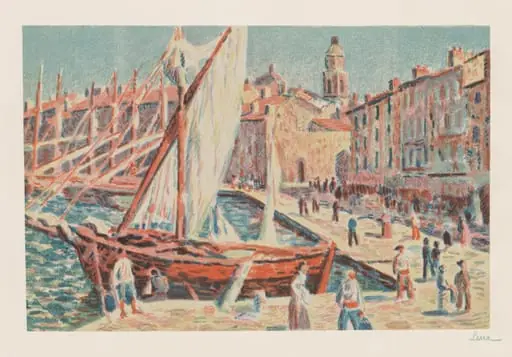
The scene centers on a red vessel floating in a harbor, surrounded by loosely rendered buildings and masts. The composition avoids narrative detail, instead emphasizing the play of light across water and architecture. Signac’s choice of subject reflects his interest in the quiet rhythms of port life, not as a documentary record but as a study in color and atmosphere.
Technique & Style
Using lithographic stone, Signac applied dots and strokes of pigment to suggest form and luminosity. Blues and yellows interlace in the water, while buildings are defined by bold, simplified outlines in red, white, and orange. The absence of fine detail enhances the sense of movement and reflection, with color dots creating a shimmering effect that mimics sunlight on waves.
History & Provenance
This print emerged during a period when Signac was actively promoting Neo-Impressionism through both painting and print media. It was likely produced in a limited run, as was common with artist-made lithographs of the time. No specific early ownership records are widely documented, but it belongs to a broader body of works he created to disseminate his color theories beyond canvas.
Context
In the 1890s, lithography was gaining traction among avant-garde artists as a medium for experimental reproduction. Signac’s use of it aligned with broader efforts to democratize modern art, making Pointillist aesthetics accessible beyond gallery walls. His prints responded to contemporary debates about the role of science and perception in art, emphasizing optical mixing over traditional blending.
Legacy
Signac’s lithographs helped bridge the gap between painting and print in late 19th-century modernism. Though less celebrated than his oils, this work contributed to the acceptance of print as a legitimate vehicle for avant-garde color theory. Later artists, including members of the Fauve movement, acknowledged his influence in their own explorations of non-naturalistic color.
Artist & collection

Artist
Paul Victor Jules Signac ( seen-YAHK, French: ; 11 November 1863 – 15 August 1935) was a French Neo-Impressionist painter who, with Georges Seurat, helped develop the artistic technique Pointillism.