Artwork
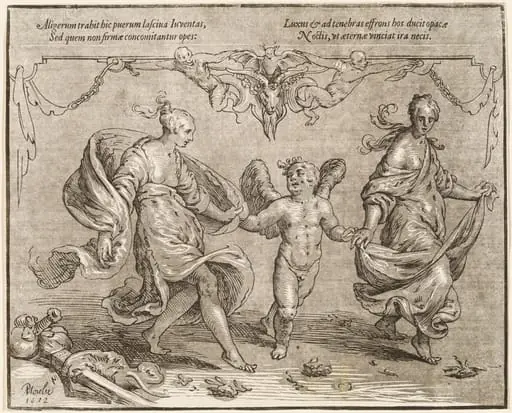
Cupid dancing with two allegorical women
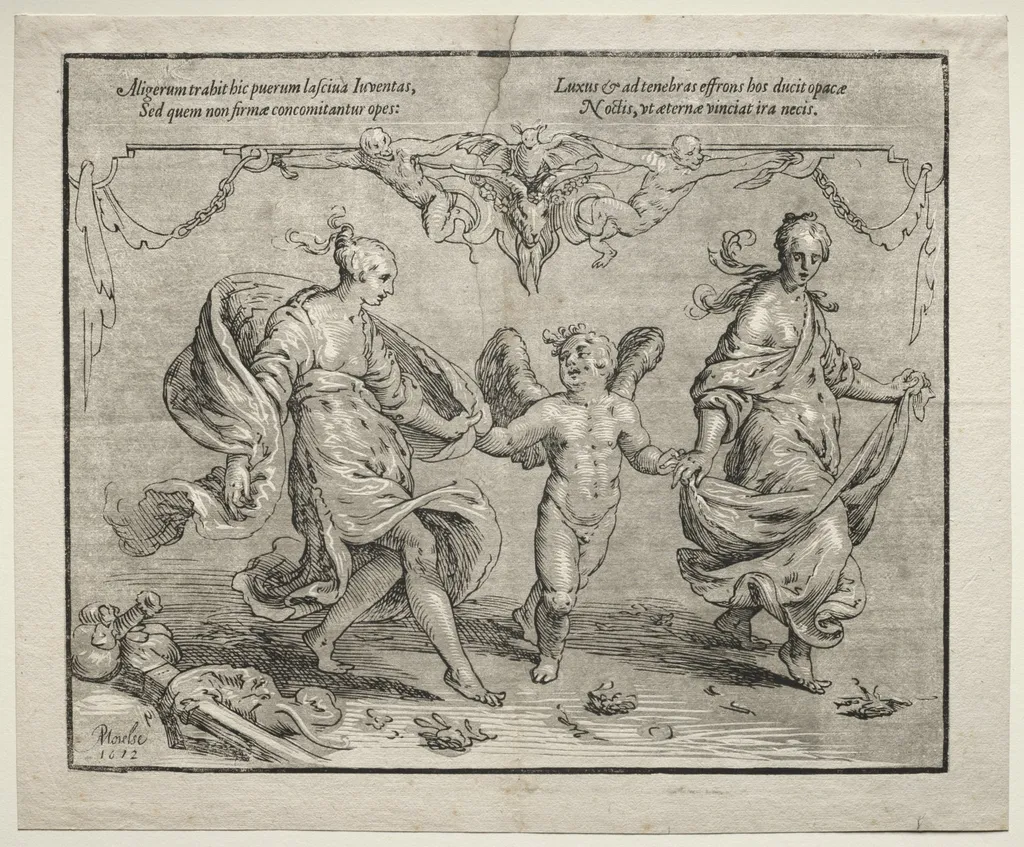
Cupid dancing with two allegorical women is a print by the Baroque artist Paulus Moreelse. It dates from 1612 and is held in the collection of the Cleveland Museum of Art.
About this work
The Latin text at the top warns about fleeting pleasures—this scene might be about how fun can turn serious.
This etching shows a small, barefoot cherub dancing between two women. The women hold his hands, smiling as he twirls. One woman has wavy hair and a flowing robe, the other wears a cloak with a hood. Above them, small putti float in the sky, tangled in swirling ribbons. Below, a rocky shore has a few scattered shells and a half-buried pot.
The artist signed it “P. Moreelse 1612” in the corner. The Latin text at the top warns about fleeting pleasures—this scene might be about how fun can turn serious.
Next, look up Baroque to see how drama and movement like this defined the era.
Overview
This 1612 etching by Paulus Moreelse depicts a cherub dancing between two female figures, surrounded by floating putti and a coastal setting. Signed by the artist, the work is part of the Cleveland Museum of Art’s collection. Its composition blends mythological elements with symbolic imagery, characteristic of early 17th-century Northern European printmaking traditions.
Subject & Meaning
The central figure of Cupid, surrounded by two allegorical women, suggests a representation of pleasure or sensuality. The Latin inscription above warns of transient joys, implying a moral reflection on ephemeral delights. The swirling ribbons and airborne putti reinforce a sense of instability, while the barren shore and scattered objects hint at decay beneath the surface of merriment.
Technique & Style
Moreelse employed fine, controlled lines typical of etching to render delicate textures—flowing drapery, wispy hair, and the fragile forms of putti. The composition is dynamic, with diagonal movement guiding the eye from the dancing figures upward into the sky. The contrast between the lively central group and the quiet, sparse foreground enhances the work’s symbolic tension.
History & Provenance
Created in 1612, the print was produced during Moreelse’s active years in Utrecht, a center for artistic innovation. It entered the Cleveland Museum of Art’s collection through established acquisition channels, likely as part of a broader interest in Dutch and Flemish prints from the Baroque period. Its preservation reflects its status as a well-documented example of early Baroque graphic art.
Context
In early 17th-century Northern Europe, allegorical prints often conveyed moral or philosophical messages through mythological scenes. Moreelse’s work aligns with contemporary trends that fused classical themes with Protestant moralizing. The emphasis on movement and emotional expression reflects broader Baroque sensibilities, even as the medium remained rooted in the precision of printmaking.
Legacy
The print endures as a refined example of Moreelse’s skill in combining narrative depth with technical finesse. While not widely reproduced, it contributes to scholarly understanding of how allegory functioned in Dutch graphic arts. Its preservation in a major museum ensures continued study of Baroque visual language and its moral undertones.
Artist & collection

 Venus Appearing to Achilles
![Temporalis Aeternitas [Second Version], by Italian 17th Century](https://artifactworldgallery.com/img/italian-17th-century--temporalis-aeternitas-second-version--2b55857961773f67-w320.webp) Temporalis Aeternitas [Second Version]
Temporalis Aeternitas [Second Version] Return from the Flight into Egypt
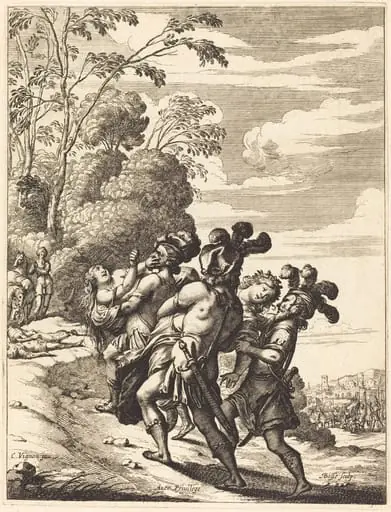 Illustration to Jean Desmarets' "L'Ariane"
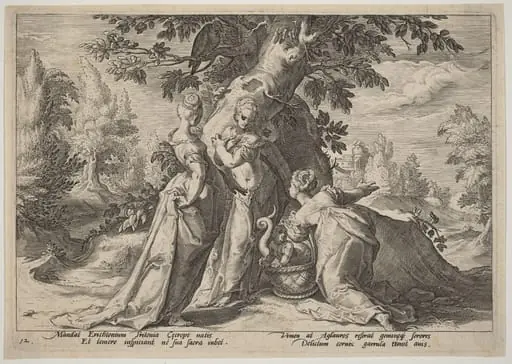 The Daughters of Cecrops Open the Casket Entrusted to Them by Minerva
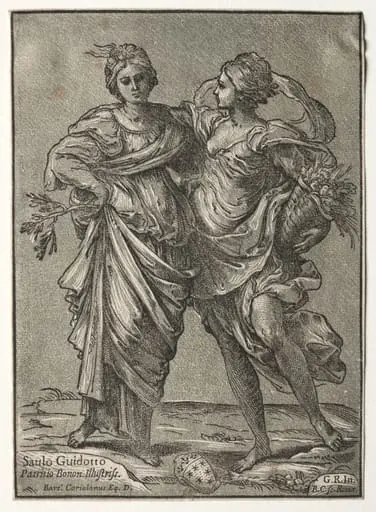 Alliance of Peace and Abundance
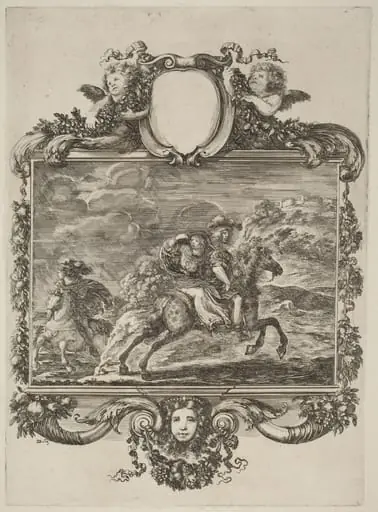 Clovis and Clotilda
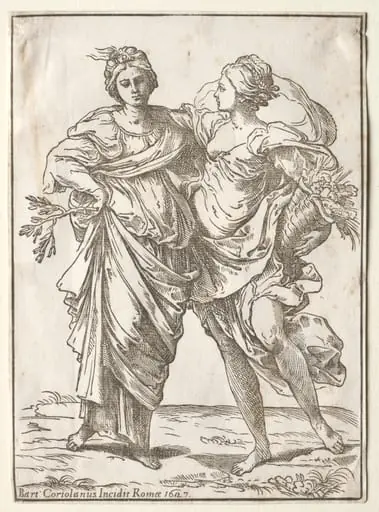 Alliance of Peace and Abundance
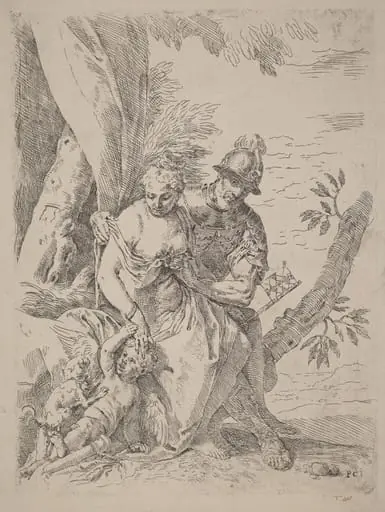 Mars, Venus and Cupid
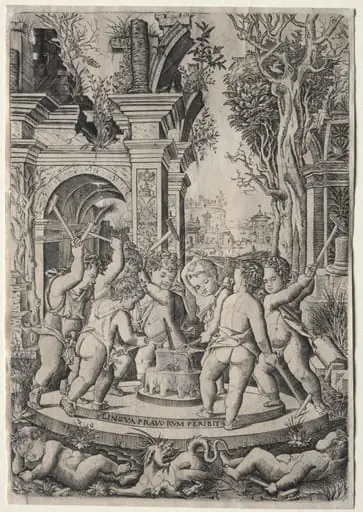 The Fate of the Evil Tongue
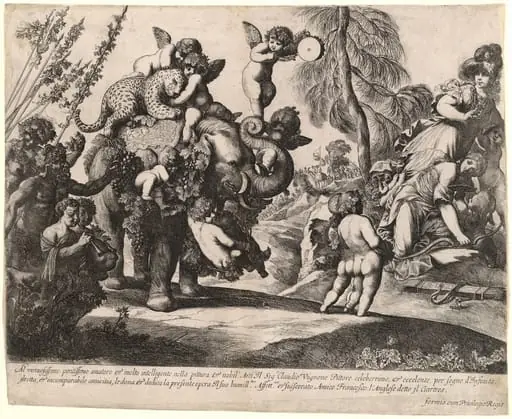 Bacchus with Diana and Minerva
 Cupid Dancing with Two Allegorical Women