Artwork
Untitled
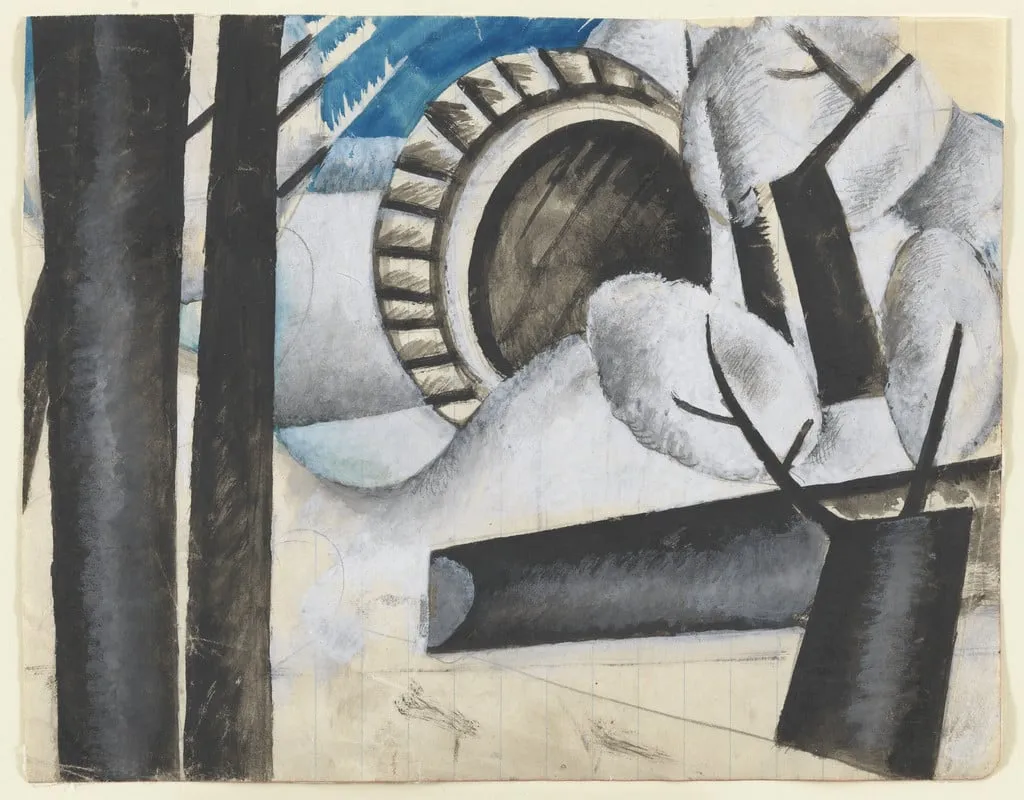
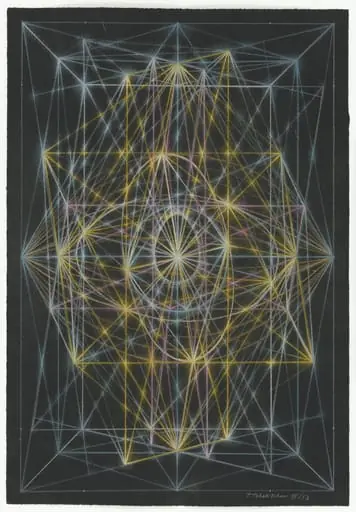
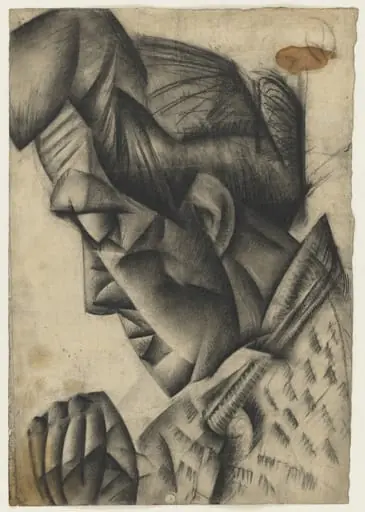
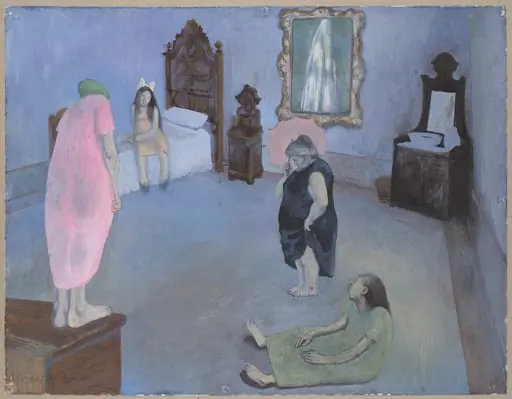
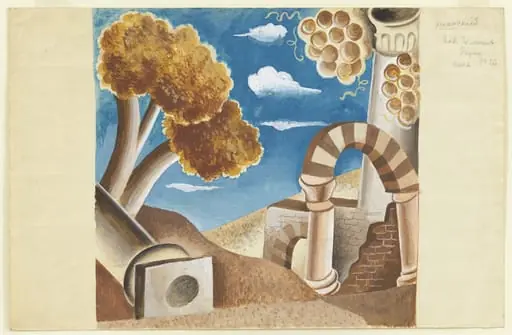
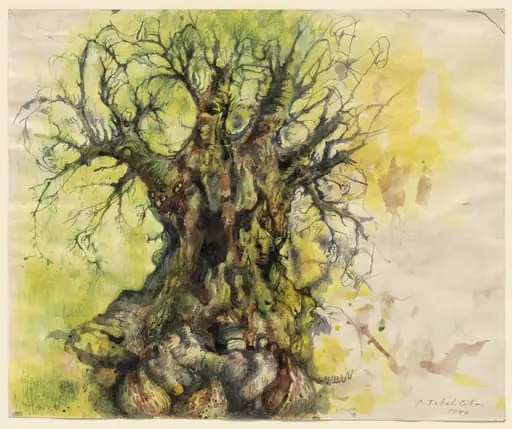
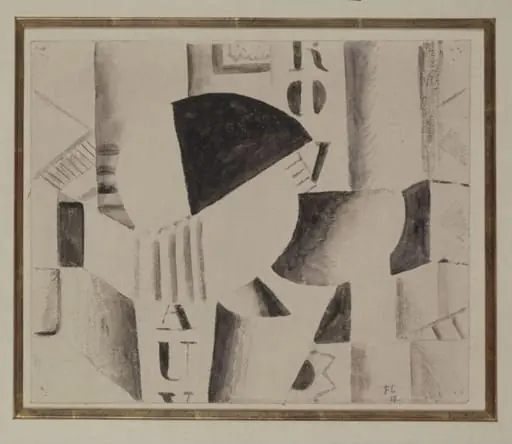
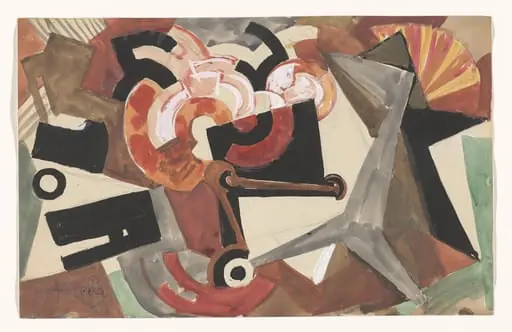
Untitled is a gouache drawing by Pavel Tchelitchew. It dates from 1919 and is held in the collection of the Museum of Modern Art.
About this work
Overview
Its materials—water-based paint and everyday stationery—hint at accessibility and immediacy, characteristic of sketches made during periods of displacement.
Created around 1919, this drawing by Pavel Tchelitchew combines gouache and pencil on lined paper, reflecting early experimentation before his later recognition in surrealism and stage design. The work’s modest scale and humble support suggest a private, exploratory moment rather than a finished composition. Its materials—water-based paint and everyday stationery—hint at accessibility and immediacy, characteristic of sketches made during periods of displacement.
Subject & Meaning
No clear narrative or recognizable figures emerge. Instead, abstract forms—a heavy black-rimmed wheel, angular blocks, and fluid washes in gray and blue—suggest structural or mechanical fragments. The disjointed arrangement resists interpretation, possibly conveying inner turmoil or the instability of post-revolutionary experience. The lack of resolution invites viewers to consider process over meaning.
Technique & Style
Tchelitchew employed gouache for its opaque, versatile quality, allowing both bold, flat areas and soft blends over the paper’s grid. Pencil lines underpin the composition, some visible beneath paint, others erased or obscured. The uneven application and layered strokes reveal a hand in motion, prioritizing intuition over precision. The underlying ruled lines subtly constrain the forms, creating tension between order and chaos.
History & Provenance
Made shortly after Tchelitchew left Russia following the revolution, the work predates his move to Western Europe and eventual association with the Surrealist circle. It entered The Museum of Modern Art’s collection as part of a broader effort to document early 20th-century European drawing practices. Its preservation reflects institutional interest in the formative years of artists who later gained prominence abroad.
Context
In 1919, Russia was in upheaval, and many artists turned to abstraction as traditional modes of representation seemed inadequate. Tchelitchew, then in his early twenties, was navigating exile and artistic identity. This drawing, made on ordinary paper, aligns with a broader trend among displaced creatives who used available materials to explore new visual languages outside academic conventions.
Legacy
Though not widely exhibited, this work contributes to understanding Tchelitchew’s evolution from experimental draftsman to established designer. Its rawness contrasts with his later, polished theatrical designs, offering insight into his foundational approach to form and space. The piece remains a quiet testament to the role of sketching in the development of modernist sensibilities.
Artist & collection

Artist
Pavel Fyodorovich Tchelitchew ( Che-LIT-chev; Russian: Па́вел Фёдорович Чели́щев) (3 October 1898 – 31 July 1957) was a Russian-born surrealist painter, set designer and costume designer.