Artwork
Petra Excavations at the eastern end of the Valley
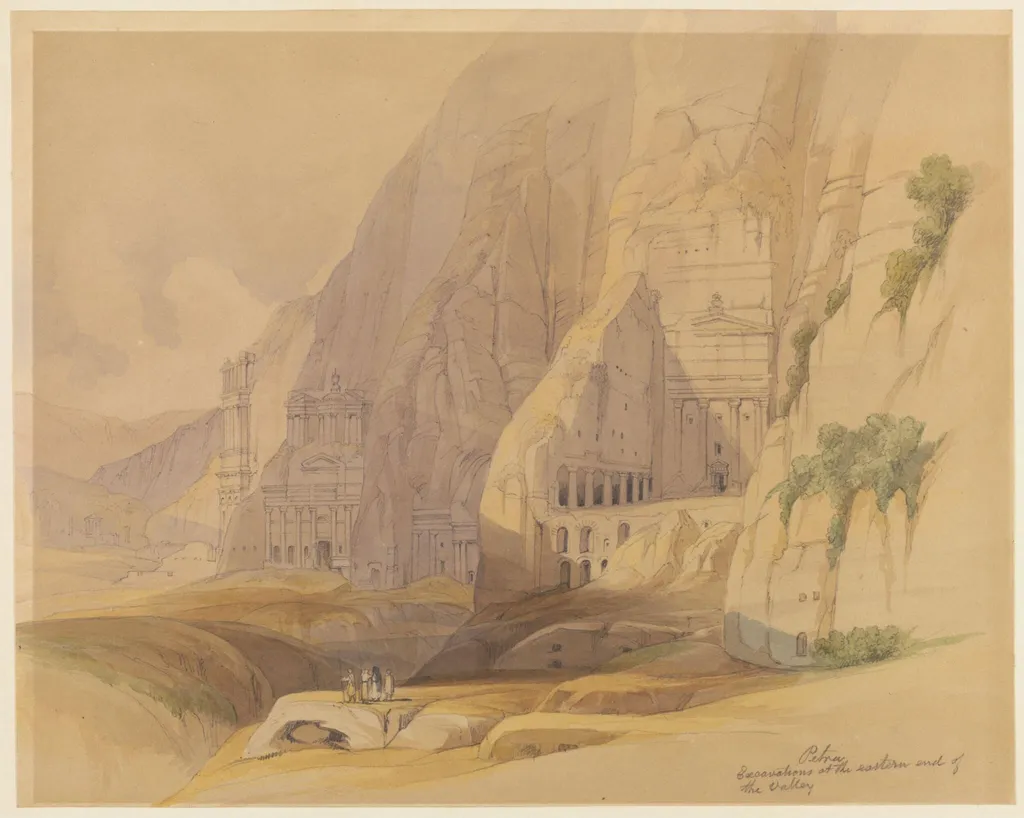
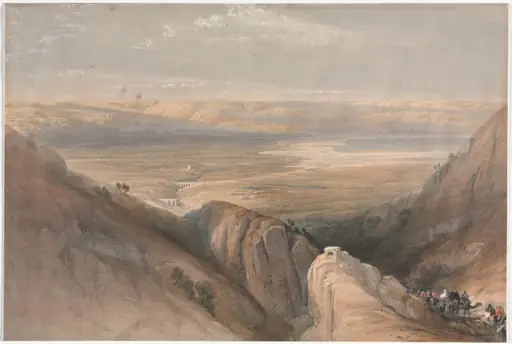
Petra Excavations at the eastern end of the Valley is a watercolor work on paper by the Romanticist artist Cornelius Pearson. It dates from 1849 and is held in the collection of the Victoria and Albert Museum. The work portrays the eastern terminus of the Wadi Musa valley, the landscape surrounding the ancient city of Petra.
About this work
Overview
The work portrays the eastern terminus of the Wadi Musa valley, the landscape surrounding the ancient city of Petra.
The work portrays the eastern terminus of the Wadi Musa valley, the landscape surrounding the ancient city of Petra. Carved façades, columns and arches emerge from the rugged rock, while figures are positioned in the foreground. Rendered in watercolor, the image balances delicate tonal shifts with the stark outlines of the stone architecture, conveying both the natural and built environment of the site.
Subject & Meaning
The composition records the iconic rock‑cut structures that define Petra, emphasizing their integration with the surrounding desert terrain. By including human figures, the artist suggests ongoing interaction between people and the historic monuments, hinting at the site's continuous cultural relevance and the curiosity it inspired among 19th‑century travelers and scholars.
Technique & Style
Executed in watercolor, the piece employs a muted palette in which washes of light and dark create atmospheric depth. The handling of pigment mirrors the Romantic era’s interest in evoking mood through natural scenery, while the precise delineation of architectural details reflects the period’s documentary approach to topographical illustration.
History & Provenance
The image is a watercolor reproduction of a lithographic copy originally produced by Louis Haghe after the drawings of David Roberts. Haghe’s lithograph appeared in Roberts’s multi‑volume publication *The Holy Land, Syria, Idumea, Arabia, Egypt, and Nubia*, issued between 1842 and 1849. The present watercolor likely derives from that lithographic source, preserving the visual record of Petra as seen by early Western explorers.
Context
Created during a time when European interest in Middle Eastern antiquities was intensifying, the work aligns with the broader 19th‑century movement to document archaeological sites. Its production coincides with the Romantic fascination with exotic landscapes and the scientific impulse to map and illustrate remote regions for scholarly and public audiences.
Artist & collection
Artist
British watercolor artist Cornelius Pearson spent years painting distant landscapes and scenes after 1849.

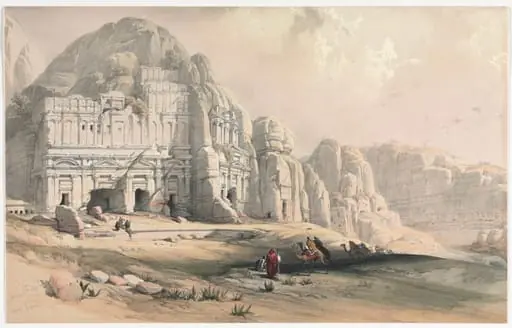 Petra, Eastern End of the Valley
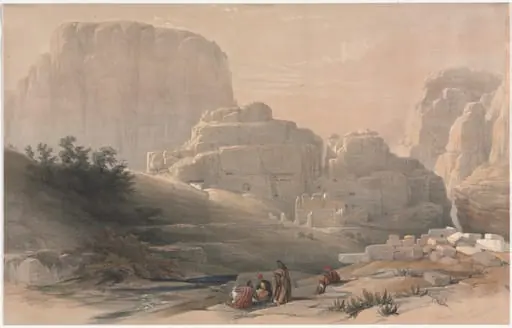 Petra, Lower End of the Valley, Viewing the Acropolis
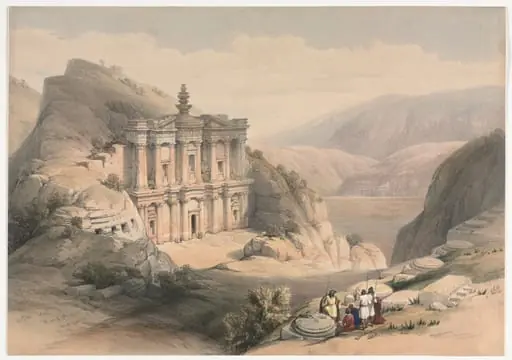 El Deir Petra
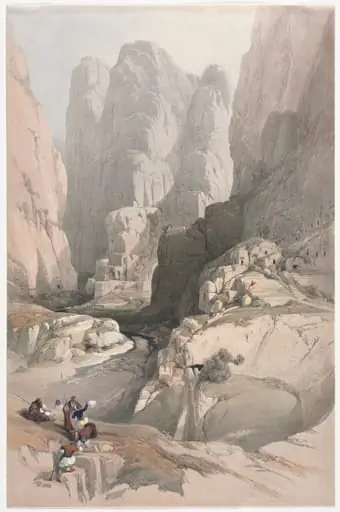 Entrance to Petra, the Theatre
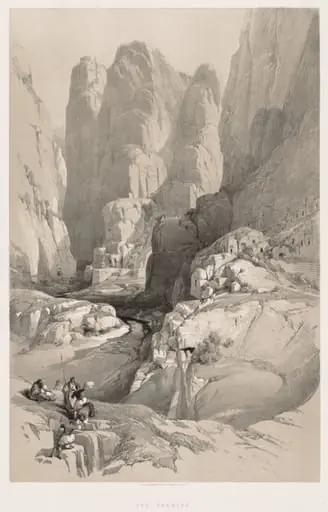 The Holy Land, Syria, Idumea, Arabia, Egypt & Nubia (Vol. III): Entrance to Petra
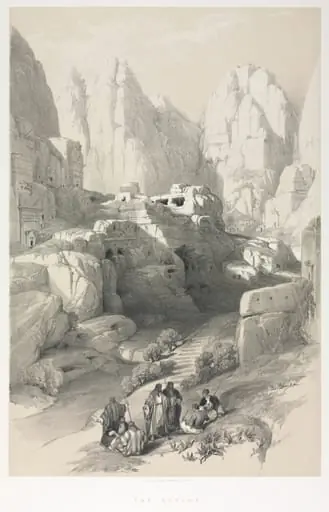 The Holy Land, Syria, Idumea, Arabia, Egypt & Nubia: Petra
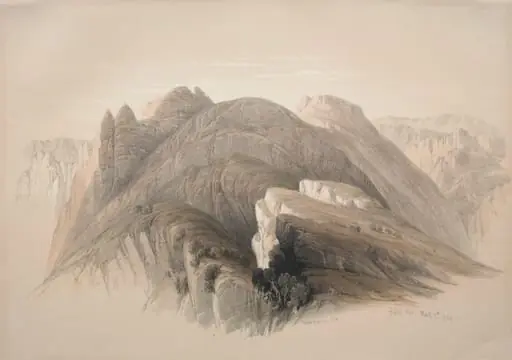 Gebil Hor. Mount Hor, from the Cliffs Encircling Petra
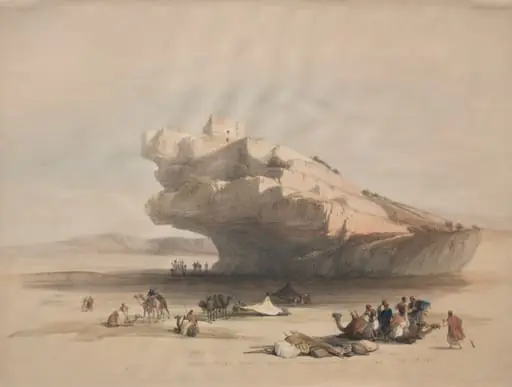 Approach to Petra, an Ancient Watch Tower Commanding the Valley of El Chor
 Descent from the Valley of the Jordan