Artwork
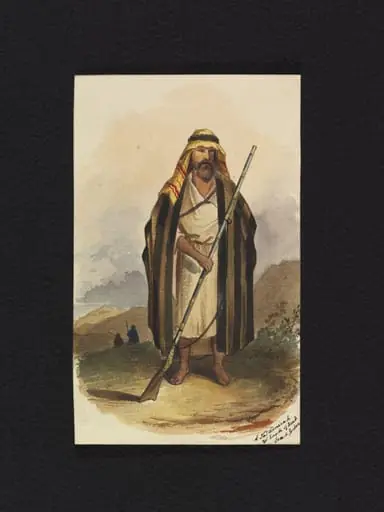
Arabs of the Tribe of the Benisaid
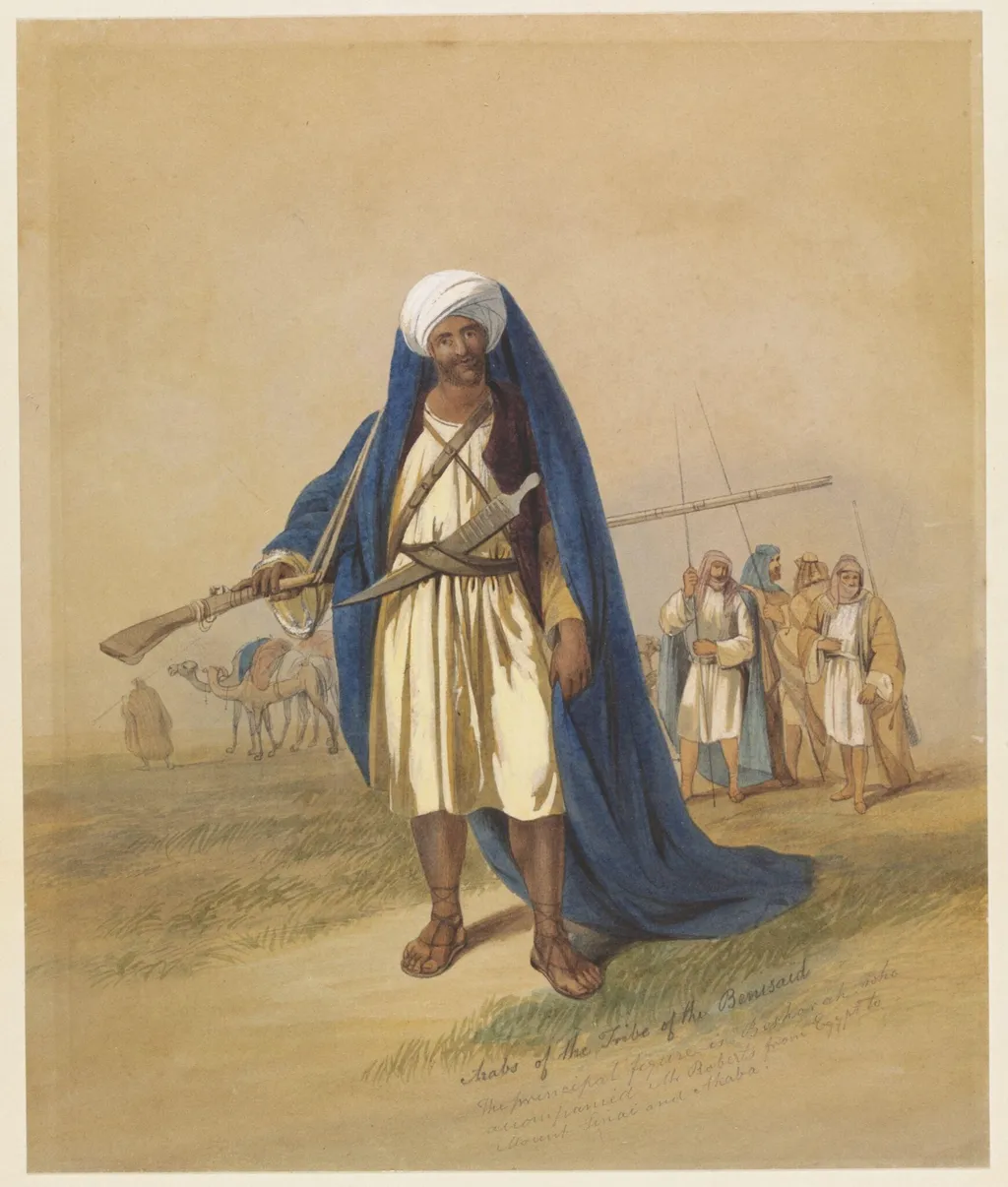
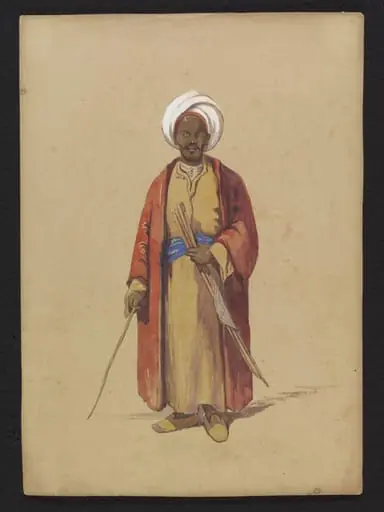
Arabs of the Tribe of the Benisaid is a watercolor work on paper by the Orientalist artist Cornelius Pearson. It dates from 1849 and is held in the collection of the Victoria and Albert Museum.
About this work
The title says these are "Arabs of the Tribe of the Benisaid," drawn from life by the artist.
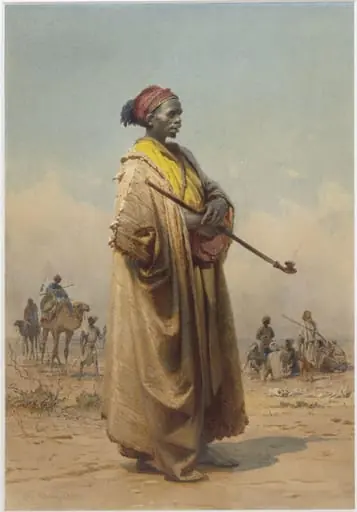
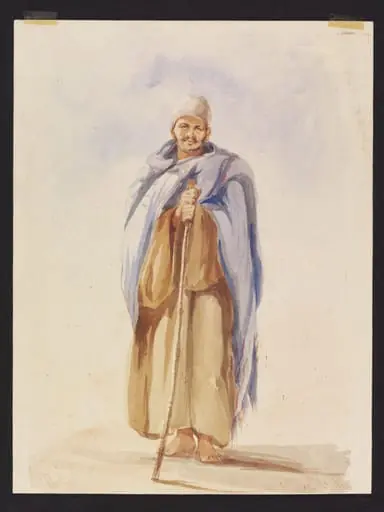
This painting shows a group of men in desert clothes. The man in the front wears a blue cloak and a white turban, holding a long stick. Behind him, other men stand with staffs, and camels are visible in the background. The colors are soft and earthy, with light shading.
The title says these are "Arabs of the Tribe of the Benisaid," drawn from life by the artist. The style looks like it was made after 1849, using watercolor.
If you like this, check out the Victoria and Albert Museum for more works like it.
Overview
This watercolour, dated 1849, is a reproduction of a lithograph originally created by Louis Haghe from sketches by David Roberts during his travels in the Middle East. It depicts members of the Benisaid tribe, a nomadic Arab group, in a desert environment. The work was produced as part of a broader project documenting the landscapes and peoples of the Holy Land, commissioned for publication in the mid-1850s. The piece entered private collection in 1970 after being acquired by Jas. Mackinnon.
Subject & Meaning
The scene portrays a group of men from the Benisaid tribe, dressed in traditional desert attire, standing with staffs beside camels. The central figure, wearing a blue cloak and white turban, holds a long walking stick, suggesting leadership or travel. The composition reflects observational ethnography rather than idealization, aiming to record the appearance and daily presence of nomadic communities in the region during the 19th century.
Technique & Style
Executed in watercolour, the work employs soft, muted tones and subtle washes to convey the arid landscape and textured fabrics. The figures are rendered with restrained detail, emphasizing form and posture over individual expression. The light shading and atmospheric perspective reflect the influence of topographical illustration, aligning with the precision expected in travel documentation of the period.
History & Provenance
The image originates from David Roberts’ field sketches made between 1838 and 1839, later translated into lithographs by Louis Haghe for the 1855 publication *The Holy Land*. This watercolour version, produced in 1849, likely served as a preparatory or derivative study. It was acquired by Jas. Mackinnon in November 1970 for £17, marking its transition into private hands after decades of circulation in printed form.
Context
Roberts’ travels coincided with a surge of European interest in the Near East, fueled by archaeological exploration and religious pilgrimage. His works, including this one, contributed to a visual archive that shaped Western perceptions of Arab life. Though romanticized in tone, the images were grounded in direct observation, distinguishing them from purely imaginative depictions of the region.
Legacy
The watercolour stands as a fragment of a larger documentary effort that preserved visual records of communities and landscapes undergoing rapid change. While not widely exhibited, such works remain valuable for their ethnographic detail and their role in the development of Orientalist visual culture. They continue to inform historical studies of 19th-century travel and representation in the Middle East.
Artist & collection
Artist
British watercolor artist Cornelius Pearson spent years painting distant landscapes and scenes after 1849.

![A Shaykh with his Son[?] on Mules, with their Sais [groom], by S. Bossi](https://artifactworldgallery.com/img/s-bossi--a-shaykh-with-his-son-on-mules-with-their-sais-groom--240d85ba529e2bf3-w320.webp)