Artwork
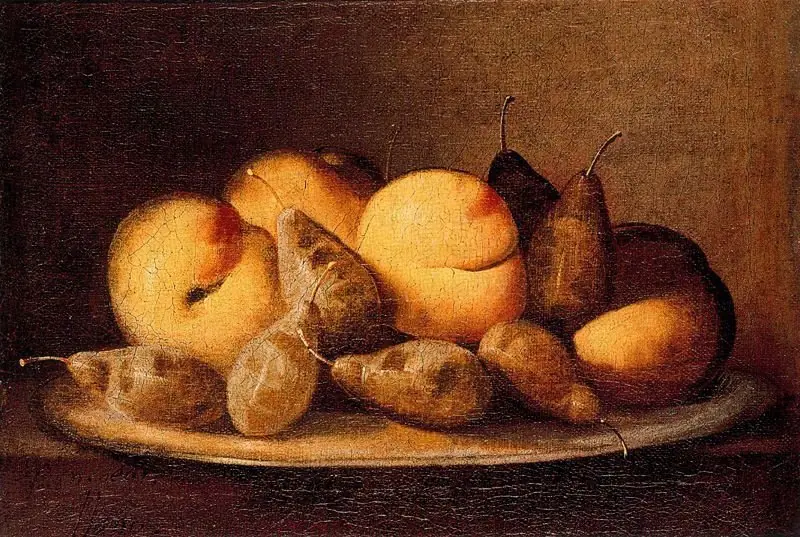
Still Life with Dish of Pears and a Sprig of Jasmine Blossom on a Ledge
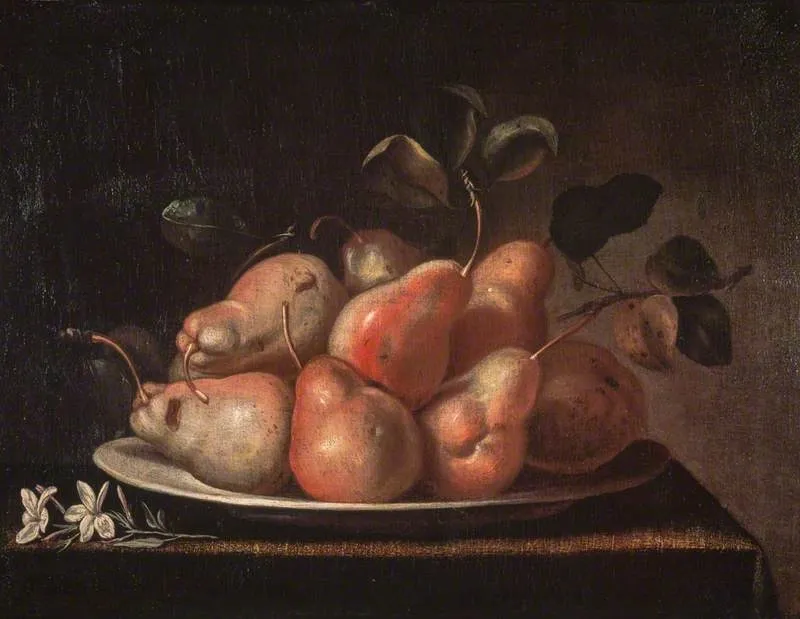
Still Life with Dish of Pears and a Sprig of Jasmine Blossom on a Ledge is an oil painting by the Early Baroque Italian artist Pedro de Camprobin. It dates from 1650 and is held in the collection of the National Galleries Scotland.
About this work
Overview
Painted around 1650 by Spanish artist Pedro de Camprobín Passano, this oil on canvas still life presents a simple arrangement of pears and jasmine blossoms on a stone ledge. Executed in Seville during the height of Spanish Baroque still-life painting, the work reflects the period’s emphasis on quiet observation and material precision. It is now part of the Scottish National Gallery’s collection.
Subject & Meaning
The arrangement invites contemplation of everyday abundance, a common theme in Spanish still life that valued quiet dignity over grandeur.
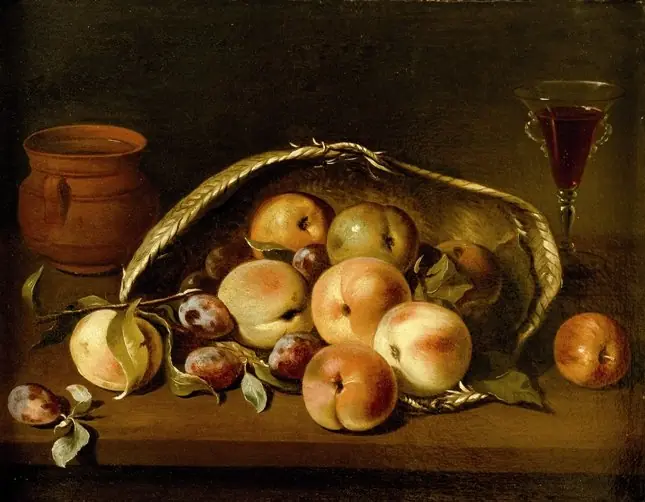
The composition centers on a modest pile of pears, their ripeness suggested by varied tones of russet and gold, alongside a single branch of white jasmine with delicate green leaves. These elements carry no overt symbolic narrative but evoke the transient beauty of nature. The arrangement invites contemplation of everyday abundance, a common theme in Spanish still life that valued quiet dignity over grandeur.
Technique & Style
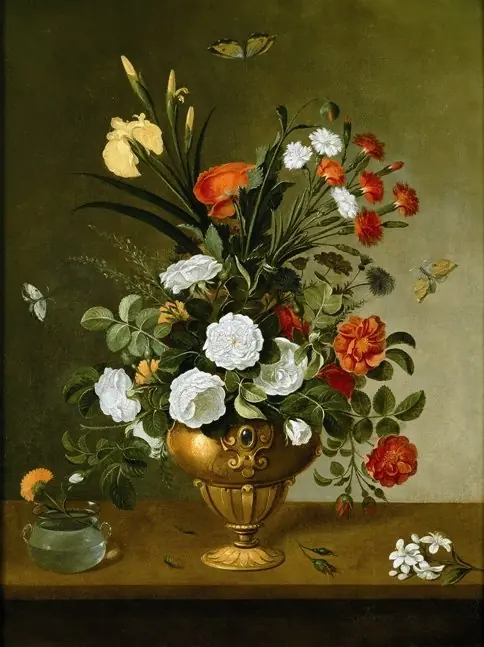
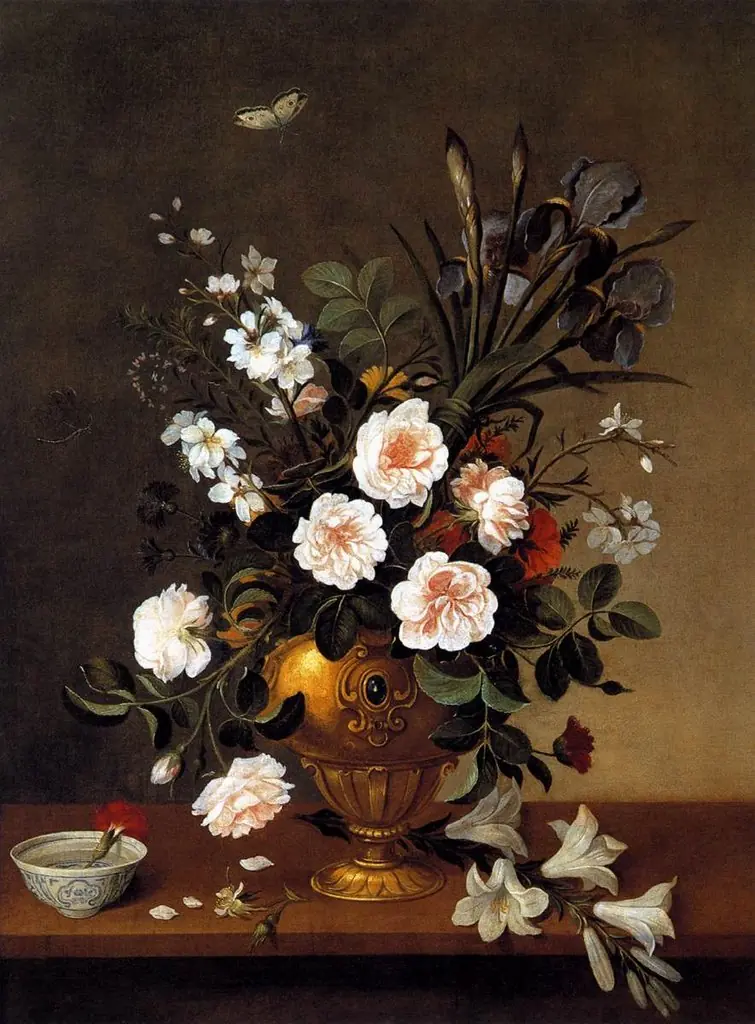
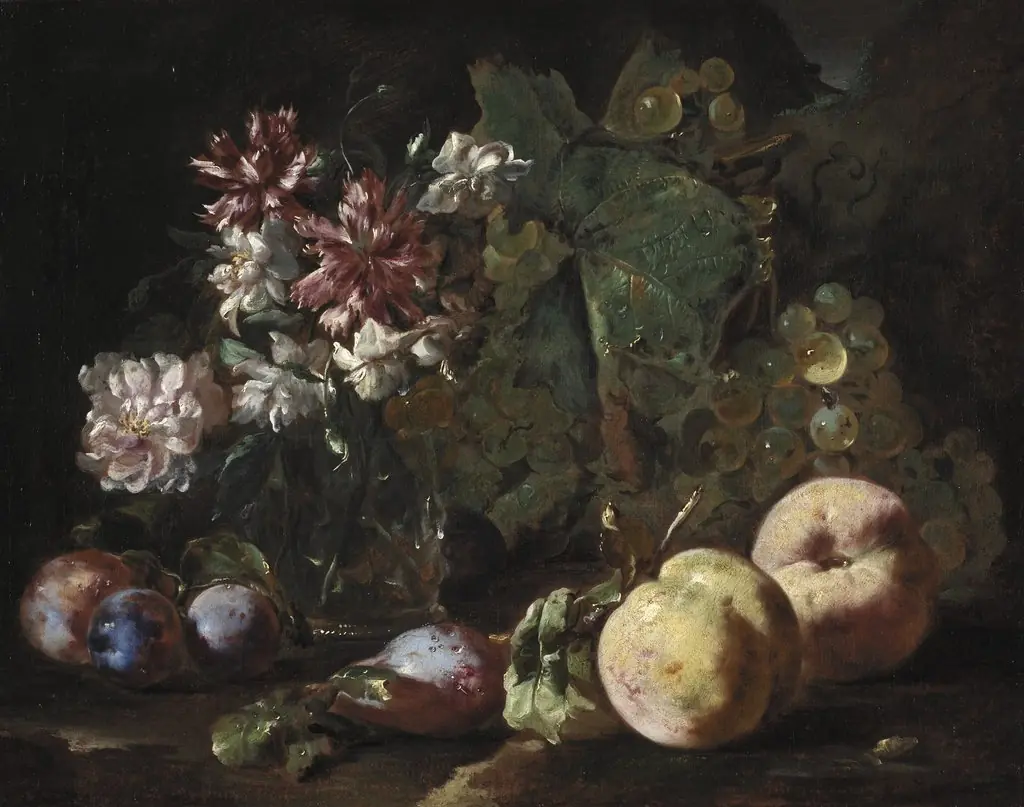
Camprobín employs chiaroscuro to model the pears and blossoms with subtle gradations of light and shadow, lending them tangible volume. The dark, unmodulated background isolates the objects, enhancing their presence. Surface textures vary—glossy skin on the fruit contrasts with the matte softness of petals and leaves—demonstrating close attention to material qualities without overt embellishment.
History & Provenance
Created during Camprobín’s active years in Seville, the painting aligns with a local tradition of still-life production that gained prominence in the mid-17th century. Its documented presence in the Scottish National Gallery indicates it entered the collection through 19th- or early 20th-century acquisitions, though its earlier ownership history remains unrecorded in public sources.
Context
In 17th-century Spain, still-life painting flourished as a distinct genre, often produced for private patrons who appreciated its quiet realism. Unlike Italian or Flemish counterparts, Spanish still lifes tended toward austerity and restraint. Camprobín’s work fits within this national tendency, emphasizing naturalism over theatricality and avoiding allegorical overtones.
Legacy
Though not widely known outside specialist circles, Camprobín’s paintings contribute to the understanding of regional Spanish Baroque practices. This work exemplifies how modest subjects were elevated through careful observation and technical control. It remains a representative example of a genre that quietly documented the material world of its time.
Artist & collection
Artist
Pedro de Camprobín Passano (1605, Almagro - 22 July 1674, Seville) was a Spanish Baroque painter who specialized in still-lifes; primarily flowers.