Artwork
Untitled
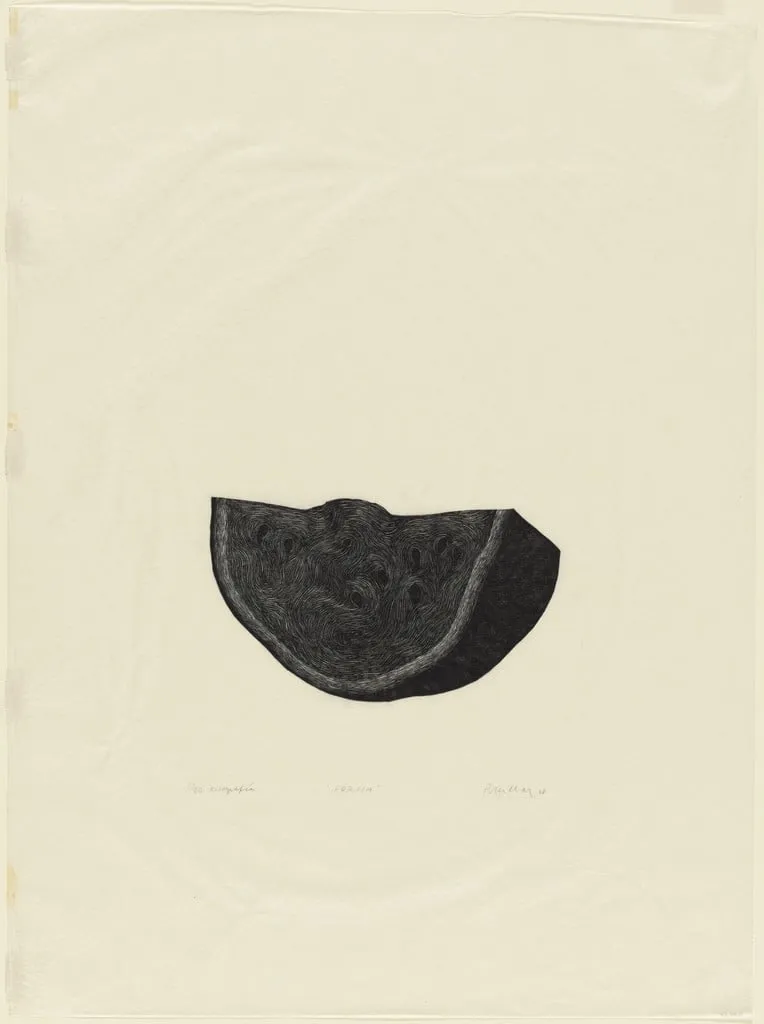
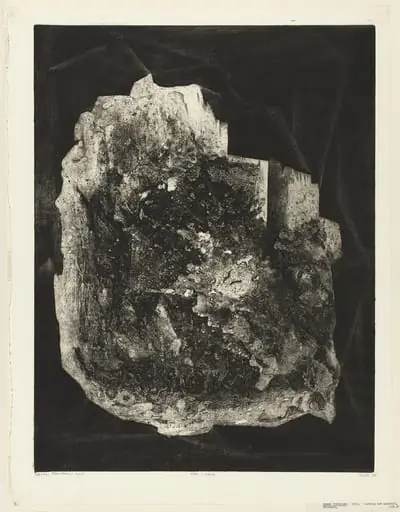
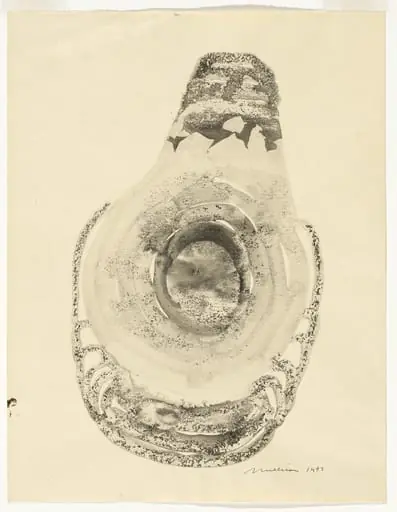
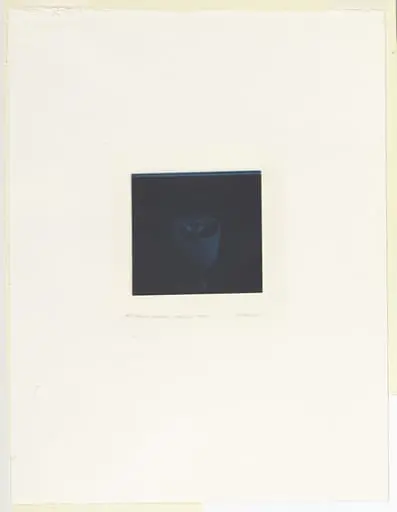
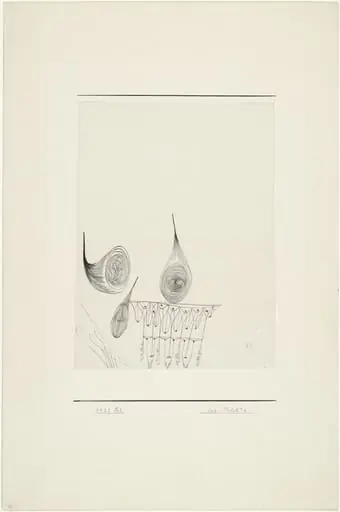
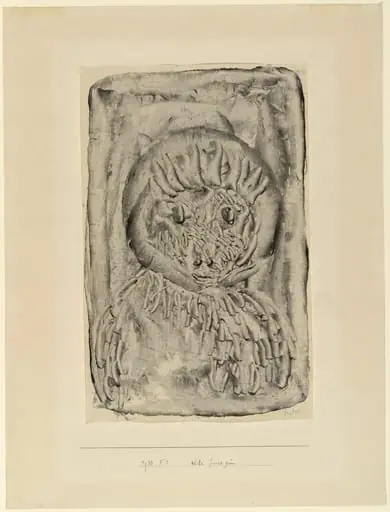
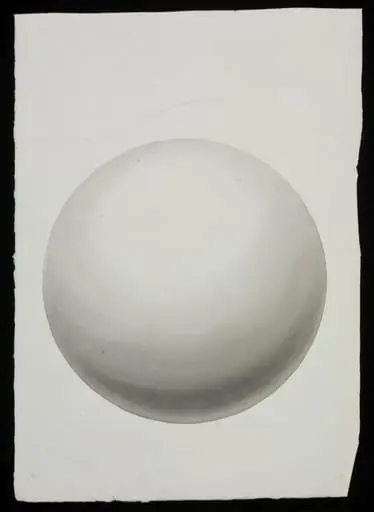
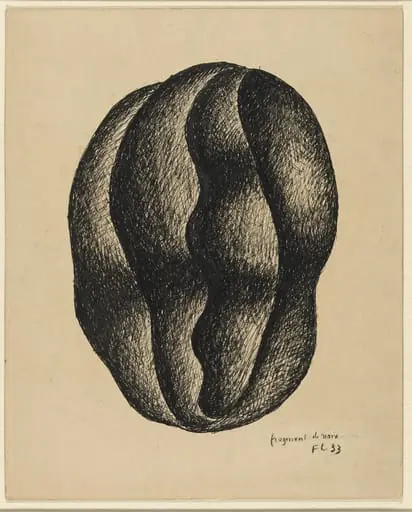
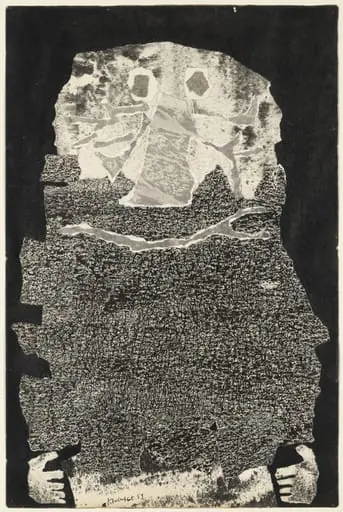
Untitled is an ink print by Pedro Millar. It dates from 1968 and is held in the collection of the Museum of Modern Art.
About this work
Overview
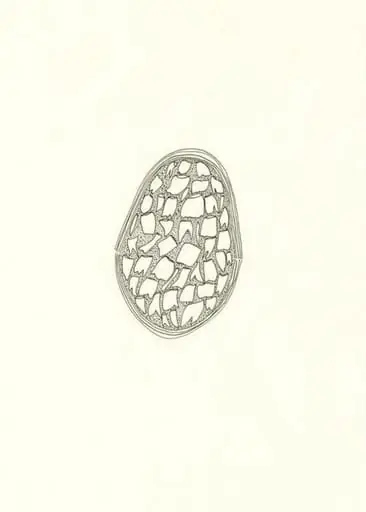
Executed in black ink on a light ground, the composition features a single, centrally placed form resembling a crescent or fragment.
Created in 1968 by Chilean artist Pedro Millar, this wood engraving is part of The Museum of Modern Art’s collection. Executed in black ink on a light ground, the composition features a single, centrally placed form resembling a crescent or fragment. Its minimalist structure emphasizes the interplay between negative space and intricate internal detail, achieved through precise carving techniques characteristic of relief printing.
Subject & Meaning
The form lacks explicit symbolic reference, inviting open interpretation. Its ambiguous silhouette—neither fully organic nor geometric—suggests a fragment of nature or a psychological imprint. The dense, woven texture within it evokes materiality like hair or fabric, yet resists definitive identification. This ambiguity reflects a broader interest in abstraction and the quiet tension between presence and void.
Technique & Style
Millar employed wood engraving, carving fine lines into the end grain of a hardwood block. The resulting print captures the sharpness of incised marks, with subtle variations in line density creating tonal depth. The texture appears both precise and softly blurred due to ink absorption and pressure during printing. This method allows for intricate detail without shading, relying solely on line to suggest form and movement.
History & Provenance
The work entered The Museum of Modern Art’s collection shortly after its creation, likely acquired during a period of increased institutional interest in Latin American printmaking. No earlier exhibition or ownership history is publicly documented. Its inclusion in the museum’s holdings reflects a mid-20th-century shift toward recognizing non-Western modernist practices within global art narratives.
Context
Made during a time of political upheaval in Chile, the piece avoids overt political messaging, aligning instead with international trends in abstract printmaking. Millar’s focus on formal economy and tactile texture resonates with contemporaries in Europe and the Americas who explored minimalism and materiality. The work stands apart from figurative or propagandistic art of the era, favoring introspective visual language.
Legacy
Though not widely reproduced, the engraving exemplifies the potential of wood engraving to convey complexity through restraint. It contributes to a quieter lineage of 20th-century printmaking that values craftsmanship and subtlety over spectacle. Its presence in MoMA’s collection continues to influence how such works are studied within broader conversations on abstraction and material process.
Artist & collection