Artwork
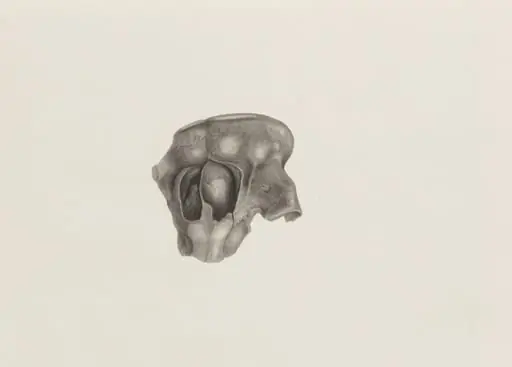
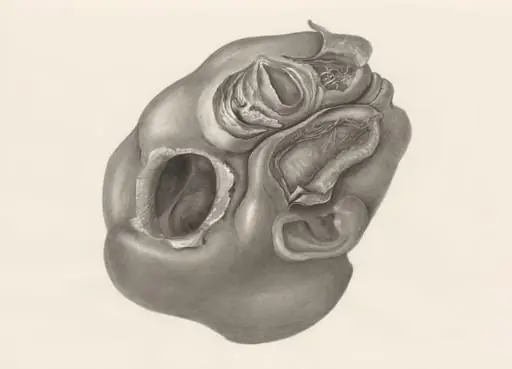
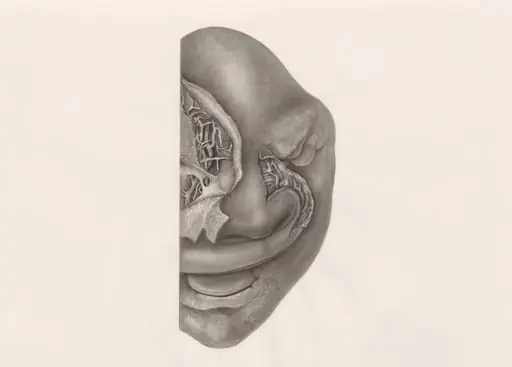
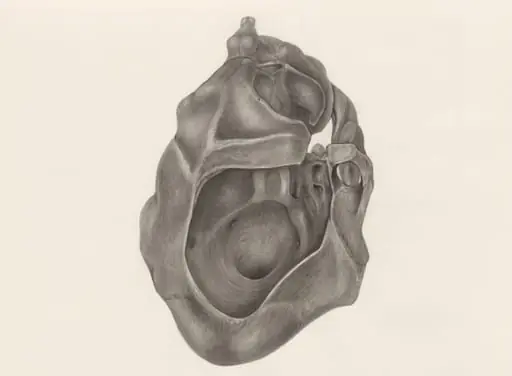
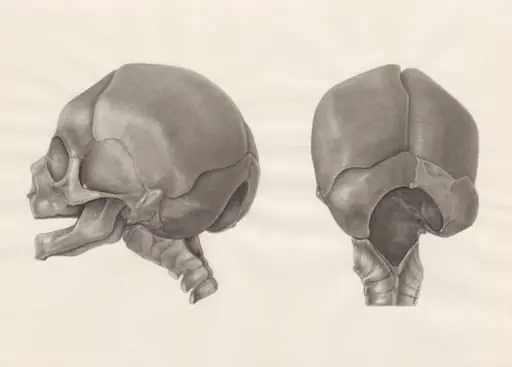
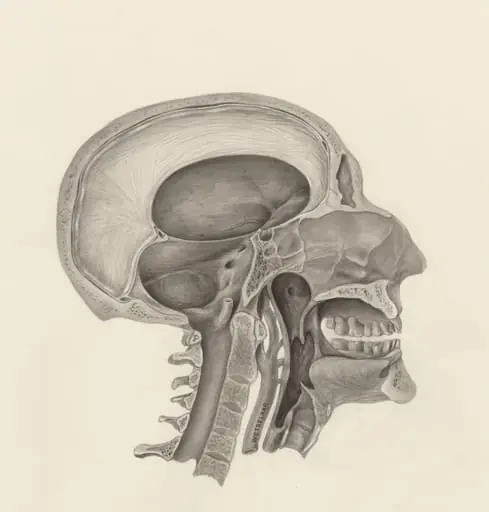
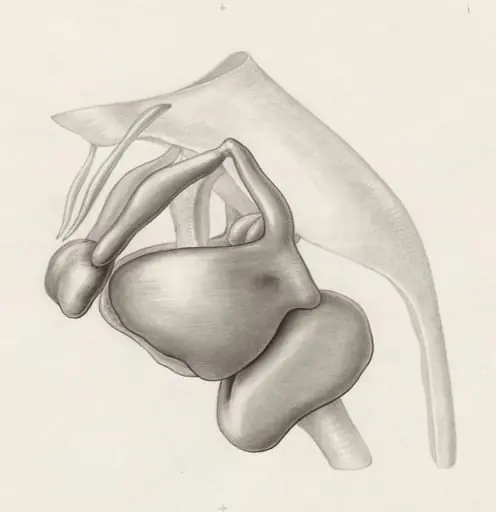
Deformed fetal head, seen from the back
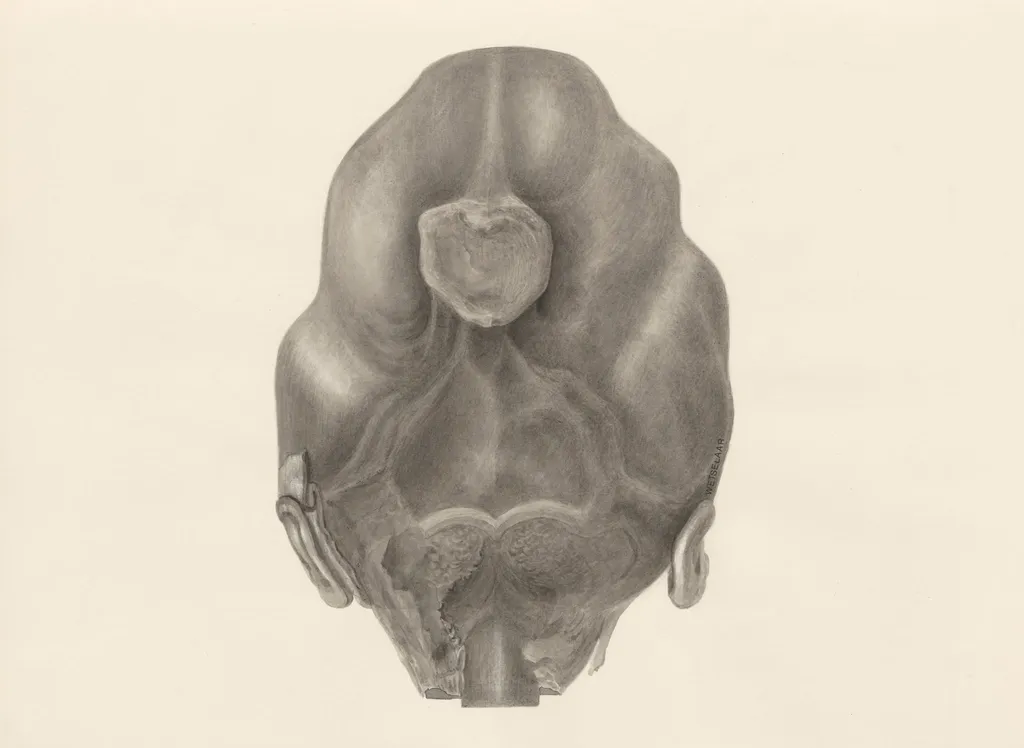
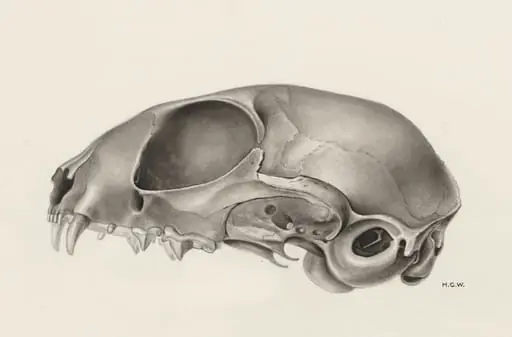
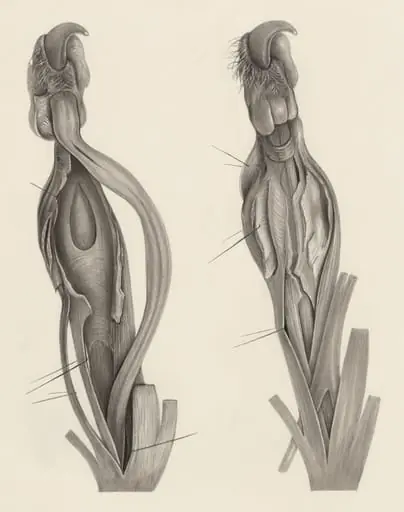
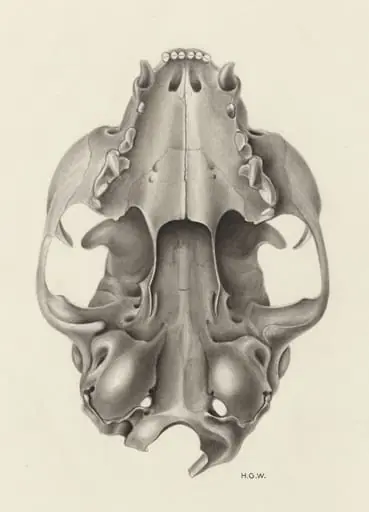
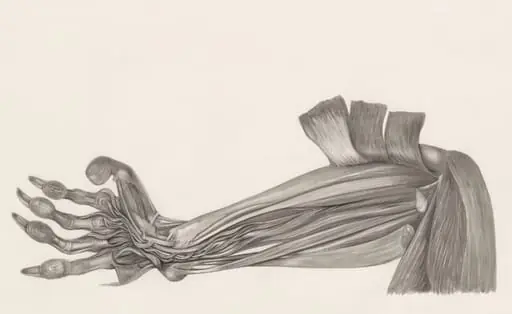
Deformed fetal head, seen from the back is a drawing by H.G, Wetselaar. It dates from 1970 and is held in the collection of the Leiden University Libraries. This drawing, created around 1970 by H.
About this work
Overview
This drawing, created around 1970 by H.G. Wetselaar, depicts a fetal head from a posterior, overhead perspective. Rendered in a precise, observational style, it captures anatomical details with minimal embellishment. The work is part of the collection at the Museum of Ethnography, where it functions as a record of developmental morphology rather than an artistic statement.
Subject & Meaning
The image presents a fetal head with visible cranial sutures and a small opening at the vertex, likely indicating the fontanelle. The shoulders and arms are faintly rendered, with hands positioned near the hips, suggesting a curled fetal posture. The focus on anatomical accuracy implies a scientific purpose, possibly for medical education or embryological documentation.
Technique & Style
The artist employed subtle shading and controlled line work to suggest skin texture and form. Surface wrinkles are indicated through light, continuous strokes, while the absence of heavy outlines preserves a clinical neutrality. The use of cross-hatching is restrained, prioritizing clarity over dramatic contrast, aligning with conventions of anatomical illustration.
History & Provenance
Created in the early 1970s, the drawing entered the Museum of Ethnography’s collection as part of a broader archive of medical and anthropological visual records. Its origin in a clinical or academic setting is implied by its precision and lack of decorative elements, though its exact commission or context remains undocumented.
Context
During the late 20th century, detailed anatomical drawings like this were still widely used in medical training before the dominance of photographic and digital imaging. Such illustrations served as teaching tools in embryology and obstetrics, valued for their ability to highlight structural anomalies and developmental stages with clarity.
Legacy
Though not widely exhibited, the drawing contributes to a historical archive of pre-digital medical visualization. It reflects a period when hand-drawn illustrations remained essential for documenting human development, preserving a method of observation now largely replaced by technology but still valued for its interpretive precision.
Artist & collection
Artist
H.G. Wetselaar spent his days hunched over microscopes in a quiet Leiden lab, sketching what most people ignore. His pencil caught the raw architecture of bodies we pretend are smooth—like the knotted muscles of a…