Artwork
The Annuciation
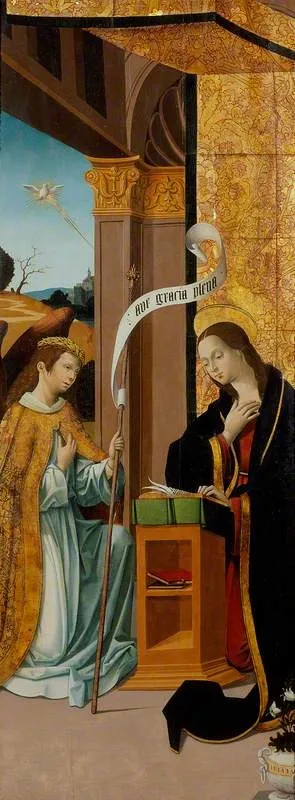
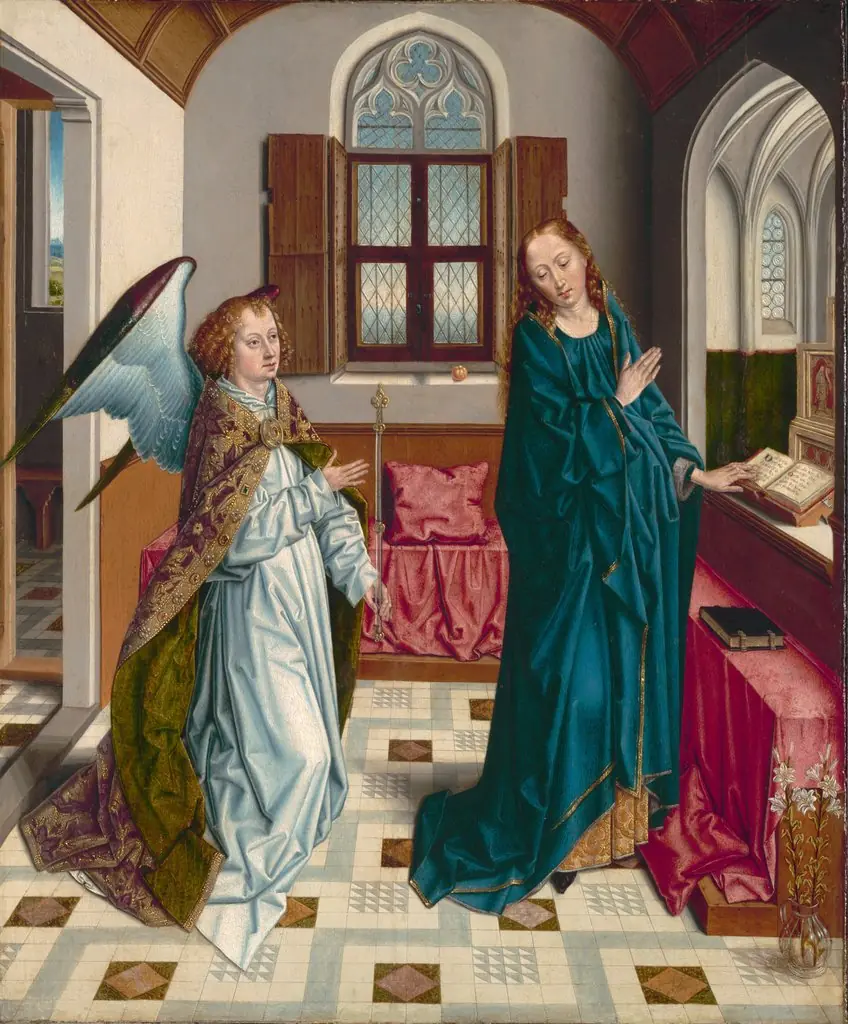
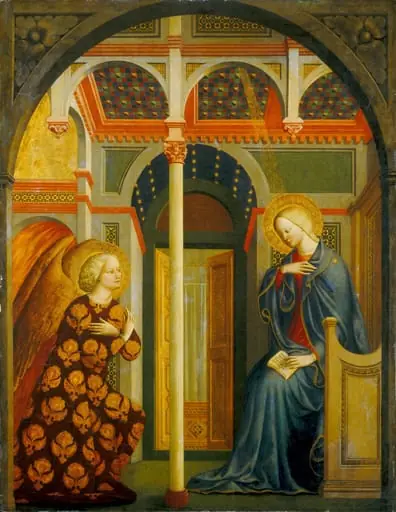
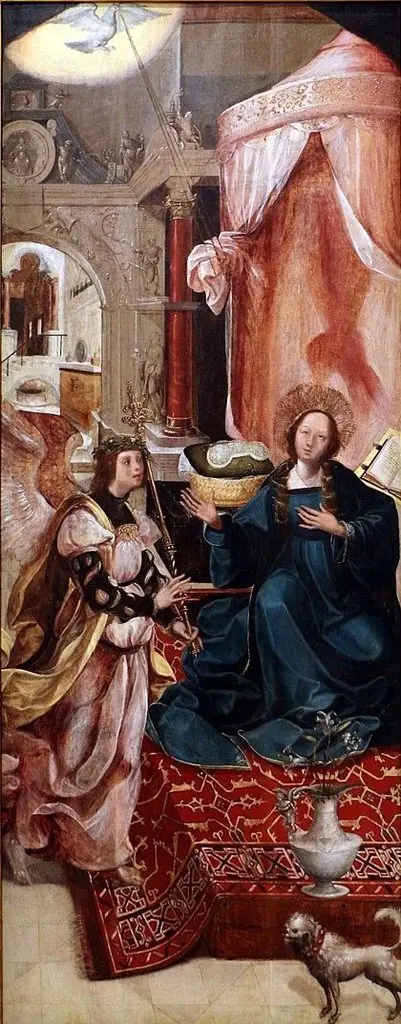
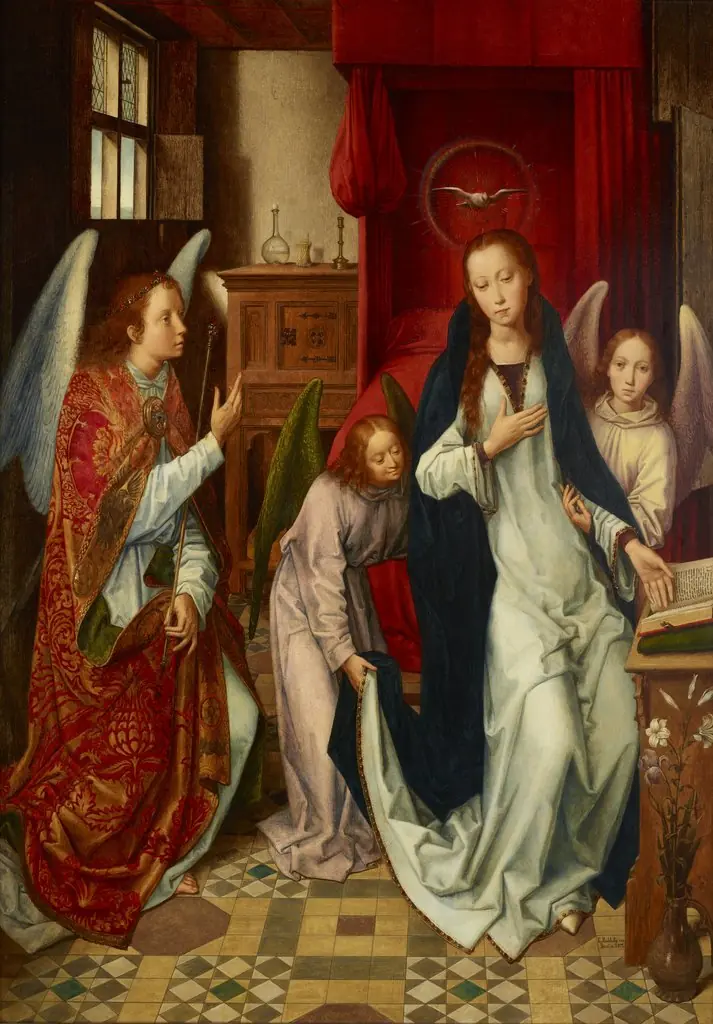
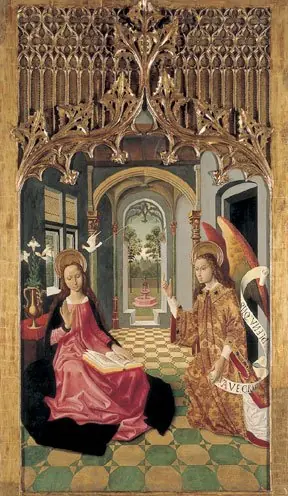
The Annuciation is an unspecified painting by the Mannerist artist Pedro Romana. It dates from 1527 and is held in the collection of the Victoria and Albert Museum.
About this work
Overview
The painting is now part of the Victoria and Albert Museum’s collection, preserved as an example of early 16th-century Spanish devotional art.
Painted in 1527 by Pedro Romana, a Spanish artist active in Córdoba, this depiction of the Annunciation is one of several religious works produced during the height of his career. Romana operated within the regional Córdoba School, where local traditions intersected with broader European trends. The painting is now part of the Victoria and Albert Museum’s collection, preserved as an example of early 16th-century Spanish devotional art.
Subject & Meaning
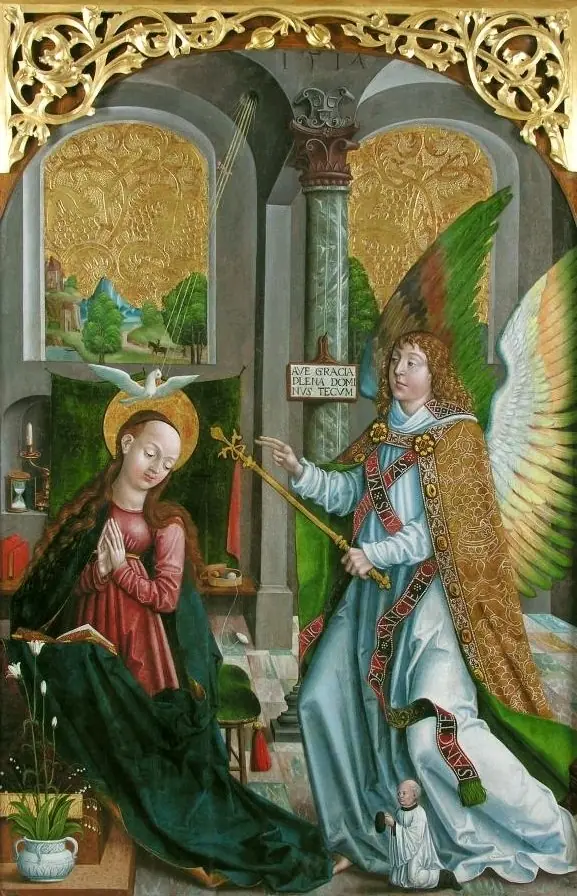
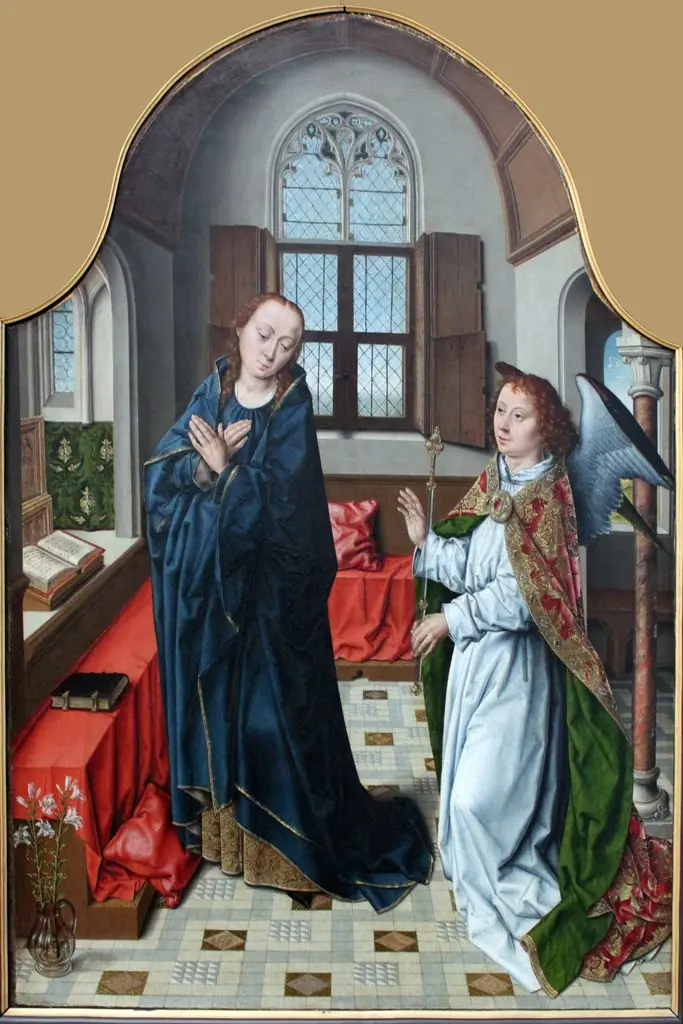
The scene portrays the moment the Archangel Gabriel announces to the Virgin Mary that she will bear the Son of God. Gabriel, adorned in white and gold, presents a banner as a symbol of divine message, while Mary, in red and black, responds with reverent clasped hands. The crowns on both figures suggest their sacred status, and the enclosed interior space emphasizes the intimacy of the revelation, a common convention in devotional imagery of the period.
Technique & Style
Romana’s approach combines the detailed realism of Flemish painting with the compositional clarity of Italian Renaissance models. Figures are elongated and posed with deliberate formality, characteristic of emerging Mannerist tendencies. The use of rich color, especially the contrast between Mary’s red garment and Gabriel’s gold accents, enhances visual hierarchy. The architectural setting, rendered with precise stone textures, reflects an interest in spatial depth despite its stylized proportions.
History & Provenance
Created during Romana’s mature period, the painting likely originated as an altarpiece or private devotional panel in a Córdoba church or household. Its journey to the Victoria and Albert Museum remains undocumented prior to its acquisition by the institution, but its preservation suggests it was valued as a regional example of Spanish Renaissance religious art, possibly collected in the 19th century as interest in Iberian art grew.
Context
In early 16th-century Spain, religious imagery was central to artistic production, shaped by the Counter-Reformation’s emphasis on clarity and emotional resonance. Romana’s synthesis of Northern and Italian influences mirrors the mobility of artists and prints across Europe. While Italian humanism influenced composition, Flemish attention to detail persisted in Spanish workshops, resulting in a hybrid style unique to regions like Córdoba.
Legacy
Though not widely known outside Spain, Romana’s work contributes to the understanding of regional artistic identity during the transition from Late Gothic to Mannerism. His integration of diverse influences highlights how provincial centers participated in broader European dialogues. The painting remains a reference point for scholars studying the adaptation of international styles in Spanish religious art before the rise of the Spanish Baroque.
Artist & collection
Artist
Pedro Romana (c.1460–1536) was a Spanish Renaissance painter. Romana was probably born around Córdoba, Andalusia where he was active from 1488 to 1536. He specialized in religious-themed works for church commissions,…