Artwork
The Festival of Saint George
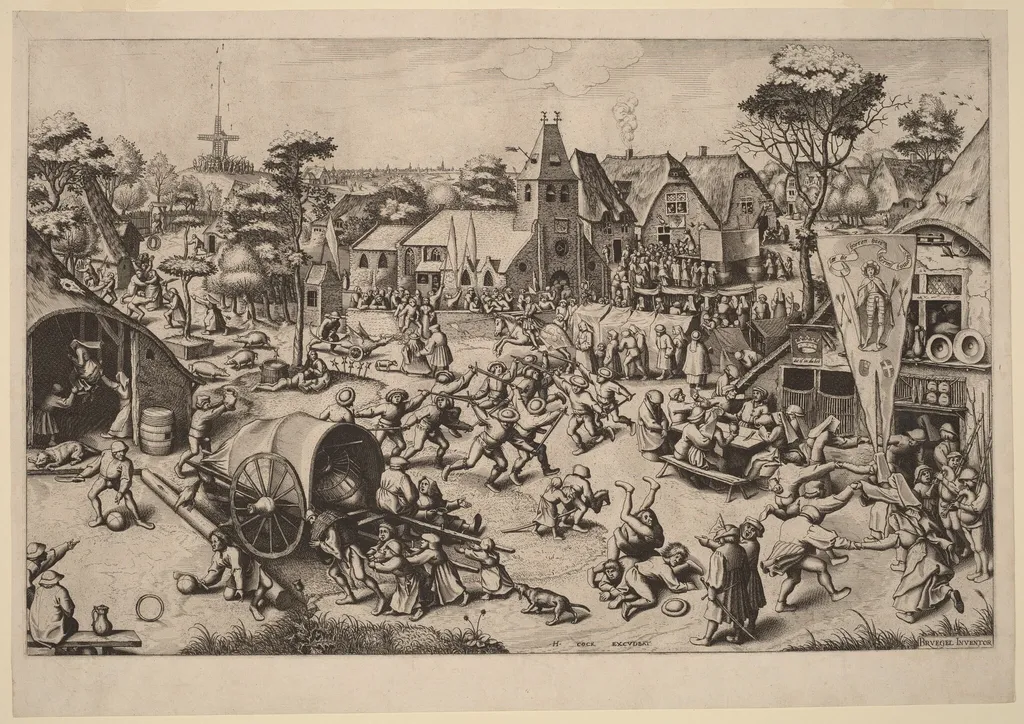
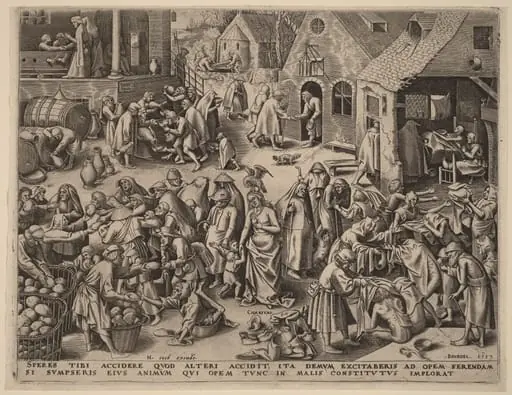
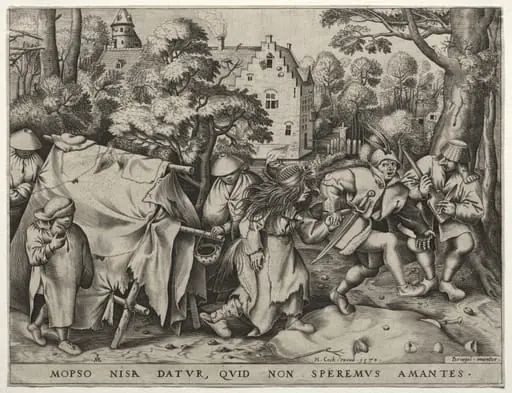
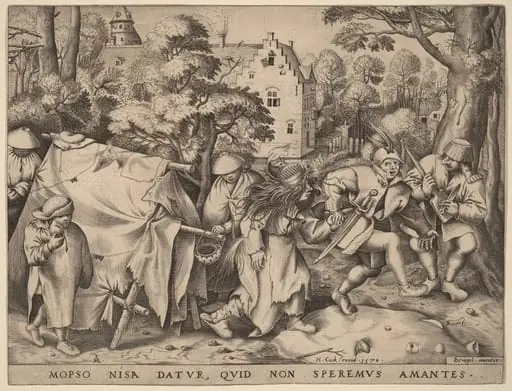
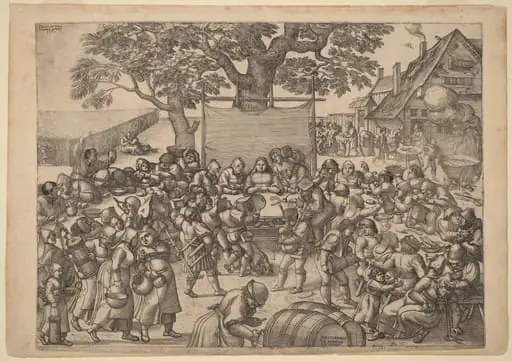
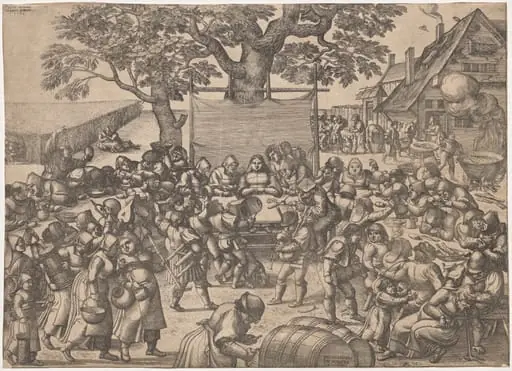
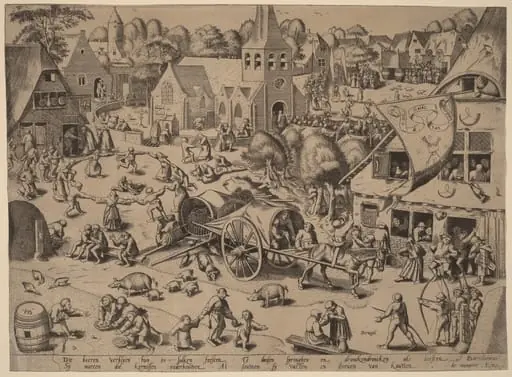
The Festival of Saint George is an ink print by the Renaissance artist Johannes van Doetechum the Elder. It dates from 1561 and is held in the collection of the National Gallery of Art. Created around 1561 by Johannes van Doetecum the Elder, this print combines etching and engraving to depict a lively village gathering.
About this work
Overview
Created around 1561 by Johannes van Doetecum the Elder, this print combines etching and engraving to depict a lively village gathering.
Created around 1561 by Johannes van Doetecum the Elder, this print combines etching and engraving to depict a lively village gathering. Though titled after Saint George, the scene is more a genre depiction of communal festivity than a direct biblical narrative. Van Doetecum, a Dutch engraver and cartographer, was known for translating the detailed compositions of Pieter Bruegel the Elder into print form, and this work reflects his skill in rendering crowded, dynamic spaces with precision.
Subject & Meaning
The scene portrays a village festival with figures engaged in combat, music, play, and observation, suggesting a secular celebration rather than a solemn religious rite. A small figure bearing a dragon-shaped shield alludes to Saint George, possibly anchoring the event in local tradition or folklore. The inclusion of such a symbol invites interpretation without dictating a singular narrative, allowing the viewer to perceive the occasion as both civic and mythically resonant.
Technique & Style
Van Doetecum employed fine etched lines and engraved details to convey texture and motion across a densely populated composition. The sharp, controlled strokes define individual figures, architectural elements, and natural features with clarity. The use of overlapping forms and varying line weights creates a sense of spatial depth, while the absence of tonal shading keeps the focus on linear rhythm and narrative activity, characteristic of Northern Renaissance printmaking.
History & Provenance
The print was produced during Van Doetecum’s early career, before his 1578 relocation to Haarlem. It likely formed part of a series created in collaboration with his brother Lucas, who also worked in printmaking. Though specific early ownership records are sparse, the work aligns with the broader circulation of Bruegel-inspired prints in the Low Countries, intended for collectors and urban audiences interested in detailed visual storytelling.
Context
In mid-16th century the Netherlands, prints like this served as both entertainment and cultural documentation. Village festivals, often tied to saints’ days, were common social events that blended religious observance with folk customs. Van Doetecum’s depiction reflects this hybrid character, capturing everyday life with the same attention to detail found in contemporary cartography and genre painting, bridging art and civic record.
Legacy
Van Doetecum’s prints contributed to the dissemination of Bruegel’s visual language beyond paintings, influencing how Northern European audiences perceived rural life. His technical precision and compositional clarity helped standardize the aesthetic of narrative printmaking. Though less celebrated than his contemporaries, his work remains a vital link between the painted genre scenes of the period and their printed reproductions.
Artist & collection

Artist
Johannes van Doetechum the Elder
Joannes van Doetecum the Elder (1530 – 1605) was a Dutch engraver-cartographer known for his etched works after genre scenes by Pieter Bruegel the Elder and maps of various cities in the Netherlands.

![Charity [recto], by Philip Galle](https://artifactworldgallery.com/img/philip-galle--charity-recto--5c20ea2a094179e0-w320.webp)