Artwork
Mal
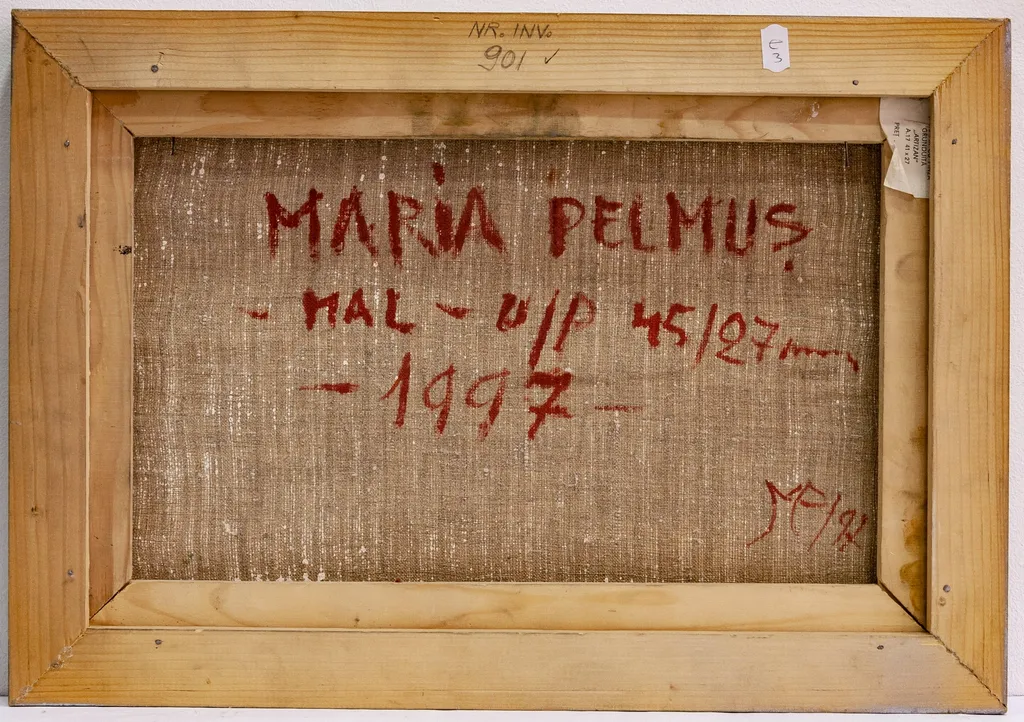
Mal is a print by Maria Pelmuș. It dates from 1997 and is held in the collection of the Gavrila Simion Eco-Museum Research Institute Tulcea.
About this work
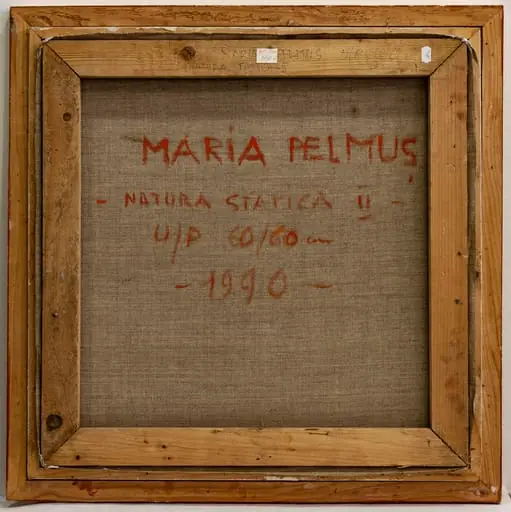
The writing looks like a signature or title, but the canvas itself is worn and patchy.
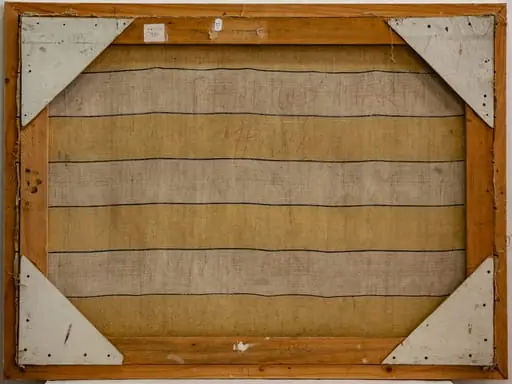
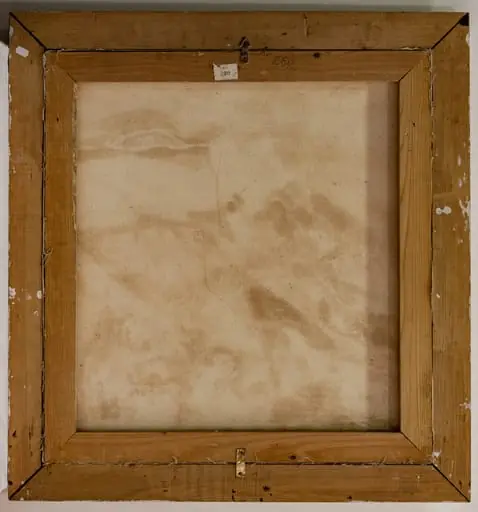
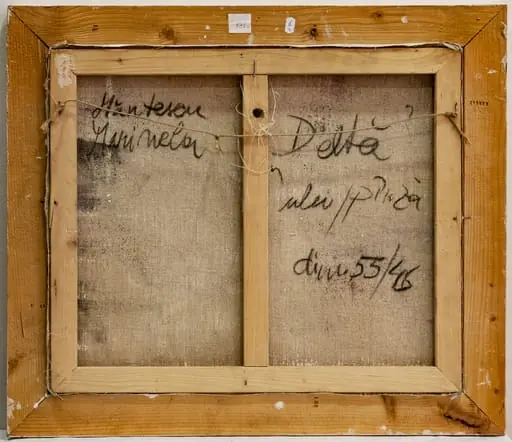
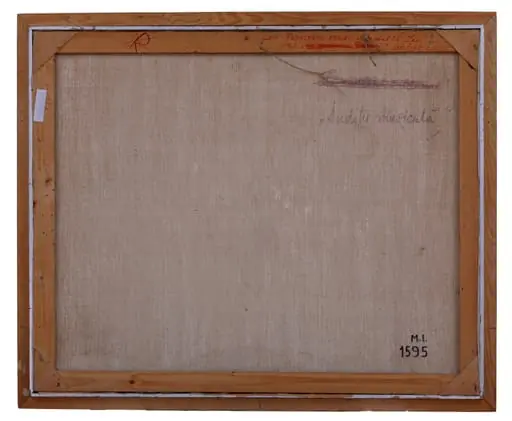
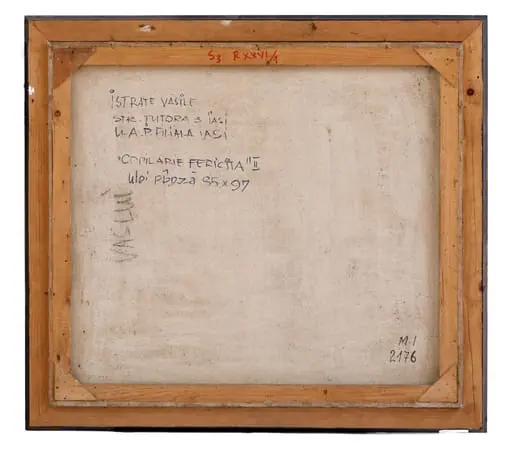
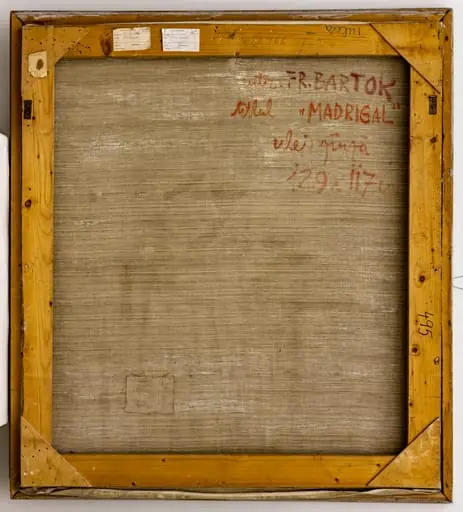
This is an empty wooden frame with a faded canvas inside. The canvas is mostly blank, but someone has written in red paint: *"MARIA PELMUS? - MAL - 1997."* The letters are uneven, almost like a hurried note.
The writing looks like a signature or title, but the canvas itself is worn and patchy. The frame has a few labels stuck to it, including an inventory number.
Next, check out Pelmuș, Maria to see what else she’s made.
Overview
Created in 1997 by Romanian artist Maria Pelmuș, Mal is an unadorned wooden frame containing a deteriorated canvas. The surface bears a sparse, crudely painted inscription: 'MARIA PELMUS? - MAL - 1997.' The work’s minimalism and material decay suggest an intentional rejection of traditional artistic presentation, inviting reflection on authorship and the value assigned to objects in institutional contexts.
Subject & Meaning
The title 'Mal'—Romanian for 'bank' or 'shore'—and the uncertain attribution in the inscription ('MARIA PELMUS?') evoke ambiguity. The work resists clear narrative, instead foregrounding questions of identity, ownership, and the fragility of artistic legacy. The hesitant handwriting and worn canvas imply a gesture of self-questioning, as if the artist is confronting the permanence of her own mark.
Technique & Style
Pelmuș employs found materials and deliberate imperfection. The canvas, faded and uneven, is not painted with precision but marked with a crude, urgent red inscription. The wooden frame, unvarnished and unembellished, holds the canvas without adornment. This austerity aligns with conceptual practices that prioritize idea over craft, using material decay to challenge notions of artistic finish and preservation.
History & Provenance
Mal entered the collection of the Museum of Ethnography shortly after its creation. The frame retains institutional labels, including an inventory number, anchoring the work within a museum’s archival logic. Its journey from private studio to public collection underscores its role as a commentary on how institutions assign meaning to objects, even those designed to resist interpretation.
Context
Emerging from post-communist Romania’s shifting cultural landscape, Mal reflects a generation of artists questioning established systems—artistic, political, and institutional. Pelmuș’s work aligns with broader Eastern European conceptual practices that used absence, text, and decay to critique authority and the commodification of culture, turning mundane materials into sites of quiet resistance.
Legacy
Mal endures as a quiet example of conceptual art that privileges uncertainty over resolution. It has influenced later Romanian artists interested in the politics of display and the erosion of authorial control. Its presence in a museum of ethnography, rather than fine art, further complicates its reception, prompting ongoing dialogue about categorization and cultural value.
Artist & collection
Artist
Maria Pelmuș painted scenes of the Danube delta and everyday life around it. Her brush captured wide skies and watery horizons in works like *Delta* and *Peisaj*, while her prints and paintings of local people and…
Museum
Gavrila Simion Eco-Museum Research Institute Tulcea
Continue through works from the same source collection.