Artwork
The Adoration of the Magi
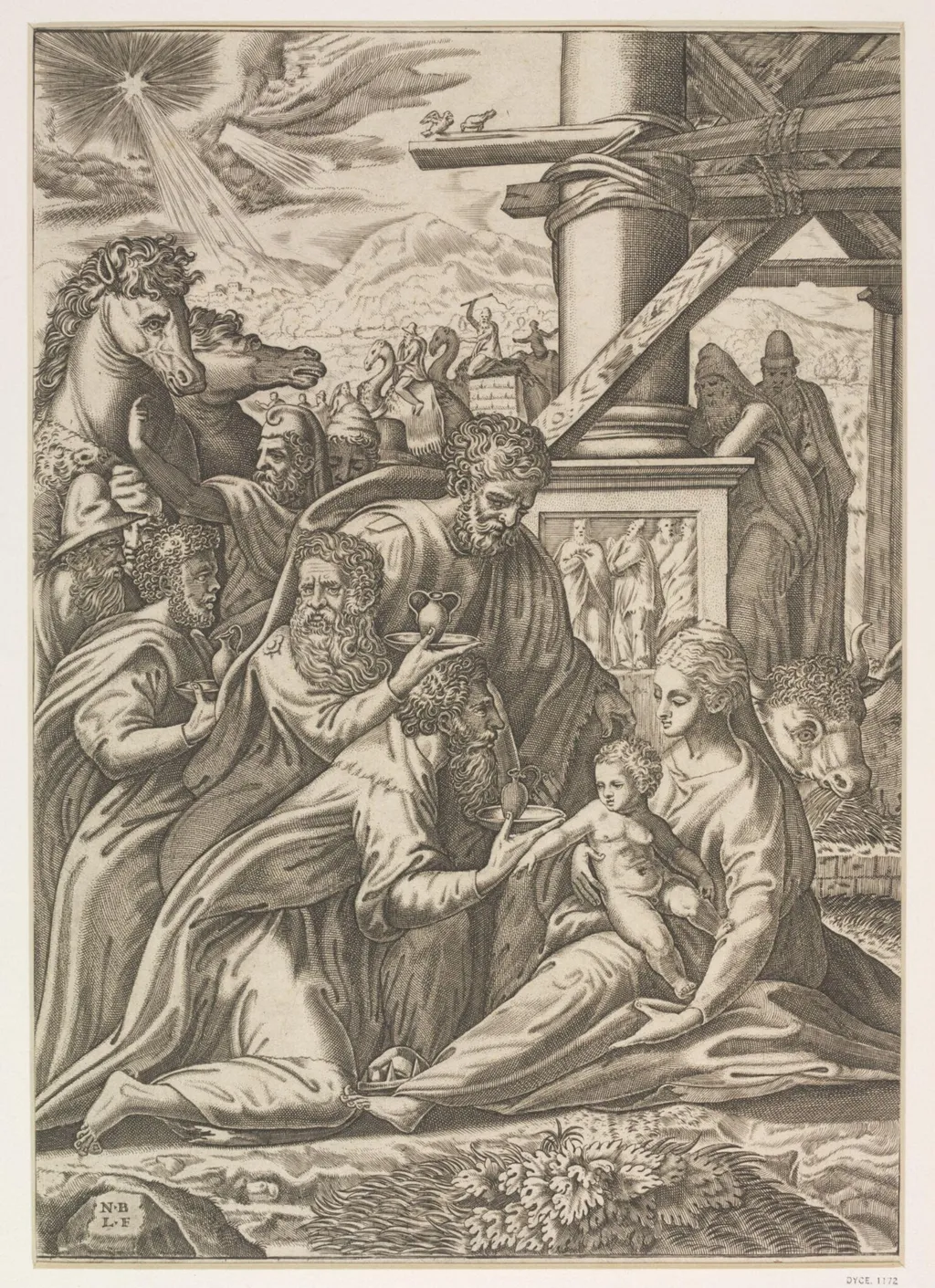
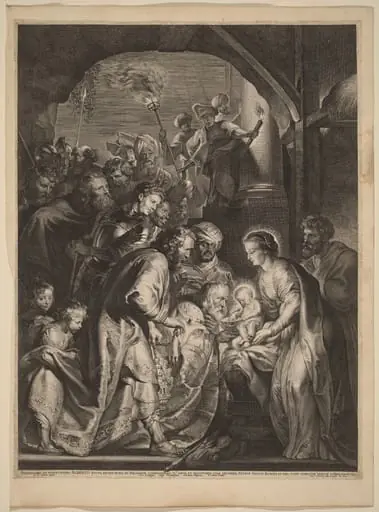
The Adoration of the Magi is a print by the Renaissance artist Nicolas Beatrizet. It dates from 1520 and is held in the collection of the Victoria and Albert Museum.
About this work
Overview
This print illustrates the Adoration of the Magi, a biblical scene in which three wise men present gifts to the infant Jesus. Attributed to a design by Giulio Romano and engraved by Nicolas Beatrizet, it was produced in the mid-16th century. The work is recognized in its second state by the inclusion of Anto. Lafrerij’s address, indicating its publication by the prominent Roman print dealer.
Subject & Meaning
The composition centers on the Virgin Mary seated with the Christ Child, surrounded by the three Magi offering symbolic gifts. Figures gesture in reverence, their postures conveying awe and submission. The inclusion of attendants, animals, and distant architecture situates the sacred moment within a worldly setting, reinforcing the theological idea of divine presence manifest in human history.
Technique & Style
The figures are draped in flowing garments rendered with rhythmic folds, characteristic of Mannerist sensibilities derived from Romano’s style.
Beatrizet employed fine, controlled lines to render texture and volume, using chiaroscuro to model forms against a dark ground. The figures are draped in flowing garments rendered with rhythmic folds, characteristic of Mannerist sensibilities derived from Romano’s style. The background’s sparse architecture and atmospheric sky enhance spatial depth without clutter, focusing attention on the central group.
History & Provenance
The print was produced in Rome during the 1540s, likely as part of a broader circulation of reproductive engravings after major painters. The appearance of Anto. Lafrerij’s imprint marks its second state, aligning it with the commercial print trade that disseminated Italian artistic designs across Europe. Copies of this work appear in several major European collections from the late 16th century onward.
Context
This print emerged during a period when Italian artists increasingly collaborated with engravers to extend the reach of their compositions. Romano’s Mannerist style, known for its elongated forms and complex arrangements, was well-suited to the graphic medium. Such prints served both devotional and educational purposes, making high art accessible beyond elite patrons.
Legacy
The print contributed to the standardization of the Adoration scene in Northern European visual culture. Its widespread distribution helped anchor Romano’s compositional approach in the collective imagination of later artists and collectors. Though not original in subject, its technical precision and stylistic clarity ensured its continued reproduction and study into the 17th century.
Artist & collection


![Castello S. Angelo di Roma [Castel Sant'Angelo in Rome], by Nicolas Beatrizet](https://artifactworldgallery.com/img/nicolas-beatrizet--castello-s-angelo-di-roma-castel-sant-angelo-in-rome--6c77d3bfe127c436-w320.webp)
![Pantheum Romanum [The Roman Pantheon], by Nicolas Beatrizet](https://artifactworldgallery.com/img/nicolas-beatrizet--pantheum-romanum-the-roman-pantheon--8069db7dd8e6f190-w320.webp)
 The Adoration of the Magi
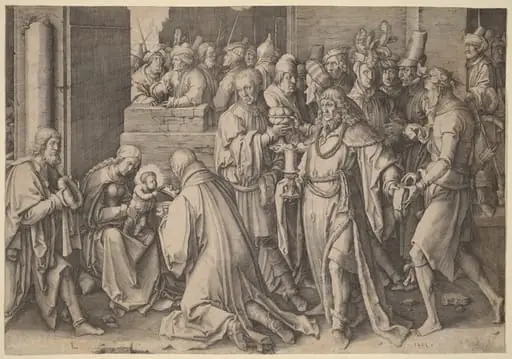 The Adoration of the Magi
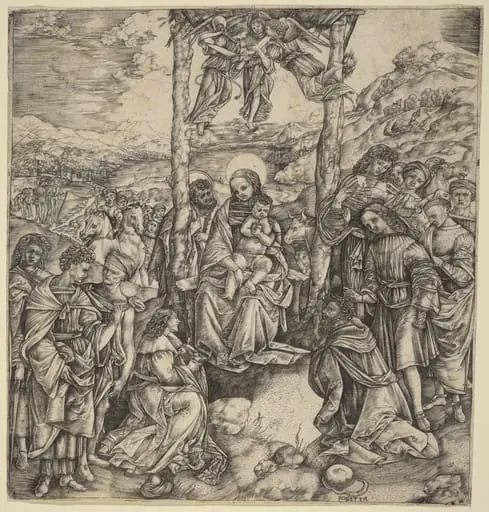 The Adoration of the Magi
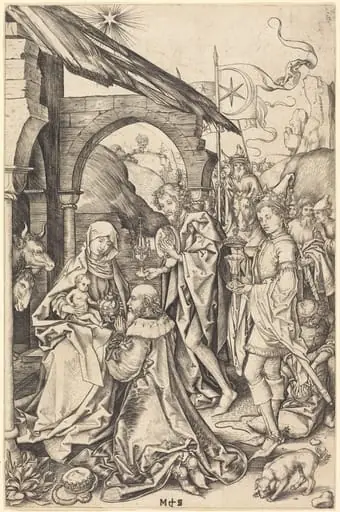 The Adoration of the Magi
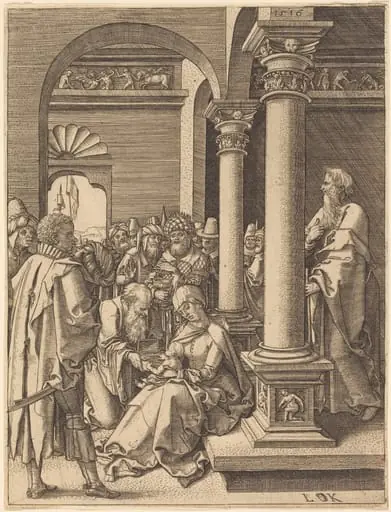 The Adoration of the Magi
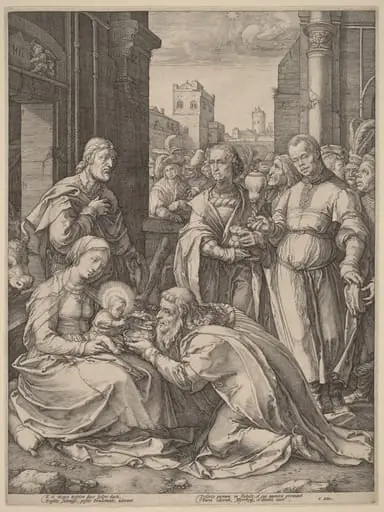 The Adoration of the Magi
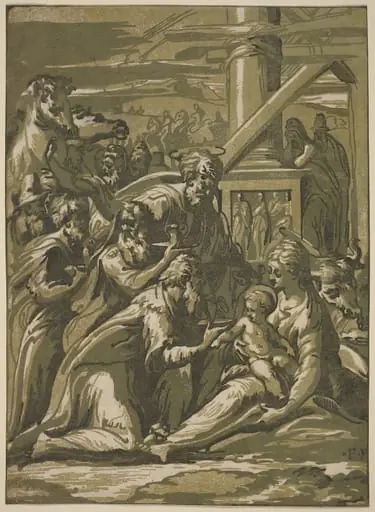 The Adoration of the Magi
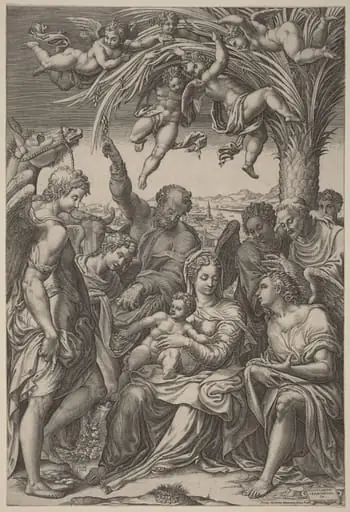 The Rest on the Flight into Egypt
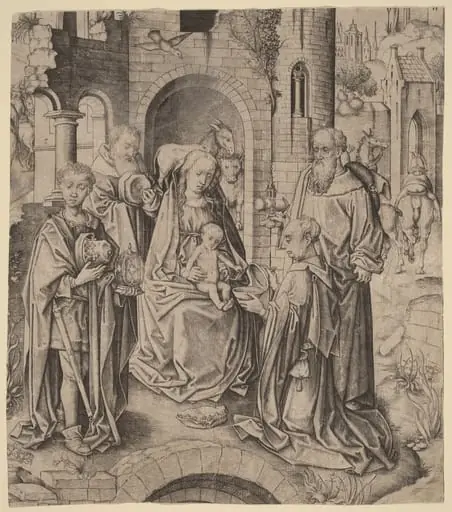 The Adoration of the Magi
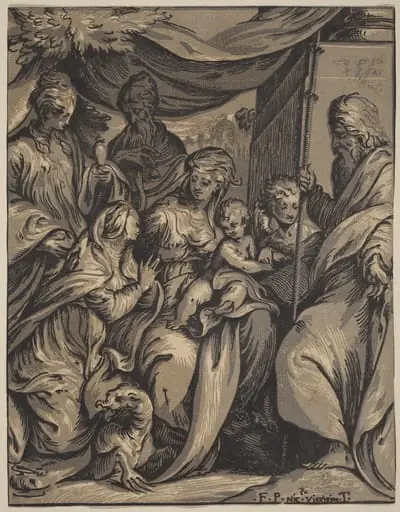 The Virgin and Child with Saints
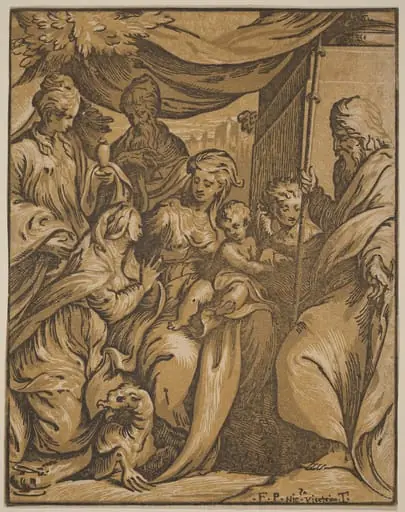 The Virgin and Child with Saints
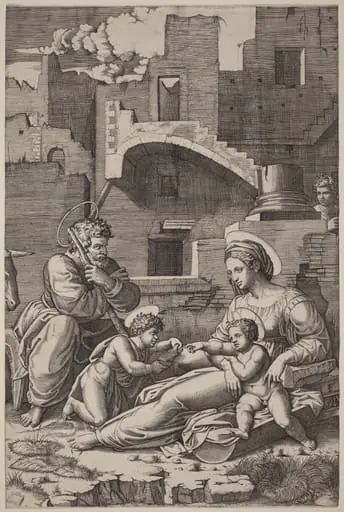 The Holy Family with the Young Saint John the Baptist (The Madonna of the Long Thigh)