Artwork
The Raising of Lazarus
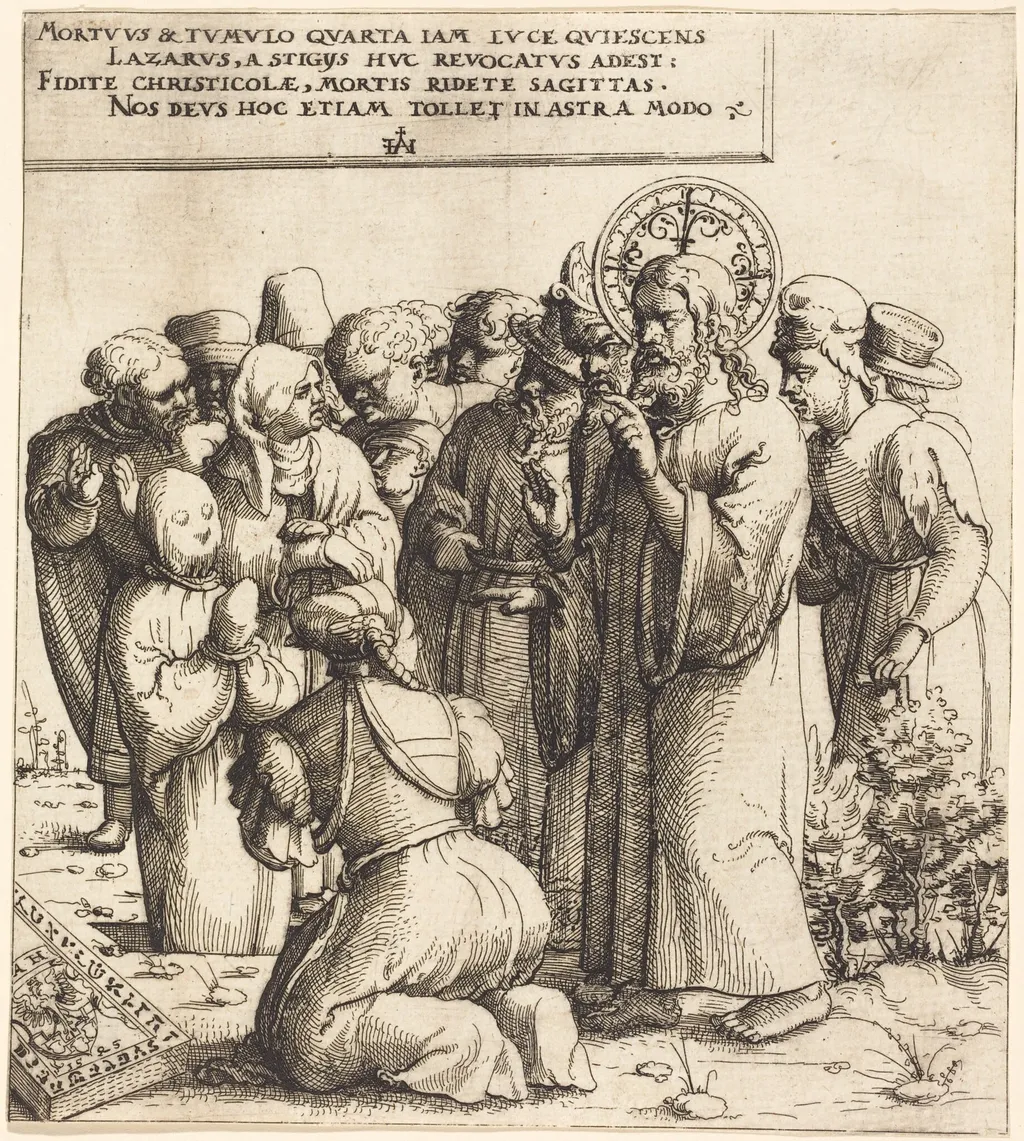
The Raising of Lazarus is an ink print by the Renaissance artist Augustin Hirschvogel. It dates from 1545 and is held in the collection of the National Gallery of Art. Created in 1545, this small etching depicts the biblical moment when Lazarus returns to life.
About this work
Overview
The composition conveys a sense of collective astonishment as the resurrected man is observed by a crowd dressed in contemporary Renaissance attire.
Created in 1545, this small etching depicts the biblical moment when Lazarus returns to life. Executed in a compact format, the print presents a central figure standing amid a gathering of onlookers, set against a gently rolling landscape of trees and hills. The composition conveys a sense of collective astonishment as the resurrected man is observed by a crowd dressed in contemporary Renaissance attire.
Subject & Meaning
The work illustrates the miracle of Lazarus’ revival, a theme drawn from the Gospel of John. By placing the newly risen Lazarus at the heart of the scene, the artist emphasizes the transformative power of faith, while the surrounding figures embody human curiosity and reverence toward the supernatural event.
Technique & Style
Executed with fine lines characteristic of mid‑16th‑century etching, the image balances delicate hatching with broader washes to model forms and convey depth. The landscape background, rendered with subtle tonal gradations, reflects the influence of the Danube School’s interest in naturalistic scenery, while the figures retain a restrained, almost schematic quality typical of early printmaking.
History & Provenance
The print belongs to a series of thirty‑five modestly sized landscape etchings produced by the German artist between 1545 and 1549. These works were compiled during a period when the creator, also noted for his contributions to mathematics and cartography, was establishing his reputation within the artistic circles of Bavaria and Austria.
Context
Although primarily known for his topographical studies, the artist’s involvement with the Danube School situates this religious scene within a broader tradition that merged detailed natural observation with spiritual narrative. The inclusion of contemporary dress links the biblical story to the viewer’s own era, a common practice among 16th‑century Northern European printmakers.
Artist & collection
Artist
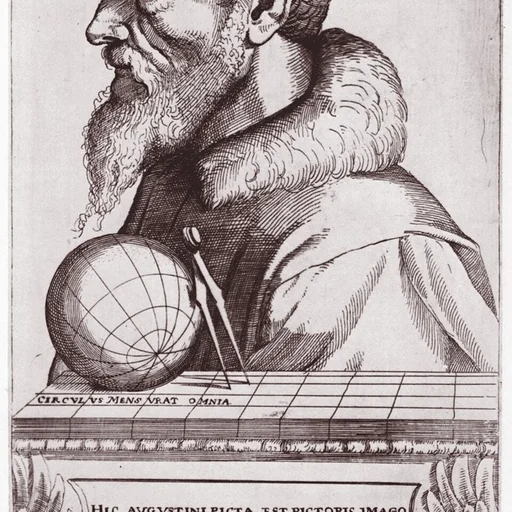
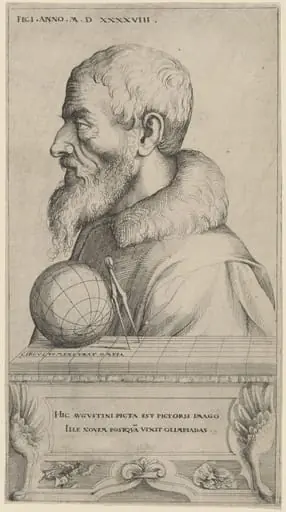
Augustin Hirschvogel (1503 – February 1553) was a German artist, mathematician, and cartographer known primarily for his etchings.

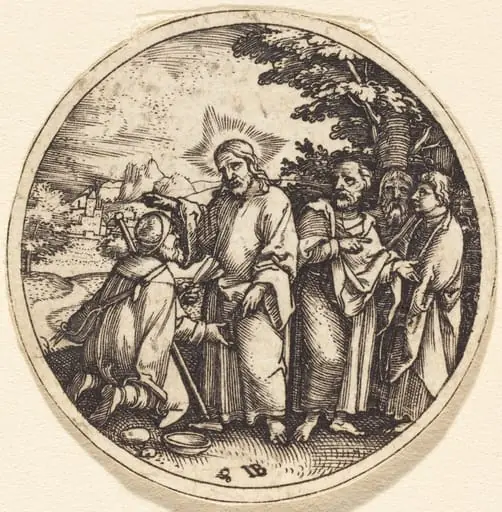 Christ Consoling the Centurion
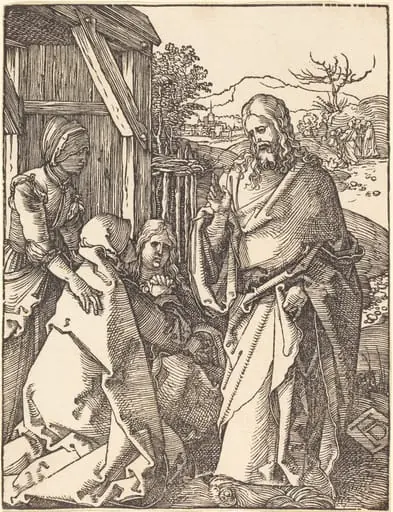 Christ Taking Leave from His Mother
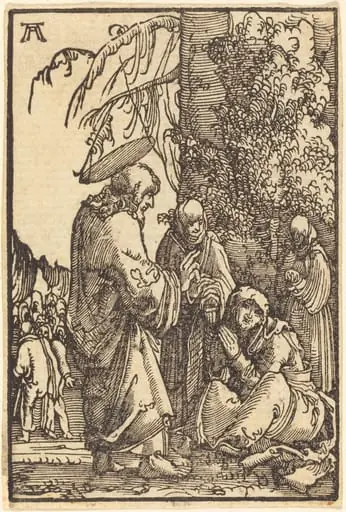 Christ Taking Leave of his Mother
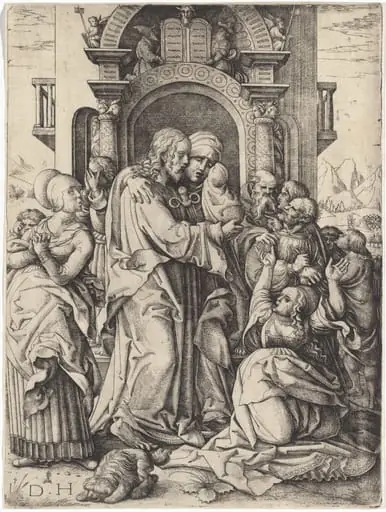 The Virgin Mary Taking Leave of Christ
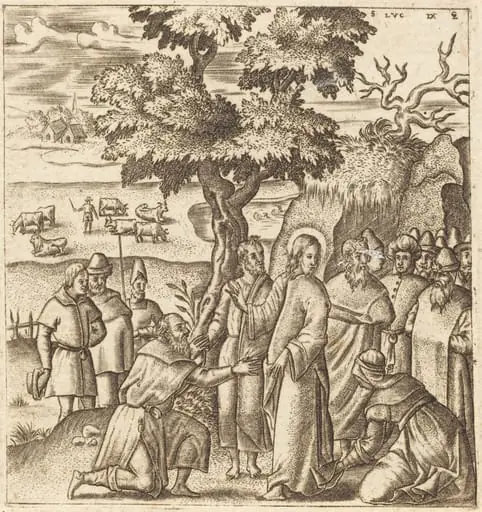 Christ Heals a Sick Woman
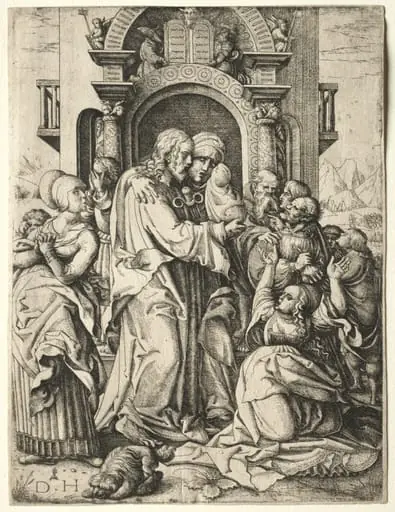 Christ Taking Leave of His Mother
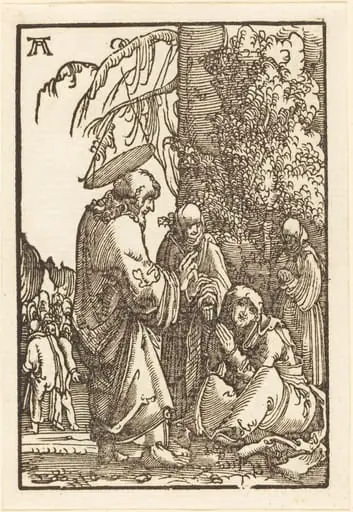 Christ Taking Leave of his Mother
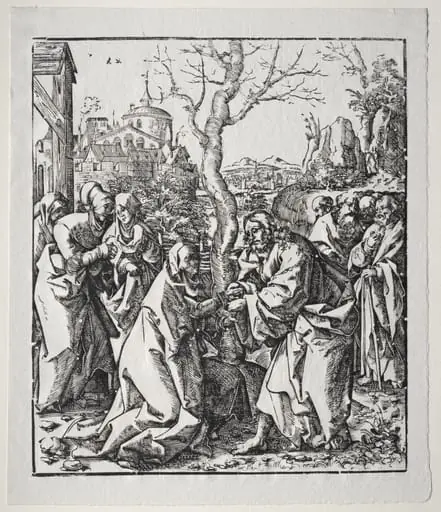 Christ Taking Leave of his Mother
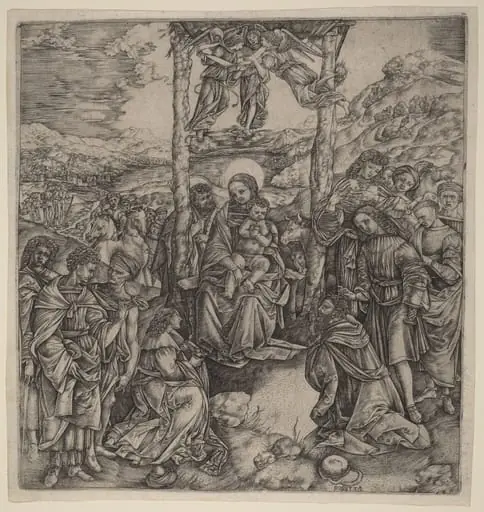 The Adoration of the Magi
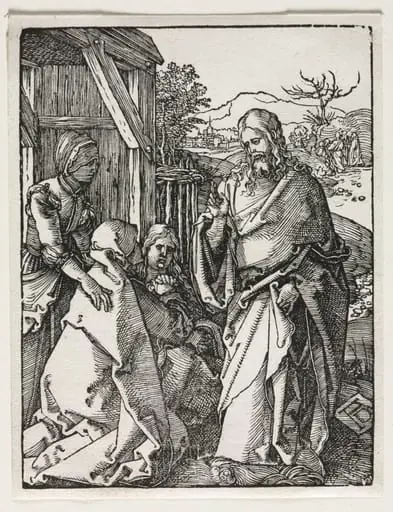 The Small Passion: Christ Taking Leave of the Virgin