Artwork
Grammar
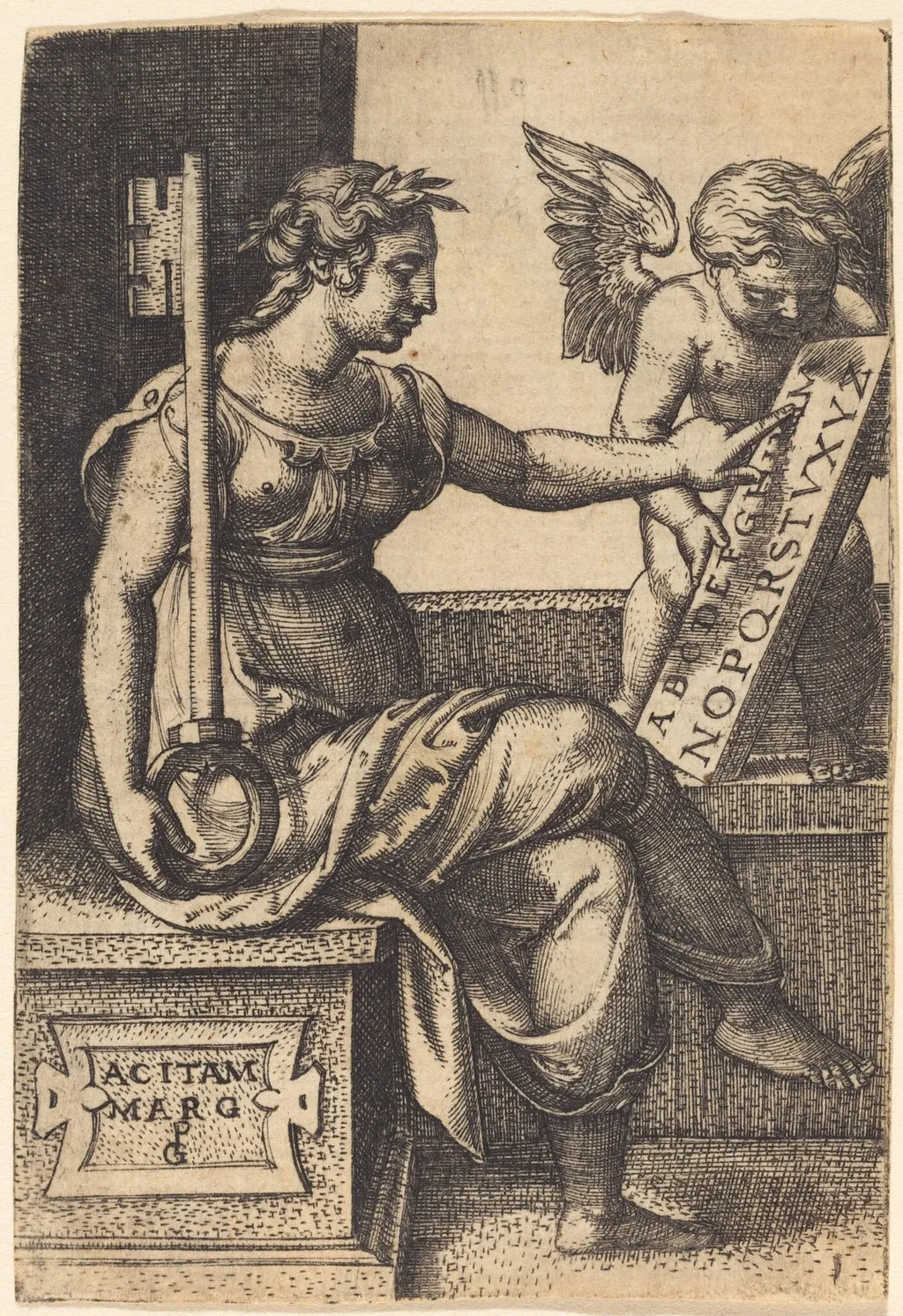
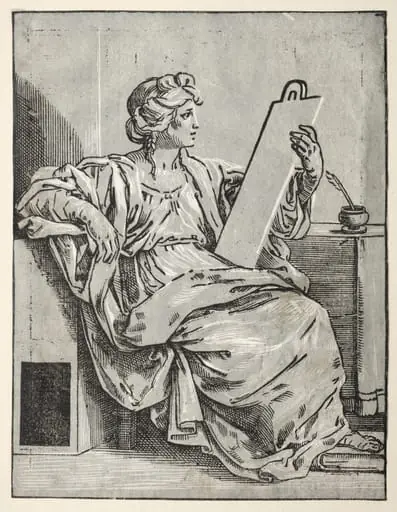
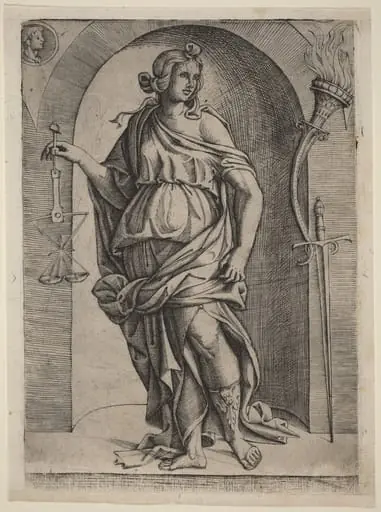
Grammar is an ink print by the Renaissance artist Georg Pencz. It dates from 1525 and is held in the collection of the National Gallery of Art.
About this work
Overview
Georg Pencz, a German printmaker active in the early sixteenth century, produced the engraving titled *Grammar* in 1525. Executed in the traditional copperplate technique, the work exemplifies the detailed line work characteristic of the period’s print culture.
Subject & Meaning
The composition presents an allegorical scene: a woman, draped in flowing robes, holds a scroll while a winged child reaches toward it. The child’s scroll bears the words “ABOPORSTI” and “LEX,” and the woman’s shield is inscribed with “ACITAM MARCI,” suggesting a meditation on language, law, and learning.
Technique & Style
Pencz employs fine, cross‑hatched lines to model forms and create tonal depth, a hallmark of engraving. The precise incisions produce subtle shading that renders the fabric, the shield, and the winged figure with a three‑dimensional quality, reflecting the influence of his training under Albrecht Dürer.
History & Provenance
Born around 1500, Pencz studied in Nuremberg with Dürer before traveling to Italy, where Venetian artistic currents left an imprint on his style. In the year of the engraving’s creation, he was briefly imprisoned with the Beham brothers for holding radical theological positions, a circumstance that may have informed the work’s intellectual tone.
Context
*Grammar* emerges from a humanist milieu that prized the study of language and classical learning. The allegorical figures and Latin inscriptions align the print with contemporary scholarly debates, positioning the work within the broader cultural exchange between Northern Europe and Italy during the Renaissance.
Artist & collection
Artist
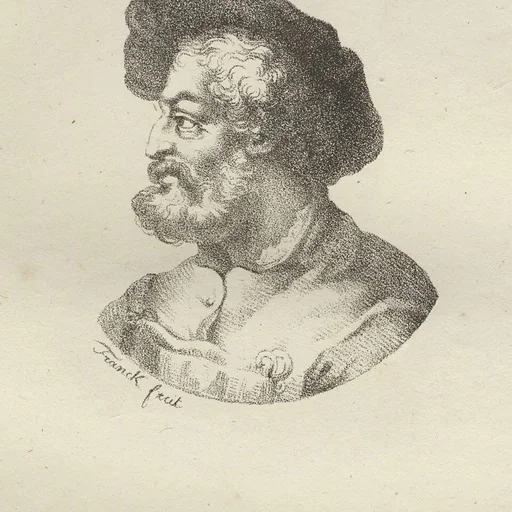
Georg Pencz (c. 1500 – 11 October 1550) was a German engraver, painter and printmaker. Pencz was probably born in Westheim near Bad Windsheim/Franconia. He travelled to Nuremberg in 1523 and joined Albrecht Dürer’s…