Artwork
A Sibyl
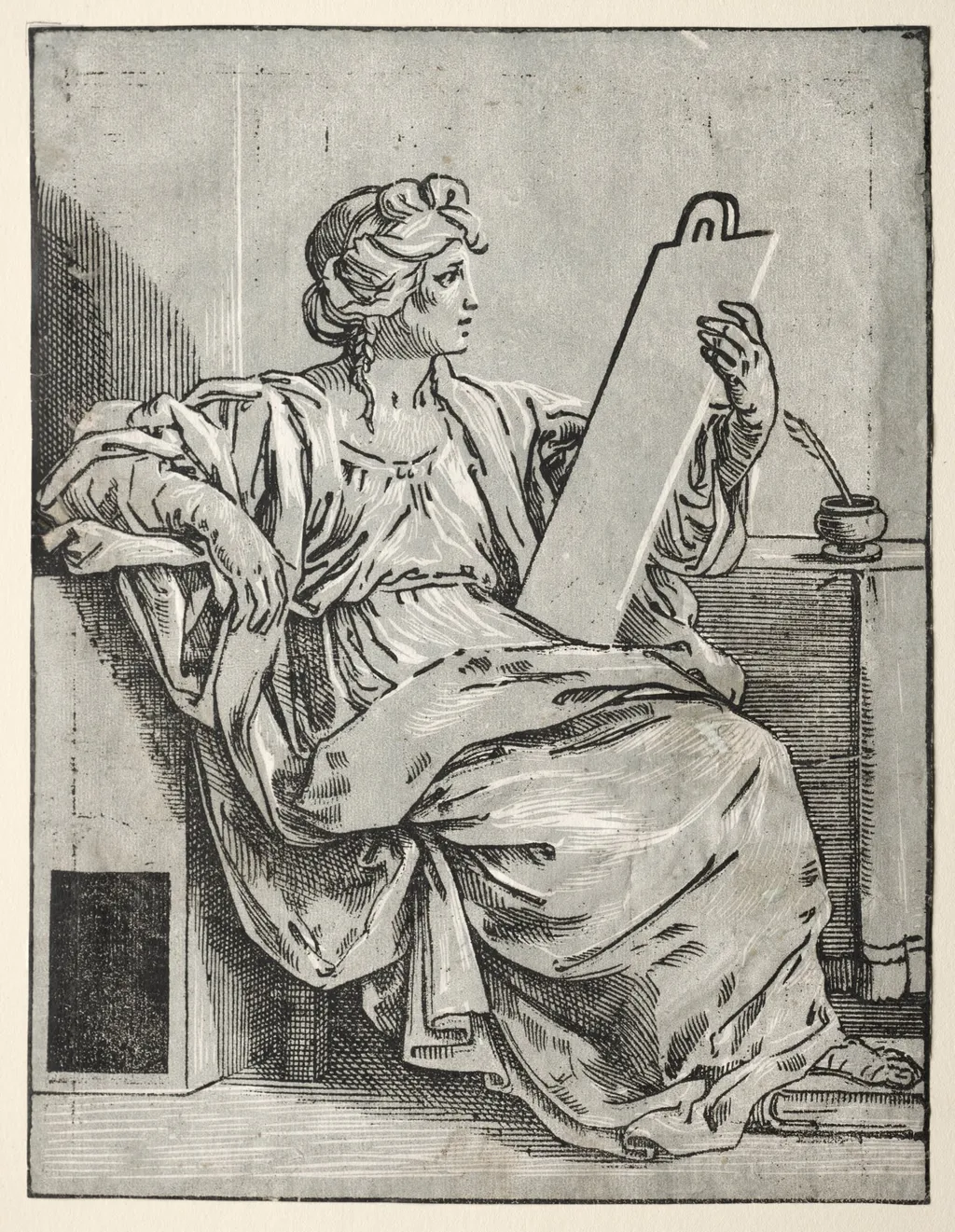
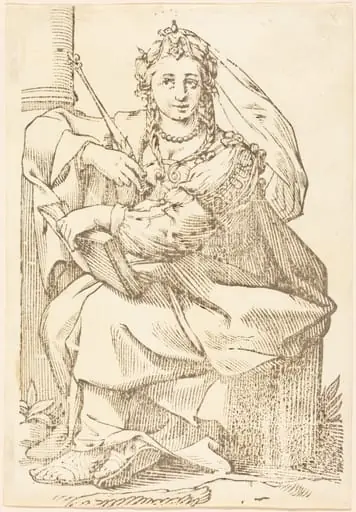
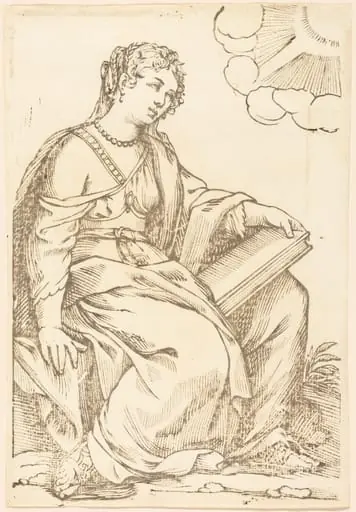
A Sibyl is a print by the Baroque artist Bartolommeo Coriolano. It dates from 1640 and is held in the collection of the Cleveland Museum of Art.
About this work
Overview
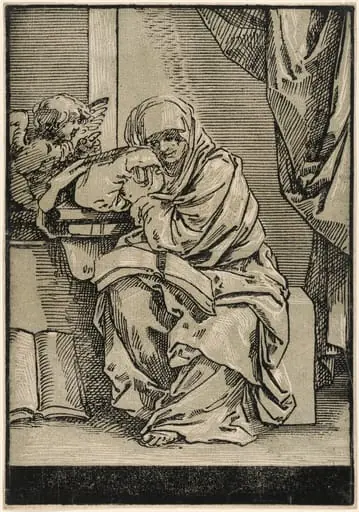
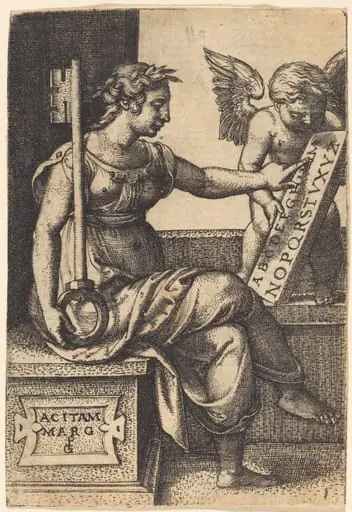
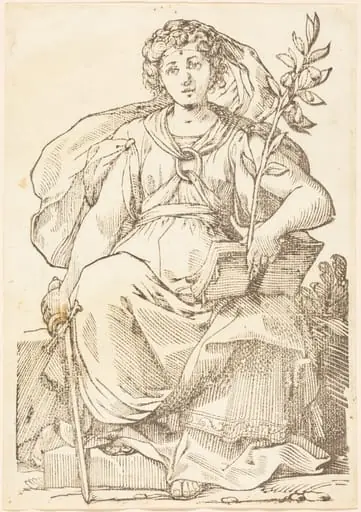
Executed in chiaroscuro woodcut, it captures a solitary figure seated by a window, engaged with a scroll and a small object.
Created in 1640 by Bartolommeo Coriolano, this print depicts a sibyl, a prophetic woman from classical tradition. Executed in chiaroscuro woodcut, it captures a solitary figure seated by a window, engaged with a scroll and a small object. The work is part of the collection at The Cleveland Museum of Art, where it is recognized for its technical precision and atmospheric depth, reflecting Coriolano’s mastery of the medium during the early Baroque period.
Subject & Meaning
The figure represents a sibyl, a prophetic female seer from ancient Mediterranean cultures often associated with divine revelation. Her posture—gazing downward at a scroll—suggests contemplation or transcription of sacred knowledge. The key or ring in her other hand may symbolize access to hidden truths or spiritual authority. The quiet, introspective mood aligns with Renaissance and Baroque interpretations of sibyls as intermediaries between the mortal and the divine.
Technique & Style
Coriolano employed the chiaroscuro woodcut technique, using multiple blocks to layer tones of black and gray, creating a strong sense of volume and spatial depth. The contrast between light falling on the figure’s face and robes and the shadowed background enhances the three-dimensionality of the form. Delicate linework defines the folds of fabric and the texture of the scroll, demonstrating refined control over the woodcut medium’s limitations.
History & Provenance
The print was produced in Italy around 1640, during a period when chiaroscuro woodcuts were prized for their ability to emulate the tonal effects of drawings and paintings. Coriolano, active in Bologna, was among the few artists to sustain the technique into the mid-17th century. The work entered The Cleveland Museum of Art’s collection through documented acquisitions, though its earlier provenance prior to the 20th century remains largely unrecorded.
Context
In early 17th-century Italy, sibyls were frequently depicted in religious and humanist art as symbols of pre-Christian prophecy, often paired with Old Testament seers. Coriolano’s print reflects a broader trend of reviving classical themes through printmaking, particularly in Bologna, where artists blended Northern European woodcut techniques with Italian compositional ideals. This work stands as a rare surviving example of the technique’s late use.
Legacy
Coriolano’s 'A Sibyl' exemplifies the final phase of the chiaroscuro woodcut tradition in Italy, a technique largely supplanted by etching and engraving by the mid-17th century. Its survival and preservation in a major museum underscore its importance as a technical and aesthetic artifact. The print continues to inform studies of printmaking evolution and the enduring cultural resonance of prophetic female figures in Western art.
Artist & collection

Artist
Bartolommeo Coriolano was an Italian printmaker during the Baroque period, mainly in colour woodcuts.