Artwork
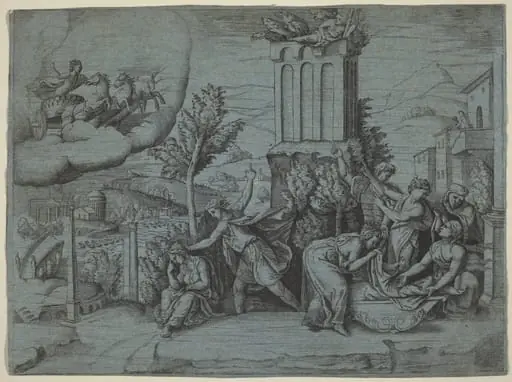
The Triumph of Time
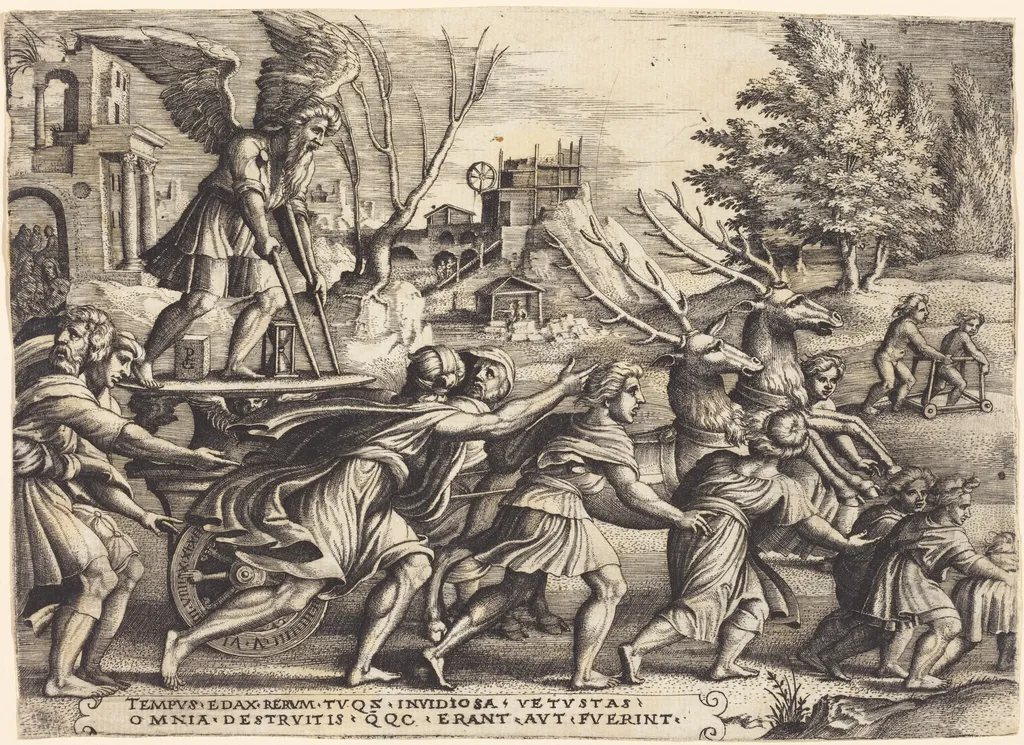
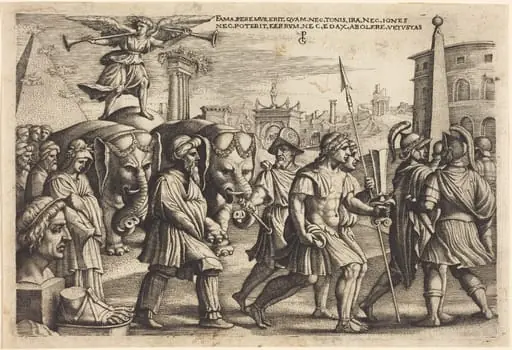
The Triumph of Time is an ink print by the Renaissance artist Georg Pencz. It dates from 1539 and is held in the collection of the National Gallery of Art.
About this work
Overview
Trained in Nuremberg under Albrecht Dürer and later influenced by his time in Italy, Pencz synthesized Northern precision with Italian compositional ideals.
Georg Pencz, a German artist active in the early 16th century, produced this engraving around 1539. Trained in Nuremberg under Albrecht Dürer and later influenced by his time in Italy, Pencz synthesized Northern precision with Italian compositional ideals. The work exemplifies his technical command of the engraving medium and reflects the broader Renaissance engagement with allegorical themes, particularly those concerning mortality and the passage of time.
Subject & Meaning
The image presents Time as a winged figure wielding a scythe, mounted on a chariot drawn by human figures. A deer-like creature with antlers is also pulled along, possibly symbolizing fleeting desire or the natural world subdued by time’s force. The scene functions as a moral allegory, common in Renaissance humanist circles, where human effort is shown as futile against the inexorable advance of time, echoing classical and Christian meditations on transience.
Technique & Style
Pencz employed fine, controlled lines and dense cross-hatching to model form and texture with remarkable precision. The engraving’s intricate detailing—seen in the folds of clothing, the foliage, and architectural elements—demonstrates his mastery of the burin. His style merges the linear clarity of Northern European printmaking with the spatial awareness and anatomical grace learned from Italian models, resulting in a balanced, layered composition.
History & Provenance
Created during Pencz’s mature period, the engraving emerged from a network of artists connected to Marcantonio Raimondi and the Venetian printmaking scene. Pencz’s association with reform-minded circles likely influenced the work’s somber tone. Though no early ownership records are widely documented, the print circulated among collectors and scholars in Germany and the Low Countries, contributing to its survival in multiple institutional collections today.
Context
In the decades following the Reformation, allegorical prints like this one served as vehicles for moral and philosophical reflection, especially as religious imagery faced scrutiny. Pencz’s fusion of classical motifs with Northern detail aligned with humanist interests in antiquity and the human condition. The work reflects a broader European trend of using print to disseminate complex ideas beyond elite audiences, bridging art and intellectual discourse.
Legacy
Pencz’s engraving contributed to the development of the Northern Renaissance allegorical print tradition. While less celebrated than Dürer’s works, his technical rigor and thematic depth influenced later engravers in Germany and the Netherlands. The piece remains a reference for studies on how Renaissance artists adapted classical allegory to contemporary spiritual and social concerns, preserving a quiet but potent commentary on human vulnerability.
Artist & collection
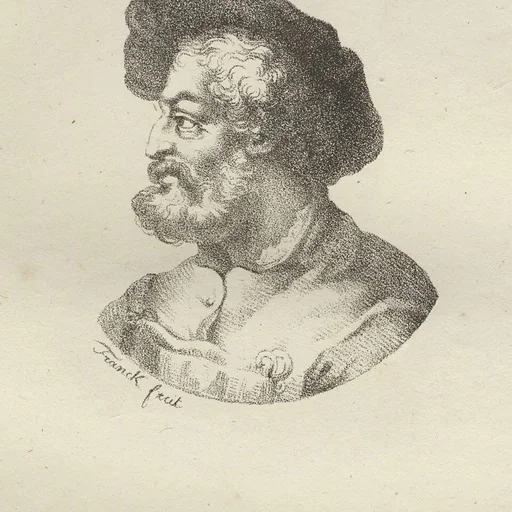
Artist
Georg Pencz (c. 1500 – 11 October 1550) was a German engraver, painter and printmaker. Pencz was probably born in Westheim near Bad Windsheim/Franconia. He travelled to Nuremberg in 1523 and joined Albrecht Dürer’s…