Artwork
An Omen of Augustus's Future Greatness
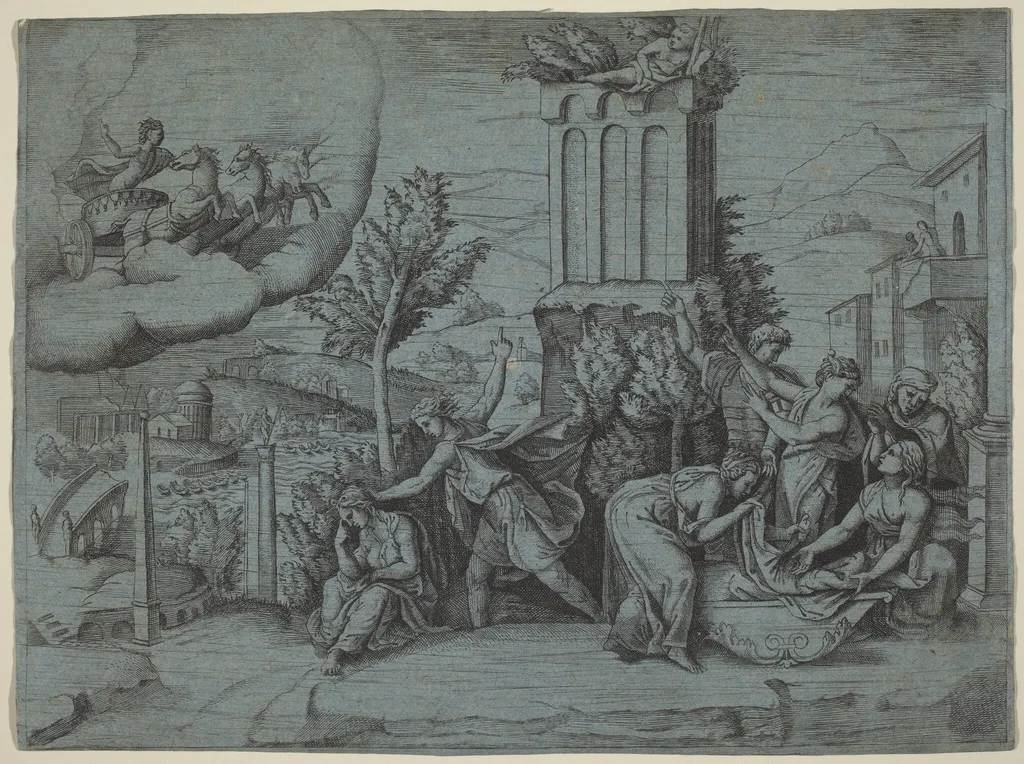
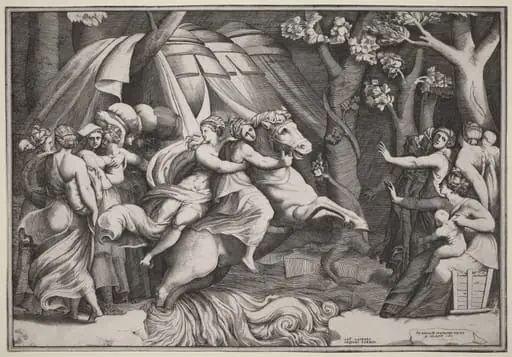
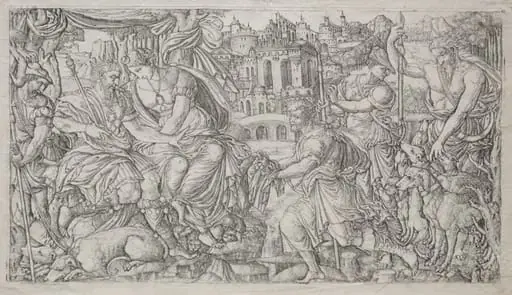
An Omen of Augustus's Future Greatness is an ink print by the Renaissance artist Giulio Bonasone. It dates from 1554 and is held in the collection of the National Gallery of Art.
About this work
Overview
The use of blue paper, uncommon for the period, adds a subtle tonal depth to the monochrome composition, enhancing its atmospheric quality.
Created in 1554 by Giulio Bonasone, this engraving on blue paper depicts a prophetic moment tied to the early life of Augustus. Bonasone, trained in the tradition of Marcantonio Raimondi, specialized in reproductive and original prints that blended classical themes with meticulous line work. The use of blue paper, uncommon for the period, adds a subtle tonal depth to the monochrome composition, enhancing its atmospheric quality.
Subject & Meaning
The scene portrays a moment of divine intervention, interpreted as an omen signaling Augustus’s destined rise. A woman lies prostrate while figures around her gesture in awe or supplication. Above, a chariot drawn by winged horses soars toward a temple structure, symbolizing celestial approval. The imagery draws on Roman mythological conventions, where supernatural signs foretold the greatness of rulers, reinforcing the legitimacy of imperial authority through divine association.
Technique & Style
Bonasone employed fine, controlled engraving lines to render texture and movement, from the fluttering wings of the horses to the folds of drapery and crumbling architecture. The blue paper serves as a mid-tone ground, allowing black ink lines to define form with contrast and clarity. His technique reflects a synthesis of northern European precision and Italian compositional dynamism, characteristic of his mature style during his time in Rome and Venice.
History & Provenance
Bonasone produced this print during a period of intense activity in Rome, where he worked for patrons interested in classical antiquity and imperial symbolism. Though no early ownership records are documented, the print aligns with a broader trend in mid-16th-century Italy of reviving Roman narratives through printmaking. Its survival in collections today reflects its status as a refined example of Renaissance reproductive engraving.
Context
In mid-1500s Italy, prints like this served as vehicles for disseminating classical ideals and political allegory. The Augustan theme resonated with contemporary rulers who sought to link their power to Rome’s imperial legacy. Bonasone’s work, though not commissioned for a specific patron, participated in this cultural current, using mythological imagery to reinforce notions of destiny and authority in an age of dynastic ambition.
Legacy
Bonasone’s engraving remains a notable example of how Renaissance artists reinterpreted ancient stories through technical mastery. While less famous than contemporaries like Dürer or Raphael, his ability to convey narrative complexity in monochrome influenced later printmakers. This work exemplifies the period’s fascination with prophecy and power, preserved not as a grand painting but as a finely crafted, intimate image meant for private contemplation.
Artist & collection

Artist
Giulio Bonasone (c. 1498 – after 1574) (or Giulio de Antonio Buonasone or Julio Bonoso) was an Italian painter and engraver born in Bologna. He possibly studied painting under Lorenzo Sabbatini, and painted a Purgatory…

 The Four Horsemen of the Apocalypse
 Mars
Mars Sacrifice to Priapus
 Christ and the Samaritan Woman
 Death of St. Peter the Martyr
 The Triumph of Time
 The Winepress of the Wrath of God
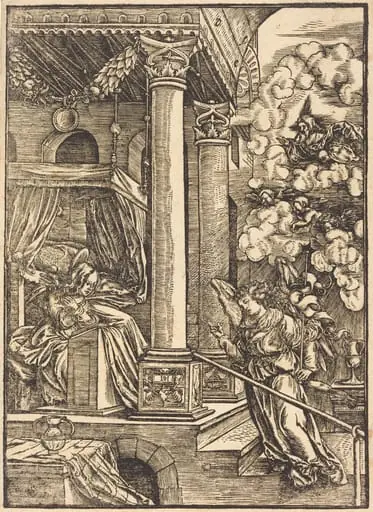 The Annunciation
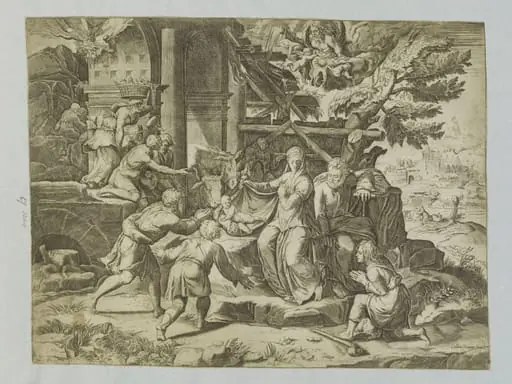 Adoration of the Shepherds
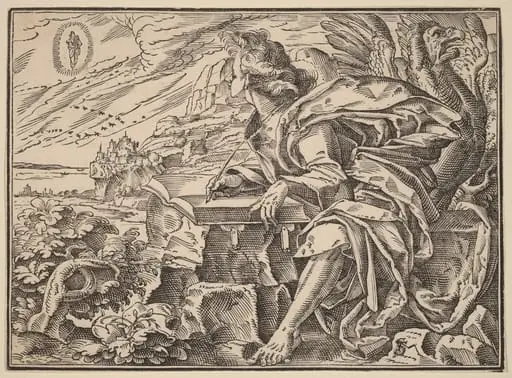 The Four Horsemen of the Apocalypse
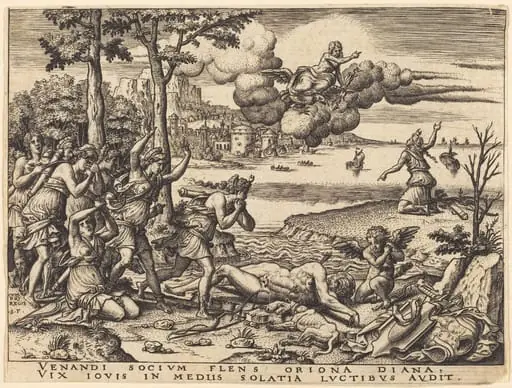 Diana Mourning the Death of Orion
 Huntsman Presenting a Gift to a King