Artwork
To Clothe the Naked
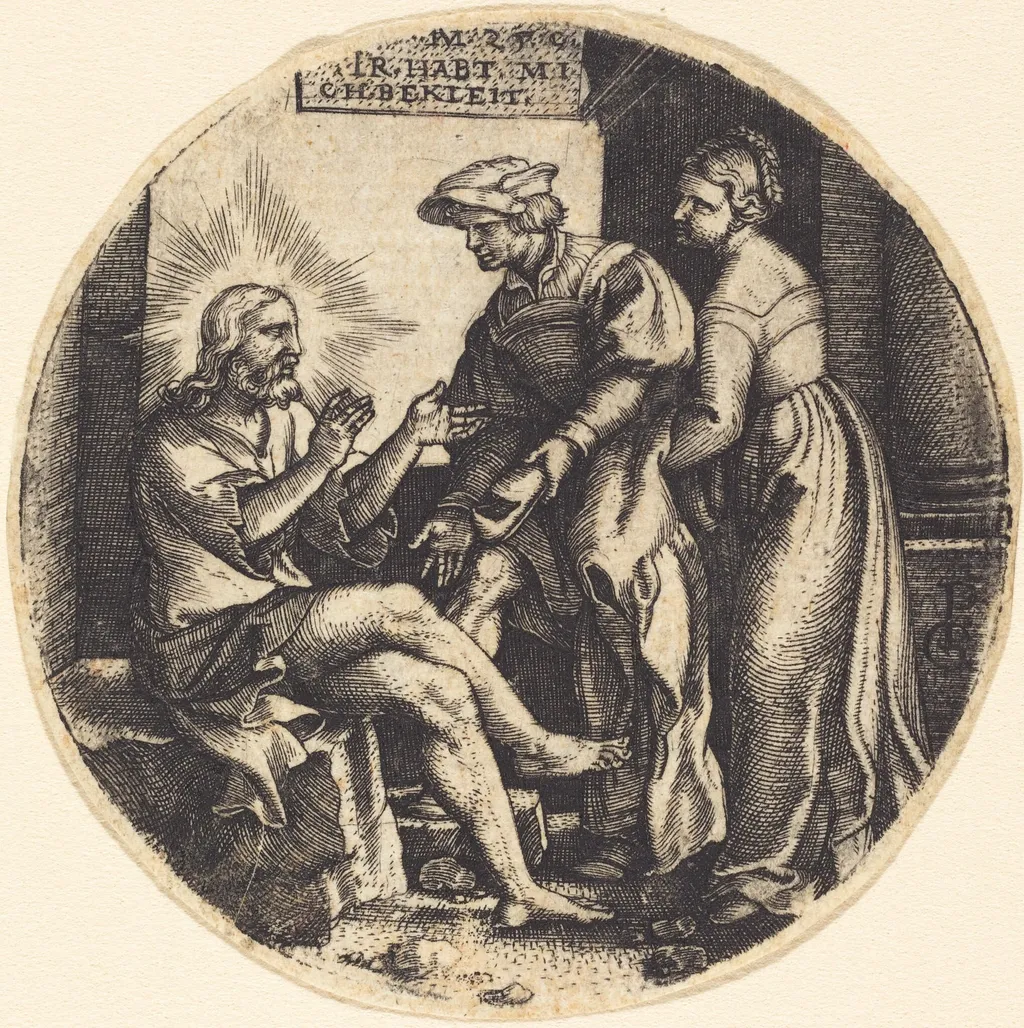
To Clothe the Naked is an ink print by the Renaissance artist Georg Pencz. It dates from 1525 and is held in the collection of the National Gallery of Art.
About this work
Overview
Georg Pencz, a German printmaker active in the early sixteenth century, produced the engraving *To Clothe the Naked* in 1525. Executed in black‑and‑white, the work measures roughly a typical sheet size for the period and presents a compact, interior scene populated by three male figures. The composition is rendered with precise line work that emphasizes the tension among the characters.
Subject & Meaning
The image depicts an older man seated, a younger man kneeling before him, and a third figure standing behind, supporting the younger’s shoulder.
The image depicts an older man seated, a younger man kneeling before him, and a third figure standing behind, supporting the younger’s shoulder. The title suggests an act of assistance or charity, inviting viewers to interpret the gesture as either the provision of clothing or a broader moral appeal for aid to the vulnerable. The subdued lighting and close proximity of the figures heighten the sense of personal exchange.
Technique & Style
Pencz employs fine hatching and cross‑hatching to model volume, creating subtle gradations of light across skin and drapery. The engraving’s strong linear contours define the folds of garments and the musculature of the hands, while the use of chiaroscuro conveys depth within the cramped interior. The overall style reflects the influence of Albrecht Dürer’s workshop, especially in the meticulous attention to detail.
History & Provenance
Created the same year Pencz was detained with the Beham brothers for holding reformist religious opinions, the print may echo contemporary concerns about social responsibility. No surviving records trace its early ownership, but the work entered scholarly catalogues in the nineteenth century and has since been held by several European print collections.
Context
Pencz’s training in Nuremberg under Dürer’s circle and his subsequent exposure to Venetian art during an Italian sojourn informed his synthesis of Northern precision and Southern compositional drama. The engraving aligns with the period’s broader engagement with biblical and moral subjects, reflecting the Reformation’s emphasis on personal piety and charitable action.
Artist & collection
Artist
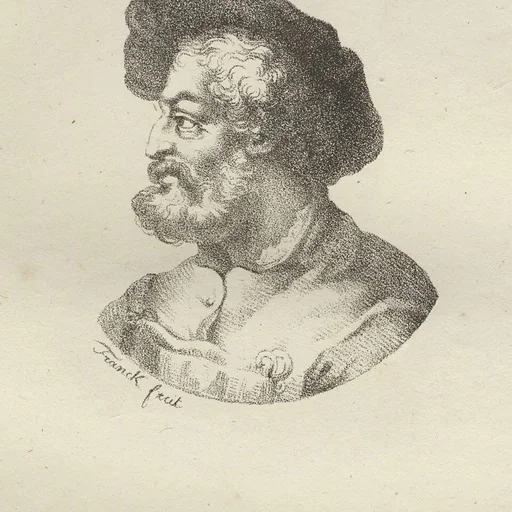
Georg Pencz (c. 1500 – 11 October 1550) was a German engraver, painter and printmaker. Pencz was probably born in Westheim near Bad Windsheim/Franconia. He travelled to Nuremberg in 1523 and joined Albrecht Dürer’s…

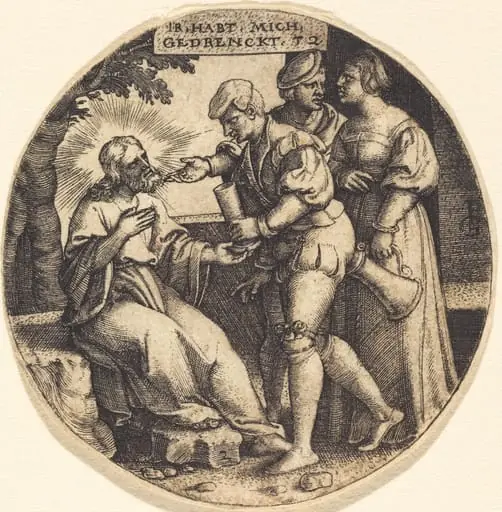 To Give Drink to the Thirsty
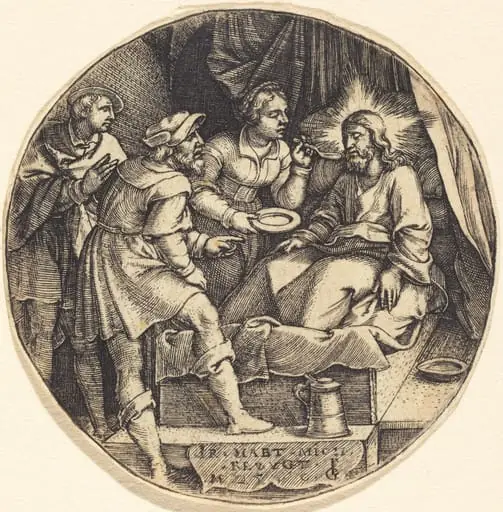 To Nurse the Sick
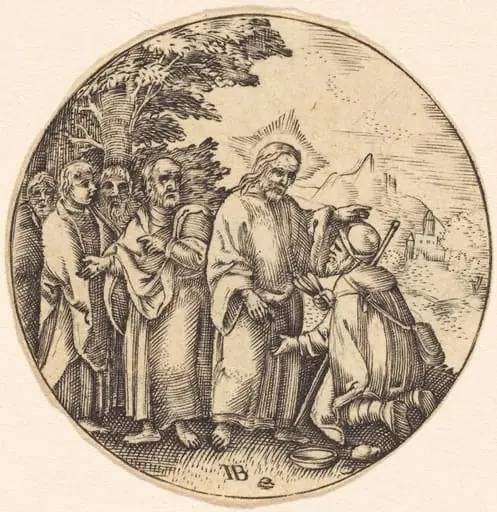
 Christ Consoling the Centurion
 Christ Washing the Feet of the Disciples
 The Small Passion: Christ Washing St. Peter's Feet
 The Academy of Plato
 Christ Consoling the Centurion
 Job Conversing with His Friends
 The Story of Joseph: Joseph Recounting his Dreams to his Father
 Diogenes Casting away his Bowl
 Death of Seneca
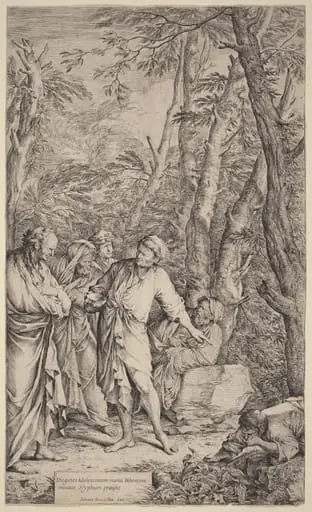
 Diogenes Casting Away His Bowl