Artwork
To Give Drink to the Thirsty
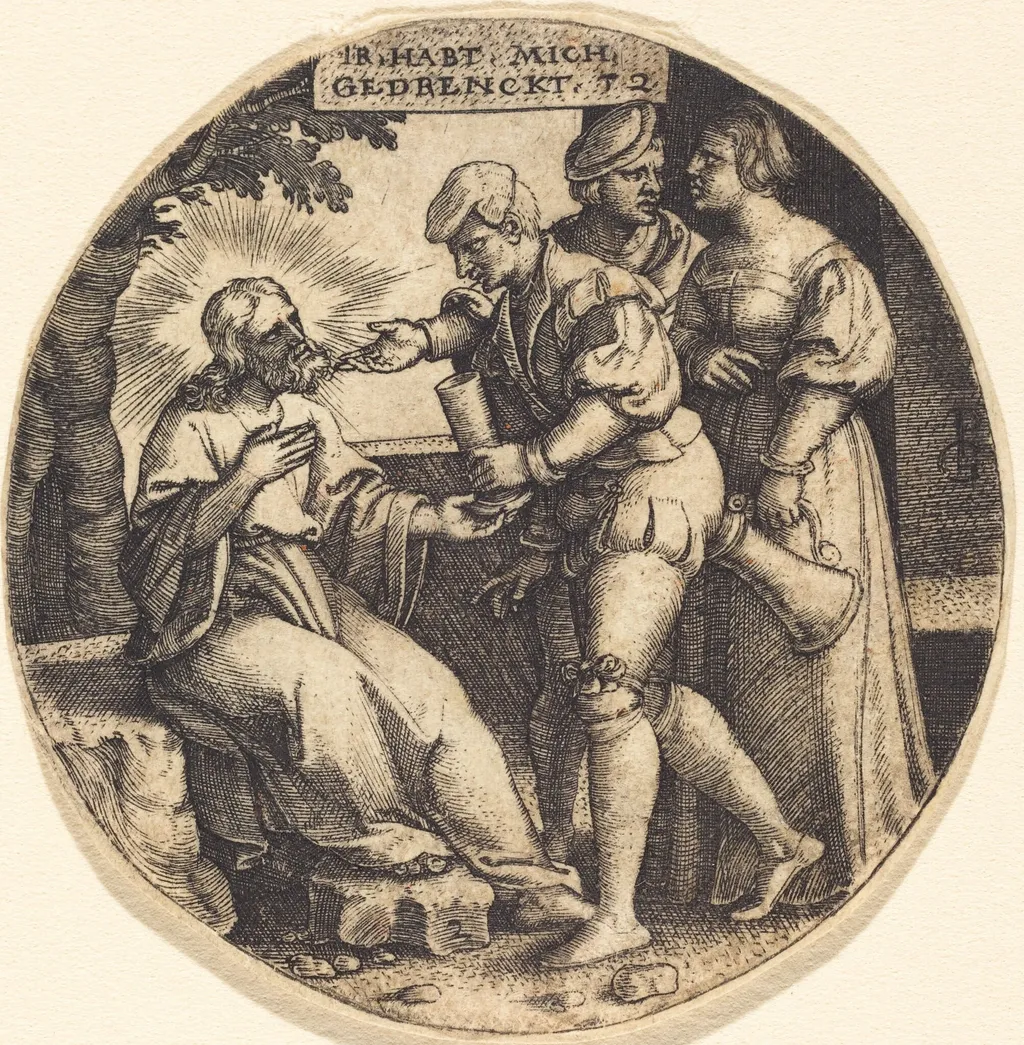
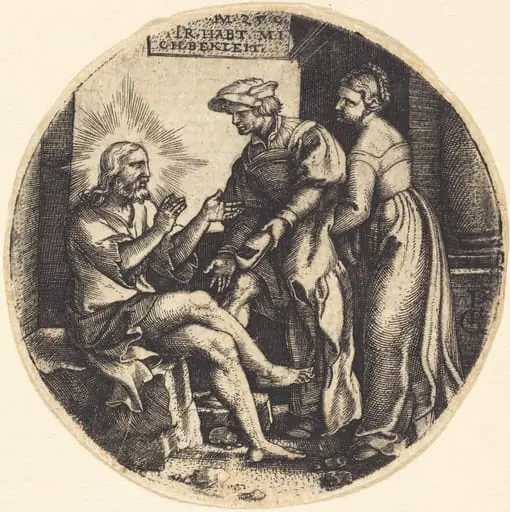
To Give Drink to the Thirsty is an ink print by the Renaissance artist Georg Pencz. It dates from 1525 and is held in the collection of the National Gallery of Art.
About this work
Overview
Created in 1525, this copper engraving presents a compact charitable scene rendered in the precise line work typical of early Renaissance printmaking. The composition centers on a bearded donor extending a cup to a thirsty recipient, while two onlookers observe, all set against a sparsely indicated architectural backdrop.
Subject & Meaning
The image illustrates the act of giving water to the parched, a visual metaphor for Christian charity and spiritual nourishment. The central exchange between giver and receiver emphasizes humility and generosity, themes commonly explored in devotional art of the period.
Technique & Style
Executed with fine cross‑hatching, the engraving achieves texture and volume through layered lines that model clothing, flesh, and the implied space. The circular arrangement of the figures guides the eye around the scene, a compositional device that reinforces the unity of the charitable act.
History & Provenance
Georg Pencz, a German artist active in the early sixteenth century, produced this work shortly after his apprenticeship in Albrecht Dürer’s Nuremberg workshop and his exposure to Venetian influences. The print reflects his engagement with the burgeoning market for devotional images during the Renaissance.
Context
Printed at a time when religious reform and humanist ideas were spreading across Germany, the engraving aligns with contemporary calls for personal piety and social responsibility. Its modest scale and clear narrative made it suitable for private contemplation or small devotional settings.
Artist & collection
Artist
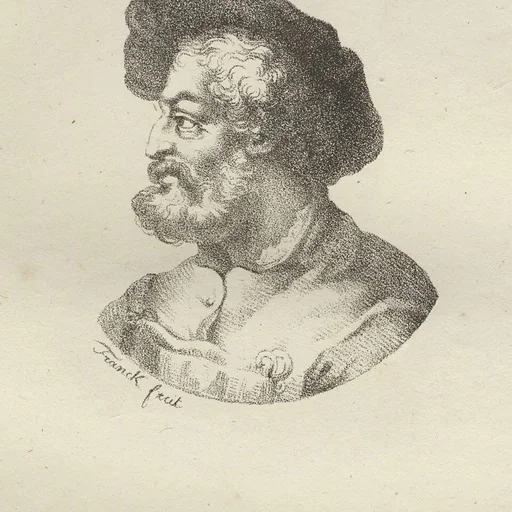
Georg Pencz (c. 1500 – 11 October 1550) was a German engraver, painter and printmaker. Pencz was probably born in Westheim near Bad Windsheim/Franconia. He travelled to Nuremberg in 1523 and joined Albrecht Dürer’s…

 To Clothe the Naked
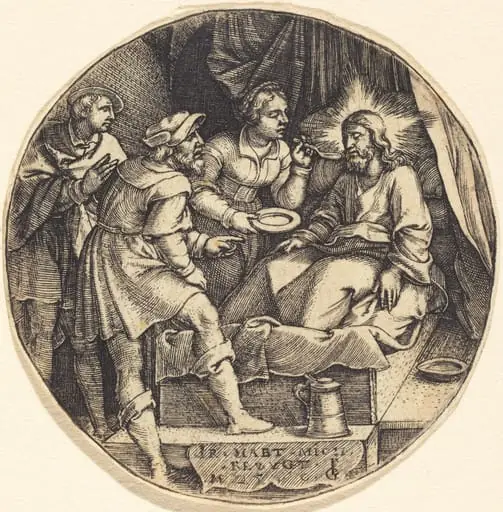 To Nurse the Sick
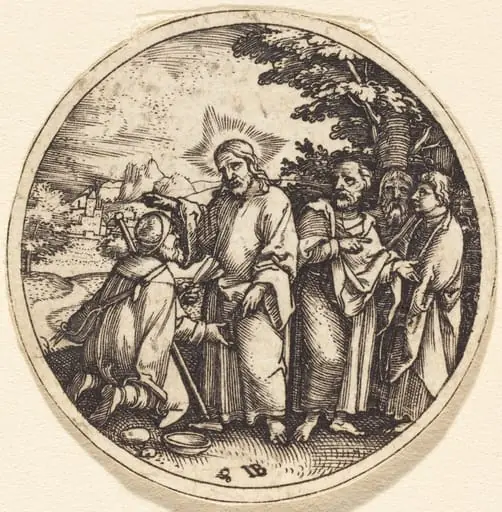 Christ Consoling the Centurion
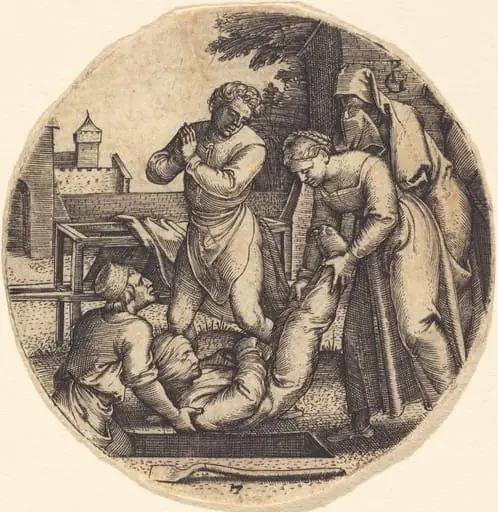 To Bury the Dead
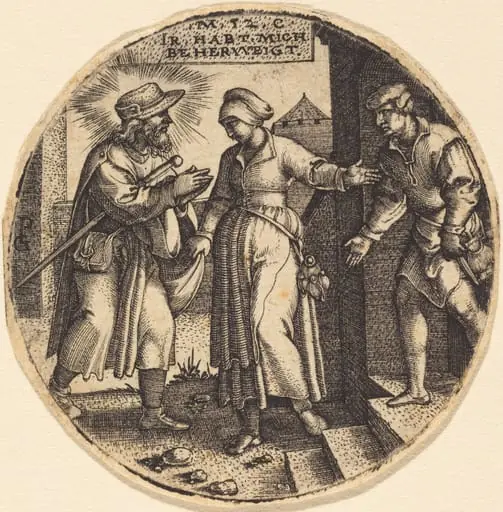 To House the Pilgrims
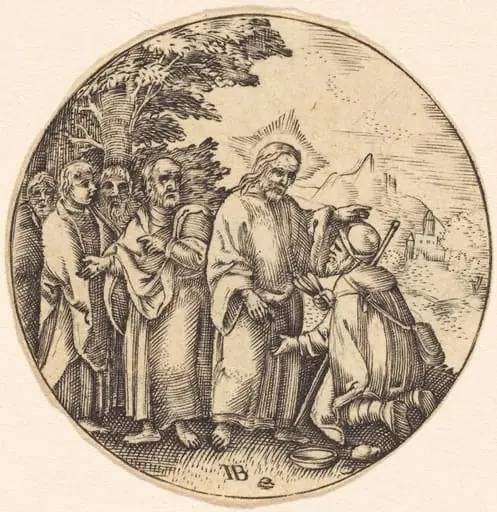 Christ Consoling the Centurion
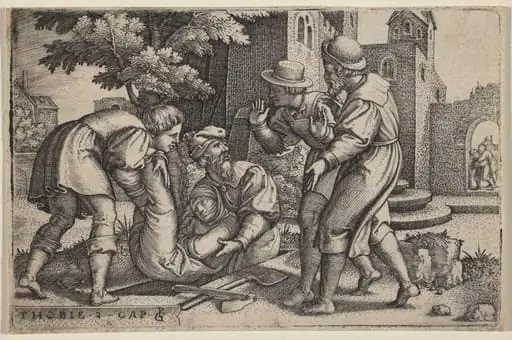 Tobias Burying One of the Children of Israel
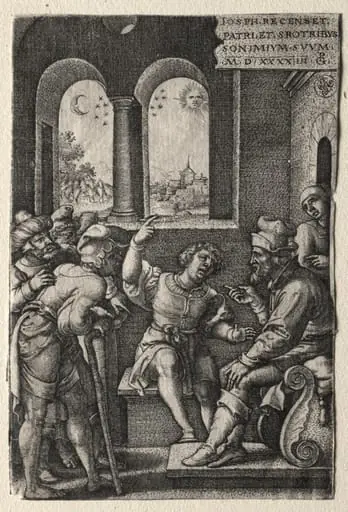 The Story of Joseph: Joseph Recounting his Dreams to his Father
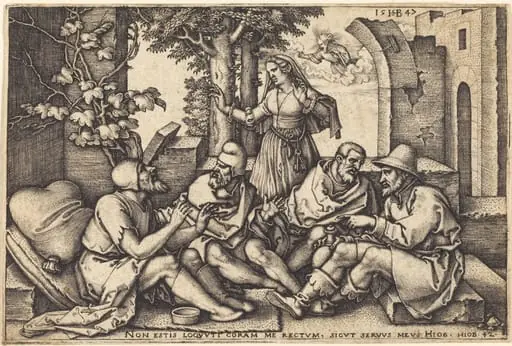 Job Conversing with His Friends
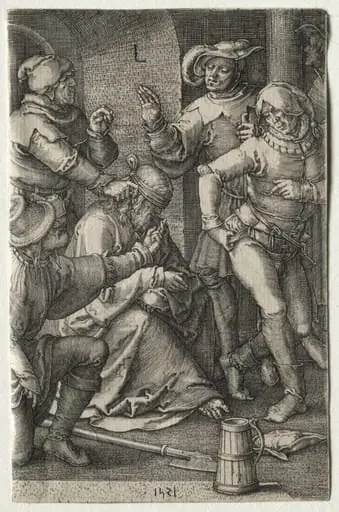 The Passion: The Mocking of Christ
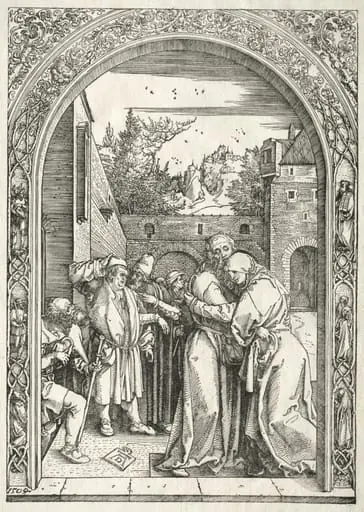 Life of the Virgin: Joachim and Anna Embracing under the Golden Gate
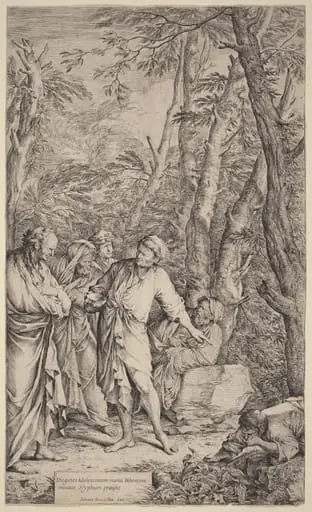 Diogenes Casting away his Bowl