Artwork
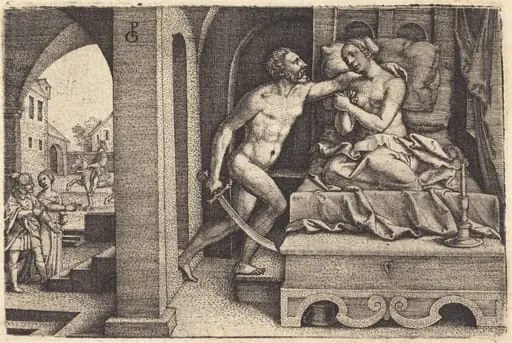
Virginius Killing His Daughter
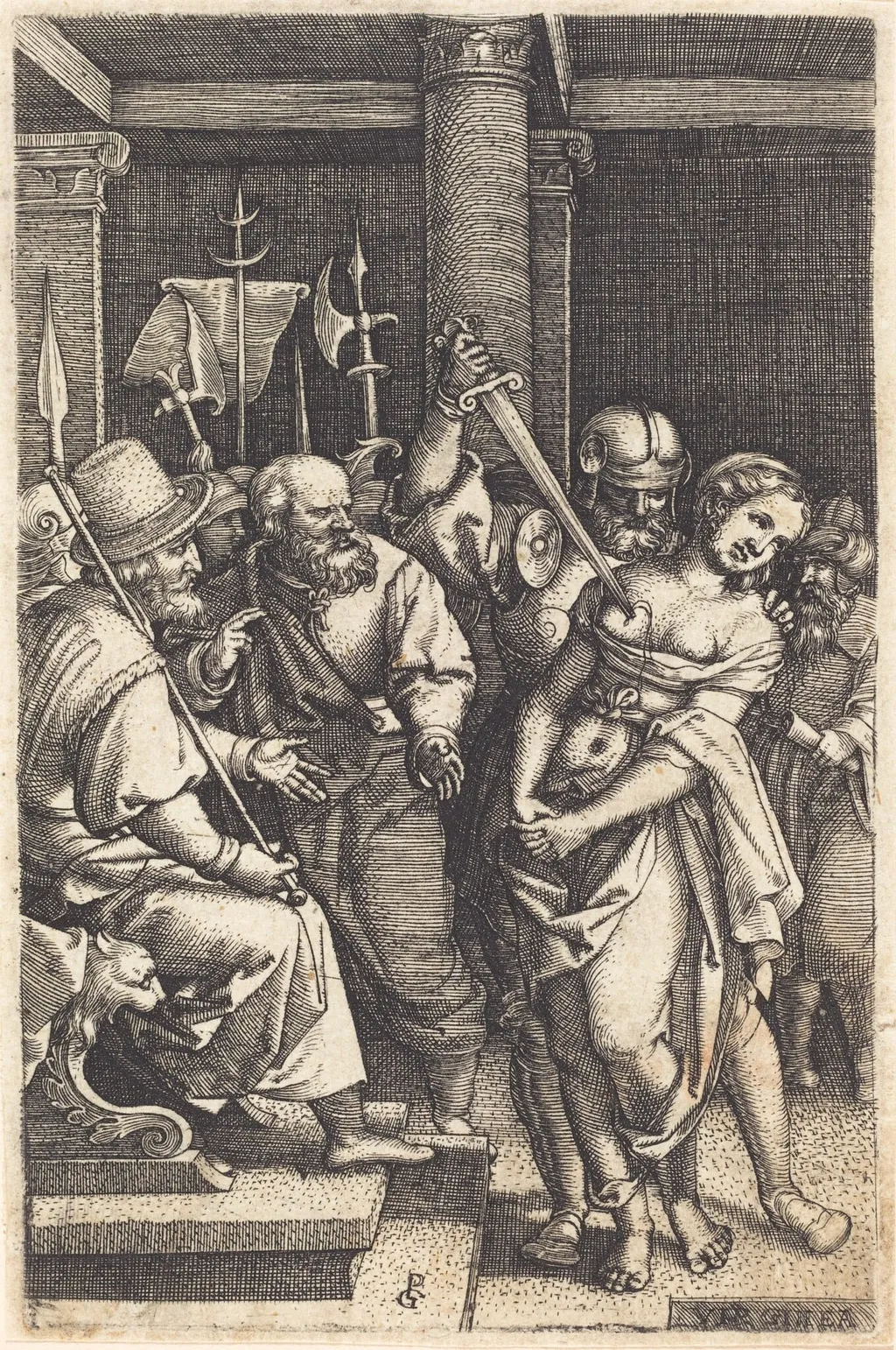
Virginius Killing His Daughter is an ink print by the Renaissance artist Georg Pencz. It dates from 1546 and is held in the collection of the National Gallery of Art.
About this work
Overview
Virginius Killing His Daughter is an engraving created by German artist Georg Pencz around 1546. It is a print made using the engraving technique, where lines are etched into a metal plate.
Subject & Meaning
The engraving depicts a scene from Roman history where the father Virginius kills his daughter to prevent her from being dishonored. This narrative was a common theme in both classical and Renaissance art, symbolizing the father's ultimate sacrifice.
Technique & Style
Pencz's work is characterized by fine lines and deliberate shading, which convey emotion and texture. The use of dark background highlights the figures and their details, such as the armor and the woman's loose hair, creating a dramatic yet subdued atmosphere.
History & Provenance
Georg Pencz was trained by Albrecht Dürer in Nuremberg and later influenced by Venetian art during his travels to Italy. His background in engraving, painting, and printmaking is reflected in the detailed and expressive nature of Virginius Killing His Daughter.
Artist & collection
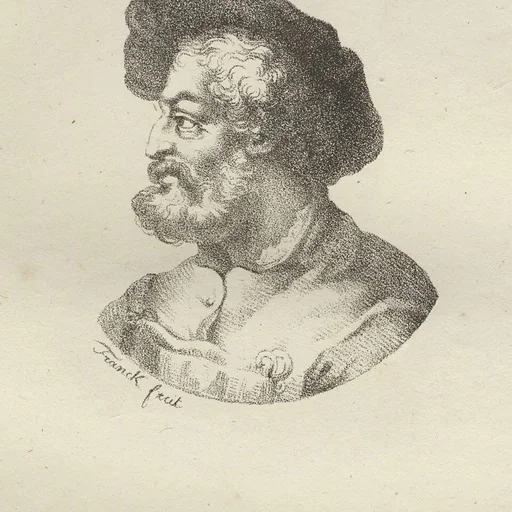
Artist
Georg Pencz (c. 1500 – 11 October 1550) was a German engraver, painter and printmaker. Pencz was probably born in Westheim near Bad Windsheim/Franconia. He travelled to Nuremberg in 1523 and joined Albrecht Dürer’s…